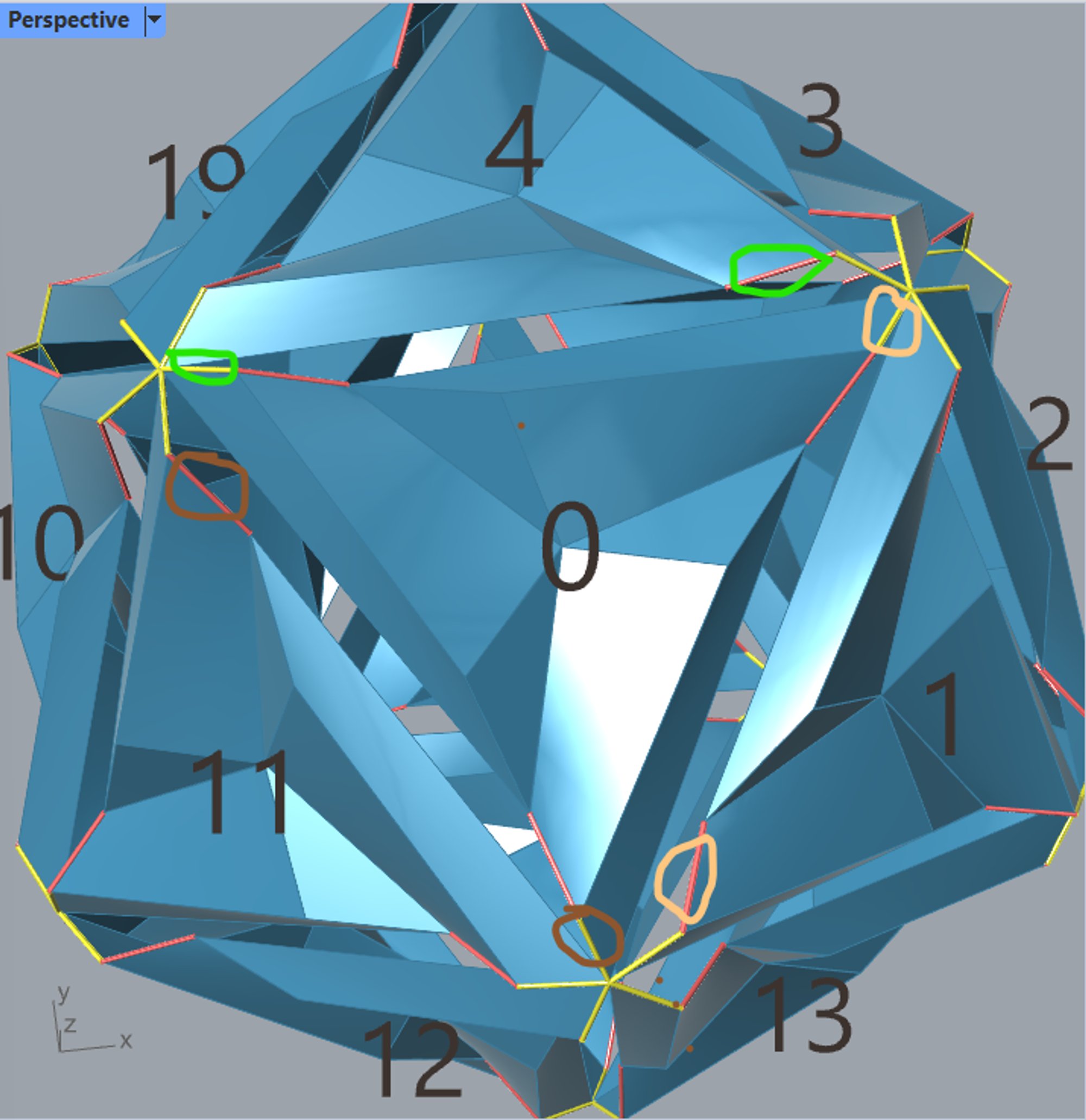
Making a polyhedra sculpture
Experiences


Making this project has been a lot of fun, but it has had a couple of big challenges to it too.
The idea was simple, use a polyhedron as start and break up every face of the polyhedron into many smaller faces. But then I saw an example where those faces sort of wrapped around to the surrounding faces, and now I knew this was a challenge worth pursuing.
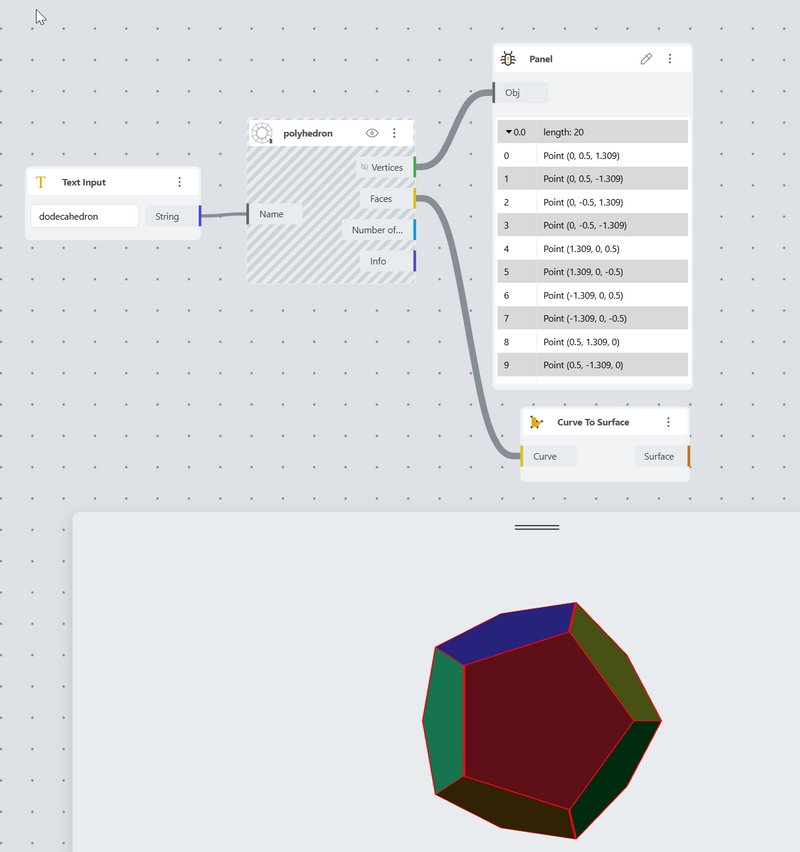
First of all I needed a couple of polyhedra to base the sculpture upon. But the only one available in Beegraphy is a cube, so I figured I needed to write a plugin that provided me with more polyhedra.
The data needed to construct for instance a dodecahedron is readily available online, and I choose to get the data about vertices and faces from dmccooey.com
I could rather quickly make a plugin work locally but publishing it to the beegraphy server has been quite a journey. Luckily the people in Beegraphy is very helpful and has during the autumn come up with the needed platform to publish your own plugins.
So far so good, with a model of a polyhedron it took less than an hour to subdivide every face into a landscape of ridges and valleys. Then it was time for the next big challenge. Working with trees and branches is one thing, but to make the original faces wrap around to meet each other I needed some way to find not the closest, but the correct edges and loft those. This made my brain hurt. For days.
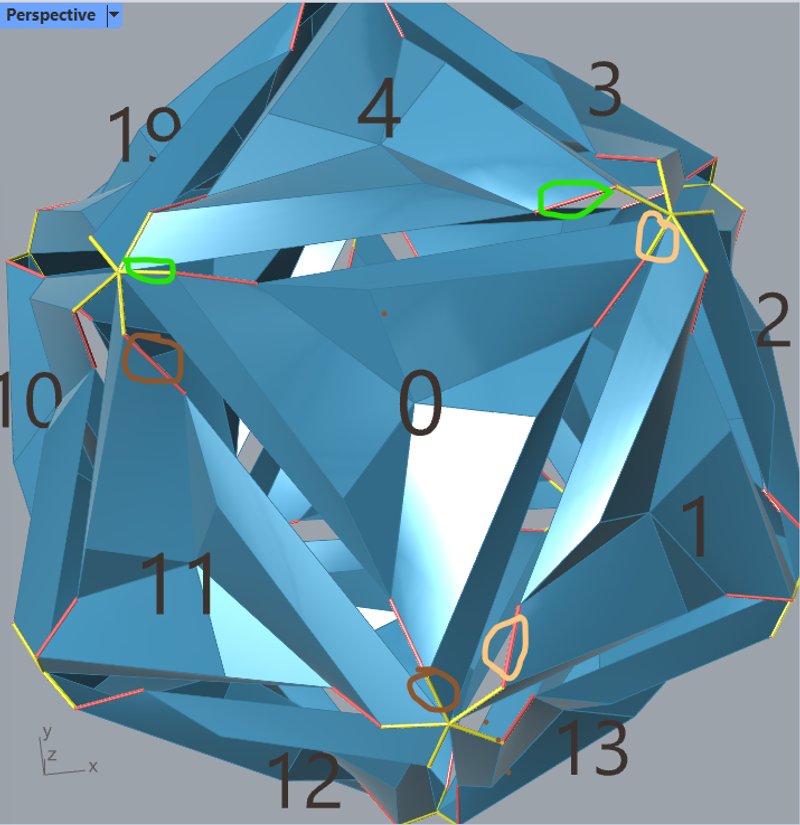
Besides the helpful team at Beegraphy I have also asked for help in the Grasshopper forum, it is very beneficial that the two platforms have so much in common. But that also means that it's challenging when things work differently between them. While I was working on this design I could not understand why the logic I used would not produce the results I was after. Until I realized that the branch node in Beegraphy didn't work as the one in Grasshopper.
Once those hurdles where overcome the work was more focused on making the workflow easier on the end users who worked with the model for the first time. Besides arranging sliders and give them names that at least hint of the outcome they produce, this also meant spending lots of time finding where the limits for different operations needed to be in order to not break the model. Since I wanted the user to have a lot of polyhedra to choose from, this meant reassessing those limits for every model. And in the end one polyhedron, the Stella Octangula shown in white plaster in the cover image had to be omitted. Some combinations of values for the sliders would break the model, and I did not want to limit all the other polyhedra just to make that one always work. (And as a bonus I got to keep that one exclusively for myself).