

Mind's Play
An essay on the relationship of the mind and design.

Homeostasis. Ever heard of it? Homeostasis, as Britannica defines it, is any self-regulating process by which biological systems tend to maintain stability while adjusting to conditions that are optimal for survival. It is largely due to this phenomenon that we enjoy the life that we do today. The innate ability of our brains and minds to evolve from a hunter-gatherer society to a full-fledged civilization is nothing short of amazing and awe-inspiring. This societal evolution wouldn’t have been possible without our innate abilities for homeostasis. Additionally, it wouldn’t be possible either without the power of our brains and minds. While our brains evolved throughout history, so too, did our minds. Research has shown that the human mind is the strongest computer on Earth. While our ancestors may not have started with the most powerful hand tools on Earth, they did, however, start with the most powerful computers on Earth. It is that capacity that has allowed us to build all that we see around us. Just like the old saying goes, “Whatever good things we build end up building us.” It has become apparent throughout history that we built an immense number of good things, otherwise, we wouldn’t be enjoying the built environment we do today.
Of course, the architecture profession had a little something to do with this growth. In the olden days, we catered to the hunter-gatherer dynamic. Now, our society has progressed to a point where more advanced topics and points of concern are at the center of attention. As our civilization progressed so did our architecture. Some of that progress may as well be attributed, in part, to architecture. The idea that ‘what we build, end up building us’ has cemented its proof in modern-day society. As society progressed from rudimentary social dynamics, we have learned to elevate our physical buildings which in turn inspired more societal growth. This mutualist exchange between society and the built environment is part of what allows us to grow as a species.
As we evolved, so too did our understanding of architecture. In the hunter-gatherer society of prehistoric times, architecture was spartan and utilitarian. There was no need and, more importantly, no awareness of the higher functions of architecture other than its rudimentary status. Nowadays, architecture is enjoyed by all, whether they are aware of it or not. We now have the liberty and awareness to understand and appreciate what aesthetic and design we like or dislike. Additionally, we don’t just appreciate architecture with our eyes. We have evolved enough as a society to appreciate and play around with our other senses in conjunction with traditional design. Simply put, design isn’t just function nor aesthetic anymore. It now encompasses more of our senses and serves a higher function. These days, we care about the psychology of design and how we can create designs that will boost mental health. We are also aware of the negative impacts of design on mental health. As I previously stated, we’re a long way from the spartan, hyper-focused-functionality, and rudimentary functions of architecture. We are, in essence, in the future. We now understand to great degrees that the built environment we build can promote success or spell collective doom.
In the early days of our civilization, we didn’t focus on these things at all. I doubt that the early Homo Sapiens cared about their mental health the way we nurture ours now. They cared more about food, shelter, and safety. Thankfully, those days are behind us. Now we can adhere to Maslow’s Hierarchy of Needs and focus on different aspects so we can continue to grow our society. This shift in focus from primal needs to advanced interests is, thankfully, a good indicator that our civilization was built well and has evolved well (all things considered). This is another sublime example of the idea that ‘what we build, end up building us’. We should also be thankful that we don’t have to focus too much on wild animals endangering the safety of our lands (with a few exceptions, of course) – this alleviated primal concern allows us to focus on better quality of life as opposed to just focusing on survival.
Our profession will always be one of the prime protectors and advocates of this evolved civilization. It is, after all, in our best interests to maintain the new way of life and to ensure that these new, advanced needs of our society will be addressed with elegant solutions (as opposed to rudimentary ones).
It’s a big responsibility for our profession, truth be told. We have the knowledge and potential to effectively alter the quality of life of people through our designs. Case in point, studies have shown that buildings and cities can affect the mood of individuals. Additionally, there is research that states that growing up in a city can increase the likelihood of individuals contracting mental illnesses. On the other hand, it is also proven that architecture can help solve these said illnesses. Architecture can also help aid in the development of individuals and children with special needs. In this regard, Magda Mostafa comes to mind as a prime example of an architect that has focused on this field particularly due to the importance of the issue. While it wasn’t easy to get to the point where we admit the immense responsibility of our profession, we should be proud of the fact that many emerging architects are on the case to crack a more streamlined approach to the psychology of design and mental health architecture, especially in these times. Thanks to the global pandemic of COVID-19, we have now accepted this rising truth as a part of modern society. With so many people affected, the stigma surrounding mental health is slowly becoming a thing of the past. While this stigma won’t go away anytime soon, our profession must shift its focus to addressing the issues surrounding it and pool our collective knowledge bases together to find a more standardized solution to this rising threat.
Now that we have been made aware of how our creations and designs affect our society, we must focus on creating an aura of positive effect with our architecture, from here on out. Gone are the days when the relationship between the built environment and the mind are neglected. We must empower ourselves alongside this movement to create even better solutions than the ones we have today. This awareness, aided by an evolved sense of community building, is one of the first concrete steps we can take to cement our role as enlightened designers and caring builders.
As I stated in my introduction, we wouldn’t be in this position if it wasn’t for homeostasis and our brain’s and mind’s ability to adapt and evolve. We should be proud to realize that most (if not all) of our physical needs are being met, that our next area of growth is that of mental health and the psychology of design. We have, so far, achieved a good part of Maslow’s Hierarchy of Needs that we are nearing the ones that involve self-growth and introspection. The homeostatic balance of our society has shifted from a dire focus on physical needs to a dire focus on mental needs. It is well within the powers of architecture to create better cities for our society so that we may all enjoy the mutual benefits. In this regard, our profession must flex its strength and knowledge to help remove the stigma surrounding the topic, create a unified design approach, and give equal attention to both physical and mental needs. The built environment will always have a great influence on our society. We must always remember this fact and recognize the immense responsibility that befalls our profession. We must recognize the power of the mind in helping shape the lives and destinies of our civilization. If we hope to maintain the homeostasis that we enjoy, we must play an active role in ensuring that all needs are met – the physical as well as the emotional and mental.
References (6)



Popular Articles
Popular articles from the community


Play: Fragments of Their World
Familiar architecture becomes modular playground design, creating safe spaces where displaced children can learn, connect, imagine and play.

Riyadh For All: Intergenerational Urban Design for Active Aging in Rabat
Riyadh For All reimagines urban design in Rabat with intergenerational co-living, adaptive courtyards, and Moroccan cultural exchange today.

Hill & Cross Opera: Sculptural Opera House Architecture Shaped by Tallinn’s Landscape and Identity
Hill & Cross Opera reimagines opera house architecture in Tallinn through its sculptural hill, civic plaza, glass wave and a luminous cross.

Co-life: Sustainable Architecture for Age-Friendly Community Living
Co-life reimagines sustainable architecture for seniors through courtyards, rammed earth, shared gardens, and spaces designed for belonging.


Similar Reads
You might also enjoy these articles

Day and Night Park: A Time-Based Urban Newsstand in Beijing
A temporary urban newsstand in Beijing blending travel, light, and reading through poetic colors, compact form, and community-focused design.

Modernist Patio Renovation in El Masnou, Barcelona by Oliver Segura Arquitectura + Cebrià Arquitectura
Modernist patio renovation blending tradition and innovation with a movable pool, leveled floors, and Catalan materials in El Masnou.
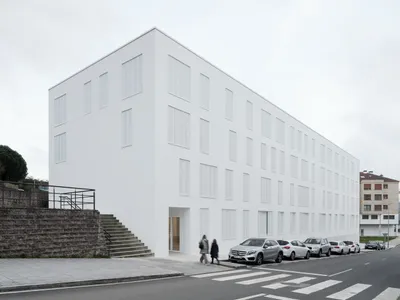
Alto Residencial Coop: Cooperative Housing Development in Santiago de Compostela by Carbajo Barrios Arquitectos
A linear cooperative housing complex blending white volumes and perforated metal façades, enhancing community living, natural light, privacy, and urban integration.
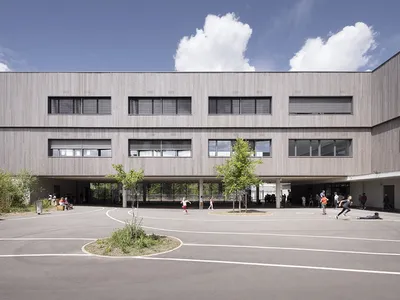
Vil Genis School by BPA ARCHITECTURE – Massy, France
Vil Genis School in Massy, France, features sustainable design, south-facing classrooms, community integration, accessible spaces, and modern educational architecture.

Comments (0)
Please login or sign up to add comments
No comments yet. Be the first to comment!