Requiem for a Dream: A Powerful Exploration of Memorial Architecture in Syria
A contemporary memorial architecture project transforming war-torn memory into spatial resilience, reflection, and collective hope.


In the evolving discourse of memorial architecture, spaces of remembrance are no longer static monuments. They are immersive environments that translate collective trauma into spatial narratives. Requiem for a Dream is a contemporary architectural proposal that reinterprets Syria’s recent history through form, material, light, and movement.
Designed by Parizad Mohammadnamdar, Amirreza Movladost, Nima Danaeimehr, and Hassan Ebrahimy, the project transform's themes of war, desolation, resilience, and renewal into a powerful architectural experience. Through raised concrete scales, water courts, symbolic pillars, and subterranean passages, the design becomes both a physical structure and a spatial metaphor for Syria’s past and future.
Concept: Turning the Page from Desolation to Hope
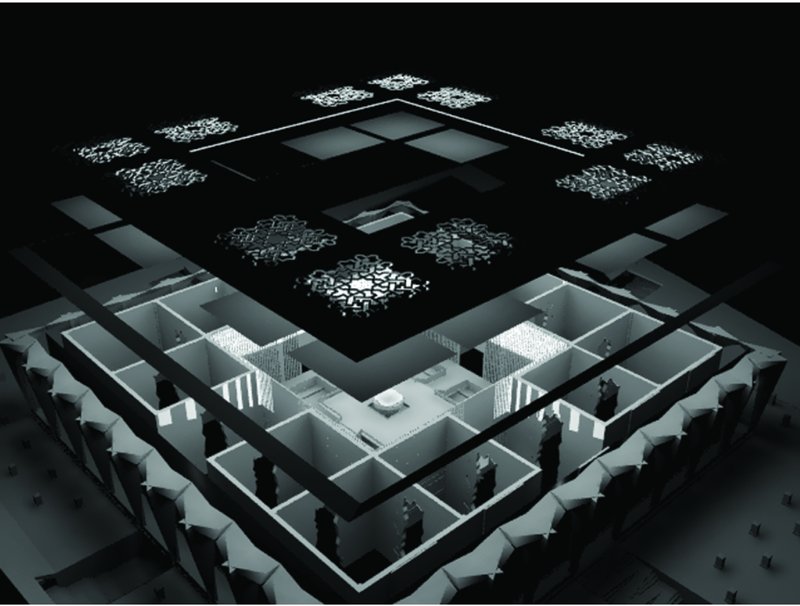
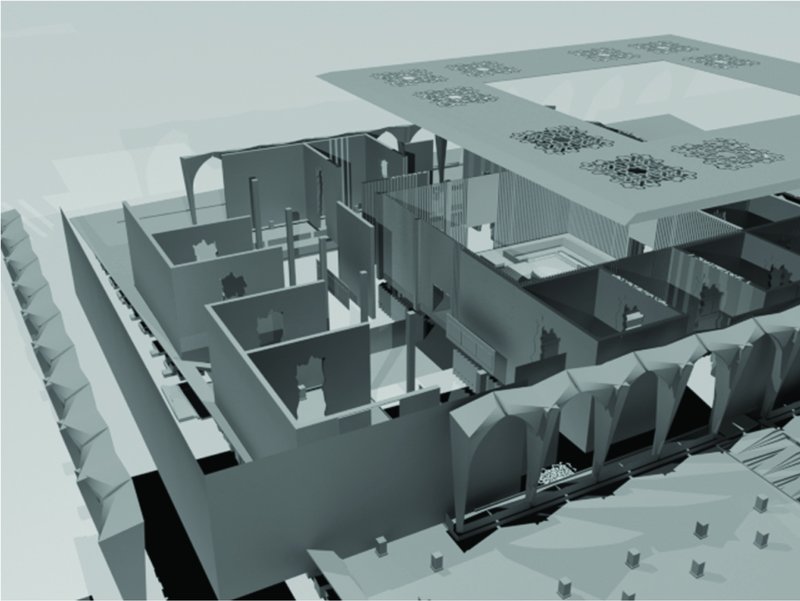
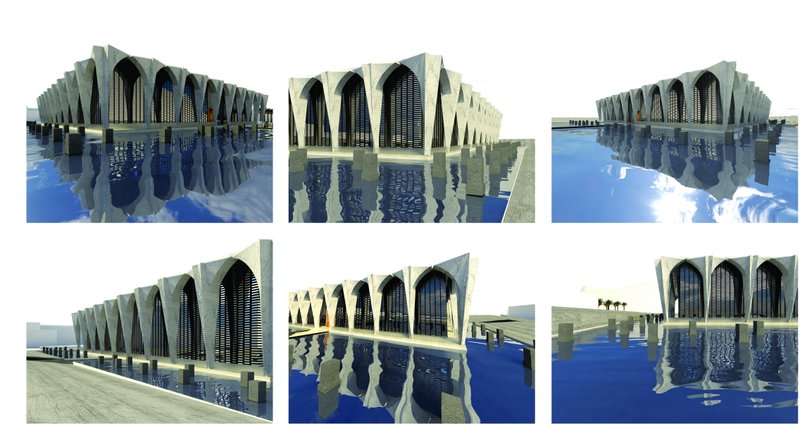
The primary architectural gesture of the project is the formation of north-east and south-west raised concrete scales emerging from the ground. These lifted planes symbolize the act of turning a page—recalling a chapter marked by war and opening a new one filled with life and hope.
This spatial strategy is central to contemporary memorial architecture: rather than presenting memory as frozen, the design represents transformation. The structure does not merely commemorate tragedy; it narrates progression from devastation toward resilience.
The geometry of the building forms a controlled and inward-focused composition, inviting visitors into a contemplative journey. Each step within the complex is carefully orchestrated to evoke reflection, empathy, and renewal.
Architectural Language: Arches, Concrete, and Cultural Continuity
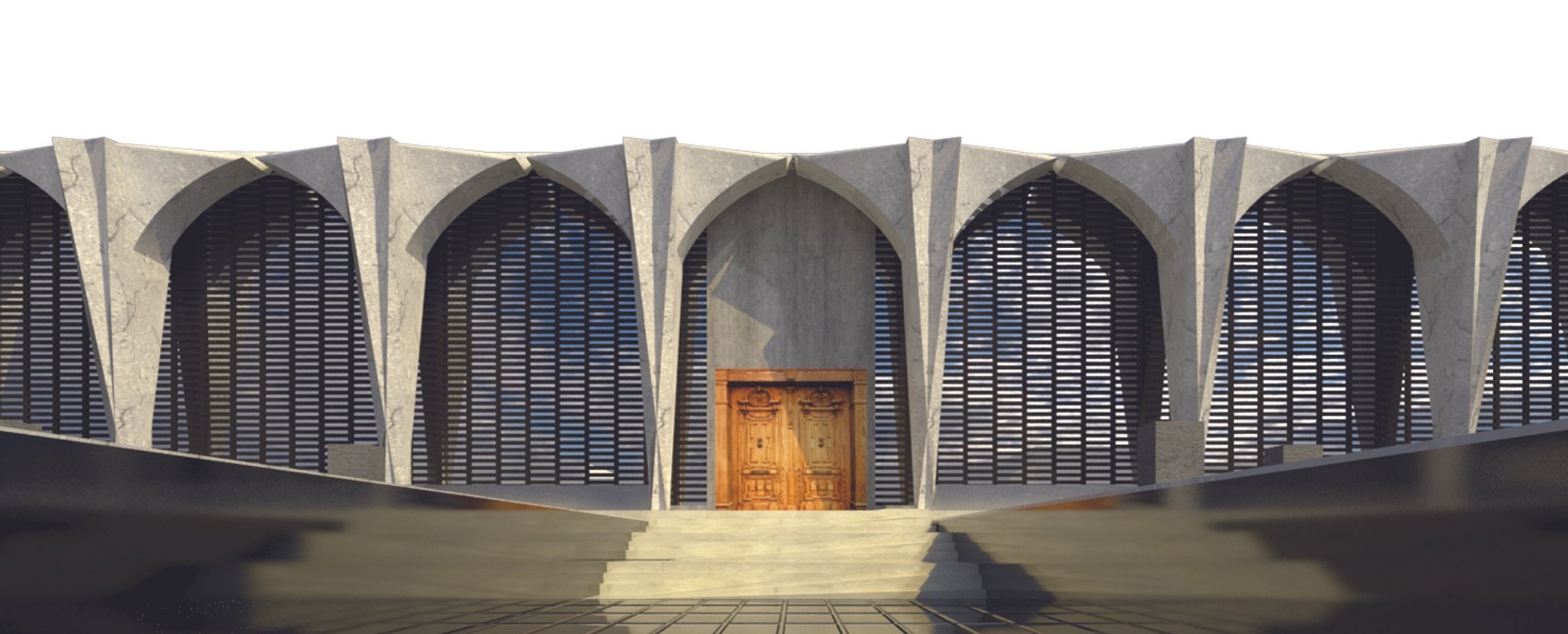
The façade is defined by a rhythmic sequence of arches inspired by Islamic and Syrian architectural heritage. These arches establish continuity with Aleppo’s historic built fabric, reinforcing cultural memory through architectural vocabulary.
Concrete, used extensively throughout the project, becomes a medium of narrative expression. Its raw, textured surfaces symbolize destruction and scars left by conflict. Yet, through controlled detailing and precise geometry, the same material conveys strength and endurance.
The building’s scale subtly rises at the corners, allowing visitors to access upper elevations and visually reconnect with the surrounding urban context. This elevation strategy reflects the act of rising above trauma while maintaining awareness of history.
The Central Courtyard: Symbolism of Water and the Olive Tree
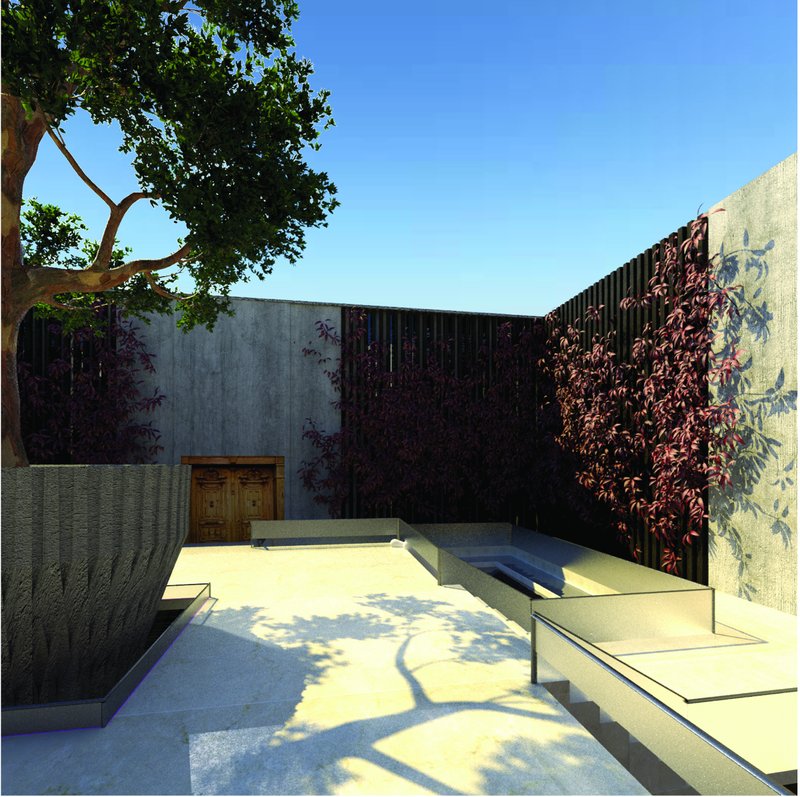
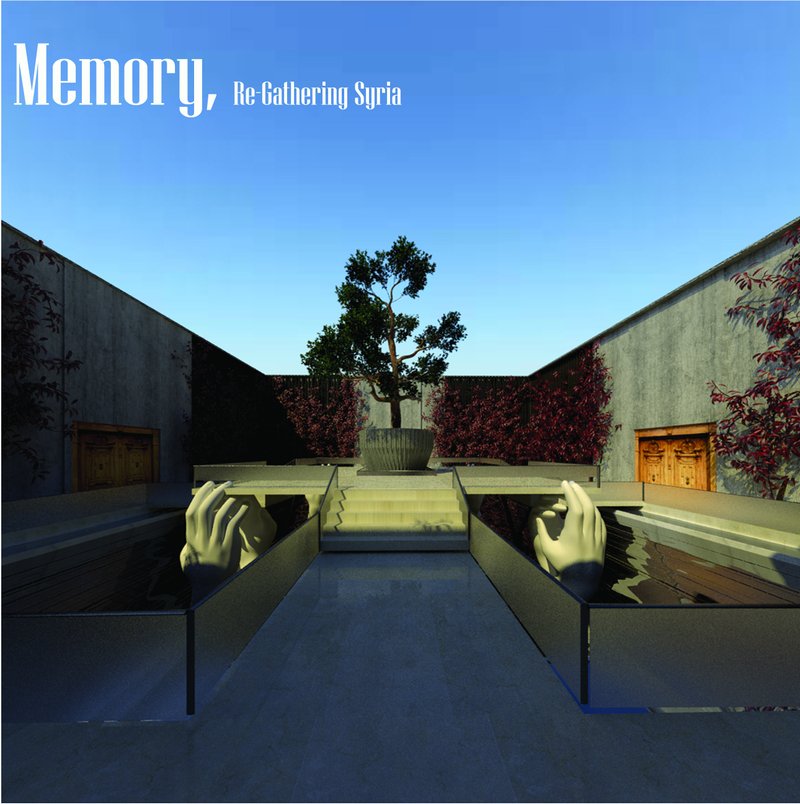
At the heart of the memorial lies a square courtyard inspired by traditional Syrian houses. Water becomes a defining element of the design—both visually and symbolically.
A hilly pool sits within the central yard, symbolizing luminosity and inner life. Emerging from this courtyard is a split pillar, formed by dividing the ground itself. Inside the pillar grows an olive tree—a powerful symbol of peace, persistence, and new beginnings.
The act of splitting the ground references rupture and conflict, yet from that rupture grows life. This contrast between fracture and regeneration reinforces the project’s thematic depth within the realm of memorial architecture.
Subterranean Journey: Confronting the Past
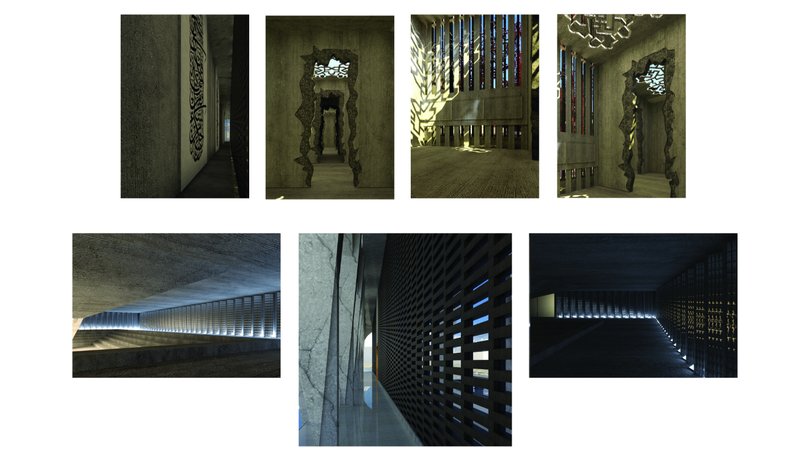
Beneath the central yard lies a hidden space accessible from both western and eastern entrances. Visitors descend through a desolated tunnel that metaphorically represents Syria’s past.
The interior walls are intentionally designed to appear ruined and fragmented. Images of war and destruction are engraved on one side, while reflective surfaces and illuminated imagery appear on the other. The reflection of light upon mirrors symbolizes luminosity emerging from darkness.
Water flows from the central park area into the basement, filling the pool and creating a calming acoustic environment. The sound of flowing water softens the emotional weight of the space, offering contemplation rather than despair.
This layered spatial sequence—descending into darkness before re-emerging—echoes a psychological journey central to impactful war memorial architecture.
Hands as Structural Symbol: Unity and Alliance
Within the courtyard pool, sculptural hand-shaped pillars hold the surface from four directions. These forms represent unity, alliance, and collective strength. Their gesture suggests that reconstruction and hope are communal acts.
The symbolism is clear: Syria’s future depends not on isolated resilience but on shared responsibility. Through sculptural integration, the design merges structural necessity with narrative meaning.
Water as Movement, Memory as Reflection
The project is surrounded by glass panels filled with water to a height of one meter, connected in sequence to express continuity. The movement of water reflects the idea that life proceeds, even after devastation.
Inscribed surfaces within the pools contain the names and memories of martyrs and war heroes. These inscriptions transform water into a reflective archive—memory becomes fluid rather than static.
In memorial architecture, reflection is both literal and metaphorical. Here, mirrored walls amplify light onto engraved images, symbolizing honor and eternal remembrance.
Spatial Experience and Urban Context
Ramps connect multiple levels of the building, guiding visitors through a carefully choreographed path. From the raised concrete surfaces, one can view surrounding landscapes, reinforcing dialogue between architecture and context.
The building’s geometry maintains symmetry around a central core, emphasizing balance. Yet the intentional ruptures within the structure prevent it from feeling rigid. This duality mirrors the tension between destruction and reconstruction.
By integrating cultural references, symbolic landscaping, and experiential movement, the project positions itself as a meaningful contribution to contemporary Middle Eastern memorial architecture.
Memorial Architecture as a Catalyst for Renewal
Requiem for a Dream transcends traditional monumentality. It is not merely a structure—it is a spatial narrative of Syria’s resilience. Through arches rooted in heritage, fractured concrete surfaces, reflective water bodies, and the enduring olive tree, the project transforms collective trauma into architectural expression.
By combining symbolism, experiential sequencing, and contextual sensitivity, the design stands as a powerful example of how memorial architecture can heal, educate, and inspire.
In a region marked by profound history and recent conflict, this proposal demonstrates that architecture can do more than commemorate—it can guide societies toward hope.