
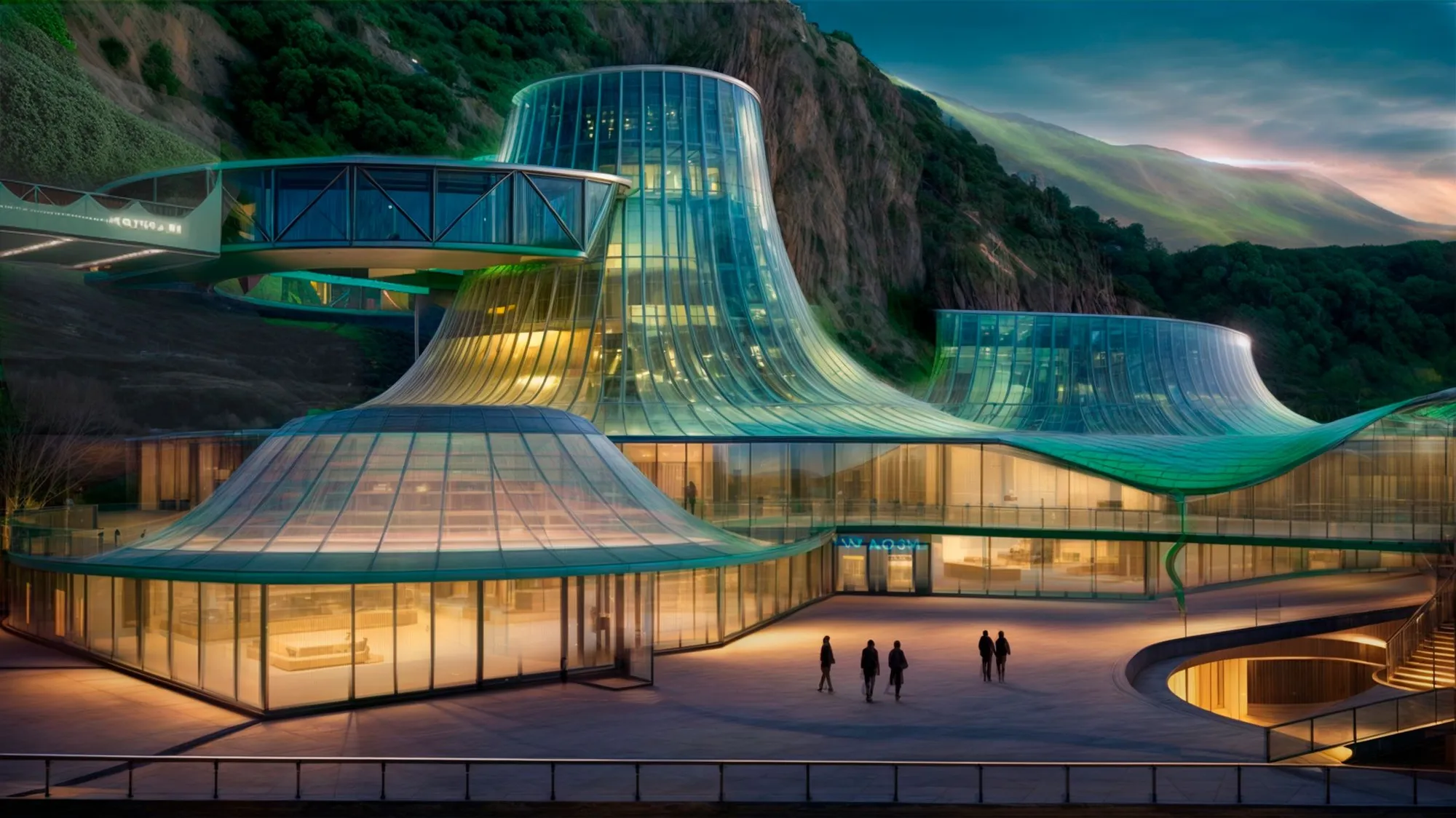
Reviving Harmony: The Center of Musical Culture Transforms Gwynedd’s Historic Quarry into a Symphony of Architecture and Nature
Where music and nature converge, breathing life into a reclaimed landscape.


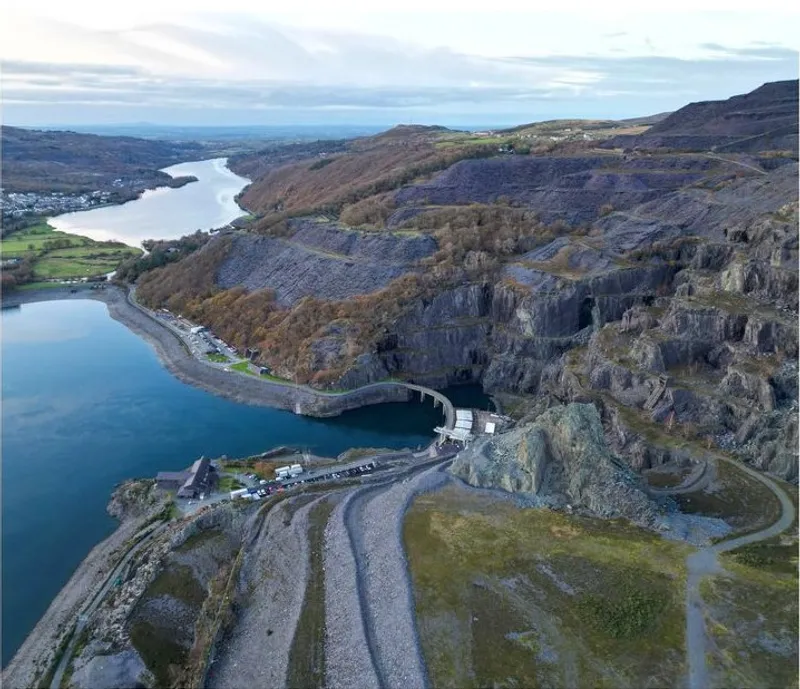
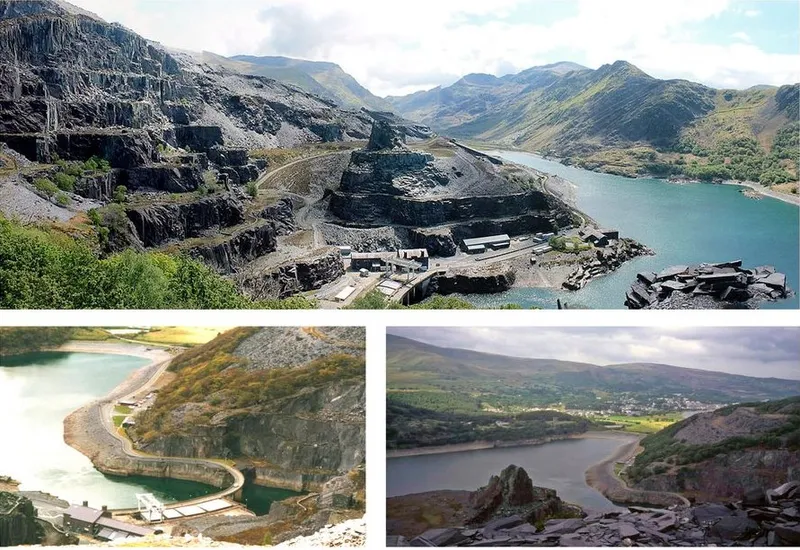
The Center of Musical Culture in Gwynedd, designed by architect Gemma Mkrtchyan, is an ambitious and innovative architectural project that aims to revitalize a disused slate quarry in Gwynedd County, Great Britain. This design is not only a concert hall but also a cultural landmark that brings life back to an industrially scarred landscape. Here’s an in-depth look at the project’s concept, design, and environmental impact.
Vision
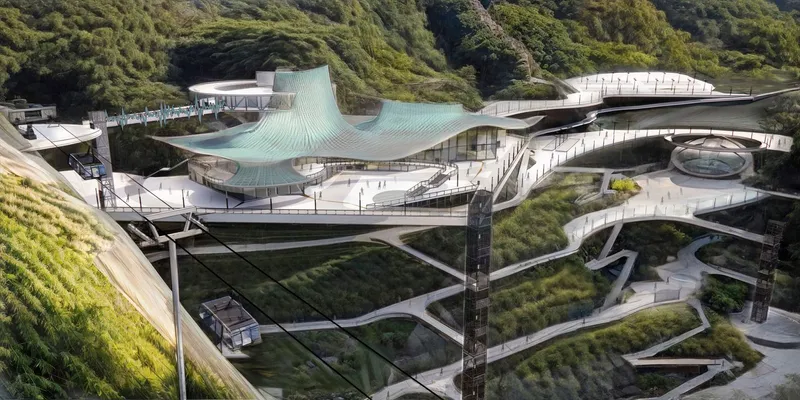
The project’s core concept draws on the metaphor of "musical spirit" emerging from the quarry, which is reflected in the flowing, organic forms of the structure. This design seeks to embody music's intangible qualities—its rhythm, movement, and emotion—through architecture. This symbolic approach transforms the abandoned slate quarry into a thriving cultural hub, promoting a sense of renewal and connection to the natural environment.
The Center of Musical Culture in Gwynedd aims to create a multisensory experience for visitors, where the architectural elements and surrounding landscapes merge to evoke the essence of music. The design envisions a space that not only provides a venue for performances but also serves as an educational and ecological center, highlighting the coexistence of art, industry, and nature.
Architectural Design and Layout
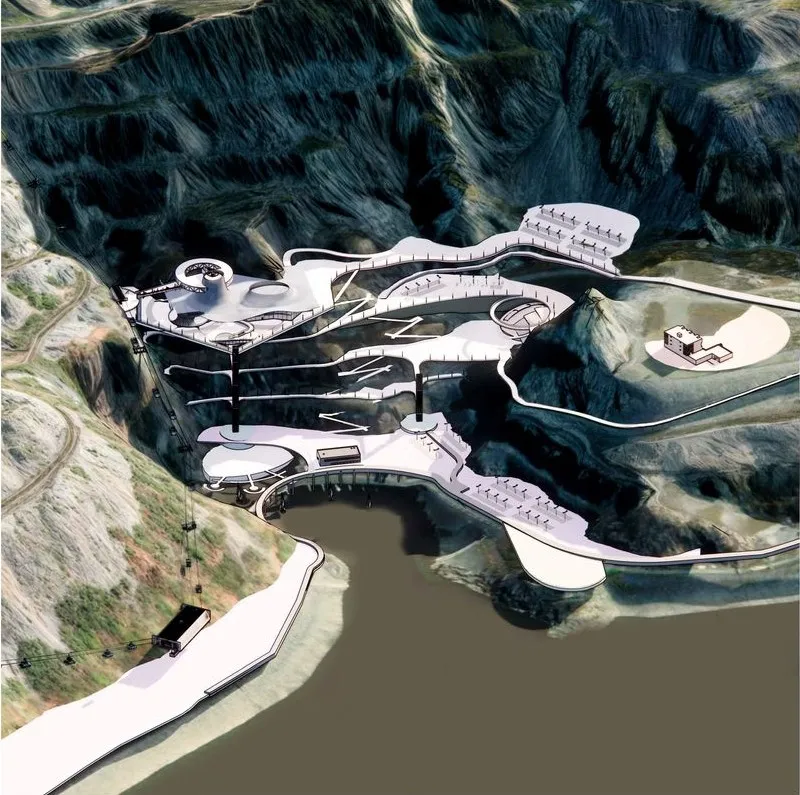
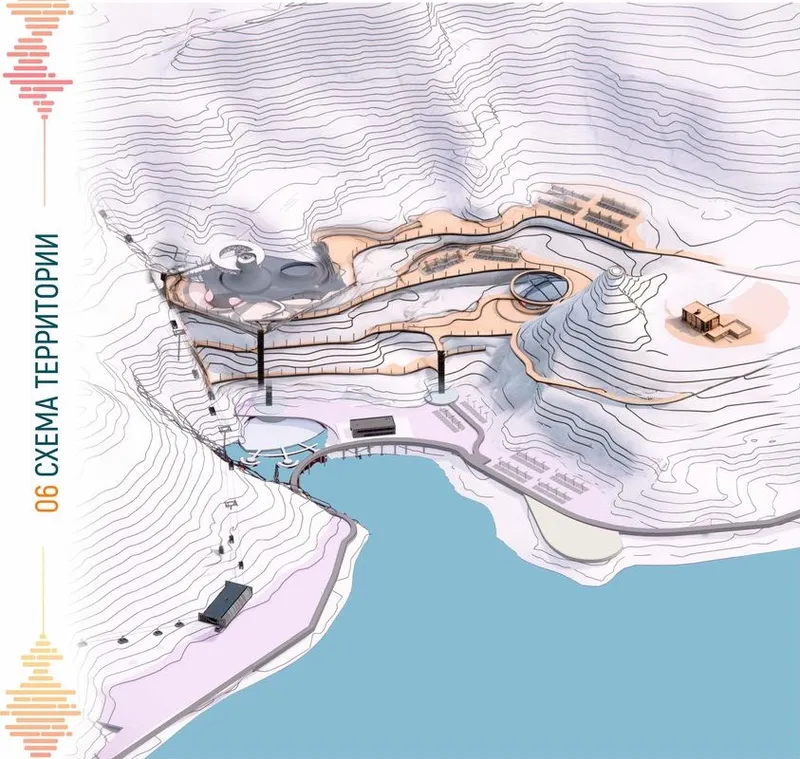
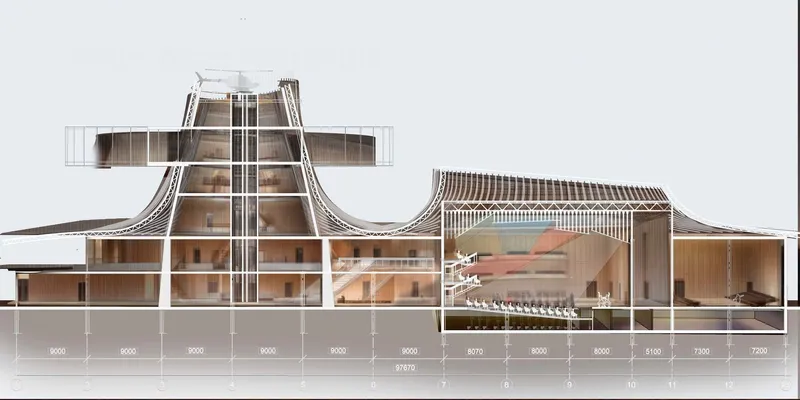
The structure of the Center of Musical Culture is divided into several functional zones, each serving a specific purpose to accommodate diverse musical and cultural activities. The layout of the building features:
Concert Halls and Performance Spaces: The concert hall, as the centerpiece, is designed with advanced acoustics and an open-air quality that merges with the quarry walls. The hall’s undulating roof form, inspired by sound waves, is engineered to optimize sound distribution while providing natural lighting.
Auditorium and Viewing Galleries: Multiple levels provide viewing platforms for spectators, creating an immersive musical experience. The tiered arrangement allows for intimate engagement with performances while enhancing visibility and acoustics.
Administration and Technical Areas: These include offices, technical support spaces, and backstage facilities, designed to support the operational and artistic needs of the center.
Exhibition and Educational Spaces: Interactive spaces are included for exhibitions related to music, geology, and local heritage, promoting educational outreach. There are also studios for sound exploration, allowing visitors to engage with sound and music in innovative ways.
Cafe and Public Spaces: Designed for relaxation and social interaction, these areas are strategically placed to offer scenic views of the surrounding landscapes and quarry lake, integrating visitors’ experiences with nature.
Environmental Integration and Sustainable Design
One of the standout features of this project is its commitment to environmental sustainability. The design aims to revitalize the quarry ecosystem by incorporating green roofs, water reclamation systems, and native landscaping. The use of glass and metal elements in the building’s facade allows the structure to blend seamlessly with the rocky terrain, reflecting the colors and textures of the quarry.
Key sustainability features include:
Green Roof System: The building's flowing roof structure is covered in native vegetation, helping to regulate temperature, reduce rainwater runoff, and create a habitat for local flora and fauna.
Renewable Energy Sources: Solar panels and possibly geothermal energy contribute to the building’s power supply, making it a model for renewable energy integration in public architecture.
Water Management: Rainwater collection systems and filtration processes help manage water resources, contributing to the local water cycle and supporting surrounding vegetation.
Materials and Construction
The project uses a combination of modern and sustainable materials that reflect the quarry’s industrial heritage. The primary materials include:
Steel and Glass: These materials are used extensively to create the building’s lightweight, transparent appearance, allowing natural light to penetrate the space while framing views of the quarry.
Slate and Stone: Locally sourced slate is used in walls and facades to honor the region's geological heritage, while providing thermal mass and structural durability.
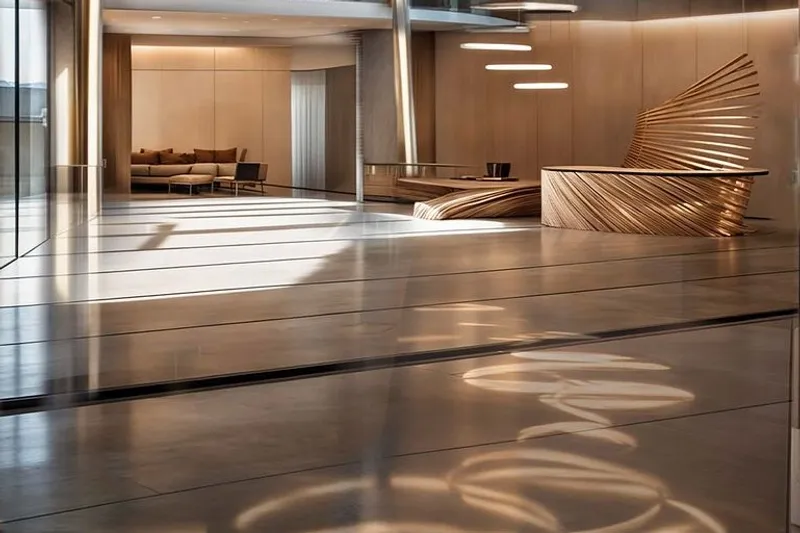
Fabricated Mesh Structures: The mesh details, seen in the design schematics, are inspired by soundwave patterns, serving as an aesthetic feature that adds depth and texture to the structure.
Spatial Organization and Flow
The spatial organization in the Center of Musical Culture emphasizes a seamless flow between indoor and outdoor spaces. Visitors can experience a journey from the outside landscape into the enclosed concert hall, symbolizing an immersion in musical spirit. The building’s open design allows for natural ventilation, minimizing the need for mechanical air conditioning.
The layout is divided into multiple levels, with each section connected by gently sloping ramps and pathways that wind through landscaped terraces and gardens. This arrangement promotes accessibility and encourages exploration, making the center welcoming to a broad audience.
Technological Innovations
Advanced technology is integrated throughout the center to enhance both performance quality and visitor experience. Notable technological features include:
Acoustic Engineering: The concert hall is equipped with cutting-edge acoustic technology to ensure clear, resonant sound. The roof structure and wall surfaces are designed to reflect and disperse sound, creating an immersive auditory experience.
Interactive Media Installations: In exhibition spaces, interactive installations allow visitors to explore sound waves, musical composition, and the history of music in an engaging way.
Lighting Design: LED and fiber-optic lighting systems are strategically used to create dynamic atmospheres, shifting in color and intensity to match the mood of performances or exhibitions.
Socio-cultural Impact
The Center of Musical Culture in Gwynedd is designed to be more than a concert venue; it’s intended as a cultural catalyst for the region. By revitalizing an abandoned industrial site, the project contributes to the local economy, fosters cultural tourism, and provides a community space for artistic expression and education. The center also highlights Gwynedd's rich musical heritage, providing a platform for local and international artists.
Gemma Mkrtchyan's design for the Center of Musical Culture in Gwynedd County is a testament to the transformative power of architecture. By reimagining a quarry as a cultural landmark, the project symbolizes renewal, community, and creativity. This innovative space invites visitors to experience the beauty of music and nature in harmony, setting a precedent for environmentally conscious and culturally enriching public architecture. The Center of Musical Culture not only revives a historical landscape but also redefines what a concert hall can be—an immersive, sustainable, and dynamic space that celebrates music’s universal language.


Popular Articles
Popular articles from the community


Conexión: Biophilic Design Reimagines High-Rise Living in Hong Kong
Conexión reimagines high-rise living in Hong Kong through biophilic design, green facades, shared spaces, daylight, water and nature within.

Co-life: Sustainable Architecture for Age-Friendly Community Living
Co-life reimagines sustainable architecture for seniors through courtyards, rammed earth, shared gardens, and spaces designed for belonging.

The Ocean Hive: Sustainable Architecture for a Self-Sufficient Civilization at Sea
The Ocean Hive imagines sustainable architecture at sea, where modular habitats, algae, wave power and ocean waste sustain a growing colony.

The Musturak Paradise: Senior Living Architecture for a Connected Future in Temara, Morocco
The Musturak Paradise reimagines senior living architecture in Temara via private homes, social spaces, culture, community, and shared care.

Similar Reads
You might also enjoy these articles

Day and Night Park: A Time-Based Urban Newsstand in Beijing
A temporary urban newsstand in Beijing blending travel, light, and reading through poetic colors, compact form, and community-focused design.

Modernist Patio Renovation in El Masnou, Barcelona by Oliver Segura Arquitectura + Cebrià Arquitectura
Modernist patio renovation blending tradition and innovation with a movable pool, leveled floors, and Catalan materials in El Masnou.

Alto Residencial Coop: Cooperative Housing Development in Santiago de Compostela by Carbajo Barrios Arquitectos
A linear cooperative housing complex blending white volumes and perforated metal façades, enhancing community living, natural light, privacy, and urban integration.

Vil Genis School by BPA ARCHITECTURE – Massy, France
Vil Genis School in Massy, France, features sustainable design, south-facing classrooms, community integration, accessible spaces, and modern educational architecture.

Comments (0)
Please login or sign up to add comments
No comments yet. Be the first to comment!