Space Architecture for Discovery: A Tribute to Apollo 11 Through Immersive Design
An immersive space architecture experience redefining discovery through sensory design, skydiving, and astronautic simulation.


In a world where architecture continues to blur the boundaries between imagination and reality, this project by Eduardo Sanchez and Fernanda SG stands out as a pioneering example of space architecture—a typology not just defined by extraterrestrial exploration but by the power to inspire discovery here on Earth.
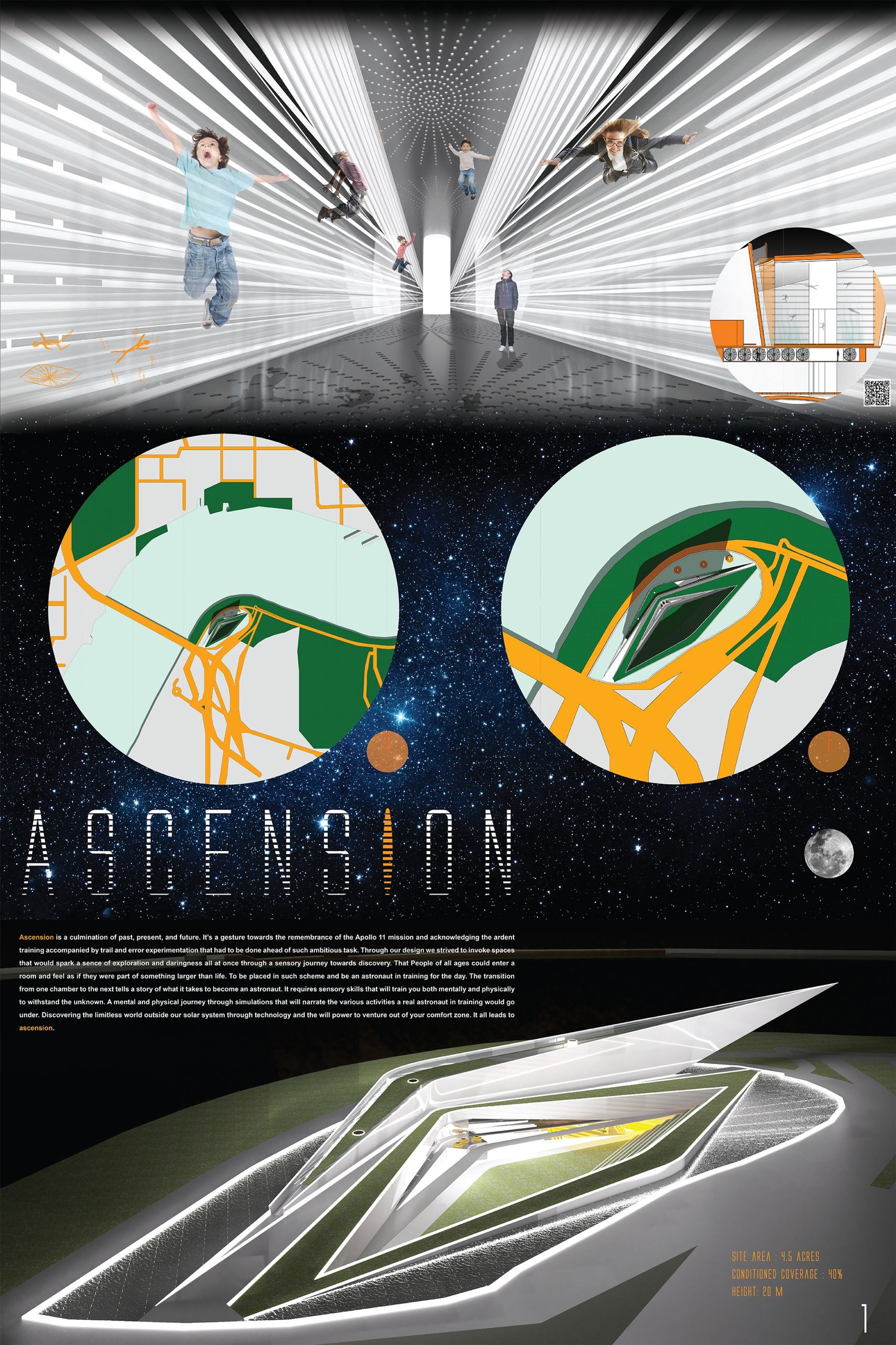
Awarded the People’s Choice Award in the Moontrip 2019 competition, "Ascension" is more than a building; it is a sensory journey into the cosmos. Rooted in the idea of experiential architecture, the design walks visitors through a dynamic environment that blends technology, movement, and memory.
A Tribute to Apollo 11 and the Spirit of Movement
The architectural form pays homage to the Apollo 11 mission, marking its 50th anniversary with a boomerang-like shape that speaks of return and continuity. Inspired by the poetic movement of space shuttles and the emotional gravity of their return, the structure simulates the transitions an astronaut experiences—from launch to reentry.
Designed to rise and descend, the building symbolizes a cycle of exploration. The surrounding water element echoes the capsule's ocean landing, providing a symbolic as well as sensory layer to the spatial story.
Three Levels of Experiential Learning
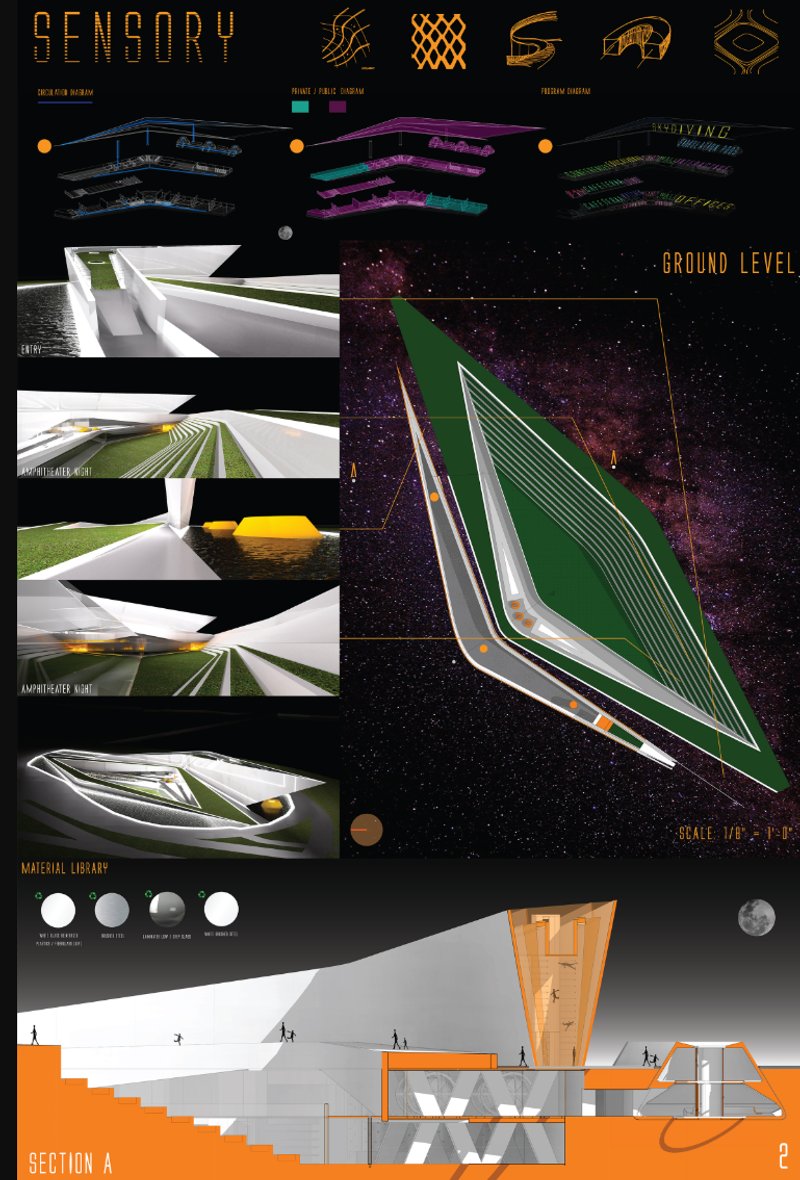
Ground Level: Skydiving and Amphitheater The ground level hosts an indoor skydiving chamber designed to simulate a zero-gravity experience. With uninterrupted rooftop views of Washington D.C., visitors begin their journey in an open, flowing environment that guides them downward. This level also features an outdoor amphitheater—a space for public gatherings and live demonstrations, integrating natural and built environments.
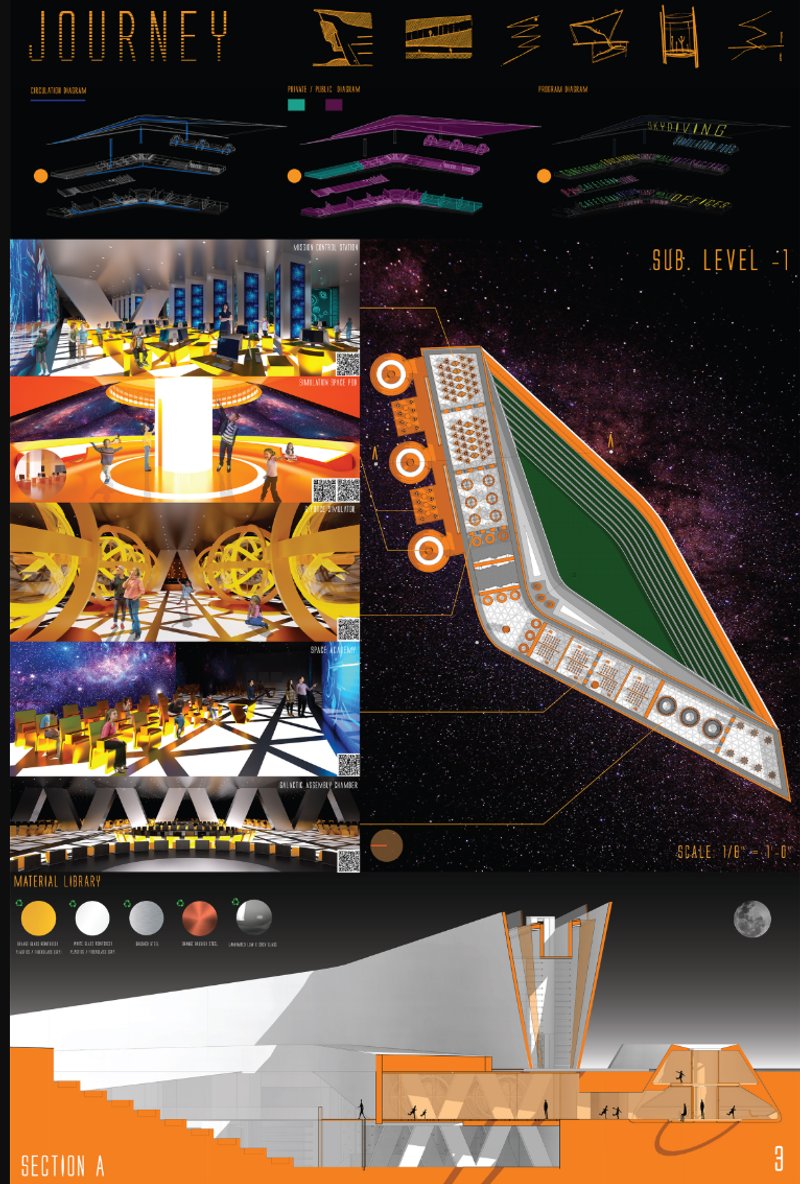
Sub Level -1: Simulation and Education Here, the space splits into interactive and educational zones. G-force simulators, mission control stations, and rock-climbing walls offer visceral, physical learning experiences. On the other side, lecture halls and conference spaces support reflective learning. Together, they form a complete training simulation for visitors to "become" astronauts for the day.
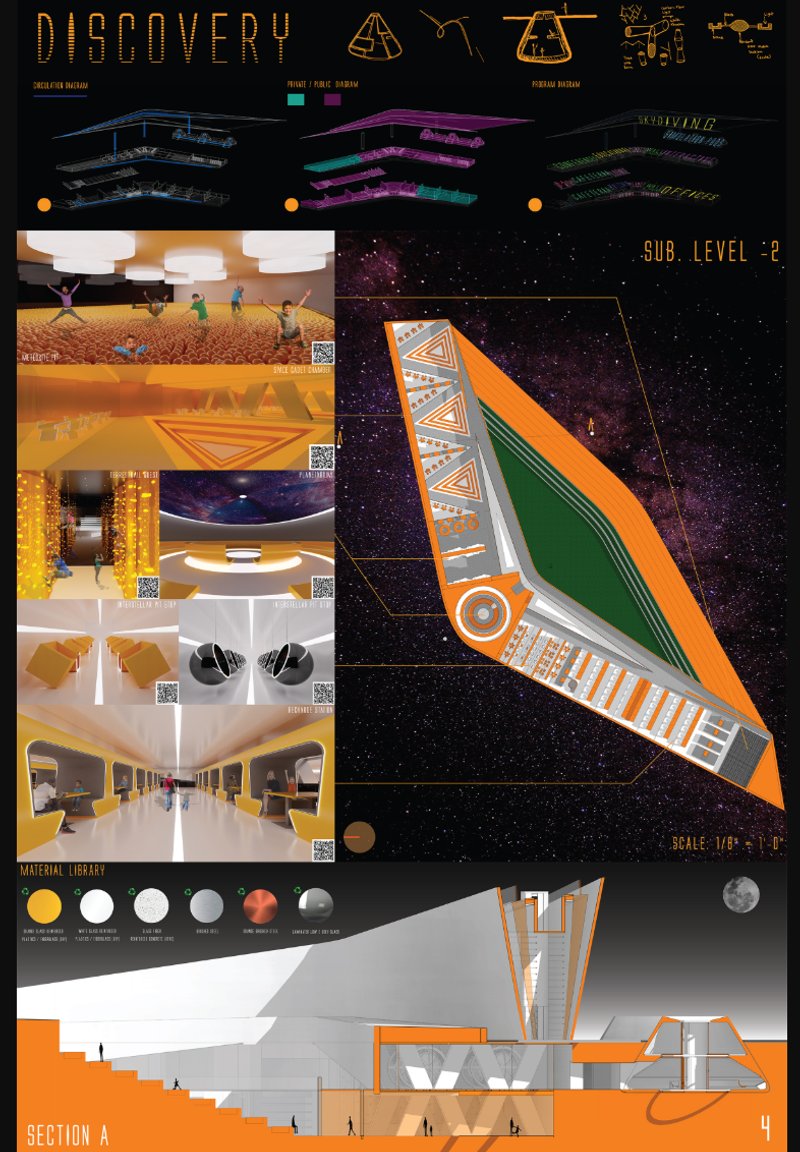
Sub Level -2: Deep-Space Exploration The lowest level includes a planetarium, space-themed cafeteria, interstellar pit stops, and even a recreation station. Visitors find themselves in a fully immersive zone, where each design element evokes life aboard a space vessel. From zero-gravity chairs to neon-lit modules, every detail reinforces the narrative of movement through time and space.
Interactive Learning Through Space Architecture
At the heart of this space architecture project is the philosophy of "learning by doing." It doesn’t merely house exhibitions; it becomes the experience. Visitors activate walls with their touch, interact with simulation chambers, and shift seamlessly between architectural volumes that function like parts of a spacecraft. The interplay of indoor and outdoor ramps further enhances accessibility and storytelling.
Symbolism in Form and Function
The project integrates symbolic and functional aspects—an orange color palette borrowed from space suits, water referencing reentry, and a form that stretches into the sky before returning to its base. Every element, from material choice to programmatic layering, is a deliberate nod to space exploration history.
This building isn’t just about architecture for astronauts; it’s about architecture as astronautics. It educates, simulates, and celebrates the very idea of discovery. Ascension is not only a name but an ethos—capturing the ambition of humanity’s space legacy and its grounding in sensory, interactive design.