
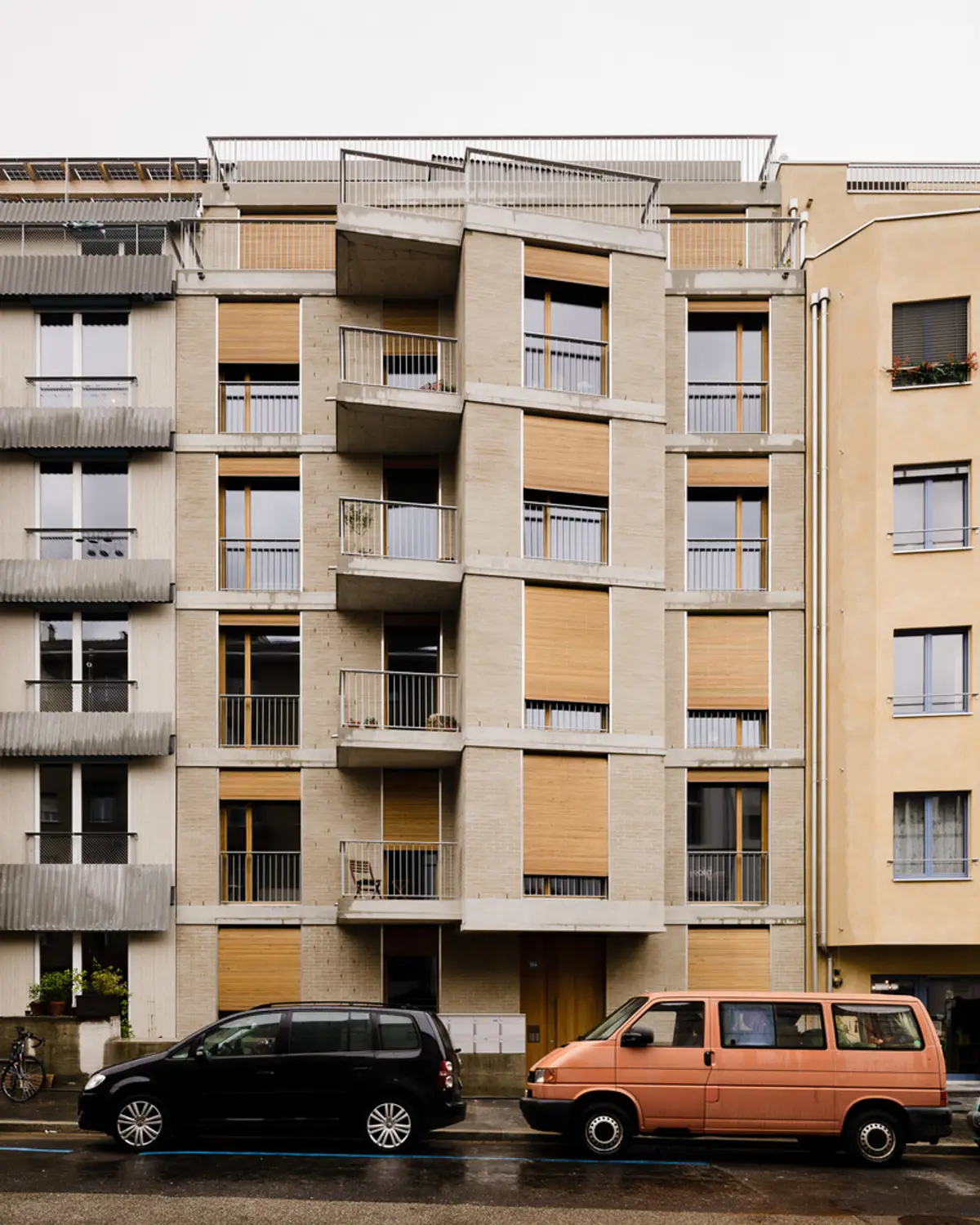
The Dirty Harry Residential Building by NEUME: Redefining Urban Living in Basel
The Dirty Harry residential building by NEUME in Basel showcases innovative, sustainable urban living through cooperative housing and thoughtful architectural design.


In the vibrant district of St. Johann in Basel, Switzerland, the Dirty Harry residential building stands as a testament to innovative urban living. Designed by the architectural firm NEUME, this unique structure marries the need for personal living spaces with a collective approach, embodying a new vision for cooperative housing. Completed in 2022, this 970 m² building not only addresses the essential needs of its residents but also exemplifies sustainable design practices through the strategic use of materials and thoughtful urban planning.
Context and Urban Integration
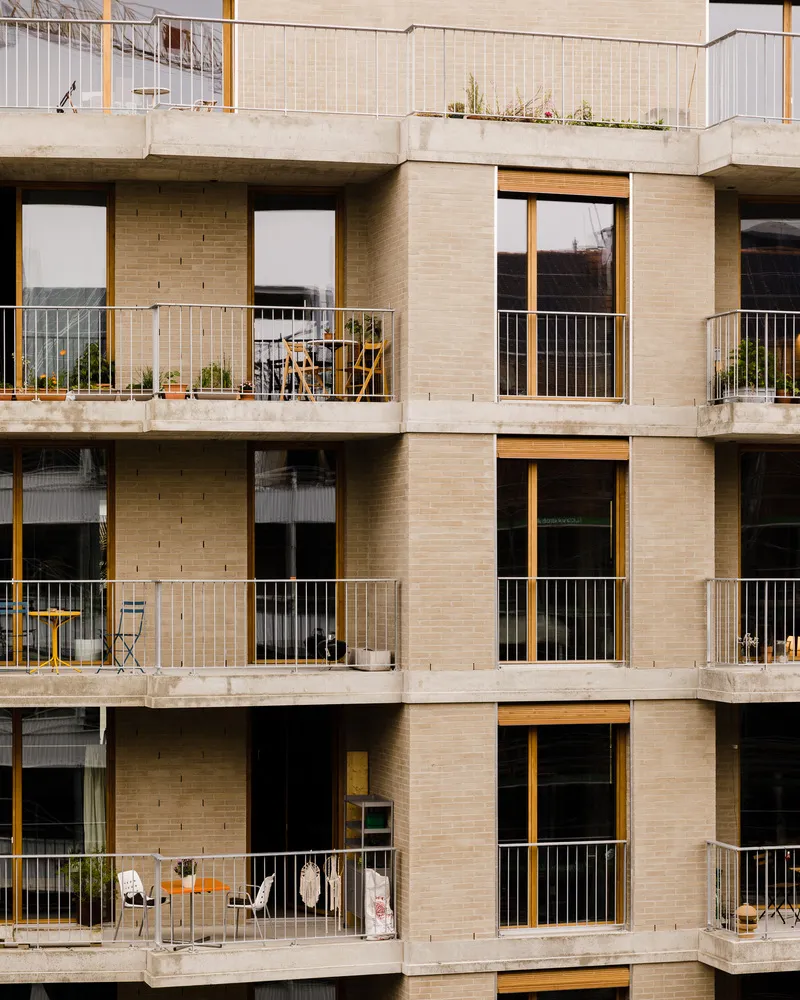
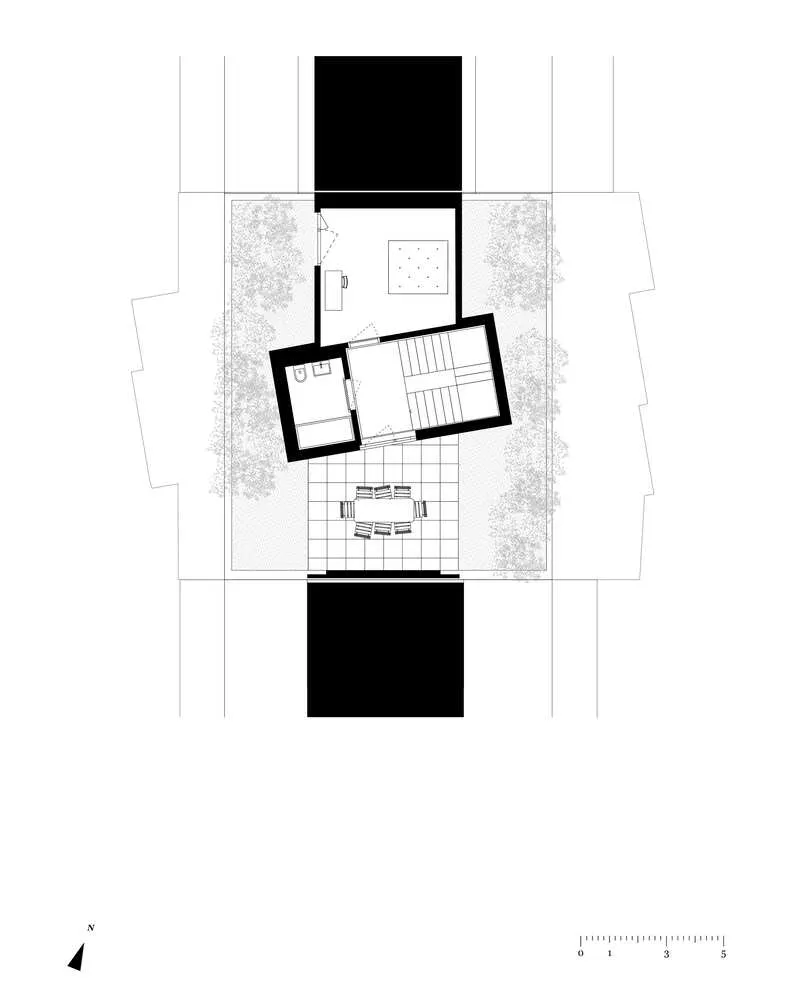
Located near the French border, Dirty Harry occupies a former warehouse area previously owned by a trading company. This setting is significant, as it situates the building within a rich historical and industrial context, which NEUME has cleverly integrated into their design. The building forms part of an urban block with a free inner courtyard, providing both privacy and community space for residents.


Architectural Design and Materials
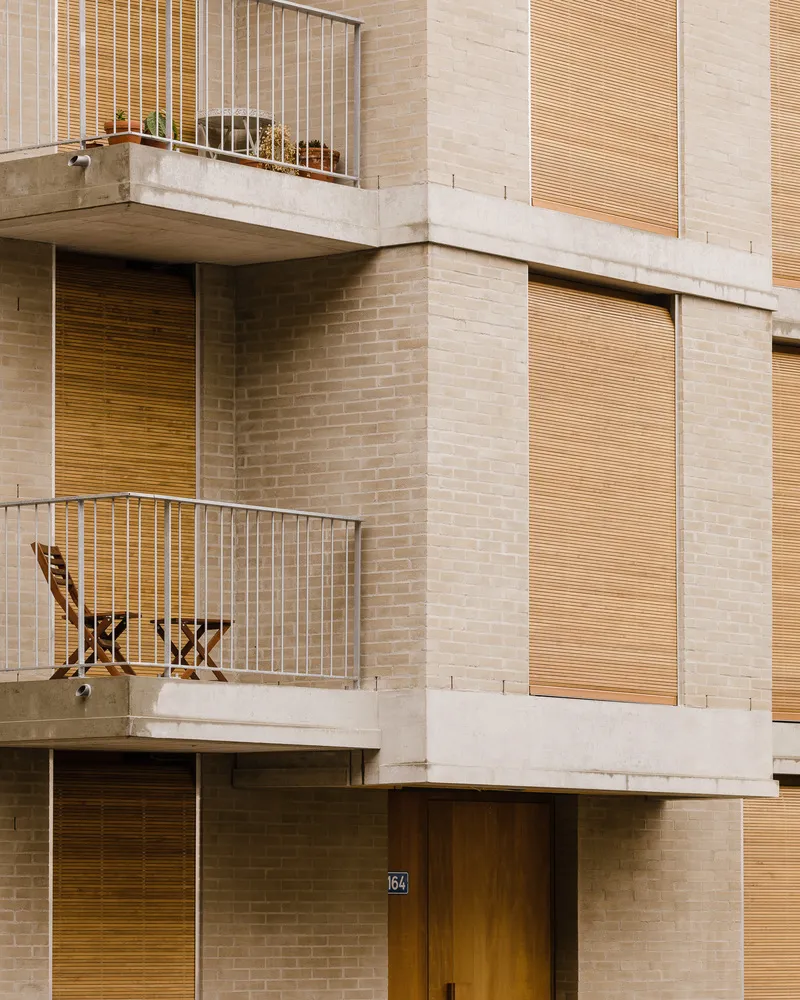
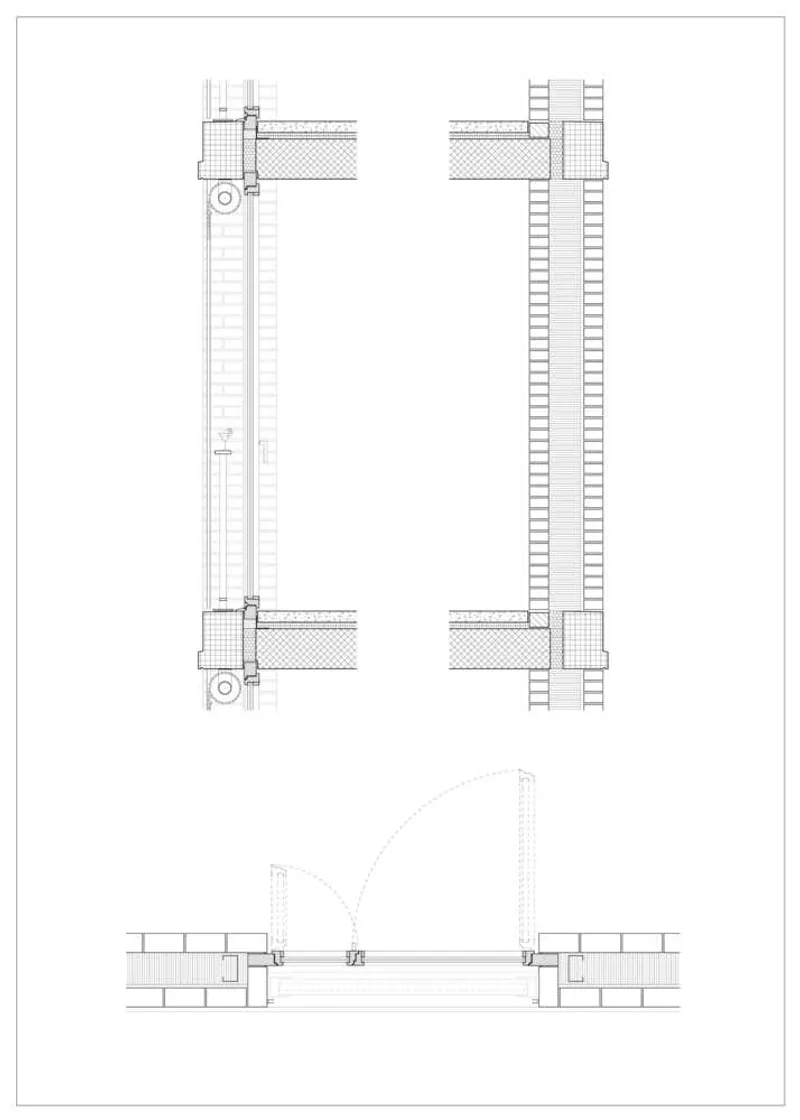
The exterior of Dirty Harry is marked by its use of raw, sustainable materials, including clay bricks, concrete, and wooden roller shutters. These materials not only ensure durability but also contribute to the building's aesthetic appeal. The facade, with its vertical arrangement of high-rectangular windows and aluminum guide rails, emphasizes the building's height and gives it a distinctive look. The use of large wooden frame windows and the vibrant color of the clay bricks add warmth and character to the structure.
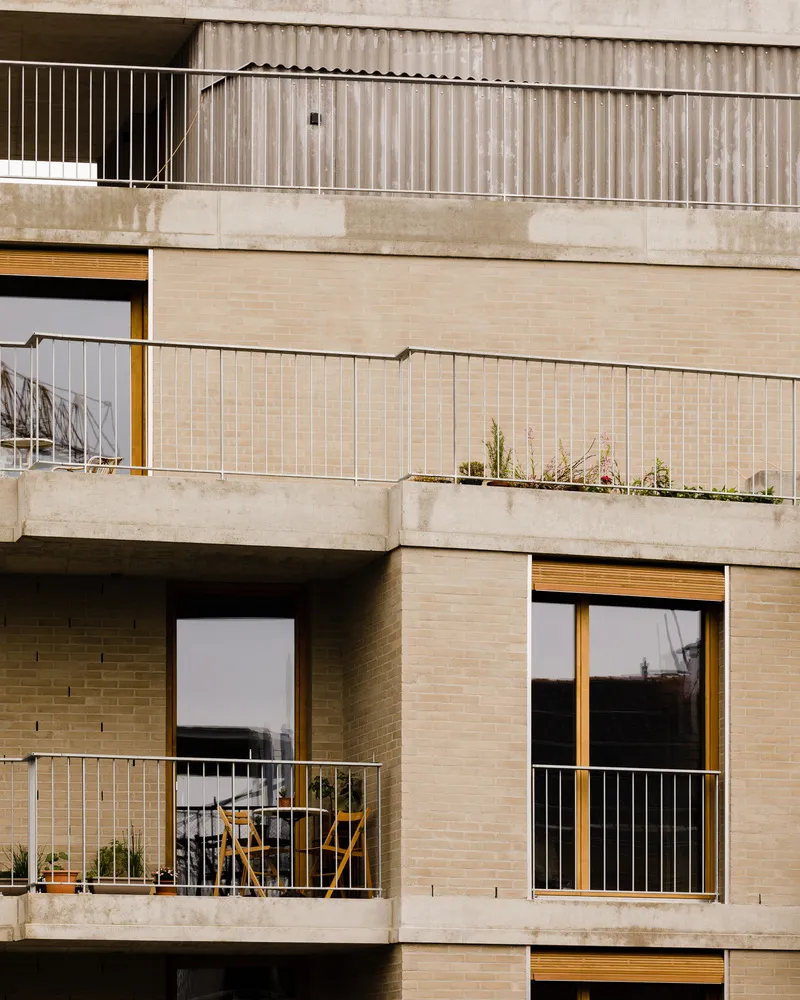
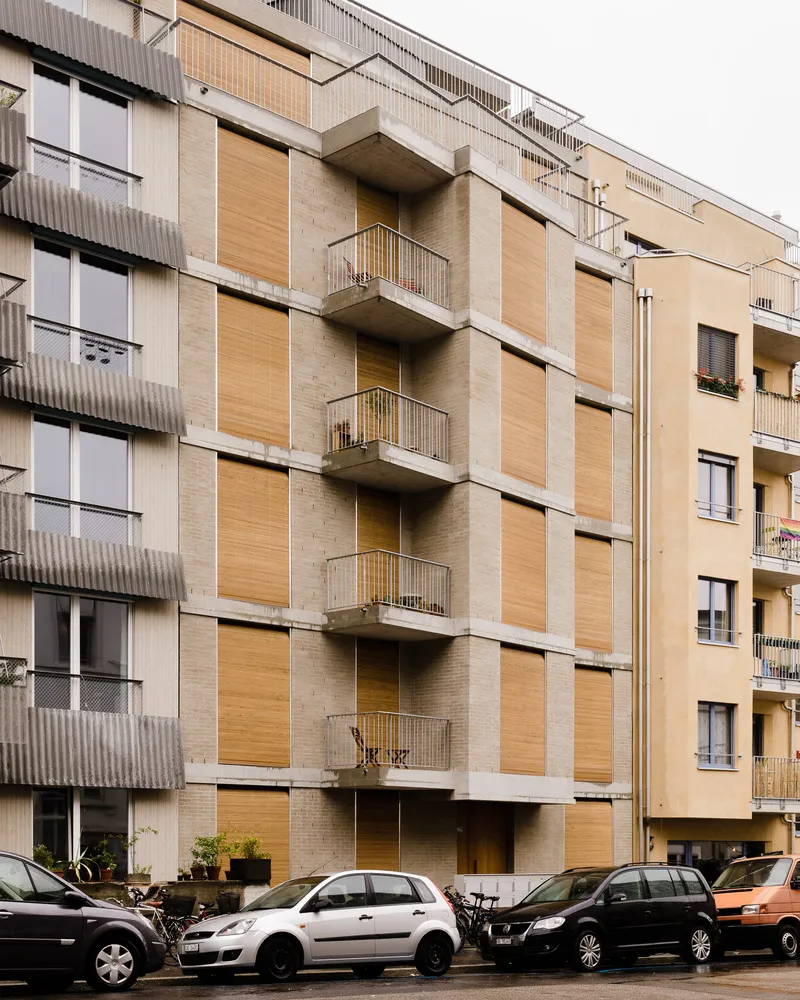
A noteworthy feature is the four-story-high bay window, which creates an inviting entrance and adds a dynamic element to the building's urban façade. This bay window is not just an aesthetic choice but also a functional one, enhancing the interior space and light distribution.
Interior Layout and Functionality
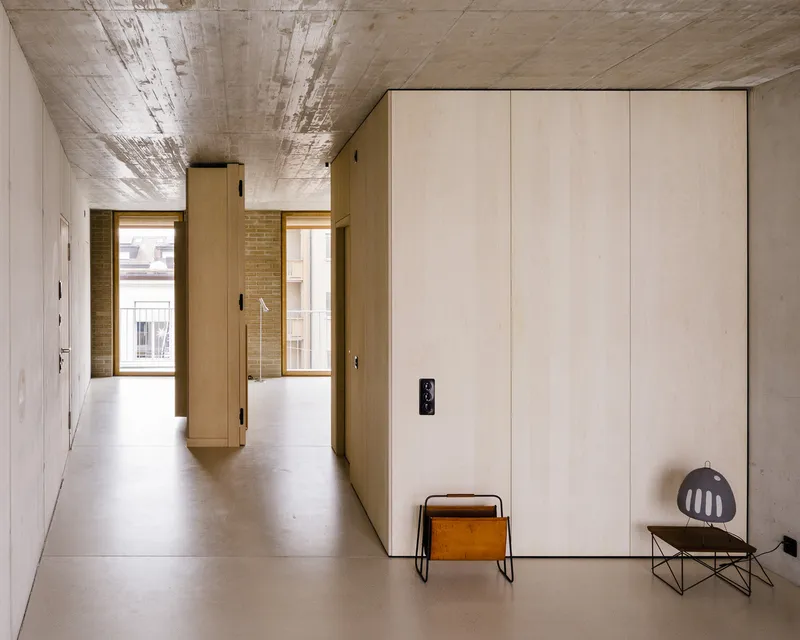
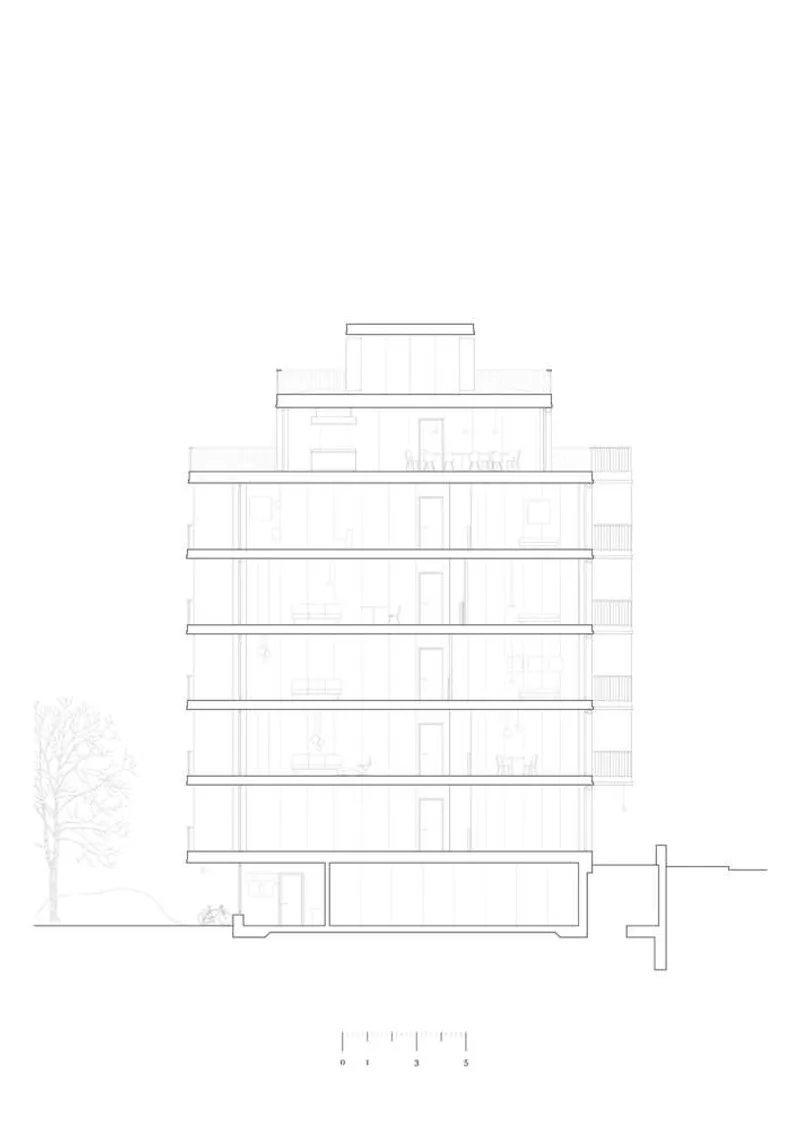
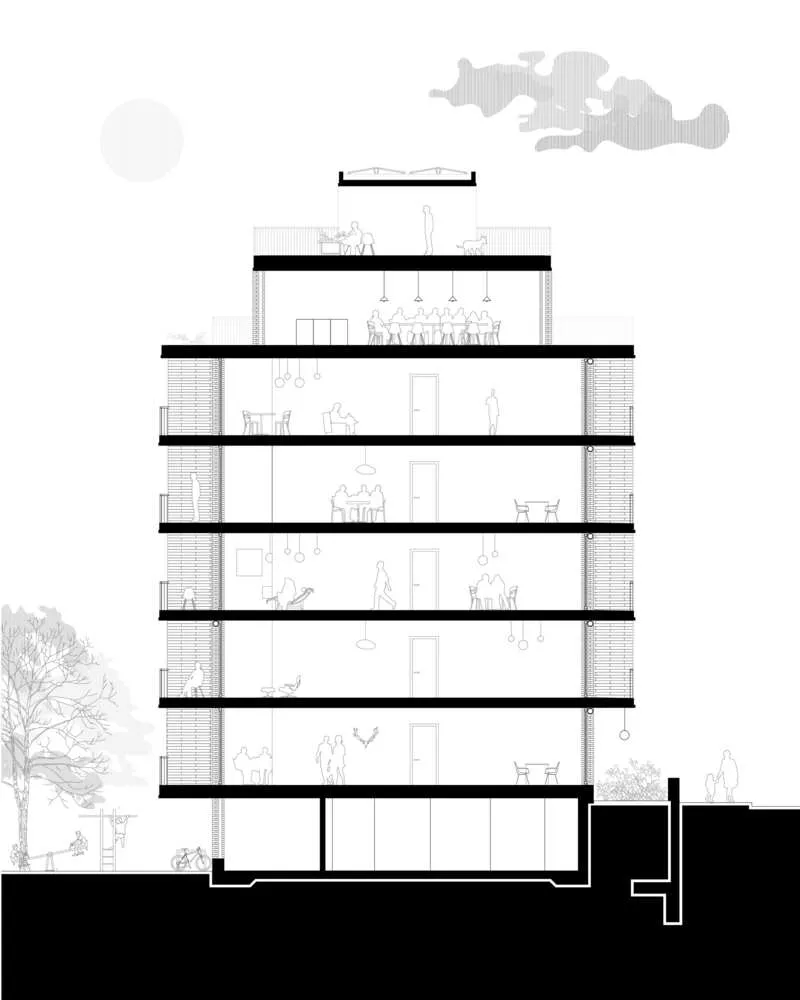
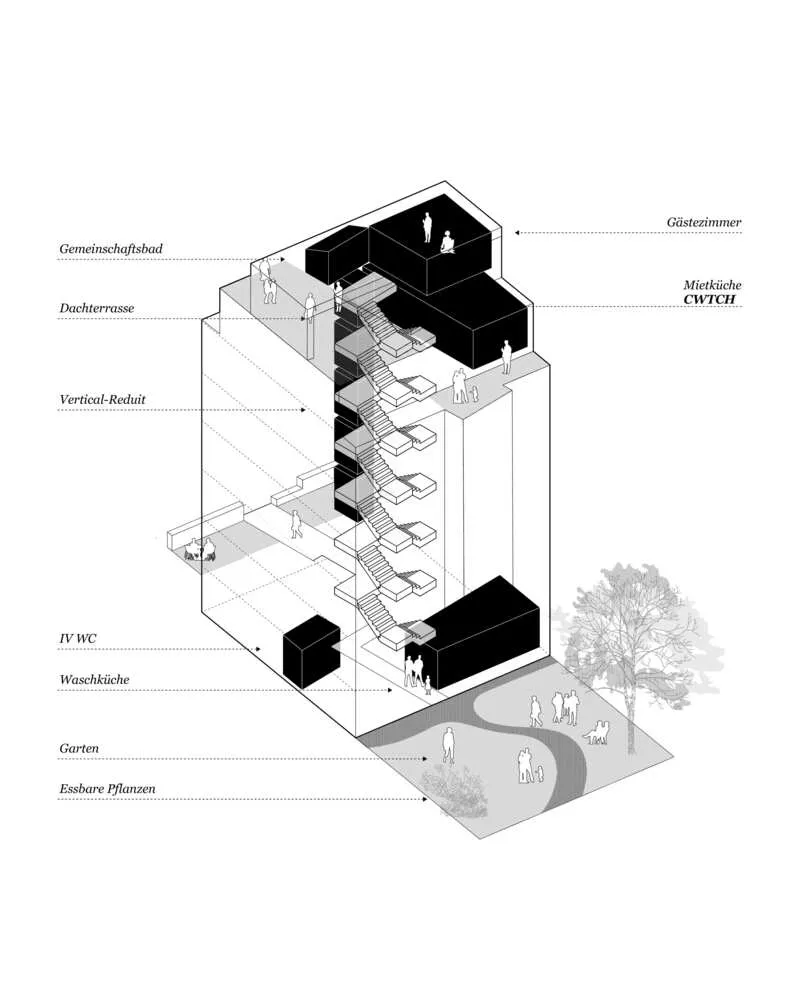
Inside, the building houses eleven apartments spread across five regular floors and a recessed top floor. These apartments vary in size, offering between 2.5 to 4.5 rooms, and are designed to be adaptable through the use of switching rooms. This flexibility caters to diverse resident needs and promotes a sense of individuality within the collective living model.
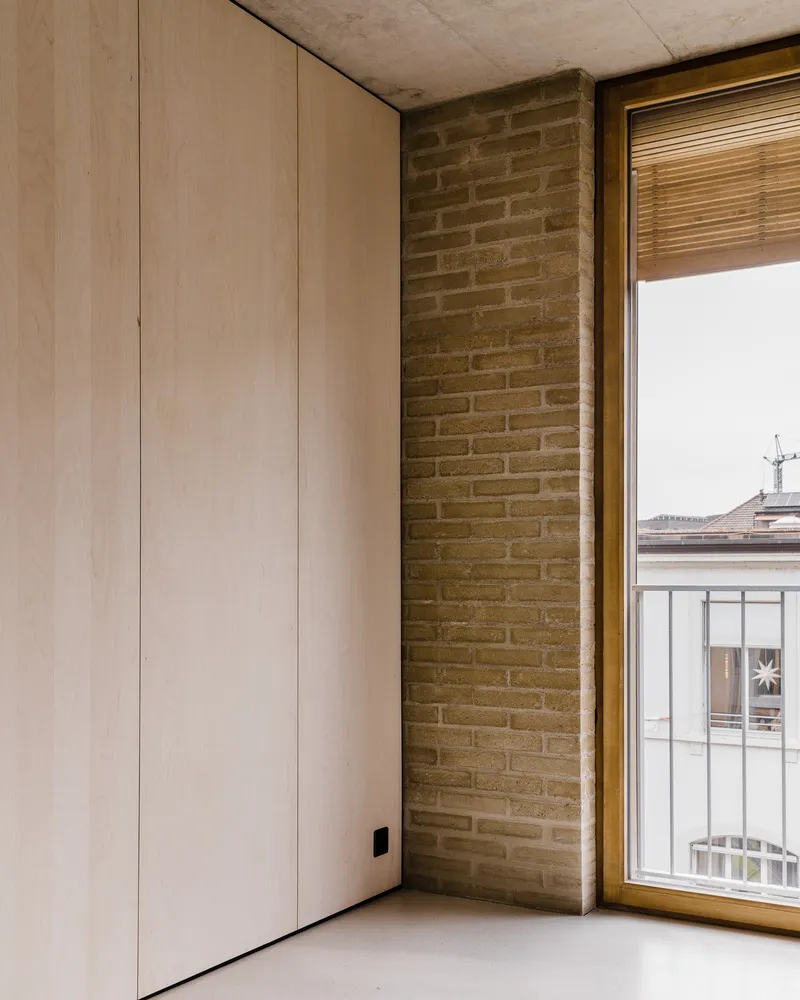

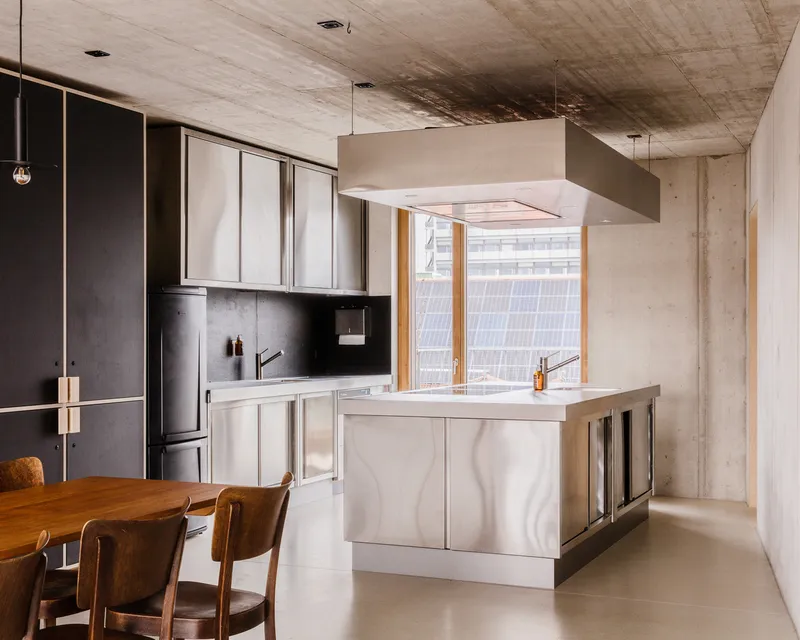
The interior design emphasizes the use of natural materials, with exposed concrete, Birchwood surfaces, and clay bricks creating a harmonious blend of hardness and warmth. Full-height Birchwood surfaces, slightly offset from the ceiling and floor, serve as room dividers and doors, contributing to a seamless flow within the apartments. Built-in installations ensure that space is utilized efficiently, with no wasted areas.

Sustainable Design and Community Living
NEUME's approach to sustainability is evident in their deliberate choice of materials and the building's energy-efficient design. The use of clay bricks and exposed concrete not only provides thermal mass but also reduces the need for artificial heating and cooling. The building's sun protection system, provided by Mensch Rolladen, further enhances its energy efficiency by minimizing heat gain during the summer months.


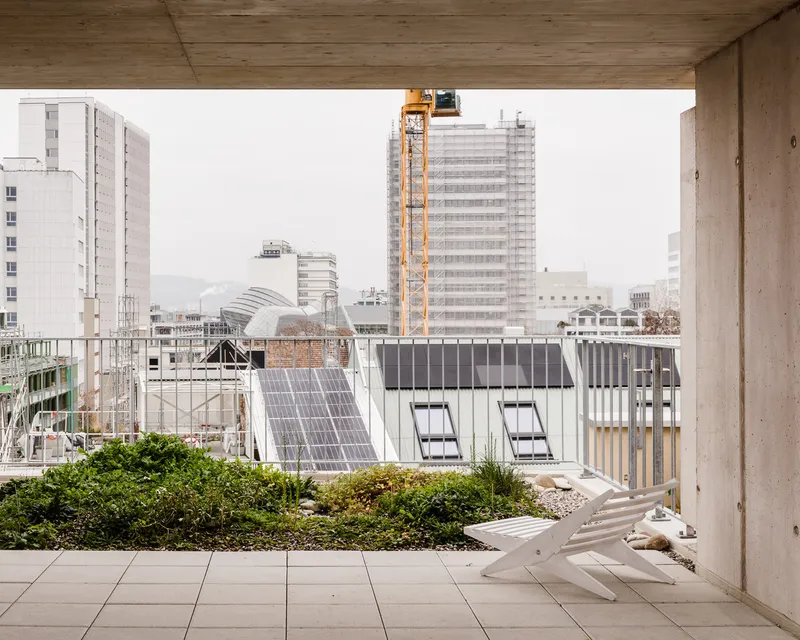
The cooperative housing model promoted by Dirty Harry is a response to the anonymity often associated with urban living. By fostering a sense of community and solidarity, this model encourages residents to engage with one another, share resources, and support each other. The top floor's commercial kitchen and rooftop terrace are prime examples of shared spaces designed to enhance communal living.


The Dirty Harry residential building by NEUME is a pioneering example of how architecture can address contemporary urban living challenges. By combining sustainable design practices with a cooperative housing model, NEUME has created a space that not only meets the basic needs of its residents but also fosters a sense of community and belonging. This innovative approach to housing serves as a blueprint for future residential developments, demonstrating that thoughtful design and community-oriented living can coexist harmoniously in the urban landscape.


All photographs are work of Daisuke Hirabayashi


Popular Articles
Popular articles from the community


David Ortega Stacks a Two-Story Mexico City Penthouse Around a Steel Stair and a Pergola-Shaded Roof Terrace
In Colonia Roma, a 300 m² penthouse uses oak joinery, a planted steel stair and a slatted roof pergola to make a new-build apartment feel like a house.

Jaramillo Van Sluys Arquitectura and Urbanismo Turn a Demolished Registry Lot in Quito into an Orchard Plaza
In Quito's Centro Histórico, a 2,800 m² plaza exposes the San Agustín convent wall and redraws its lost Augustinian orchard in volcanic stone.

LT2A and OPEN Architectes Thread a Brick and Glass High School Through a Wooded Belgian Campus
In Braine-l'Alleud, a 3,000 m² wing for Collège Cardinal Mercier pairs pale brick with a glazed colonnade, deferring to a small chapel and a dense wood.

David Macias Steps a Doorless Stone and Plaster House Down a Tropical Colombian Hillside
In the humid hills of Colombia, Threshold House replaces the front door with an open void and terraces its 850 m² down the slope instead of fighting it.

Similar Reads
You might also enjoy these articles

Yenisei Monitoring Center: A Sun-and-Moon Sphere Anchors a Research Campus on Siberia's Great River
In Krasnoyarsk, shifting square blocks, a glazed central sphere and descending window rhythms turn river science into a public spectacle on the Yenisei.
Andretta Artist's Village: A Node-Based Masterplan That Lets the Hills Write the Plan
A cultural landscape strategy for Palampur's artist colony threads studios, residences and stages along a porous spine shaped by the Dhauladhar terrain.
Street Children Rehabilitation Center: A Brick Campus That Eases Children From Street to Safety
A low-rise courtyard campus where learning streets, uthans and shaded verandahs stage a gradual passage from street into protective, family-scale life.

The NEON Culture: A Field of Pavilions Built for the 24-Hour City
Smaran Alva spreads galleries, stages, clubs and markets across a varied site, treating light, sound and ramped movement as the real building materials.

Explore Residential Building Competitions
Discover active competitions in this discipline

Comments (0)
Please login or sign up to add comments
No comments yet. Be the first to comment!