

The 'Right' Approach
An essay on a shocking revelation about Biomimetic Architecture and the steps we have to take moving forward.

Since its inception in 1969 by Otto Schmitt, Biomimetic Architecture has slowly become the next big thing in our profession. In eras past, our architectural ancestors created towering skyscrapers and monumental structures to shape the built environment, thereby creating a new ecosystem for society to dwell in. But as society progressed, we realized that the focus we gave to creating the built environment has had several major drawbacks. The steady rise of pollution and waste that started from the Industrial Era has finally come back to haunt us, and with its rise and effective ruin, we have thankfully shifted our focus into sustainability. This new awareness of this revamped philosophy (to reduce waste and pollution) has thrust Biomimetic Architecture to the center stage.
These days, sustainable movements such as these are all the rage and hype - but does it measure up? Will Biomimetics contribute to the sustainability problems of the world? Is Biomimetics working the way we think it is? Well, according to a research article by Louis Vitalis and Natasha Chayaamor-Heil in their paper entitled: “Forcing biological sciences into architectural design: On conceptual confusions in the field of biomimetic architecture”, there is a definitive confusion in biomimetic architecture, thereby saying that biomimetic architecture (as architects know it) has been non-authentic -- biologically speaking. With that in mind, where does that leave us (the architects) and biomimetics? From a personal standpoint, it was quite a shock to me to even see something like this published, let alone the definitive breakdown of everything wrong with a movement that we have expected so much promise from. Long thorough research aside, the main flaws of biomimetics (as the paper states) are the following:
“Biomimetic researchers often complain that biomimetic designs are not rigorous or lack theoretical consistency (Vincent et al., 2006; Lenau, 2009). They thus propose normative frameworks, so called “methods” that designers should follow.”,
“In other case studies, as in the one of the Beijing Stadium designed by Herzog & de Meuron (Vitalis, 2020), the inspiration from a bird's nest, simply has nothing to do with biology.”, and finally
“Discussing these misunderstandings, we tackled the problem of an authentic biomimetic architecture, that would not be reduced to a patch-up of engineering device neither to any filling of an urban scheme.”
To translate, Biomimetics (as we know it) is inconsistent, disconnected, and non-holistic. To a harsh extent, they’re not wrong.
First off, the systems of nature have been studied for thousands of years dating back to the Neolithic Revolution - if they have been studied for as long (maybe a bit longer) as history has been recorded, why don’t we have mastery over it already? It is simply because nature’s systems are complicated - our profession inadvertently set a ridiculously high standard, to begin with.
Secondly, the case against the Beijing Stadium is well-founded - it's a steep slippery slope if we consider this structure as a Biomimetic structure. Biomimetics has to go beyond recreating a shape found in nature. Case in point, if we consider the Beijing Stadium to be biomimetic then by the same logic, the Grand Lisboa Hotel in Macau can also be classified as biomimetic because it copies the shape of a lotus.
Finally, we can’t just use patches of technology to create biomimetic architecture - we have to apply a more holistic approach to the art of emulating from nature. We can’t just add automated facades or photovoltaic smart glass and call it biomimetic. After all, nature’s systems are more complex than we realize - it was true then, it is true now, and it still will be true in the future.
Now that the negatives have been laid out, another issue comes forth, has our profession truly created anything worthy of the title ‘biomimetic’?
According to the aforementioned paper, yes, there is! While the researchers have certain skepticisms regarding the project, The Eastgate Center, is objectively one of the most successful examples of biomimetic architecture - so much so in fact, that the researchers have essentially tagged it as an outlier, meaning that the design (in the researcher’s standards) is considered to be an ideal project for biomimetism (to an extent). While there are still some negatives that are yet to be addressed, it is a significant win for our profession to have created something objectively correct in the case of biomimetism. This means that while our approach isn’t perfect, there are positive takeaways from how our profession approaches biomimetic architecture, chief among them, is to design biomimetism holistically.
To design holistically should always be the agenda of every architect but it’s more important in biomimetic architecture than one might assume. As the researchers have stated, we can’t simply copy a form from nature and call it biomimetic architecture - it doesn’t and shouldn’t work that way, especially in this day and age where the main function of this architecture movement is to promote sustainability. What would be the purpose of creating a building shaped like a lotus if it doesn’t even function remotely like a lotus other than aesthetic preference? Why create a bird’s nest-like structure, if you won’t be using recycled wood or recycled materials, other than the aesthetic awe of the built form? We, being the architects, should be one of, if not, the vocal champions for designing with sustainability in mind.
Think about it this way, the cities and communities that exist today are the new ecosystems, and this new movement allows us to add more responsibly to these new ecosystems, lest we suffer another version of the sustainability problem. If we truly want to be a part of the sustainability movement, we have to approach it with the highest levels of artistry and science that we can muster. We can’t ignore the minute details of how nature works because to do so would be disingenuous - and to call our work biomimetic without a more enlightened and holistic approach to designing with the philosophy would be tokenism at best.
After everything stated above, after all the information, I believe that the last question to be answered now is, where do we go from here? Quite simply, the answer is this – forward. We go forward. We do what architects do best - we adapt. We adapt to this new information and we become more conscientious to what it truly means to design biomimetic architecture. While there is a research article that exists that indirectly discredits years of work by thousands of people, we have to be thankful for this coming to light. While the progress isn’t as broad or as grand as we might have hoped for, it is progress nonetheless. In my opinion, the reason why we haven’t achieved the big leaps forward that we have so hoped for is the fact that modern technology is still developing. We are still advancing our technology, maybe it’s time to advance more bio-tech so that society will benefit from it. Plus, this is architecture - it’s an art and a science. It’s not purely art or science. Since half of our profession is in science, we get to experiment on what works and what doesn’t - and someone finally told us what doesn’t work. Why don’t we use this information and pool our collective knowledge bases, listen to those in the know, and apply all available knowledge to answer the questions rooted in biomimetic architecture. I can’t tell you how to properly design biomimetic architecture because as of writing this, my preconceptions and supposed ideals on the matter have been cleared - what that does mean is that I am open to learning more and learning the proper way of designing biomimetic architecture.
As Bjarke Ingels once said, “I believe that architecture, as anything in life, is evolutionary. Ideas evolve; they don’t come from outer space and crash into the drawing board.” - with this new information we can do just that. We can adapt and evolve to create better designs. We have to. We need to. If we truly want to make an impact in the fight against climate change we have to push biomimetic architecture even further than we have pushed it. We have no time to rest on our laurels, or to assume that we know everything (especially since it’s been proven that we don’t). We have to be more connected, more in sync, and think holistically if we have any chance of creating something special. I for one am excited just thinking about a world where we can create as well as nature creates - only then will I truly feel the title, master builder, in all its majestic glory.
References (4)
Forcing biological sciences into architectural design: On conceptual confusions in the field of biomimetic architecture
ISBN: None
A History of Life Sciences
Publisher: CRC Press
ISBN: 0824708245 | Vol. 3rd Edition

Popular Articles
Popular articles from the community

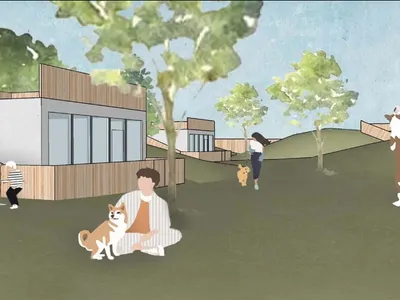
Temporary Home for Dogs: A Reversed Zoo Rethinks Animal Shelter Architecture
In Bucharest, a sinuous corridor and freed landscape flip the logic of containment, designing a shelter that works to make itself unnecessary.
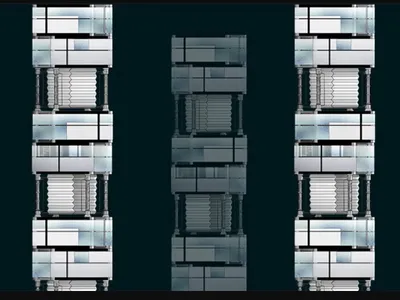
Tsunami Convergenics: Turning Catastrophic Ocean Forces into Underwater Housing Infrastructure
A speculative underwater settlement off the coast of Onagawa, Japan, treats tsunamis and typhoons as energy sources rather than threats.
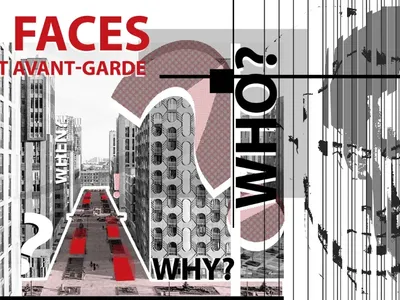
Faces of the Soviet Avant-Garde: Turning Moscow's Street Names into an Open-Air Museum
A network of sculptural installations across a Moscow residential district transforms forgotten architect names into spatial encounters with cultural memor
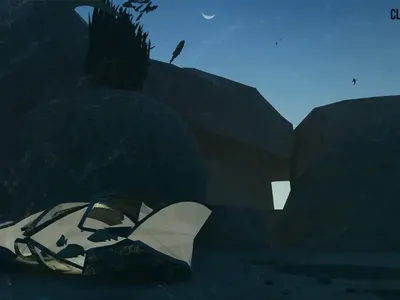
Cloaked Colonization: A Mobile Underwater Habitat That Moves Like a Fish
Micah Abaya's shortlisted EHC Pacific entry reimagines ocean settlement as a dispersed network of self-sustaining architectural organisms.

Similar Reads
You might also enjoy these articles

Shakur's House: Exposed Brick as an Interior Organiser in a 168 m² Mashhad Residence
Brick moves indoors in this Mashhad residence, where masonry walls, glass partitions and teal planes sequence a compact home without closing it off.

Day and Night Park: A Time-Based Urban Newsstand in Beijing
A temporary urban newsstand in Beijing blending travel, light, and reading through poetic colors, compact form, and community-focused design.

Modernist Patio Renovation in El Masnou, Barcelona by Oliver Segura Arquitectura + Cebrià Arquitectura
Modernist patio renovation blending tradition and innovation with a movable pool, leveled floors, and Catalan materials in El Masnou.

Alto Residencial Coop: Cooperative Housing Development in Santiago de Compostela by Carbajo Barrios Arquitectos
A linear cooperative housing complex blending white volumes and perforated metal façades, enhancing community living, natural light, privacy, and urban integration.

Comments (0)
Please login or sign up to add comments
No comments yet. Be the first to comment!