
The Story of Underearth -- Havada
Celebrating and exploring medieval - Beneath the ground

What was the concept behind the project?
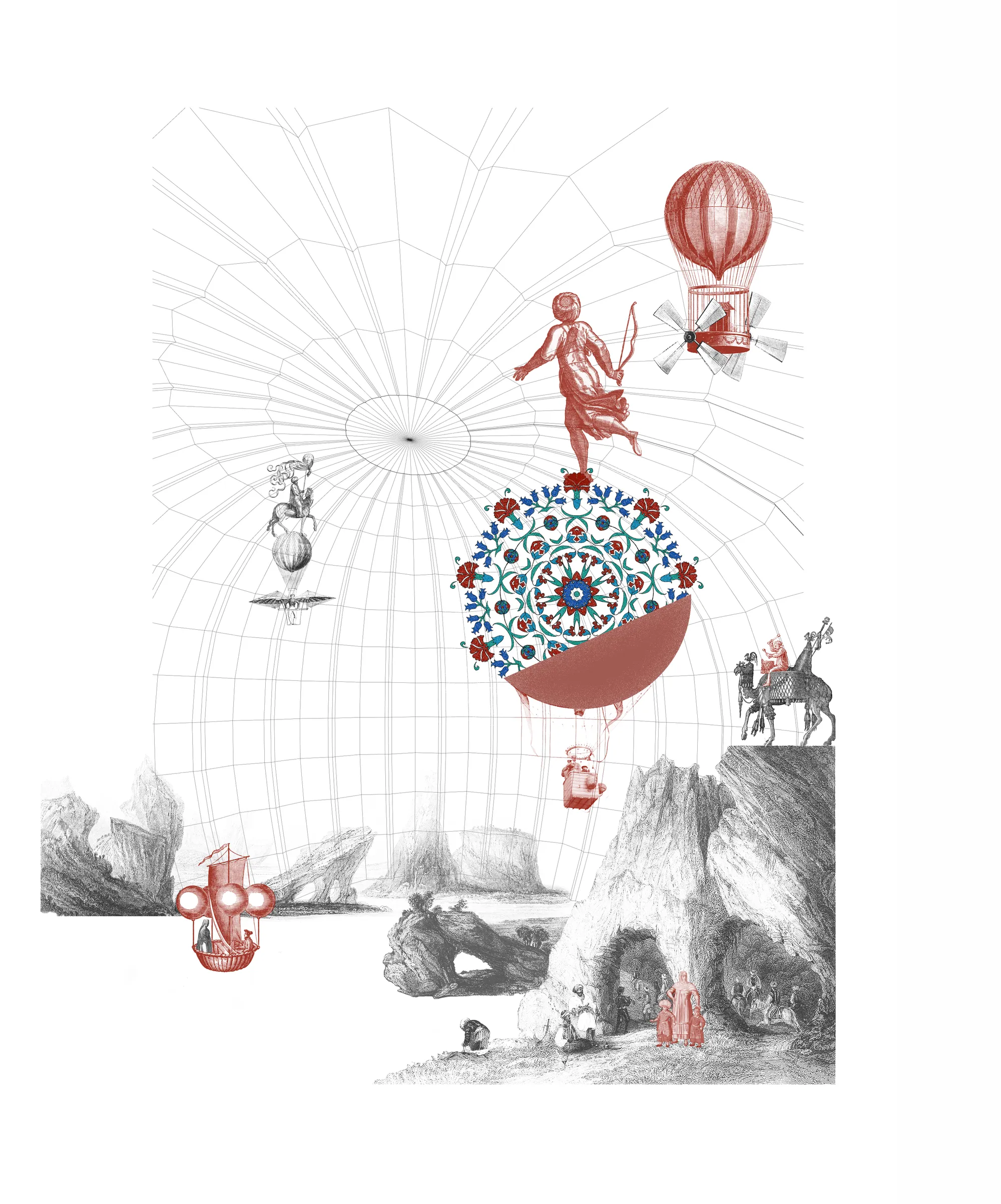
Havada is a doorway, anchored on earth, to the skies. An alter-dimension of sunken skies and earthen seas. Its labyrinth of passageways and chambers vivifies the ancient passion to voyage through the shoreless seas in search of residence and shelter in the unfathomed underground world, free from topographical obstacles. All visitors who venture in are invited to board yet another one of Cappadocia’s drifting orbs, as Havada evokes one of the most prominent features and unforgettable sights of the lands and reimagines the form of hot air balloons, turning positive space into negative space within its caverns and halls. As such, visitors are under-earth, but also Havada, the Turkish adjective for in the air, afloat, and aflight.
Underground cities such as Derinkuyu were created in the olden days when the varying Cappadocian landscape was deemed uninhabitable or unideal for living. Whilst present technology has paved the way for building high-rise and other terrain defying structures, it is crucial that we reflect on the relationship between the under-earth and surface, and once again realize their inter-connection.
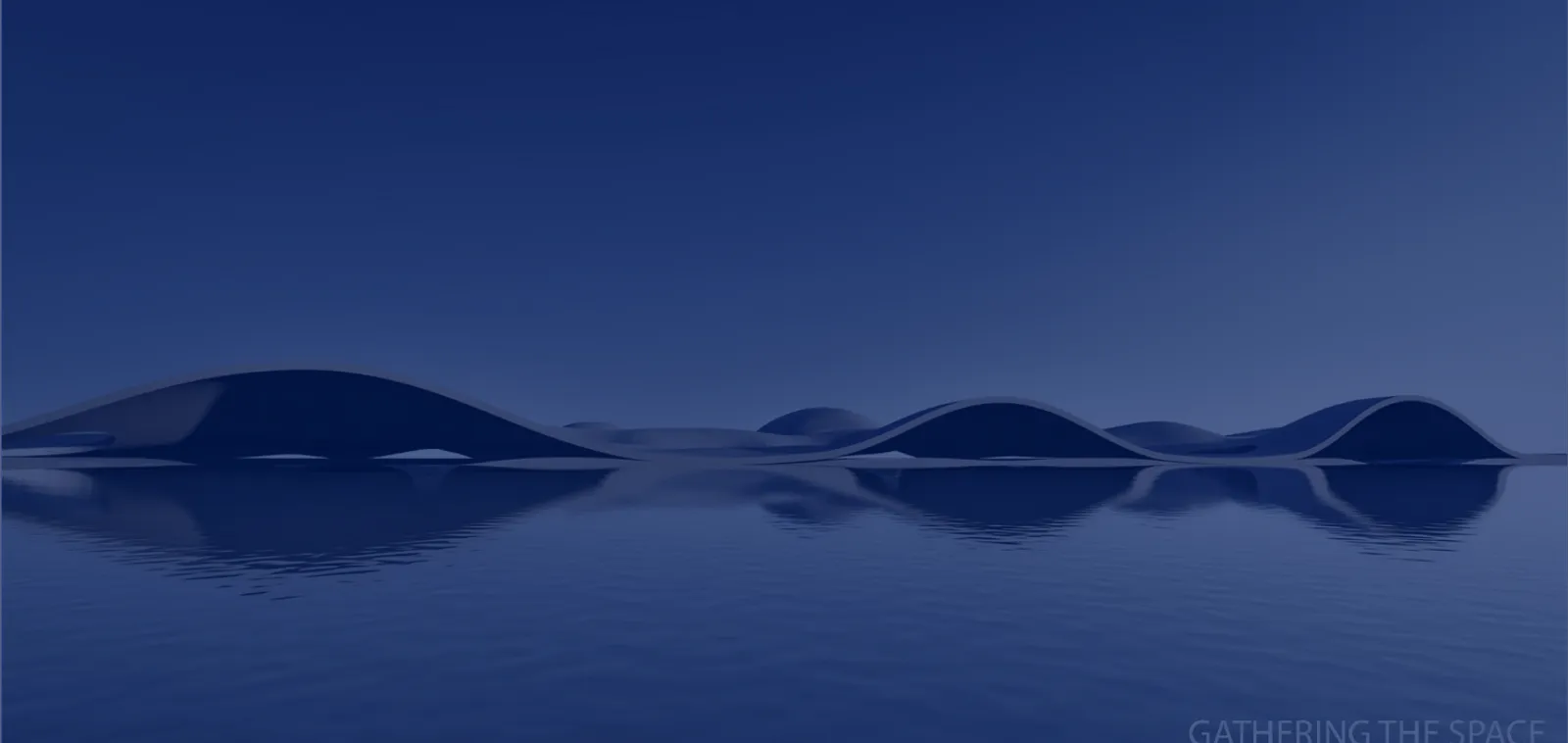
The motif of the hot air balloon, the vessel that removed the “bound” in “earthbound” and allowed people to touch the vault of heaven, is translated into an architectural language that is seen throughout the design of the museum. Its playful outline can be sought out in the arches, the barrel vaults, the skylight, and the qubba domes, where the vernacular and organic landscape of Derinkuyu is modernized into new meandering pathways that encapsulate the marriage of the new and old ages. Thus, the museum becomes the shuttle across the loom that knits the strings of heaven and earth into a new Kilim, an heirloom of Cappadocia.
What was the intent behind the organization of elements across various levels (Architectural, Site, Urban)?
In staying loyal to the existing landscape that borned the underground cities, the museum design seeks to impart minimum expropriation and disturbance to the existing scenery. This aligns and furthers the previous vision to lay the museum on earth as a Kilim that marks and blurs the elemental distinction.
The structure above-ground imitates the look of ruins at the city’s outskirts, where the outward facades give a clean and sharp finishing to couple with the surrounding structures and streetscape. In contrast, the interior walls are rough and mimic natural rock caverns to recreate the presence of the underground city.
The amphitheatre at the centre provides an open public space for the neighbouring communities and all who pays a visit. Designed for casual meetups, leisure activities and performances, it will be the new social and cultural hub that draws citizens closer to each other and the underground museum, which is aptly within sight through the chiselled skylight. A minimalist impression of the museum at the entrance level is thus realized, creating a contrast between what is already seen and yet to be seen underground.
Upon entering the museum, visitors alight a cantilever that serves as an observation deck, a horizontal platform that temporarily quells the undulating waves of the rocky formations as visitors stand suspended in midair, overlooking the double volume space of the surrounding environment. This is closely followed by a series of feature galleries, from arched corridors delving into the Cappadocian history and abstracted caverns studying the geology of the site, to a labyrinth that unravels not just balls of threads but the culture of the people, and a concept room that showcases the intent of the design, of Kilim fibres that bind the earth into one. Visitors wander along these arteries of Havada whilst reliving the downward excavations of their ancestors, and unearth their own cultural identity, as they eventually arrive at the heart of the museum, a domed lobby. A floating walkway that runs through the length of the lobby is encircled by a hidden corridor with echoes of the Derinkuyu entry arches, splayed under the luminescence from the light well that maintains a visual connection to the above-ground spaces.
How many iterations were tried to arrive at the final outcome?

Devising the design strategy was rather straightforward once the feature galleries, main concept rooms and programme was decided and settled. A final conclusion was reached after experimenting with the different curation and circulation that revolves around the main lobby and traverses between the art galleries and thematic permanent exhibitions. While the idea of incorporating a grand staircase that penetrates the levels of the underground museum was entertained, escalators are opted as the better alternative to facilitate visitors flow.

More time was trained instead on the surface designs, including the amphitheatre, cascading stairs, the landscaping, and how they can be embedded into each other for a minimal finishing in line with the design rationale.
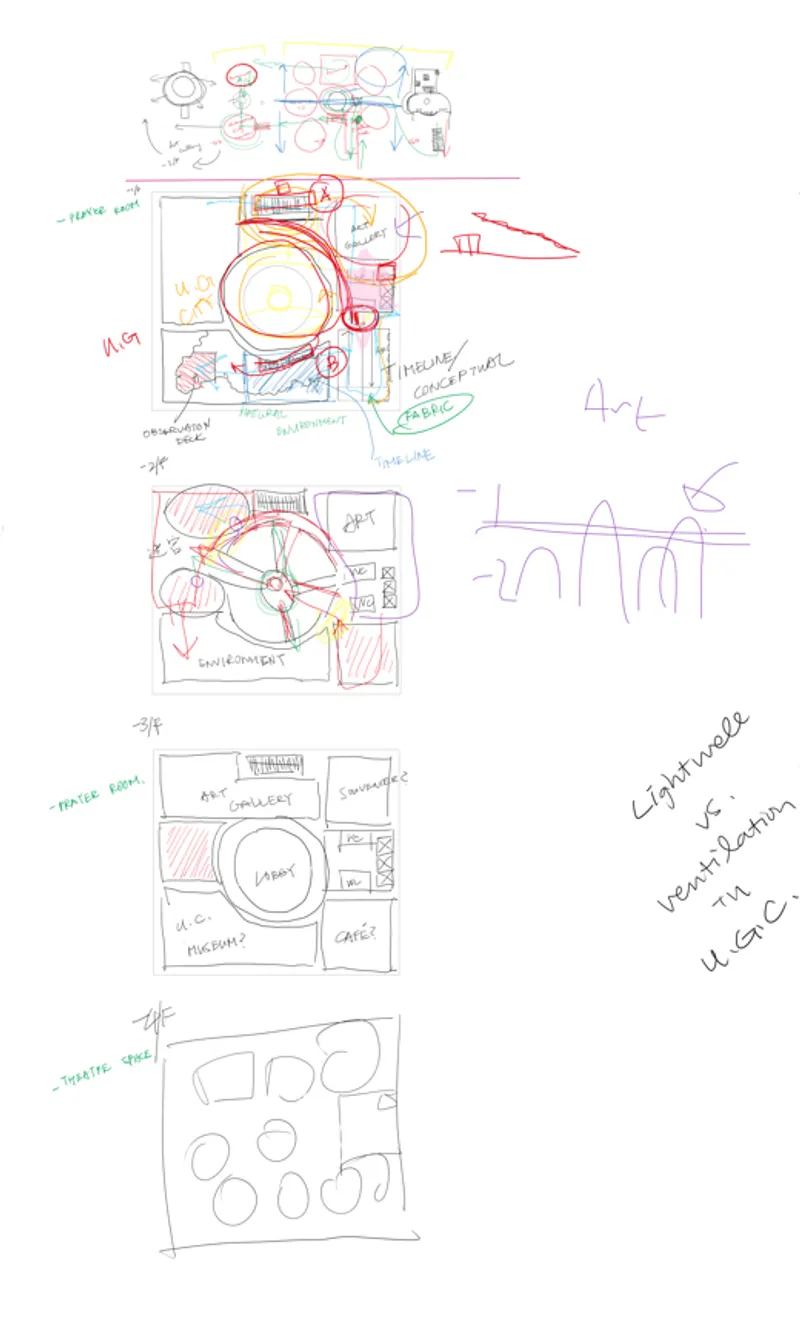
A study of Derinkuyu and Cappadocian culture was first conducted before initiating the design process, in hopes to capture and continue the genius loci of the area, which was deemed the foremost consideration and deciding factor to the museum design. The recurring motif of arched and circular designs came as a pleasant surprise, which are so often seen in hot air balloons, architectural elements, religious celebrations, and arts such as mandalas and Turkish mosaic lamps. It is from these findings that our initial sketches sprang from. To further refine the multi-sensory experience of the underground city in Havada, the materiality of the design is oriented more towards textural clay mediums, where the range of Adobe, rock, sand and polished concrete conglomerated into a symbiotic architectural system that embodies Havada’s hybrid spirits.
Towards the western corner of the museum, a chimney slits through the underground volume and rounds off with a small dome to tackle the ventilation problem just as the ancient Cappadocians had done with their underground cities.
Havada, the underground museum citadel, thus takes off to the rhythm of its people and the heartbeat of the land.


Popular Articles
Popular articles from the community


Conexión: Biophilic Design Reimagines High-Rise Living in Hong Kong
Conexión reimagines high-rise living in Hong Kong through biophilic design, green facades, shared spaces, daylight, water and nature within.

Play: Fragments of Their World
Familiar architecture becomes modular playground design, creating safe spaces where displaced children can learn, connect, imagine and play.

Hill & Cross Opera: Sculptural Opera House Architecture Shaped by Tallinn’s Landscape and Identity
Hill & Cross Opera reimagines opera house architecture in Tallinn through its sculptural hill, civic plaza, glass wave and a luminous cross.

Co-Life: Senior Housing Design That Reconnects Older Adults With the City
Co-Life reimagines senior housing design through healing gardens, shared streets, workshops, and a sustainable community across generations.

Similar Reads
You might also enjoy these articles

The Rhythm of Seasons
A Farmers' Market Connecting Nature and the City


More Than a Building-Designing a Living System
More Than a Building-Designing a Living System
Base Beyond
DESERT COMPOUND ARID: TOURISM OF ABSENCE AND ABUNDANCE




Comments (0)
Please login or sign up to add comments
No comments yet. Be the first to comment!