Vertical Aurora
Journal of the competition: Fire Tower


Intro
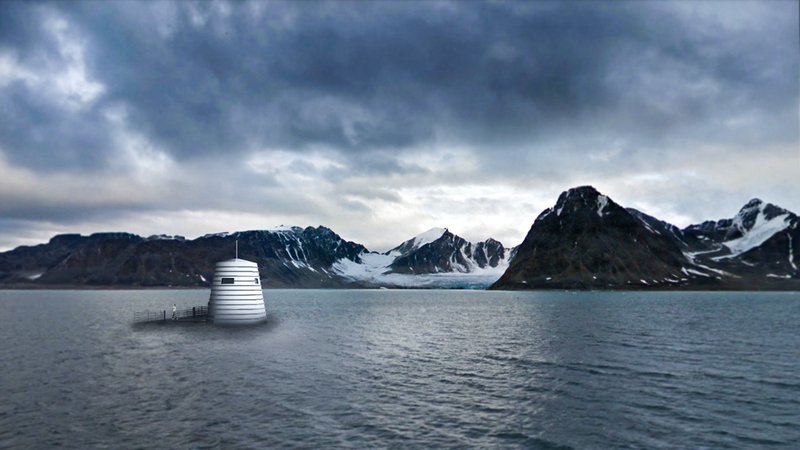
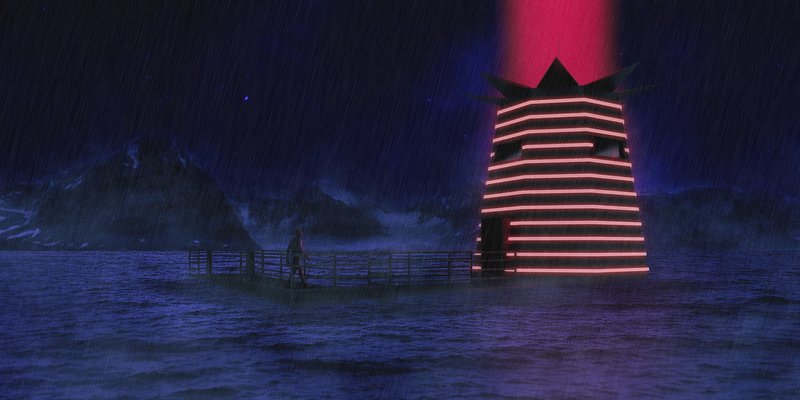
In today’s world, the concept of the “Lighthouse” has changed through time as technology has developed so far. In the competition “Fire Tower”, the designers are expected to re-interpret the idea of lighthouses into today’s world. As architecture has no boundaries as it depends on imagination, the designing process of my proposal “Vertical Aurora” takes references from various sources of other disciplines such as video games, sci-fi movies, and fictional books.
About the site
The site is located in the northern hemisphere, near to north pole. This means that the climate will be at its extremities when it comes to the term “cold”. This leads me to design thick walls with aluminum cladding, to minimize the danger of the low temperature. Also, the site is located on the sea, including both shallower and deeper parts of the seacoast. I tried to locate the structure on the shallower part as I propose levels underneath the water level. Another site input that was challenging was the duration of daylight throughout the year. As the site is located near the north pole, half of the year is constant daylight, and the other half is constant dark. I wanted to attract tourists’ attention as dark period as well, that is why the structure has different functions both in daylight and in no-light. Finally, the site is located near the routes of cruise ships, meaning that tourists are the main users to experience the structure from the sea. In the island of Spitsbergen, the inhabiting is lacking, and as there are no more lighthouse keepers in today’s world, I wanted to maintain that quality in my design and tried to make the structure as self-functioning as possible.
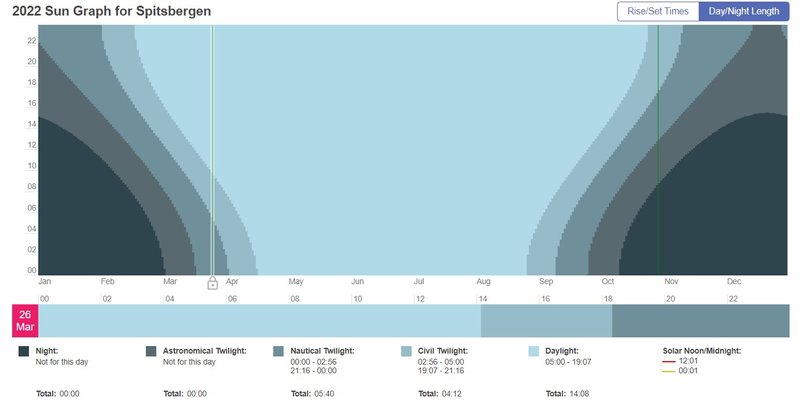
Source: https://www.timeanddate.com/sun/@2728573, the image shows the annual daylight of the site.
The concept
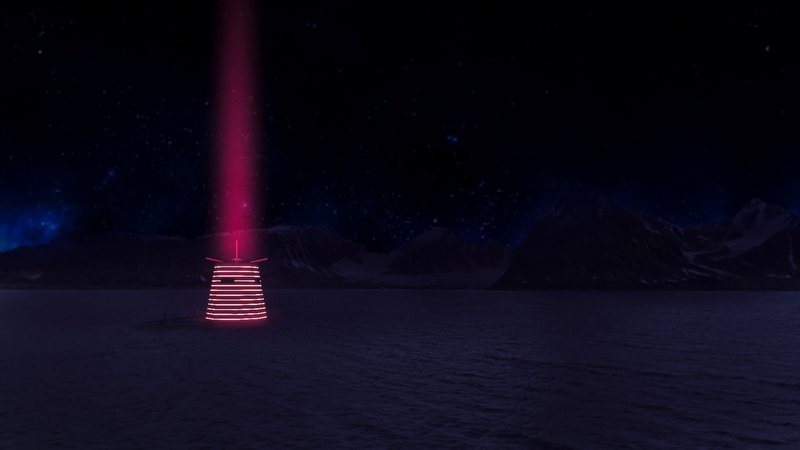
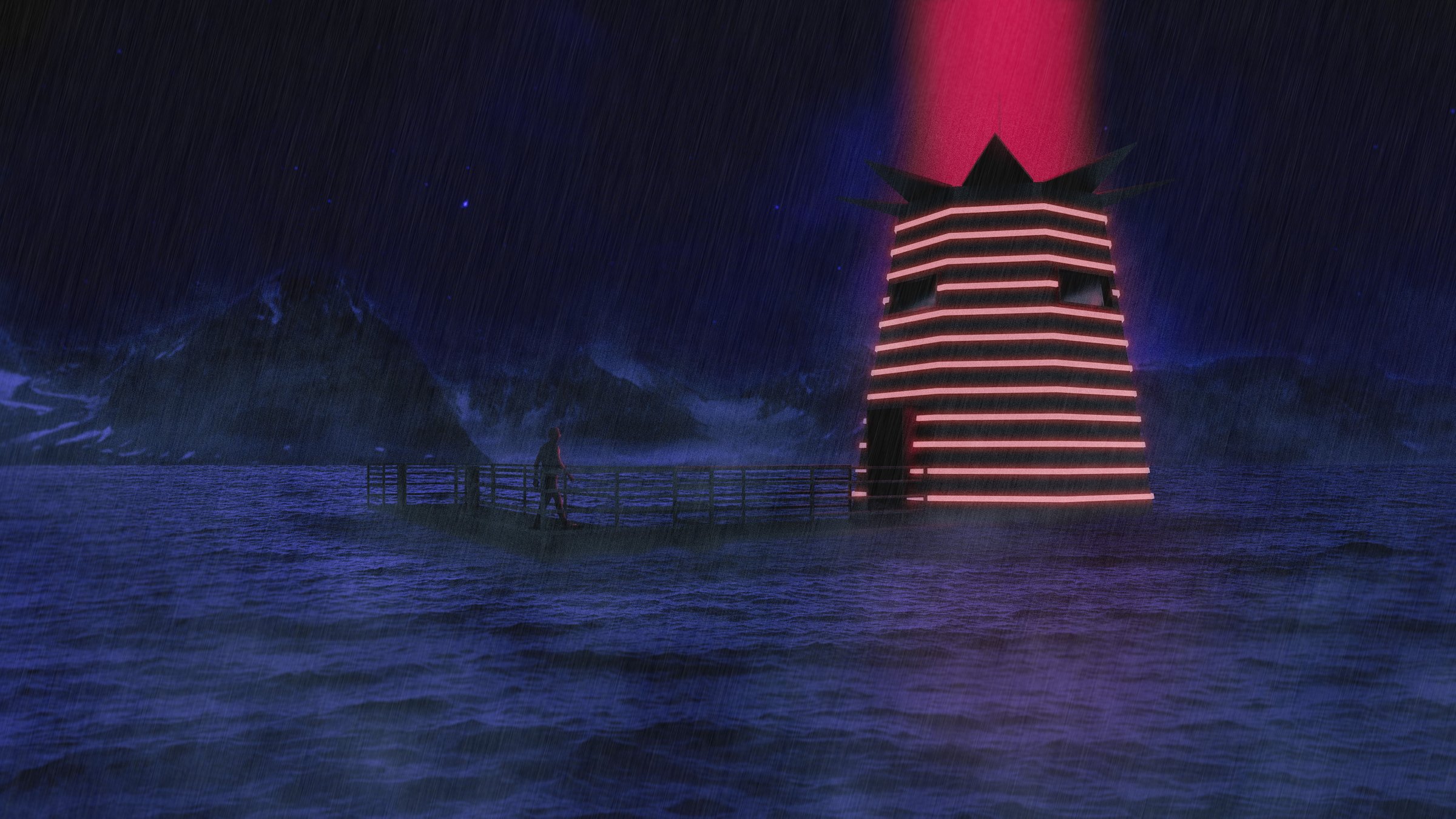
The main function of a lighthouse is to make sailors find their way. There used to be coals and fires, and even Fresnel’s system that reflects light so that sailors can find their way. In short words, it is a visual radar. However, in today’s world, people use radar transponders (GPS), which makes the initial methods completely useless. I wanted to resurrect the visual checkpoint idea and thought about the natural lights that are occurring near the north pole, which are auroras. What if the structure can create artificial auroras with the use of light projectors that can not only as a checkpoint but as a visual manifesto to the people near the location? That is why I split the function into two: The period in which daylight dominates the year, the lighthouse will act as a monument as its solid presence in the sea, and in the remaining periods it will create an artificial, vertical light that serves a checkpoint. This is where the design gets its name. As it contains a radar transponder, the distant wayfinding will occur via the most contemporary method.
The 7 meters height challenge and form-giving
One of the greatest challenges in this project was the height limitation of the structure. Lighthouses are designed for observing the surrounding, that is why they are built on the highest locations; plus, most of the examples around the world are at least 20 meters in height. As there is a strict limitation of the structure in this design challenge, the structure I propose somewhat tries to break that limit with the long vertical light it produces. If solids and voids do not suffice to obtain verticality and monumentality, maybe a visual element can break this rule. For the form-giving part, it is logical to have a cylindrical form for resilience when it comes to the lighthouses. Still, due to the limitation of height, the form occurred as a polygonal prism that shrinks from bottom to part, to represent the monumentality better in that scale.
Materials/ Resiliance
Many of the lighthouses are made from thick layers of masonry, to protect the interior from the environment. “Vertical Aurora” also has thick load-bearing masonry walls, and for extra protection from harsh climate conditions, there are aluminum claddings that help form the plain texture of the facade. The facade is also texturized by continuous layers of linear light panels that also reflect the solid presence of the structure in the pitch dark.
Conflict 1: Functionality vs. Self-functionality
Normally inhabitants are living near the lighthouse, to keep the lighthouse functioning. However, due to GPS systems, lighthouses are not needed to be kept by people. Even though the proposal includes a control room with a wet space, it will not be used every day. That is why it is a single structure supported with a dock so that the users can access the structure from the seacoast with a boat and control the activity of the lighthouse.
Conflict 2: Sustainability vs Self-sustainability
Another one of the greatest design challenges the site offers is the lacking of daylight through the half of a year. As Vertical Aurora promises an artificial light creation during night times, there must be a way to produce the required energy for that and it was impossible with implanting solar panels into the structure. What is unlimited in seas? The answer is the tides. There are tidal panels implanted underneath the dock structure, supplying energy for the production of light during night times, and to store energy during daylight. The idea is shown in the elevation drawing. In this way, the energy is produced naturally, and no pollution is done.