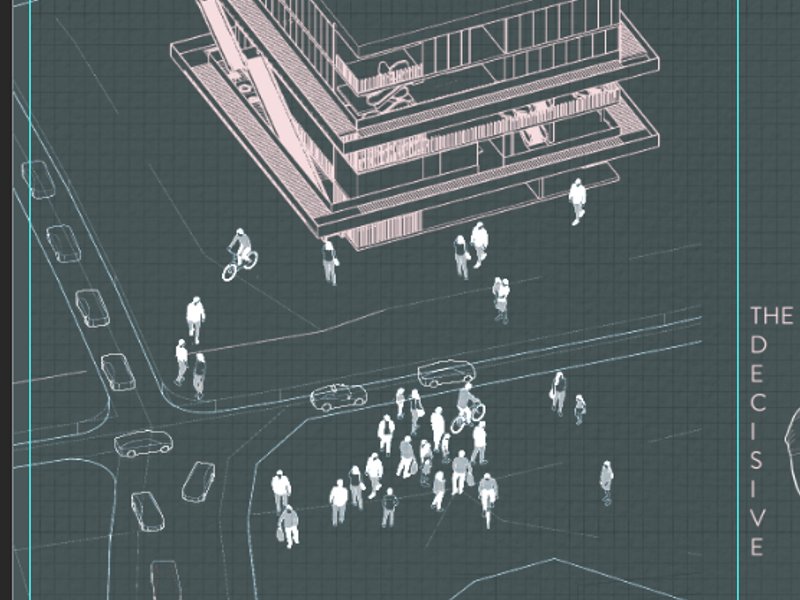
Furniture Mall 2.0
In today’s world where work from home is prevalent, the domestic realm no longer serves its sole purpose as a place to rest. With this changing landscape, public retail spaces are an opportunity to fulfill this need as a realm of repose, while catering to current issues - thriving in an age of capitalisation, intrusion of domestic realm, and the spatial strategies amidst the COVID-19 pandemic. The retail space is a furniture mall, one that envisions the shopping experience to imitate a long walk in the park. Playing on the idea of routes, we let users decide if they want to enter retail showrooms as piques of interest arise from the display viewing platform. With multiple winding experiences in the circulation route that allow you to see something new at every turn. This actualises the concept of having a space to rest as the mind relaxes in the journey, like how an unpredictable outdoor space allows for anticipation without participation. This reverser static mall seeks to land itself in the Orchard Road shopping district of Singapore. In the heart of the hustle and bustle, there is peace and tranquility to experience, to see the lively spirits from close proximity without actually engaging in it. With the pandemic as a conceptual gamechanger, the furniture mall is one that is unidirectional in circulation from bottom to top, aided by escalators, a spatial strategy to curb potential of different customers intermingling. It also caters to two demographics - the browser and the decisive shopper. The latter persona has become more relevant with more shoppers now going out only when necessary and economic uncertainty encouraging planned spending on consumption. Thus, there is an outer escalator that brings shoppers direct access to where they need to go. This mindset has influenced our window display for items in the shop as well, from one that is static to a mobile and rotating visual display to attract potential customers. In a technology-savvy retail space, customers will not make their purchase at a counter but instead order through a mobile application, adding to cart and making payment online. Additionally, the furniture mall utilises an internal conveyor belt system to transport items from the storage on the respective floors down to the self collection space. The same mechanical system is used to restock items that had been delivered by lorry on the first level.

Similar Publications
Discover more publications you might be interested in


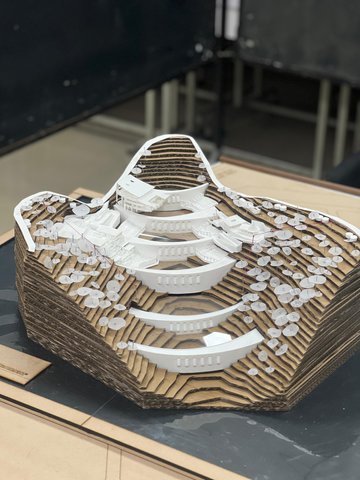
प्रवाहः Harmonizing Water, Culture, and Environment


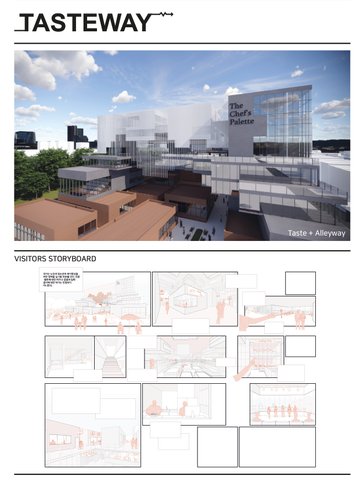






Educational Strength: Building a Resilient School for the Future










Comments (0)
Please login or sign up to add comments
No comments yet. Be the first to comment!