Abode
Biophilia in Architecture for better living
OVERVIEW

Img 1: A representative image of humans’ innate desire to connect with nature. Source
Premise
The Biophilia hypothesis outlines a fundamental tendency in human beings to be attracted to nature and emulate its processes and structures in everyday life. More broadly, human beings subconsciously seek connections with other forms of life, due to our evolutionary dependence on it for survival and personal fulfillment. How this idea is relevant in daily life can be seen in the way humans travel and spend money to sightsee in national parks and nature preserves, relax on beaches, hike mountains, and explore jungles.
Some biophilia advocates believe that humans have developed a lifestyle far removed from what may be considered natural, and biophilic design may foster happiness and well-being among us. Thus, when applied to architecture, it is indeed a welcome call for more sustainable and human centric design. This is especially true given the rapidly deteriorating living conditions in cities.
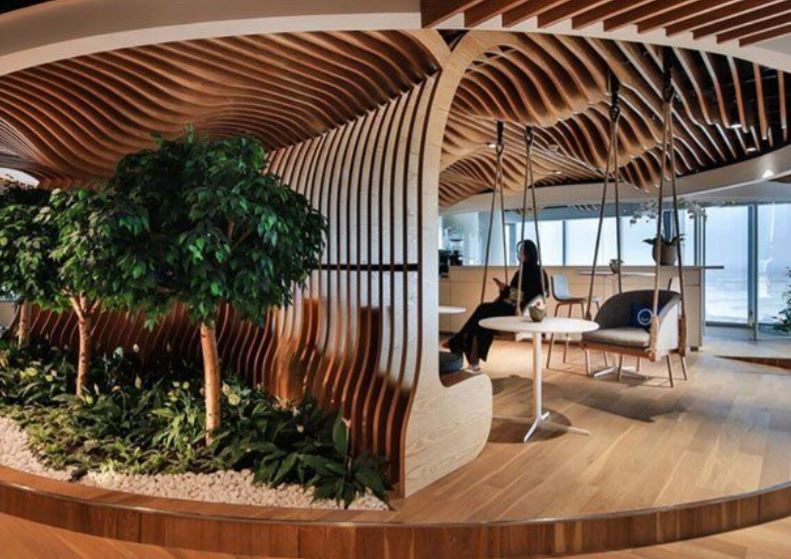
Img 2: An example of the application of Biophilia in interior architecture in an attempt to produce more pleasing environments. Source
Biophilia and Architecture
Biophilia in buildings, when applied correctly, serves much more than mere aesthetic. Especially in workplaces, biophilic design has yielded tangible positive impacts on employee productivity, well being and mental health. It has also been proven to reduce stress and enhance learning, apart from aiding in improving patient recovery times in hospitals, reducing crime rates in residential areas, and increasing learning ability and test results in schools.
Among its many intangible benefits as well, it is believed to have engendered an appreciation of nature and natural habitats in humans.
However, despite the proven advantages, the proliferation of Biophilia as a practice, especially in residences where we inevitably end up spending the most time in our lives, remains severely limited.
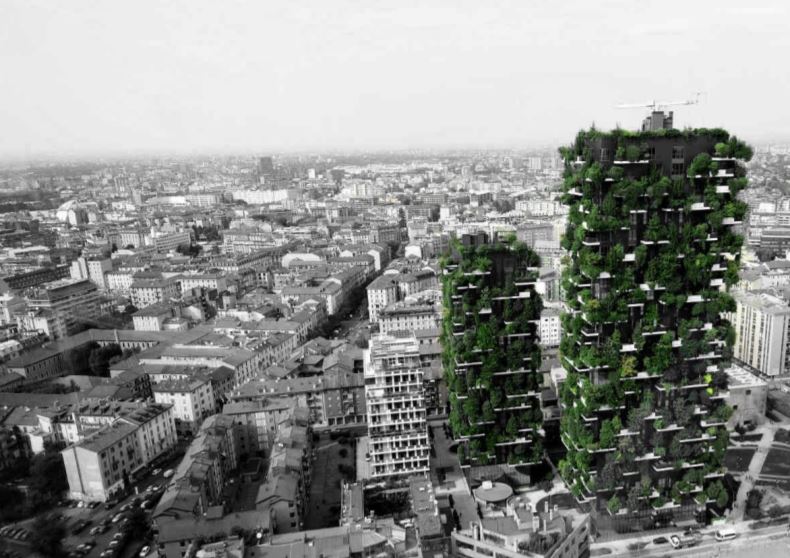
Img 3: The Bosco Verticale in Milan, Italy, an example of Biophilic architecture sustained within its relatively concrete surroundings. Source
Issue
Modern lifestyles seem to have not only taken a toll on our mental well-being, but our cities as well. As a result of the density/space paradigm, most of them have transformed into vast concrete jungles, resulting in increasingly reduced avenues for human interaction with nature. Despite its immensely therapeutic impacts, the only building typology that seems to be acknowledging Biophilia’s transformative role in building design are workspaces and offices. That too, a select few.
A working individual may be spending a majority of his/her time at work, but their homes are where an individual spends the most time out of their lifespan. Our habitats are where we seek physical and emotional respite. They serve as havens where some of the most important events of our lives take place. However, within the current urban and economic scenario, most of us make do with only a single residence throughout our life, that too one lacking natural provisions that constitute a better quality of life.
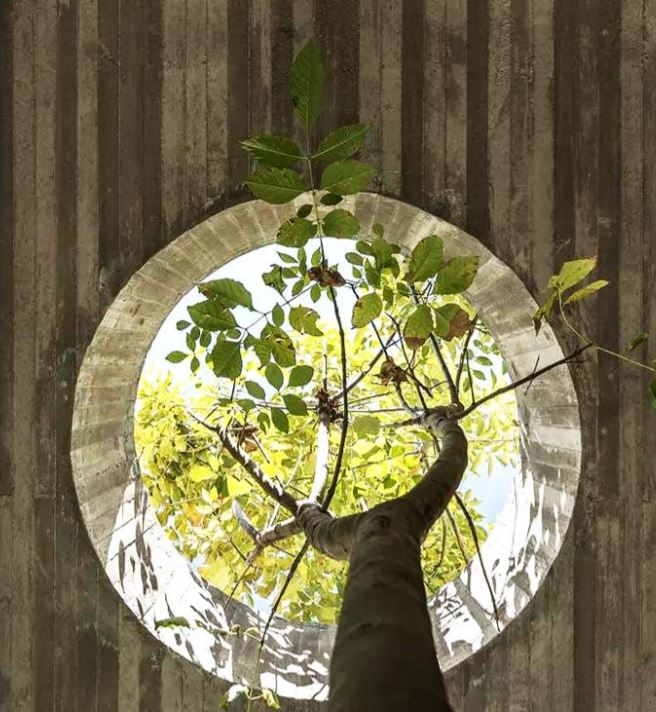
Img 4: Tacuri House in Quito, Ecuador by Gabriel Rivera Arquitectos. Source
Can Biophilic principles in Architecture and Design aim to improve quality of life in modern cities?
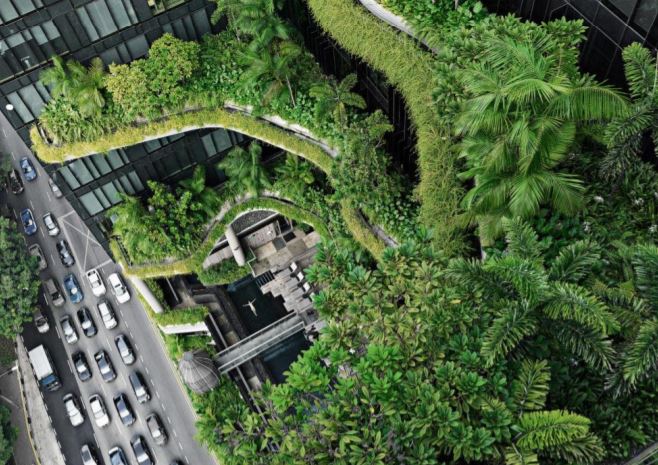
Img 5: The Park Royal in Pickering, Singapore, one example of the many biophilic buildings in Singapore. Source
Brief of the competition
The challenge is to design a residential tower with 75 housing units on the site provided, incorporating biophilic design principles. The size of the unit is homogenised to a 2.5 BHK unit (2 Bedrooms + 2 Bathrooms + Hall + Kitchen + Study) so that the design’s clear impetus is on biophilia.
The design is intended to improve the quality of life of its residents, while providing them more opportunities to personally engage with nature in a bout to improve their mental health and relieve stress. More so, the design challenge urges designers to look beyond simply designing towers with vertical vegetation. A common misconception about Biophilia is that it is simply designing buildings with greenery. However, it is more than just bringing the outside in. It's about making and strengthening a connection with many aspects of nature through natural light, views of nature, plants, natural materials, textures and patterns, all of which holistically combine to create a biophilic design. This is what the challenge wishes to manifest.
Objectives
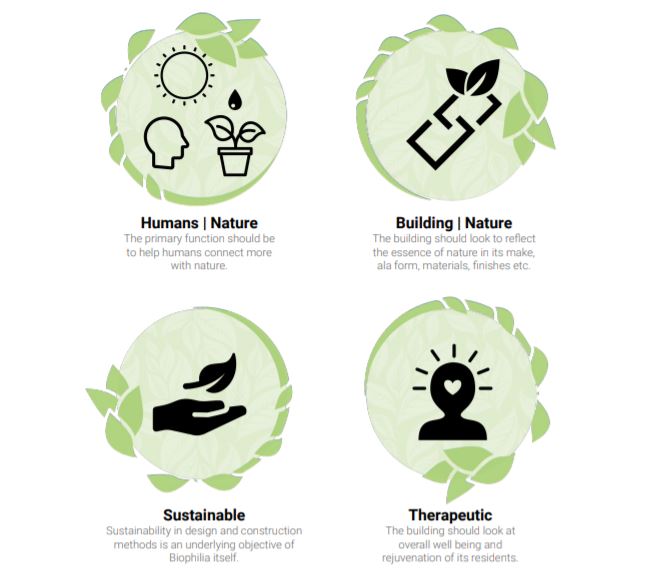
The above objectives can be a point of beginning to conceive this design. Participants can assume a mixed demographic and family size before initiating their design process.
Deliverables
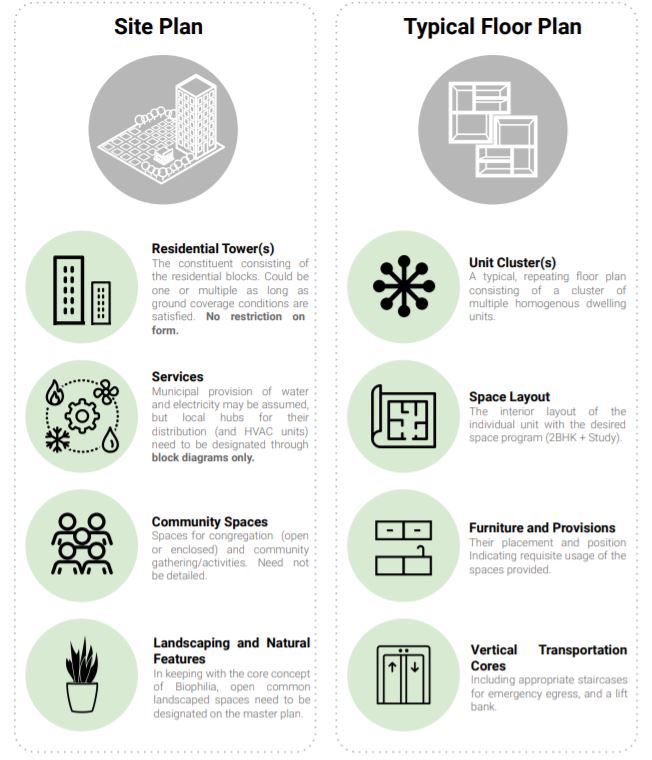
Participants must note that all site level provisions can be given in a single block placed either on the surface, in the basement (depending on the nature of the function of the facility) or incorporated within the main tower. Additionally, apart from the residential facilities, the rest of the provisions only need to be earmarked/designated on the masterplan and not detailed.
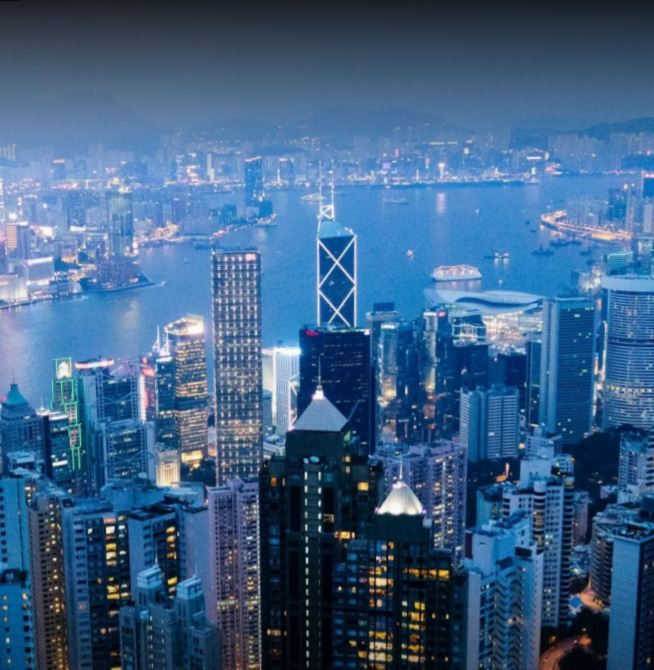
Hong Kong, China
Officially called the Hong Kong Special Administrative Region of the People's Republic of China (HKSAR), the city of Hong Kong is identified as one of the densest cities to live in around the world. The special territory has become one of the world's most significant financial centres and commercial ports. Hong Kong ranks highly in terms of infrastructure development and the Human Development Index, having one of the highest per capita incomes over the world. With a highly sophisticated network of road and services, it is also commonly known as the city with the highest number of skyscrapers in the world.
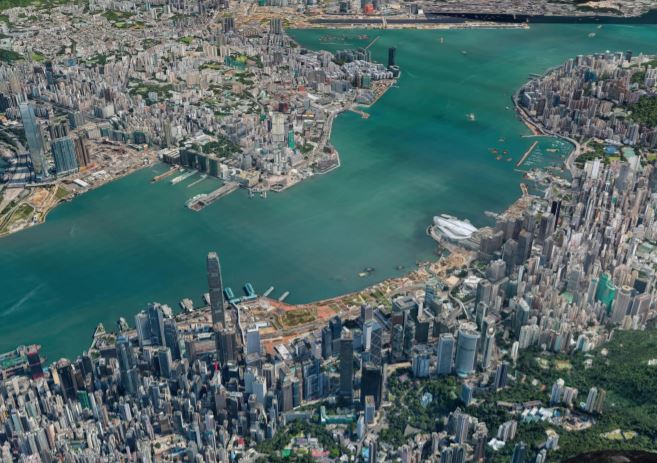
Img 6: Aerial view of the Kowloon Bay
Kowloon Bay
The Kowloon Bay area consists of the body of water and the city named so, located at the east of the Kowloon Peninsula and north of Hong Kong Island. The city has primarily been built on reclaimed land, and the bay too has undergone massive reclamation of land from the sea. The bay was roughly divided into two by the 13/31 runway of the former Kai Tak international airport (closed in 1998 and now occupied by a cruise terminal), jutting out into the sea and occupied by the ocean on three sides. Kowloon Bay Depot, the first MTR depot, is also located in the area.
The area is among the more affluent and prosperous areas of Hong Kong city, and its skyline, particularly near the shore is dotted with numerous skyscrapers belonging to high profile business conglomerates, along with a few housing towers.
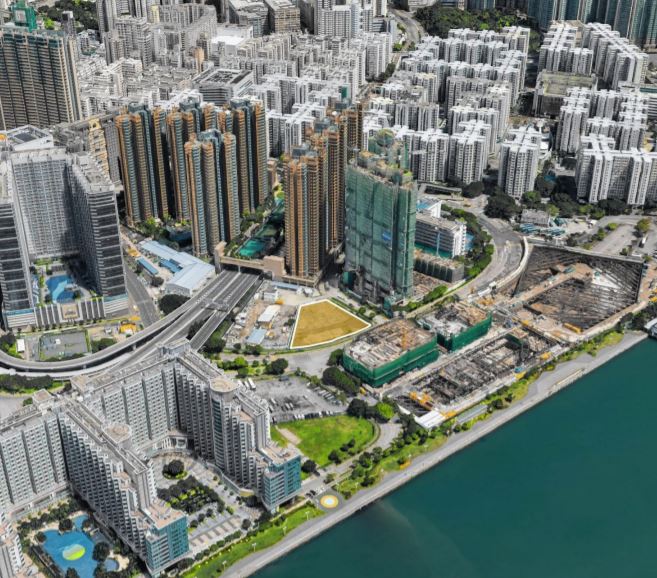
Img 6: Aerial view of the Kowloon Bay
Site Plan
The city of Hong Kong has a very high built to open density with a number of skyscrapers in nearly every block, and the site so chosen in the Kowloon Bay area reflects exactly that. The rapid development that Hong Kong has experienced has rendered the city into a concrete jungle with increasingly shrinking green pockets. The site so located thus proves to be an interesting testing ground for Biophilia in architecture. Its proximity to the South China sea and its vantage prove to be perfect to harness closeness to nature for the welfare of its residents.
- Site Area: 2591 sq. m.
- Site Coordinates: 22°18'05.2"N 114°11'12.5"E
- FAR: 5
- No. of Units: 75
- Ground Coverage: 40%
- Height Restrictions: None
- Setbacks: 6m on all sides