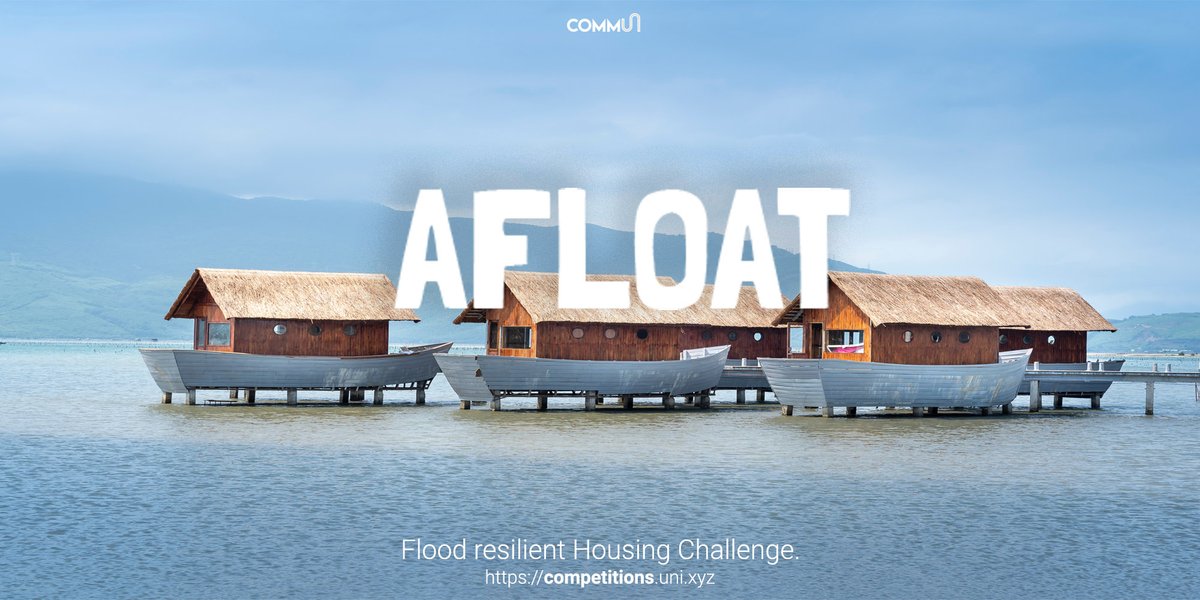
Afloat
Designing a water resilient neighborhood
OVERVIEW

Img 1: A voice against Climate Change
Premise
With her slogan “How dare you?” Greta Thunberg awakened millions and questioned the leaders across the world on Climate Change and its impact.
A global change in weather and other adverse indicators have displayed that climate change is not a distant future anymore. Although the timing, scope and magnitude of the consequences of global warmig remain uncertain, the potential risks continue to grow.
Reduction in Greenhouse gases, mitigation and control of water and air pollution through policies, and other adaptive measures that may seem prudent today are proving to be insufficient for tomorrow. Forest fires, Floods, droughts, receding shorelines, rising global temperatures, are some of the natural disasters that have substantially increased in the past decade.
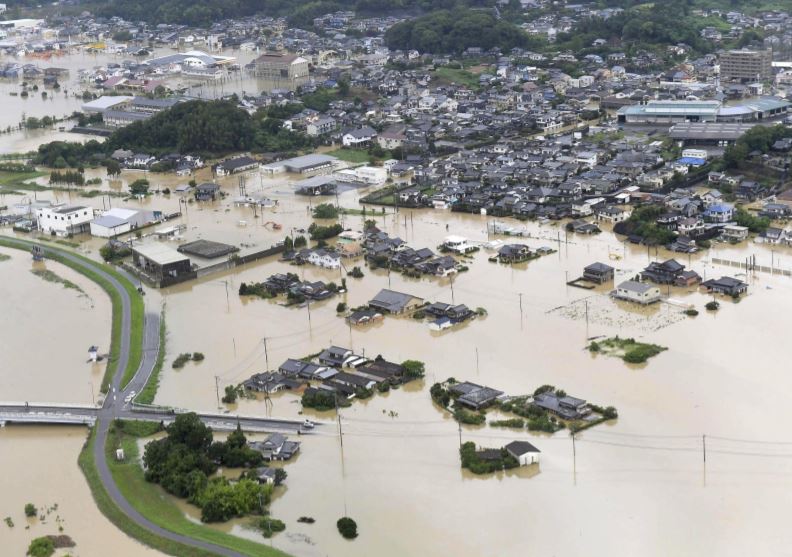
Img 2: Source
Sinking Cities
Flooding is one of the most frequent natural disasters that has occured as a consequence of Global Warming and Climate Change. Torrents of rain caused floods in South Asia in 2017 affected over 40 million.
Rising sea levels are now said to be responsible for receding shorelines and would cause the submerging of some of the major coastal cities. The new research shows that about 150 million people that are now living on land will be below the high-tide line by 2050. Cities like Mumbai, Shanghai, Jakarta, etc, lie under this zone and are at great risk They are on the front line of climate adaptation as they are the ones likely to be most affected. Combined they are home to more than half the world’s population and generate roughly 80% of global GDP.
Cities will find themselves in the epicenter of this challenge in no time.
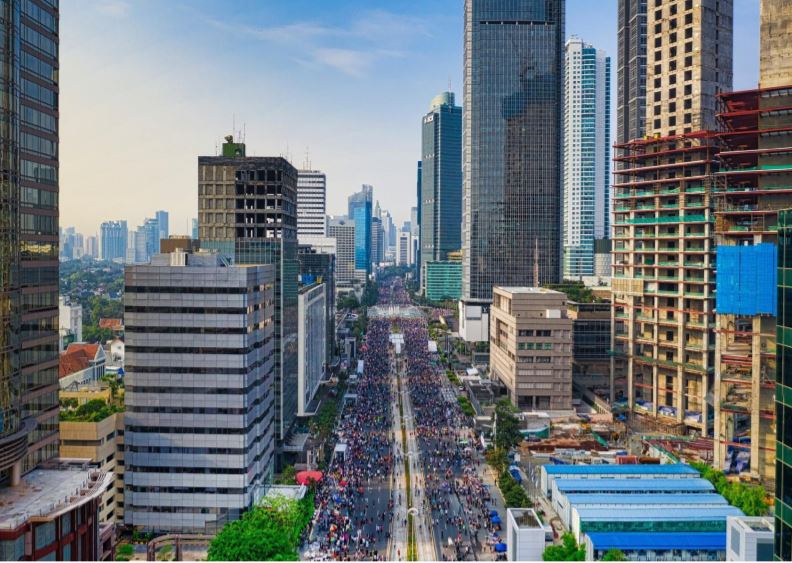
Img 3: Aerial View of Jakarta
Jakarta
Jakarta, is the capital and largest city of Indonesia situated on the northwest coast of the world's most populous island of Java. It is the centre of economy, culture and politics of Indonesia with a population of more than 10 million as of 2014. It is a pluralistic and religiously diverse city. As the capital of Indonesia, Jakarta is the melting point of cultures of all ethnic groups of the country. It is Indonesia’s booming metropolitan which attracts migrants in search of work from all across the country.
The northern part of Jakarta is plain land, some areas of which are below sea level and subject to frequent flooding. They are falling at an estimated 25 cm a year. This is majorly attributed to land subsidence from the over-extraction of groundwater and Climate Change.
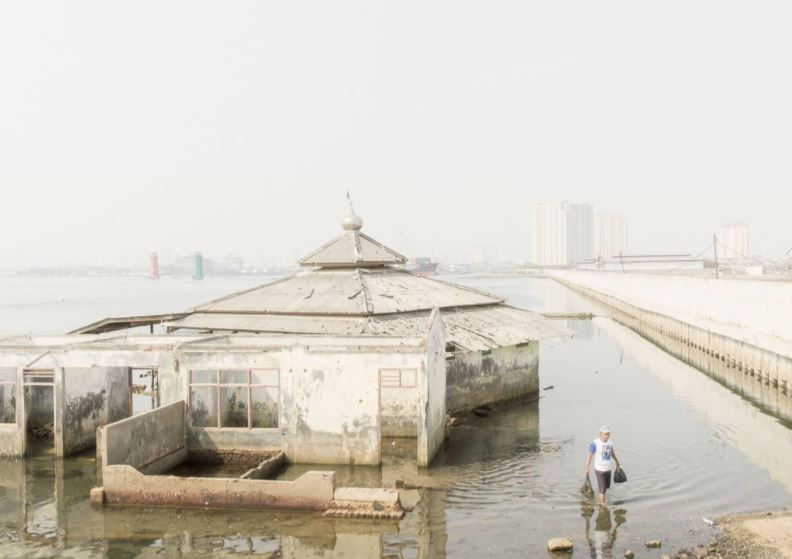
Img 4: Source Image Credit: Christoffer Rudquist
Brief of the competition
In the light of predicted water levels, the Govt. of Indonesia has begun the relocation of their capital city Jakarta to Borneo. It is something environmentalists are questioning, due to the scale of its impact on the existing rainforest. This approach is an escape rather than a solution for impending crisis. While we know that the city of Jakarta has already been inhabited and damaged, can design resolve this for the inhabitants of the future by adapting to aquaculture that is going to prevail after major parts of the city have submerged.
Can we be prepared for what is coming ahead and create a retrofit for areas of North Jakarta and design resilient habitats that can be replicated?
Brief: The challenge here is to create a prototype of a replicable Flood Resilient Neighboorhood in Jakarta.
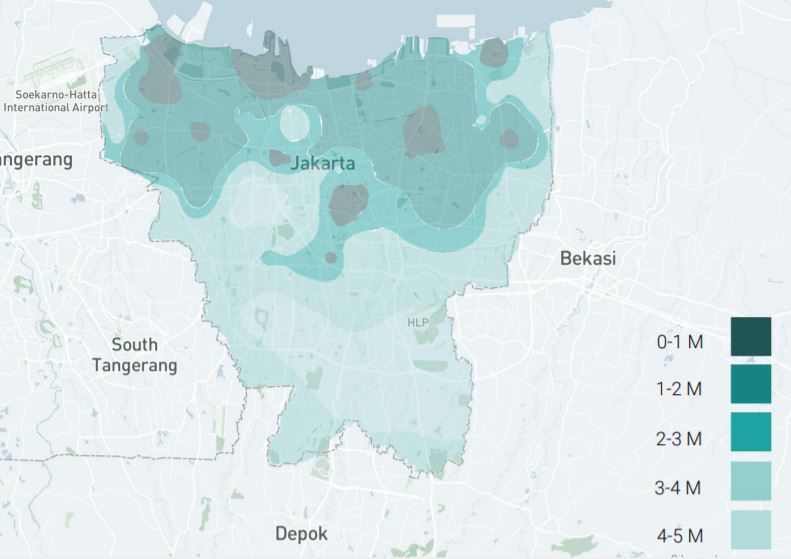
Img 5: Jakarta's land subsidence (amount of land sinking) by the year 2050
2050 Jakarta
The city has begun work on creating a cluster of 17 islands across the northern shore with a projected total area of 2700 hectares, it will significantly alter and degrade the already fragile environment of coastal Jakarta.
The non porous concrete jungle of the city does not allow rainwater to percolate, causing frequent floods. Rising seas not only contribute to this, but may also cause greater damage due to storms, faster rates of erosion. It will eventually shrink the water resources, if sea water infiltrates the aquifers. The trend has predicted about 95% of North Jakarta would submerge by 2050 as indicated in the map.
The project is expected to be designed for the coming decades, especially after 2050 when the Northern Part of Jakarta is submerged.
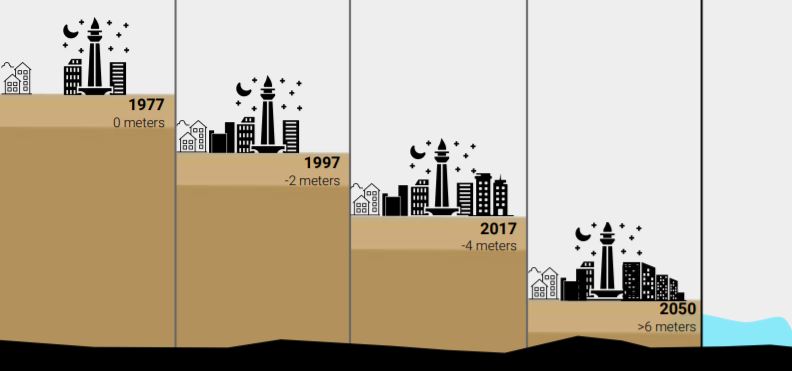
Img 6: Land sinking by years in perspective
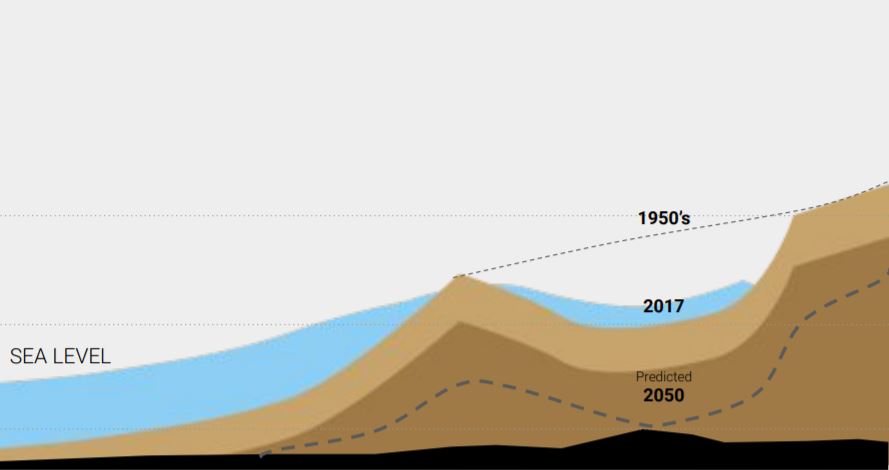
Img 7: Sunken land causing water to accumulate and hence flooding.
Land Submerging
Over the years, the land has sunk more than 4 m and is predicted to sink even more. The sunken land accumulates water during heavy rainfall or when water level rises. This evenually brings a part of land under water, submerging it completely. The increasing density of population on land makes the situation even more adverse. The challenge here is to accept the adversities that have alreay occured and prepare for a reslient future.
Objectives


Resilient: Capacity of a system to experience shocks while retaining function, structure,
Sustainable: The design must be environmentally conscious.
Modular: The neighborhood must be replicable through the rest of the city if required.
Identity: The design must reflect the culture of Indonesia.
The following objectives can be a point of beginning to conceive this design. Participants can assume their own contexts and users before initiating their design process. The neighbourhood must contain about 60 housing units on the given site, resilient to rise in water levels.
Programmatic Outline
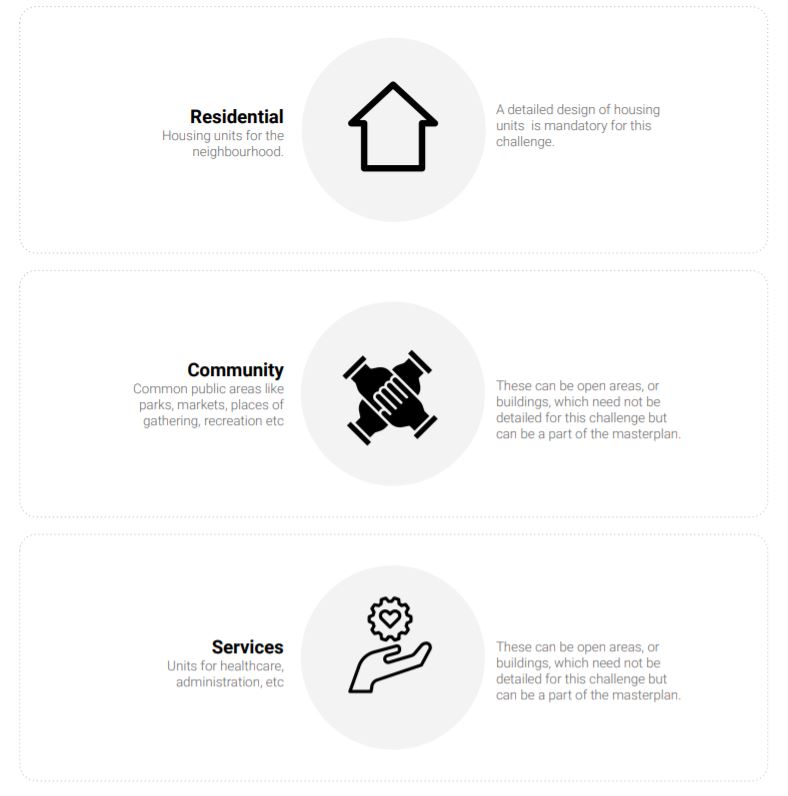
The programme of the Flood Resilient Neighbourhood has been broadly categorized into the above based on typology of the structure. However, the participants are free to add other programmatic facilities depending on their design. The number of floors for each housing unit is dependent on design and structural strength. Additionally, apart from the residential facilities, the rest of the provisions only need to be earmarked/designated on the masterplan and not detailed.
Housing Typology
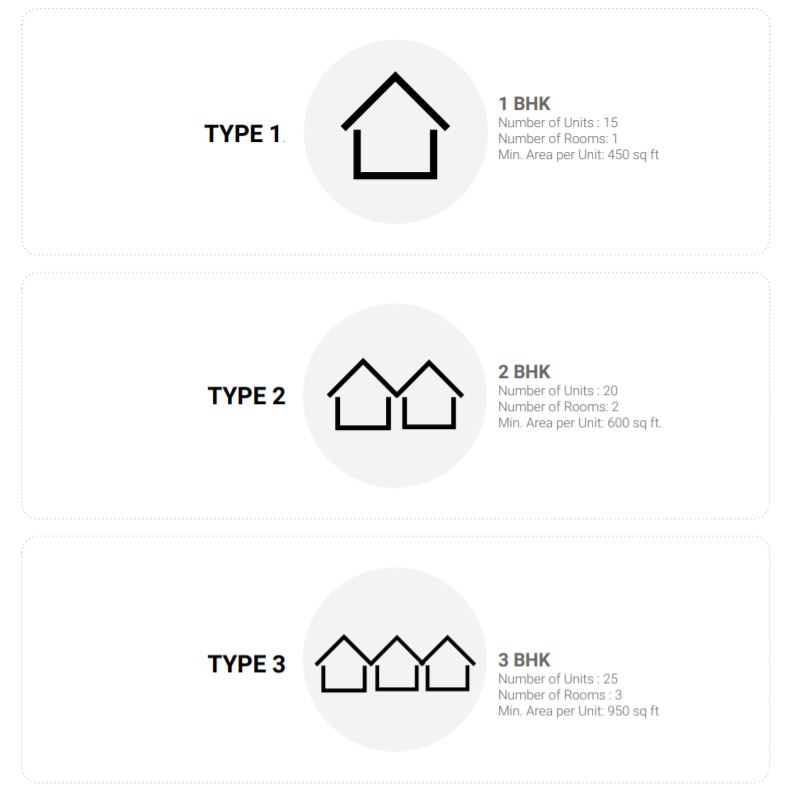
The typology of residences in Flood Resilient Neighbourhood has been broadly categorized into the above based on usual structure of families. (The participants are free to add the required number of washrooms, kitchen, balcony, etc areas, according to their design idea)
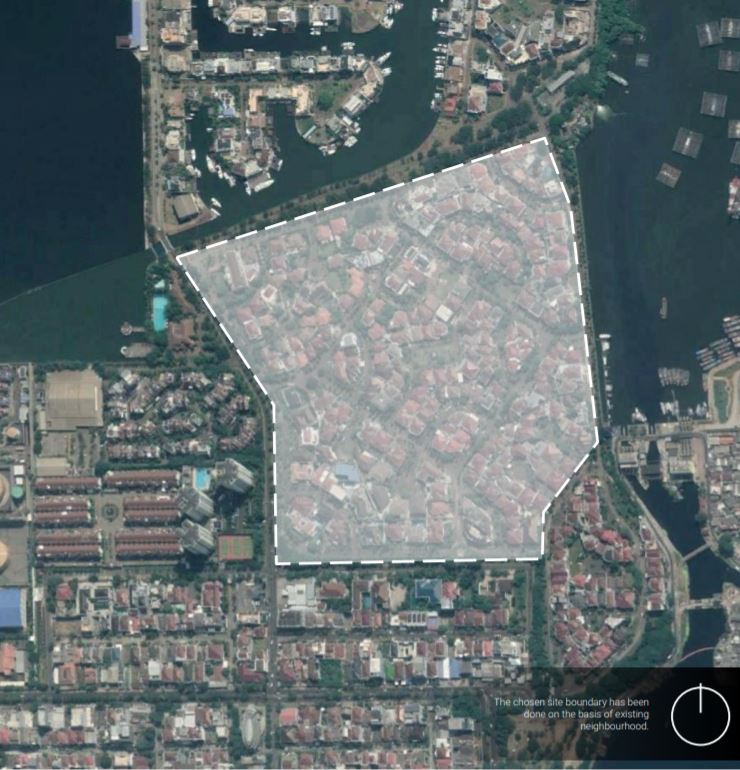
Img 6: Site Area
Site Plan
The site selected for this project is a part of the northern coast an an existing neighborhood area in the Jl pantai Mutiara district which is predicted to be partly submerged by 2050 due to land sinking and rising sea levels. For the purpose of this challenge the plot must be considere vacant / already submerged and a prototype zone for development.
Ground coverage: Unrestricted | Max. FAR 1 | Area 53 Acres | 6° 06'28.2"S 106°47'38.6"E
About COMMUN
Commun serves as a unit block for UNI in the field of Urban Design. It intends to break the fusion of traditional design barriers and methodologies by making it a platform for experimentation and conceptual exchange of ideas in urbanism, society, culture and ecology. It is a research initiative dedicated to provide opportunities for designers from all domains to explore ideas that go beyond the boundaries of the discipline and enrich our built environment holistically; thereby opening up possibilities for promotion of urban design thought at a global level.
Queries: support@uni.xyz
Discover other competitions: https://uni.xyz/competitions
Facebook: https://www.facebook.com/unixyzglobal/
Instagram: https://www.instagram.com/uni.xyz/
Discover FAQ’s about this competition on our help forum here: https://help.uni.xyz/