
As we speak
Design contest to envision immersive experiences in museums
Overview
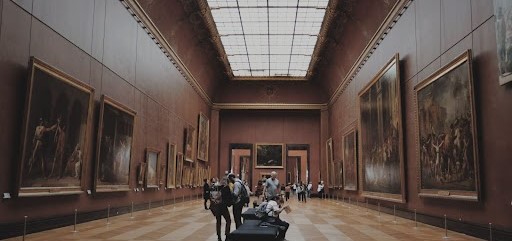 Fig: 1 - Museum is an invaluable heritage institution dedicated to the welfare of society.
HISTORY OF ARTISTIC EXHIBITS
Museums have been important collators of the social, cultural and artistic history of humans.
Traditionally they act as spaces that curate artefacts that narrate stories and trace various phases and themes in the collective life of humans. These artefacts are often passive objects curated in sterile, serious spaces. The primary mode of interaction is visual and the narrative is often relayed through written plaques.
Today these static exhibits are losing their lustre to contemporary audiences primarily owing to the technological and digital advancements we are surrounded by.
Our world today is governed by interactive experiences that are only getting increasingly immersive as we continue to develop the technology. In this world, passive learning and entertainment not only seem uninteresting but also remain limited in engaging the human mind that ranges in capability and learning styles.
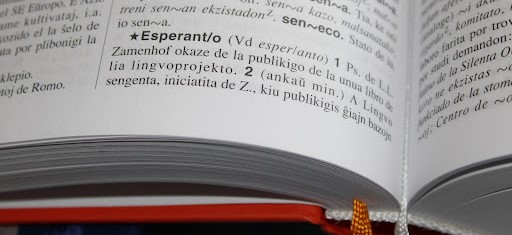 Fig: 2 - Language is the basis of communication and this invention has changed human society over the years.
CURATING LANGUAGE
Quintessentially language is one of the foremost technologies developed by humans. In fact, it is such a successful mode of technology that it is one of the few human technologies that have ascended to the tier of naturalization in the pyramid of technology. Technology can be understood as “the application of scientific knowledge to the practical aims of human life or, as it is sometimes phrased, to the change and manipulation of the human environment.”
If we attempt to understand language through this definition it emerges as what is essentially a system of sounds and/or visuals that enable human interaction. As humans mingled and dispersed across the globe in human history these modes of communication evolved and continue to evolve even in our present.
Yet in spaces that curate this essential element to human life, experiences often continue to be limited to the written word.
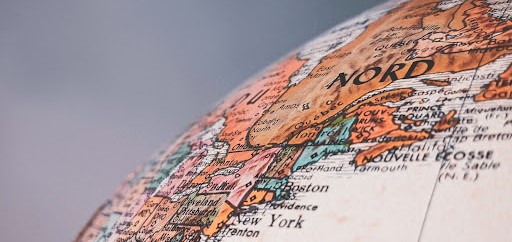 Fig: 3 - Celebration of language and its variations in different cultures around the globe in a single destination is essential to reflect on its significance in cohesive society.
IMMERSIVE LEARNING
When museums transcend the limitations posed by the use of static displays and learning, they enable intrigue, immersion, egalitarian learning opportunities as well as accessibility. In the world of languages and museums that curate language histories there have been few attempts at attempting to reinvent the mode of interaction between artefacts and visitors.
Brief: The challenge here is to attempt, as architects and designers, to envision a museum for language that attempts to create immersive experiences beyond the written word.
The designed space must be able to engage, intrigue as well as educate visitors of the museum. In your design outcome, you may choose to employ various space making strategies, technological elements and curatorial strategies to enable a truly immersive experience that celebrates the history of language to humankind.
OBJECTIVES
Design: Design a space that is inspired by language and celebrates its evolution throughout humankind's history.
Curate: Conceive and interpret the typology of artefacts that would make the museum
Exhibit: Design an immersive experiential space that celebrates the artefacts of the museum
Educate: The museum and its experiences must provide an opportunity for visitors to learn about the artefacts that it curates.
SITE
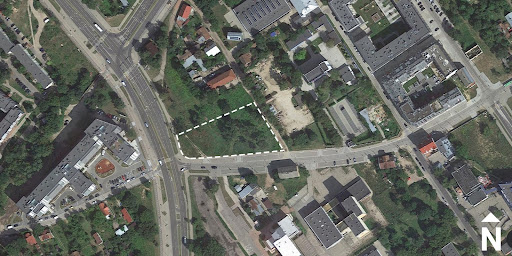
The site for this project is located in Białystok, Poland. The city was chosen since it was the origin of Esperanto, the world’s most spoken constructed language that was created in 1187 by physician and linguist L.L. Zamenhof. Esperanto was devised as an easy-to-learn, politically neutral language.
Site Area: 3680 sq.m
Height Restriction: 10 meters
Ground Coverage: 30%
Maximum FAR: 1
Setbacks as per CAD plan
Coordinates: 53°07'39.4"N 23°08'45.4"E
AREA PROGRAMME
The design outcome must have the following elements:
1. 15% Administration/Operation Wing
- Entrance, Reception ~ 50 sq.m
- Baggage deposit, Security ~ 20 sq.m
- Management + Administrative Offices (Director, staff, curators) ~ 150 sq.m
2. 40% Museum Wing (Spatial configuration can be allocated by the participant)
- Exhibit spaces, Gallery (Indoor/outdoor)
- Multi-Purpose Hall: For events, workshops, seminars, etc.
- Storage and Backend operations
3. 15% Recreation Wing
- Cafe: Seating for 50-60 people ~ 100 sq.m
- Gift Shop ~ 50 sq.m
- Open landscaping areas like gardens, roof terrace, etc.
4. 30% Circulation, Services and Parking
Participants are free to modify or add activities to the basic area programme mentioned above.
Similar Competitions
Discover competitions you might be interested in



Bring back Drive In's

Challenge to design an urban locus of culture and heritage


The Global Benchmark for Graduation Excellence


The Global Benchmark for Architecture Dissertation Awards
