
At Sea
Design contest for movable research centers at Sea
Overview
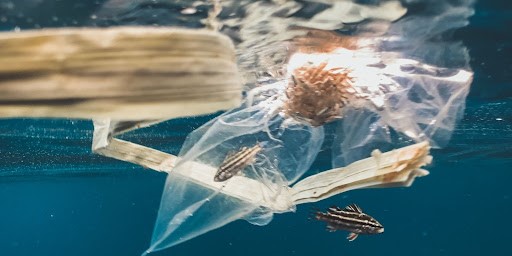 Fig: 1 - The aquatic systems ability to maintain the balance in nature and protect the way of life of living beings is being hampered by society and their inconsequential lifestyle.
MARINE ECOSYSTEM IN DANGER
Earth’s abundant marine ecosystem is the planet’s largest life support system. Research indicates that the ecosystem that covers 71% of the Earth’s surface contributes massively to stabilize climate, store carbon, produce oxygen, nurtures biodiversity, offers humans food, mineral, and energy resources, and even allows cultural and recreational services.
Unfortunately, disproportionate human interference has led to unsustainable resource extraction, pollution, climate change, and habitat destruction. As a consequence, the rapidly changing marine ecosystem is at the helm of pressing environmental concerns that urgently needs our attention.
Today, it is more important than ever that we create opportunities to foster better research that can help us understand this changing ecology and its effects on humans; as well as help us innovate solutions for a more sustainable future.
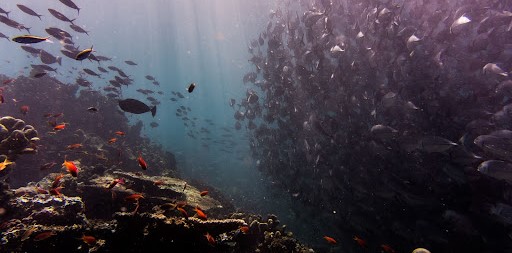 Fig: 2 - Less than five per cent of the planet’s oceans and just a small proportion of the species that exist have been explored, with new marine life being discovered everyday.
ENVIRONMENTAL LABS FOR RESEARCH
Today a majority of research laboratories are closely connected to institutions and are often far removed from their object of research.
For environmental labs, in particular, the labs are generally fixed in a site where they receive specimens that are transported from their sources.
While the lab is developed specifically for appropriate analytical procedures suited to the study, there is however valuable time lost in transportation. Furthermore, the conditions during the transportation are often crucial to the state of the specimen.
What if the environmental laboratory has the ability to move to its source?
It would help mitigate the cumbersome transportation process as well as offer faster, more reliable data, flexibility in data collection and on-site decision making.
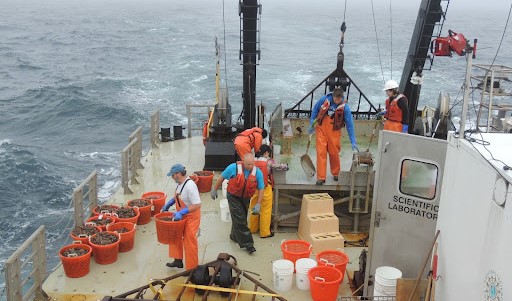 Fig: 3 - Marine research is essential not just to explore its hidden potential but to provoke conservation, protection and active regulation of these life regulating ecosystems.
MARINE RESEARCH ON THE GO
Most mobile laboratories today are built around transportation. They offer technical spaces with standard and specialised equipment that can significantly assist the research process in real-time.
Brief: The architecture competition brief calls for a design of a mobile laboratory for marine research.
The laboratory need not be tied down to a transportation module but it must be easily transportable, both on land and water. The goal is to provide valuable data research opportunities to researchers attempting to understand marine ecologies to create both opportunities for humans to learn and design more sustainable futures.
The designed space should be self-sufficient, at least for basic everyday research purposes and must be equipped with analytical equipment including microscopes, incubators, refrigerators, and other essential laboratory supplies.
OBJECTIVES
Functions: Defining essential functions and lifestyles for the researchers.
Working: Defining mobile + static + built states for the lab.
Form: How is the form optimized for survival in various conditions?
Evolution: How will the lab evolve and change over time?
SCALE
The design must respond to the needs of both a research facility and 4 research members that may spend long periods in these spaces in remote research locations. Other than the transportation and research needs, it must cater to basic requirements of sleeping, sitting, cooking, eating, washing/ bathing/defecating and storage for researchers.
The design parameters are as follows:
1. In Mobile State: Maximum permissible covered area is 10 sq. mt with minimum corresponding volume, excluding the operational area required for driving/navigation and other technical/service needs.
2. In Static: State: The total covered area used for stretchability /expandability should not exceed 50% of 10 sq. mt. (Permissible covered area)
AREA PROGRAMME
The designed outcome must contain the following spaces:
- 30% for a large central laboratory space
- 10% Office Spaces for the supervisors
- 40% Dwelling spaces for up to 4 researchers in remote conditions: Must include sleeping, sitting, cooking, eating, washing/ bathing/defecating and storage for researchers.
You may utilise the remaining 20% as you deem fit by either adding it to the above mentioned spatial requirements or including spaces you feel are necessary.
Similar Competitions
Discover competitions you might be interested in



Challenge to design public laboratory


The Global Benchmark for Architecture Dissertation Awards
