

BeeGraphy Computational Design Awards '26
From Logic to Configurators
FACADE SYSTEMS & ARCHITECTURAL SKINS
This challenge invites designers and computational thinkers to explore parametric façade systems as buildable architectural products within a dense, historic urban context. The context of this brief is set on Via Brera in Milan - an area defined by architectural restraint and fine-grained urban fabric. The brief's focus is on designing a façade that balances privacy, daylight, and material expression through a single, rational parametric logic suitable for fabrication.
Rather than designing a fixed elevation, participants are asked to develop a reusable façade skin system composed of repeatable elements or modules that can be fabricated, assembled, and adapted across varying building heights and programmatic conditions. The emphasis is on constructability, scalability, and controlled variation, demonstrating how one coherent parametric system can generate multiple façade configurations without losing structural clarity or architectural identity.
 High-performance aluminium parametric façade system with customizable geometry and MetaSurface finishes - MetaCoin by METAGUISE
Your Task
Design a parametric façade skin system driven by a single, coherent logic that transitions from dense to open across the building height. The system should use a controlled set of parameters to modulate porosity, adjust depth or articulation, and respond to privacy and daylight requirements, while remaining visually cohesive and fabrication-aware across multiple levels.
The façade system must be based on a 1.2 m × 1.2 m module, demonstrated on an 8 m × 18 m surface, and capable of scaling vertically without redesigning the underlying logic.
What we're looking for?
We are looking for architecturally grounded façade systems that demonstrate restraint, clarity, and controlled variation. Submissions should show smooth transitions from dense to open conditions, a strong understanding of repetition and differentiation, and an architectural sensibility that prioritizes performance over ornamentation. The system should feel reusable and adaptable, capable of being applied to different buildings with minimal adjustment while maintaining a coherent identity.
Design Criteria
Your design outputs adhere to:
-
A clear and legible parametric strategy where meaningful inputs directly control density, depth, layering, and visual filtering
-
A single, well-defined façade system demonstrated through consistent variation and contextual performance
-
Geometry and module logic suitable for digital fabrication workflows
-
Clean, well-organized parameters structured and previewed using BeeGraphy
Examples to Inspire
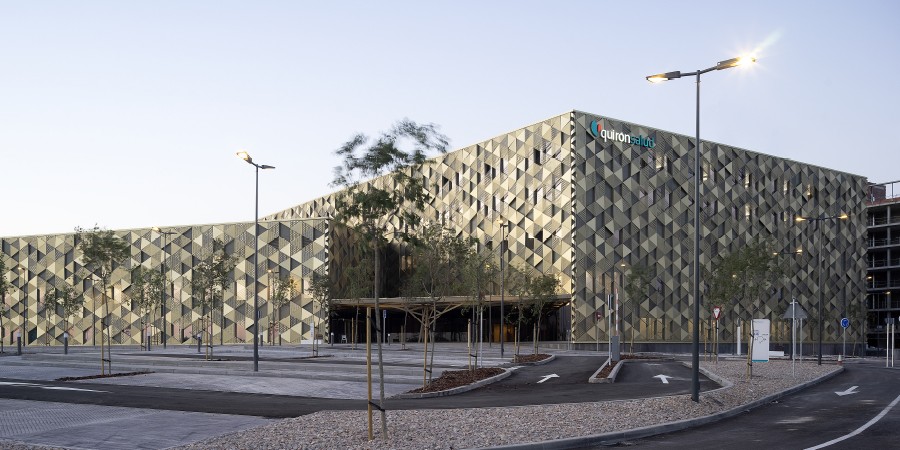 Parametric perforated façade mediating light, privacy, and urban context - Córdoba Quirónsalud Hospital by ENERO ARCHITECTS
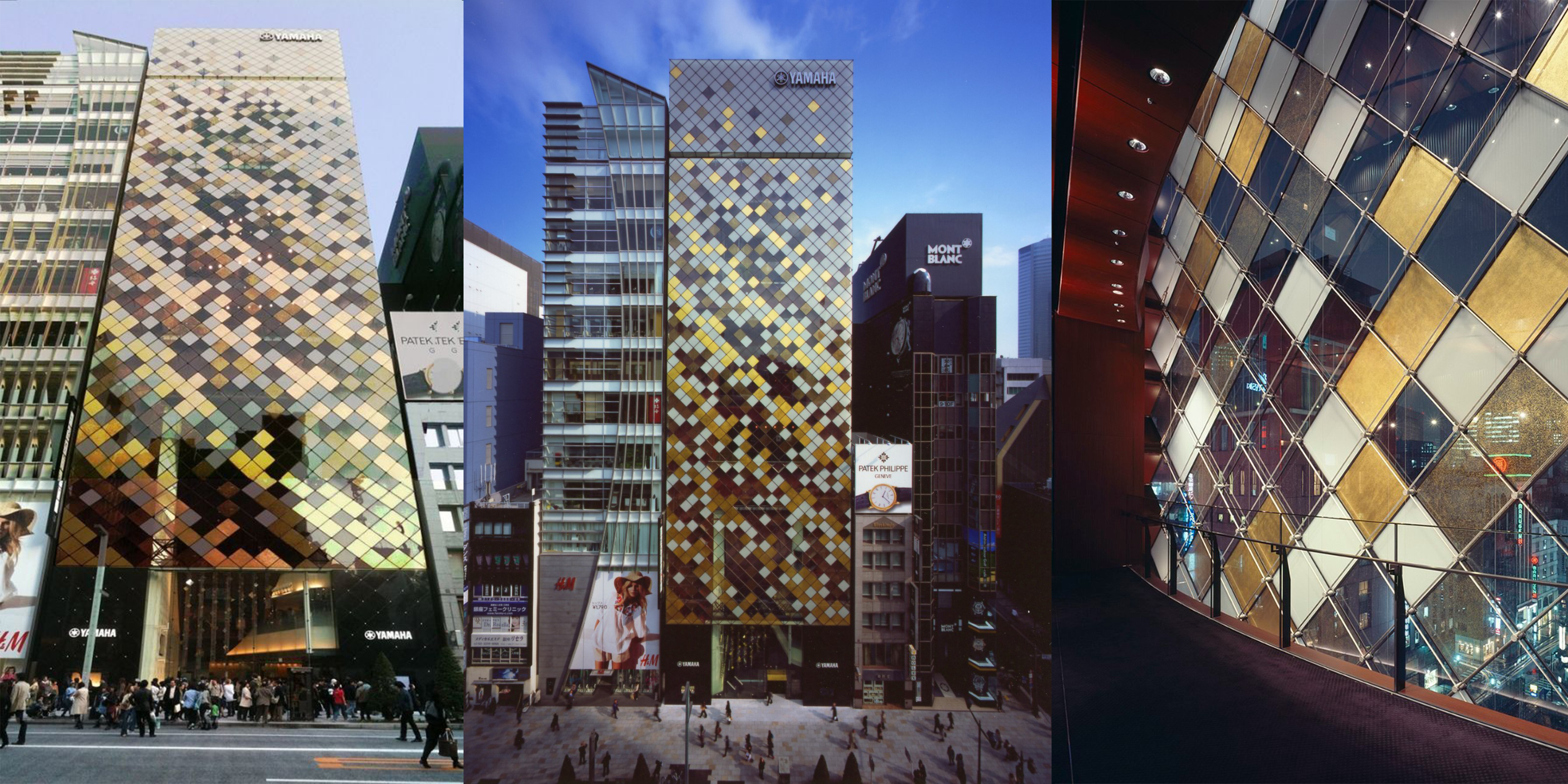 Modular diamond façade articulating light, reflection, and depth - Yamaha Ginza Building by NIKKEN SEKKEI
Adaptive louver facade articulating light and depth - DYNAMIC LOUVERS
These are references - not limits.
What to avoid?
- Fixed façade designs disguised as parametric
- Overly complex systems that lose clarity or scalability

