
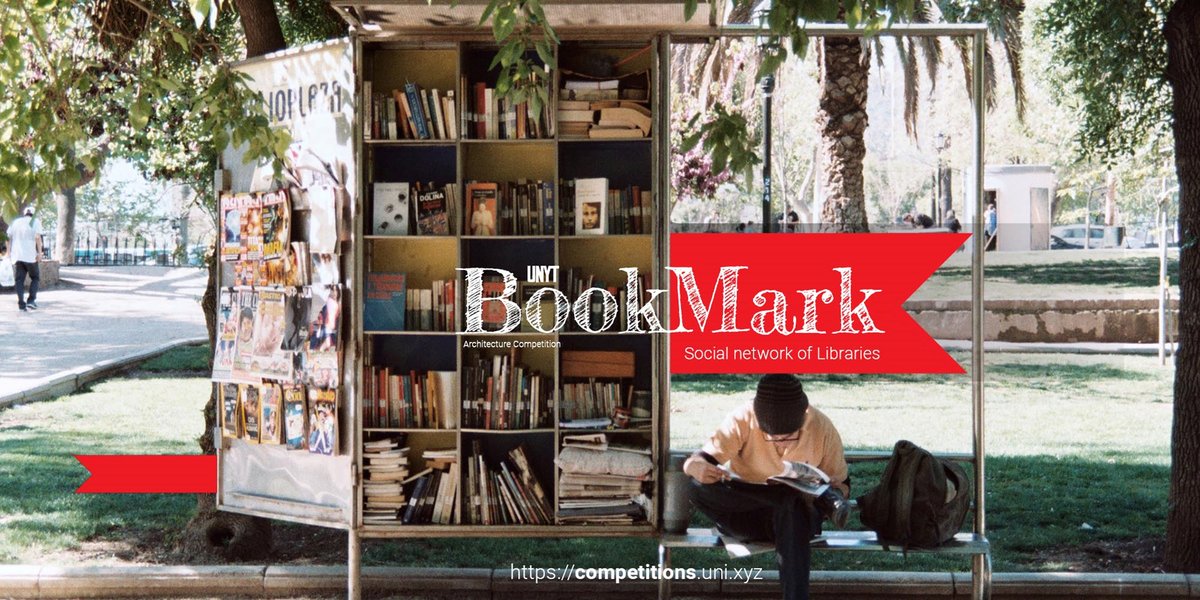
BookMark 2020
A compact library run by the community
Overview
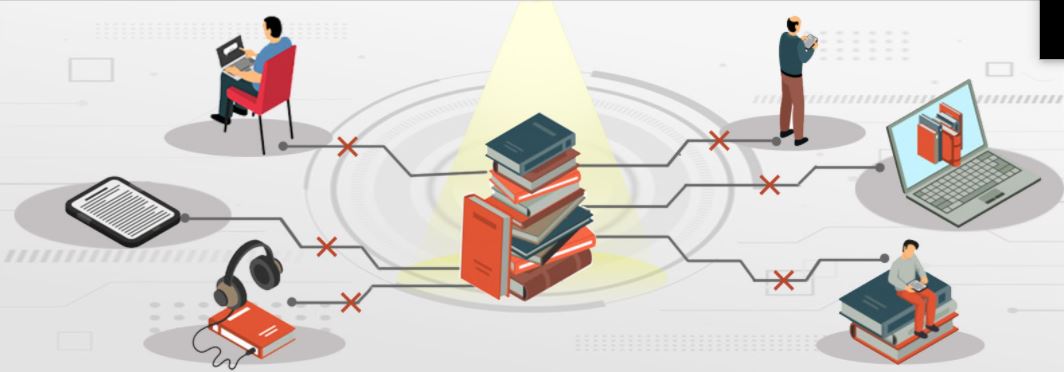
Img 1: Hegemony of internet services and electronic devices.
Premise
Digital utopia has resulted in a drastic decline in reading culture, as a result public libraries are at a critical juncture. We have made a jump from clay tablets as a source of information to electronic tablets. Due to excessive use of internet and digital devices the number of readers are drastically declining in public libraries. According to cnbc, 2019, 24% of the US citizens aged between 18 - 30 haven't read a book in the past year. Moreover, it's not just reading culture that is at stake, as the readers play a more active and involved role in the community, the decline in reading population parallels with a greater retreat from participation in civic, culture and social life.
Libraries have existed since the time people have been keeping records, they are not just a place that is an ocean of knowledge but also a place that depicts our history through its architecture, books, manuscripts etc. Libraries that were once busy are now almost left without readers. It as an institution can’t compete with the digitally evolving community. The process of digitalisation has put the analogue libraries on the back burner.
Today people are questioning the relevance of the same institutions that have marked an epoch of our lives.
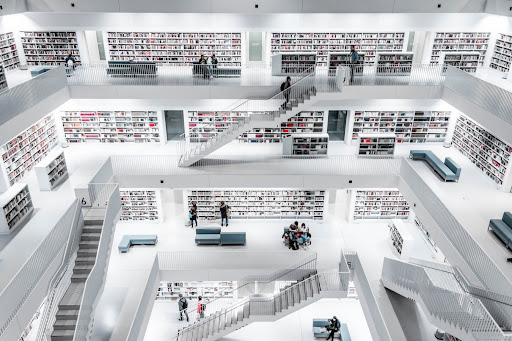
Img 2: Evolution in library architecture
Evolution of Libraries
Public library is the most democratic and one of the few spaces under the public realm of the city that have tremendous potentials to transform into value-addition as community information, knowledge, resource and service centers.
We like to think of libraries as pioneers of social justice. Education and exchange of ideas should be a right possessed by all. With constant growth in population and the world, the amount of knowledge and information available now is more than ever before. A fundamental principle of the public library is that its services must be available to all and not directed to one group in the community to the exclusion of others.
The role and function of a library is evolving with time like Helsinki Central Library Oodi, Finland; Tianjin Binhai Library, China; proves that library architecture is becoming more open and futuristic. The new organisational structure of these libraries is based on user orientation and experience.
Although the current situation proves that library architecture is evolving with time, their availability is still limited to only a fraction of the total population.

Img 3: An outdoor library system adopted in japan
Issue
The role and accessibility of a library needs to be expanded so that it can reach more people and places. With self reading and learning becoming the focus of current education system, a more open and accessible model of information is required. It is the key raw material but is of zero resource if there are only limited access points to it.
The demand of land as a resource is growing with rapid urbanisation, as a result the areas under public realm like roads, streets, parks, gardens are decreasing in number. Libraries being the most democratic and community centric institutions, are suspected to be under threat due to the shrinkage of public realm on one hand and rapid digitalisation on the other.
As public libraries modernize, they face an increasingly harsh budget environment, as well as technological disruption in media, scholarship, and education and therefore, they fail bring in new books and refurbish their collection. According to a news daily, the guardian, Over the last year, spending on libraries by local authorities fell by £30m to £741m because of which nearly 130 libraries were shut down across britain. While libraries have a positive reputation, it is clear that citizens value other government services over libraries when budgets must be cut.
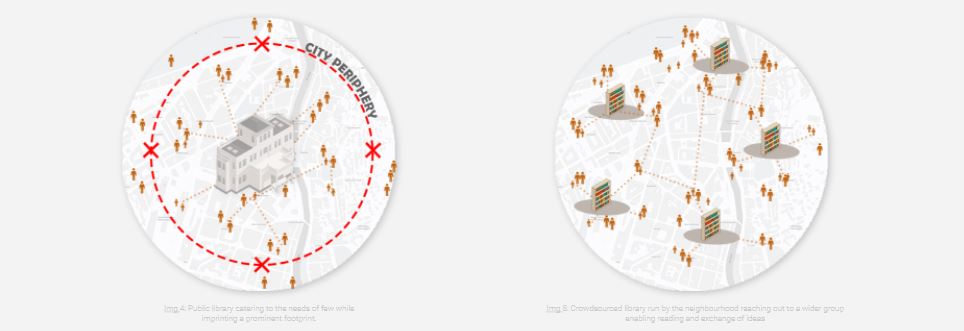
Brief of the competition
How can we make knowledge and information available and accessible to all?
Is it possible to create a new age library that can compete with current trend of digital information?
How can we promote and inculcate reading culture with the help of architecture?
Is it possible to create compact module of library with less utilisation of land and capital resources?
Can the new trend of reuse, repurpose and upcycle be adopted for libraries?
How can library become a place for dialog between people?
Brief: To build a compact module of a new age library, where it’s primary goal is to not only to hold information but rather to connect over information.
By creating a new layer of social network of books in the city where like minded people can contribute with not only their presence but also with their books, ideas and network. The designed library will be run by the neighbourhood for the neighbourhood which can hold both analog as well as digitized information.
It is essential to see libraries as a part of social model of the society and its role in social development plans (holding discussions, seminars, lectures etc.) and strategies and in legislation.
Objectives
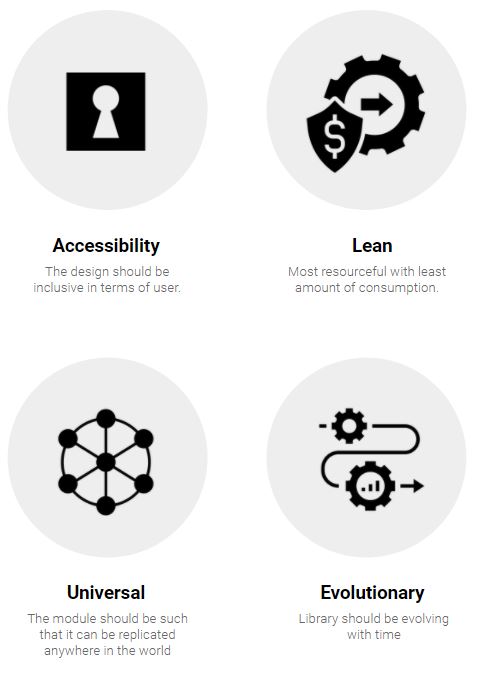
The structure should be built to accommodate 100 people with a maximum height restriction of 20m. Cost of construction of such a structure should be optimized since the design has to be applicable to different communities and cities.
The following objectives can be a point of beginning to conceive this design. Participants can assume their own contexts and users before initiating their design process.
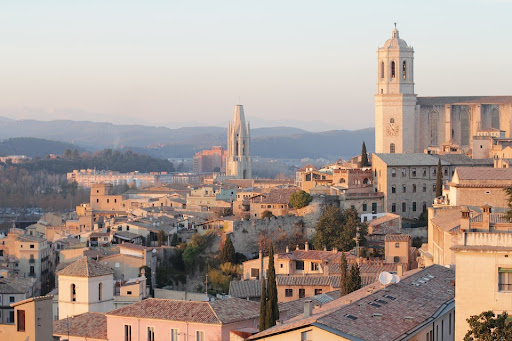
Img 5: Aerial view of the city of Girona
Catalonia, Spain
Catalonia is an autonomous community on the northeastern corner of Spain and consists of four provinces: Barcelona, Girona, Lleida, and Tarragona. Catalonian cities have a distinct history dating back to almost 1000 years which shows in their art, architecture, literature and culture. Barcelona, being the capital and the largest province, offers few library services to distance learning students from the neighbouring cities. The model of a neighbourhood library is a fit for adjoining cities of barcelona like Girona because of the limited public libraries in the city.
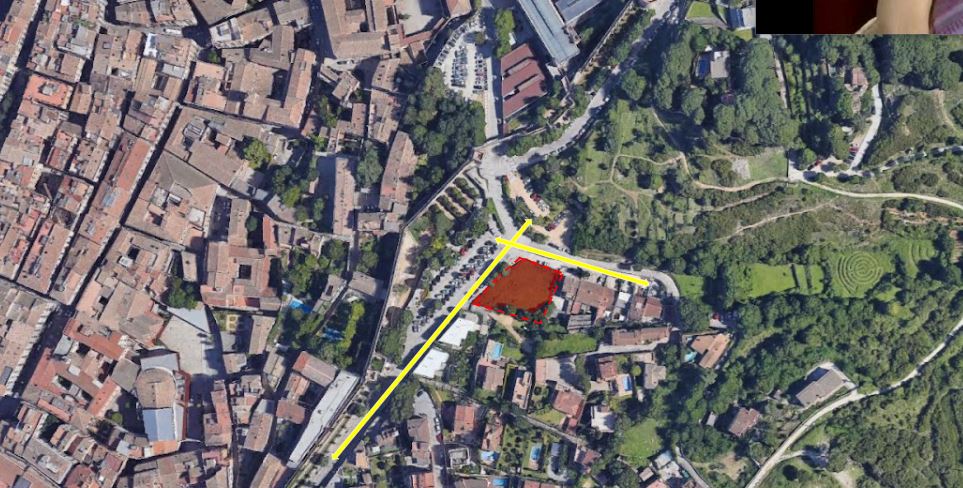
Img 6: Geographical map showing the site location
Girona
Girona is a culturally rich city built beside the river Onyar having a population of 7.5 lakhs. It is known for its medieval architecture, walled quarter (barri vell) and roman remains. The site is located in the close proximity of Girona university centrally placed in the residential area of Barri Vell and Caputxins. The site is accessible from 3 sides; two primary roads: Passeig Fora Muralla and Passeig General Peralta and one tertiary street going uphill.
- Area: 1073 sqm
- Site coordinates: 41°59'0.35"N 2°49'41.09"E
- Allowable ground coverage: 50%
Judging Criteria
The entries will be judged by an international jury of the competition on the following criterions:
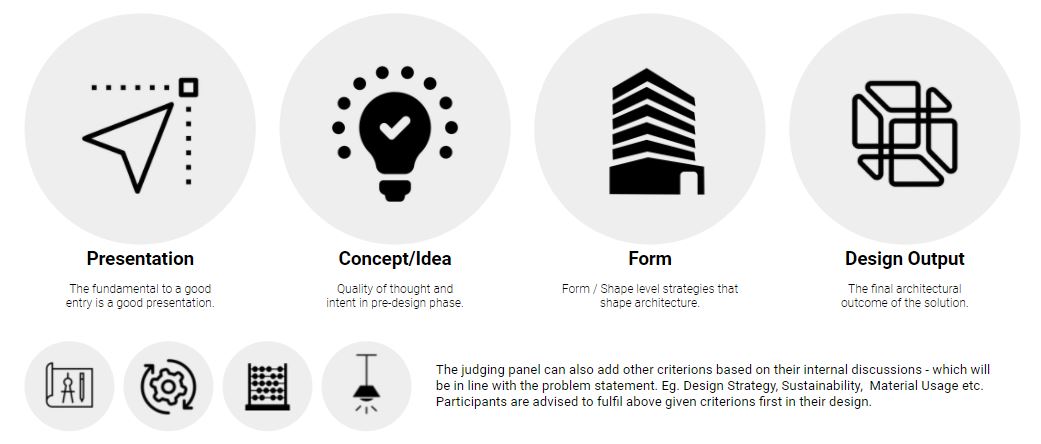
About UNYT
Unyt serves as a part of UNI in the realm of typological discoveries. It intends to break the fusion of traditional design barriers and methodologies by making it a platform for experimentation. It embarks on mobilizing ideas where creators can elementally question the buildings we create. It is a research initiative dedicated to providing opportunities for designers from all domains to explore ideas that go beyond the restrictions of usual architectural discourse.
Queries: support@uni.xyz
Discover other competitions: https://uni.xyz/competitions
Facebook: https://www.facebook.com/unixyzglobal/
Instagram: https://www.instagram.com/uni.xyz/
Discover FAQ’s about this competition on our help forum here: https://help.uni.xyz/

Similar Competitions
Discover competitions you might be interested in



Challenge to design an open learning module for the elderly


Challenge to design a portable music platform

Challenge to design a portable theatre


The Global Benchmark for Architecture Dissertation Awards
