

BookMark
Design a modular library to serve the local community
OVERVIEW
 Fig: 1 - Online education services are only accessible by pricey equipment - An impression
DIGITAL CLASSROOM
The world has come to a standstill during this pandemic, forcing people to lay back at home and rely on digital interfaces to fulfill their daily needs. It is not just a platform used for amusement anymore, but other aspects of life such as work, education, and even social events have been pushed to depend on technology. Despite the pandemic, the need for people to march on with their regular grind has not changed. But individuals belonging to certain sections of society are struggling more than others, to cope with this pandemic trend of online living.
Education has started moving forward through a different medium, but those who are far from it are left stranded. For the ones that depended on public libraries and schools to access education, transferring online has been a struggle. Children are made to depend on digital classroom methods and some of them belonging to the lower-income class, do not have access to the Internet or even a basic cell phone network.
They are the ones getting the short end of the stick and are forced to discontinue or simply sit back and wait for the unpredictable pandemic to be over.
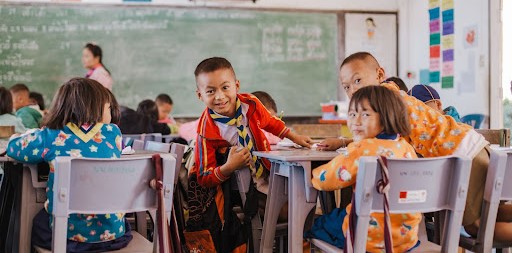 Fig: 2 - Rural classrooms are not equipped with technology to shift to online mode - An impression
INSUFFICIENT RESOURCES
The shift to online work and education trend is said to have been coming for a long time. The remotest villages of every country, however, still remain unreported as to how they are handling the disconnect from their regular lifestyle. The majority of the students in remote villages are not able to continue with their online studies, unlike their peers due to their inability to acquire devices needed to access them.
The lack of resources is a major issue that is propelled by the loss of jobs and income owing to the pandemic. With lockdowns, mandatory school closures have been announced for an indefinite period. Self-learning, as the last resort, is not possible due to the insufficient infrastructure in rural areas. These actions affect their mental health and put their future in jeopardy.
Education is often considered a luxury for people for the underprivileged, and the pandemic adds even more weight to these limitations.
How can design tip the balance in the remote regions with setups that empower children when the pandemic is over?
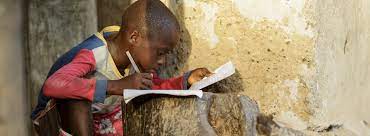 Fig: 3 - Education a need that should be accessible by all - An impression
BRIEF OF THE COMPETITION
How can design create learning hotspots within remote regions that promote learning for the willing? When schools close down, how can this vast information pool available to us reach these under-served regions?
The goal is to design a modular reading and learning space that is safe, compact, and socially conscious, built for children in a rural area.
The facility is supposed to have a design scheme that is easy to use and durable in the long run. The context of the rural site requires attention since its economic, socio-cultural, and environmental aspects must be responded to. Local materials and techniques must be used to design in a way that resonates with the people of the locality. The construction must be agile and independent with minimal resource requirements, for it to be an economical design.
The aim of the design will be to promote education and its access to the local community. The rural library will have more extensive activities that can be accommodated in multi-functional spaces. It must be a modular design that can be replicated in similar contexts around the world.
OBJECTIVES
- Modular: The design must be modular + and cost-effective and can be scalable to similar conditions across the region.
- Access: The design must be welcoming to all groups of users, with a people-friendly design.
- Context: The structure must be suitable to the locality and the site conditions.
- Evolution: Anticipating upgrades, expansion, or transformation with the future according to changing needs.
SITE
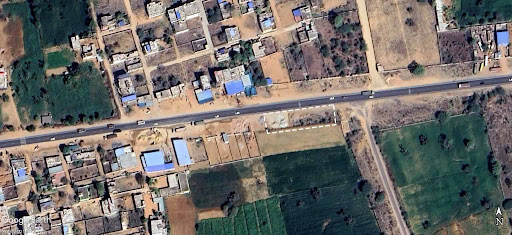
Sikar, Rajasthan
Rajasthan is a state in North India, known for its heritage and culture, making it a popular tourist destination. 75% of the population lives in rural areas which are around 51 million people. The overall literacy rate in the state is 67% which has been a cause of concern for the Government, and efforts are being made to make sure that education services reach the public.
The site is located in Bajaj gram Sanwali, Sikar, Rajasthan. It is a small village located amidst the various smaller village clusters that are 115 km from Jaipur city in Rajasthan. It is close tofu educational, commercial and residential establishments. The village is set on a path to development and has a population of 1558 people and is at a distance of 4 km from the nearest city making it suitable for a learning typology.
- Coordinates: 27.572383, 75.159780
- Site Area: 1808 sqm
- Height limit: 7 m
- Ground Coverage: 40%
- Maximum FAR (Floor Area Ratio): 1
Similar Competitions
Discover competitions you might be interested in




Challenge to design public laboratory


The Global Benchmark for Architecture Dissertation Awards
