
Brewed
Challenge to design a contemporary coffee house
OVERVIEW
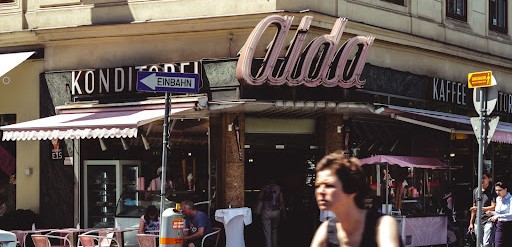 Fig: 1 - A Vienna cafe
COFFEE EVOLUTION
Coffee plants grew wild in Ethiopia and were used by nomadic tribes for thousands of years, only until the 1400s when people figured out that they could roast its seeds. By the 1500s, the drink had spread to coffee houses across the Arab world. Coffee houses first appeared in Turkey, Syria, and Egypt as early as 1530. Since they became a hotspot for political discussions, they were banned repeatedly.
Subsequently, throughout the 1600s coffee houses began popping up across Europe and North America. The French and American Revolutions were said to have brewed in coffeehouses.
The coffee house acted as a perfect mid-ground for a meetup. Here, creativity and innovation thrived through conversations. They have long been associated with writers, artists, and intellectuals and represented a safe and comfortable space to share news, and discuss philosophy or politics. This surge in innovation was not only owing to the design of the space - the physical gathering of people from different backgrounds and fields of expertise - but also to the coffee itself.
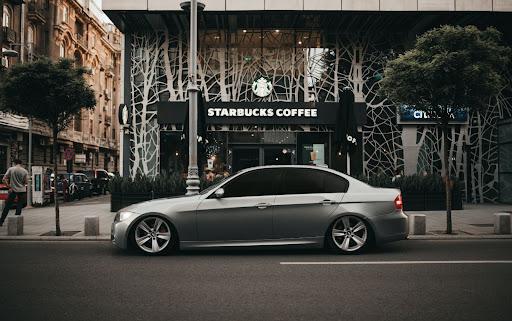 Fig: 2 - An exterior view of Starbucks, a coffeehouse chain
MULTIPURPOSE CAFE
Even after centuries, the societal functions around coffee continue to play an important role within many cultures around the world. Cafes form the centre stage for the coffee culture that has been brewing through this time.
Cafe chains like Starbucks have started a new revolution by making “cafe” culture global.
Coffee houses are still acting as hubs for making conversations happen, socialising, or working in solace. Cafes now have been decorated with multifunctional roles such as retail, and activity centre. They collectively act as pods of a city’s identity, accumulating its crowd.
The coffee served in coffeehouses may differ depending on where you are in the world, but the establishment itself conveys a sense of familiarity and understanding that can transcend borders and linguistic barriers.
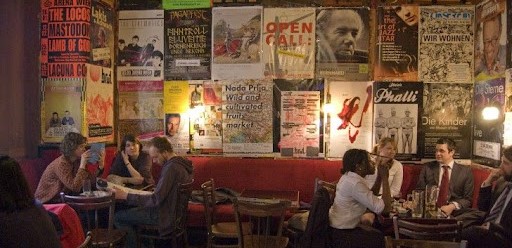 Fig: 3 - Pin Auf, A Cafe in Vienna
BRIEF OF THE COMPETITION
A coffee house still holds a similar ideology as it did 4 centuries ago. They act as a mixture of close and open public spaces that are transitioning to give people a platform to gather for conversations or work. It can be said to be a city’s public living room and reflects their traditions in more than one way.
The challenge here is to design a Coffee House, a space that transcends the concept of cafes that we see today.
The aim of these challenges is to help participants practice micro-planning of spaces & services, translating ideas into the design of volume, furniture, and finishes. It seeks to explore a coffeehouse/cafe for brazil, that embodies today’s architecture style while taking inspiration from its existing heritage.
OBJECTIVES
- Interior: Furniture, Finishes, Flooring, Material Palette
- Planning: Micro planning of the Cafe spaces.
- Lighting: Natural Lighting as well as Fixtures used in the design.
- Function: Functions of the Cafe apart from being a coffee house.
Participants can include these objectives at the beginning and add other objectives as per their design. The design outcome must respond to not only people and their surroundings but also to nature.
SITE
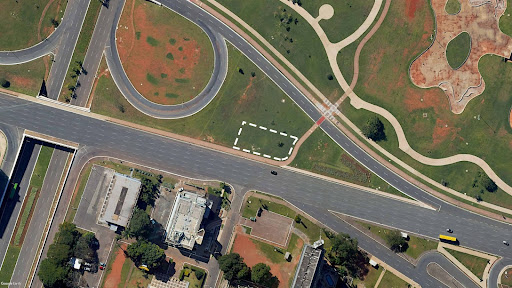
Brasília was a planned city developed by Lúcio Costa, Oscar Niemeyer and Joaquim Cardozo in 1956 in a scheme to move the capital from Rio de Janeiro to a more central location. The landscape architect was Roberto Burle Marx.
Coffee is part of the very fabric of Brazilian culture and identity. At least 98% of Brazilian households drink it, and cafezinho is the signature coffee of choice. It is a filtered cup of black coffee served boiling hot with liberal amounts of sugar. It is small and strong, and consumed regularly throughout the day.
The site chosen for this challenge is located near the Arena BRB Mané Garrincha stadium of Brasilia, Brazil. It belongs to the developed area of Brasilia that is witnessing a modern approach in its infrastructure. Site is surrounded by many plazas, malls, hospitals and offices buildings.
- Coordinates: -15.793164, -47.888555
- Site Area: 700 sqm
- Height limit: 9 m
- Ground Coverage: 10%
- Maximum FAR (Floor Area Ratio): 1
Setbacks (as per CAD plan)
Similar Competitions
Discover competitions you might be interested in



Healing places through music.


The Global Benchmark for Architecture Dissertation Awards
