
Compact Homes
Micro-housing design challenge
Overview
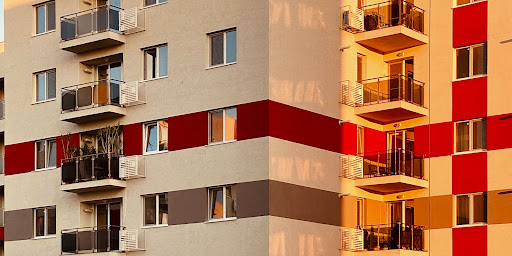 Fig: 1 - Housing has developed from single houses to apartments building as the demand for living in cities has increased (Credits-Saru Roberts)
URBAN DWELLERS
Housing is a fundamental aspect of human evolution. Since ancient times, house building and its development have been the catalysts for our progress and evolution. The creation of housing and the changes in it are a direct reflection of societal development and growth in that era.
Humankind has lived and worked primarily in rural areas. But now, more than half of the globe's population will be living in towns and cities.
The number of urban dwellers is rising, reaching almost 32% of the total world population, and 68% by 2050. It is estimated that 900 million urban dwellers and over one billion rural people now live in overcrowded and poor quality housing without adequate provision for water, sanitation, and drainage. A remedy for such conditions is required on a large scale that tackles the issue of housing for low-income groups residing in urban areas.
Can architecture that provides efficient use of housing, with a small footprint help in creating an affordable design? How can a solution be generated for such a multifaceted issue?
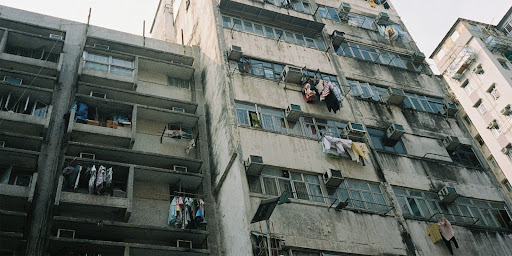 Fig: 2 - The existing housing solutions for the LIC not only provides lesser spaces but also inadequate necessities and isolation
HOUSING IN THE CITY
In spite of the huge technological and scientific development, the number of homeless people alarms us about how this situation is estimated to become more severe as the population rises with time. Working individuals and young migrants who move into big cities are constantly in search of affordable living options in the vicinity of their workplace or institution. They often stay on a temporary basis and hence rent a house. An expectant increase in the number of people who are going to migrate to urban areas will create an alarming situation when there is already a lack of housing.
There are multiple reasons for its occurrence, from economic downfall, and rapid infrastructure development to political unrest-many such incidents affect the process of creation of houses. In order to fulfil the demand of a large number of people, an affordable economical price is only possible through techniques that are applicable on a mass level and are also affordable for a majority of the population.
What new interventions can we propose in terms of affordable housing?
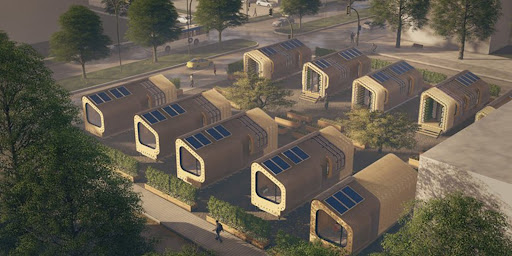 Fig: 3 - How can solutions like micro homes provide excellent living conditions in affordable designs? (Credits-Shifting nest/Bla design group)
BRIEF OF THE COMPETITION
Creating a well designed affordable house reflects the needs of the user. The spaces are defined by functions that vary depending on the need. Some basic necessities like food, sanitation, and resting area are inevitable requirements of a house.
Micro housing aims to compose these basic necessities by optimized space usage and creating common interactive spaces for the communication and recreation of the residents. These common areas can include recreation as well as break out spaces for the users.
Brief: The architecture competition brief calls for a design of micro/compact housing units of single and double occupancy that can be plugged in together depending on the demand of the urban locality.
These units must be modular in nature ready to be plugged in together to form blocks of not more than 100 units each. The participants are expected to conceptualize complete functional blocks which would include interactive areas/common service areas and corridors for circulation.
OBJECTIVES
-
Lighting and Ventilation: All living spaces must have optimum natural lighting and ventilation.
-
Modular: Housing units should be modular and fabrication friendly with minimal variations.
-
Optimization: Furniture of the house units must be optimized according to space use.
-
Customizable: The house should be customizable according to various users in perspectives.
SITE
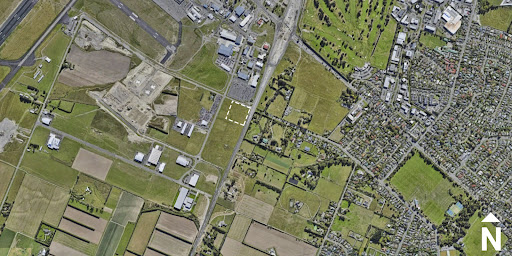
Avonhead, New Zealand
The site of this competition is located in New Zealand. New Zealand is located in the south pacific ocean, the southwesternmost part of Polynesia. New Zealand is a remote land - The country comprises two main islands - the north and south islands and a number of small islands. New Zealand offers a contrasting variety of biodiversity from active volcanoes, caves to valleys; it offers a variety of landscapes and vegetation.
This site is located in the central region of Avonhead, which is one of the most crowded regions. This site provides easy access to the major regions and areas of the city. Space for expansion in the nearby site provides scope for expansion and replication of modules.
- Coordinates: 43°29'53.1"S 172°32'46.2"E
- Area: 15,232 sqm
- Height limit: 10 m
- FAR (Floor Area Ratio): 1
- Ground Coverage: 50%
PROGRAMMATIC OUTLINE
The design of houses/units would be based on two kinds of modules namely Single or Double occupancy for User Groups. The blocks created from these units can be a combination of different units with common areas for interaction and services. These units must be modular in nature ready to be plugged in together to form blocks of not more than 100 units each
User Profile:
- Youngsters: AGE: 18-25 Years: User groups from this age category may be full time or part-time workers or students depending on their occupation and education.
- Working Professionals: AGE: 25-40 Years: User groups from this age category would have different kinds of occupations (creative freelancers, healthcare, software developers etc). However, the house units are expected to be universal and not specific.
Units: Design 80-100 housing units (Number of single or double occupancy units is upto the designer)
- Single occupancy: 25 - 30 sqm
- Double occupancy: 65 - 70 sqm
The space ideas are as follows:
- Living/residential stay areas: 70%
- Common recreational spaces: 10%
- Open/landscape areas: 20%
Other additional spaces can be added by the participants as per their design needs.
Similar Competitions
Discover competitions you might be interested in




Challenge to design mud housing for contemporary communities


The Global Benchmark for Architecture Dissertation Awards
