

Crossing Borders
Challenge to design a local weaving centre
Overview
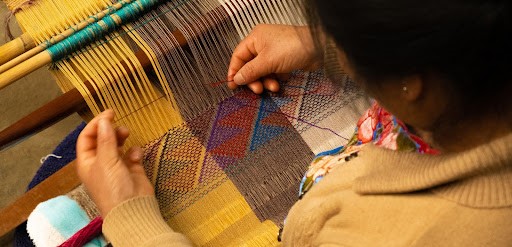 Fig: 1 - In India, 72 per cent are engaged in cotton weaving, 16 per cent in silk weaving and the rest are related to art silk and mixture.
PAST AND PRESENT OF THE HANDLOOM INDUSTRY IN INDIA
Handloom tradition and handwoven fabrics are a novelty whose prominence will remain for times to come. It is the texture, quality and intricacies that come along with the touch of a skilled hand that makes these more precious.
The practice can be traced back to the Indus Valley civilization which was further adapted by the Aryan settlers in the Indian subcontinent. India soon became well known for its variety of handloom sarees and practices. Indian cotton and muslin fabrics were praised by many travellers and historians of the time.
Soon the fabrics of some parts of the country gained popularity and stood as the signature of those places, defining their culture and identity such as Kerala Kasavu, Banarasi Brocade, Gujarati Bandhani, Kanchipuram Pattu, Odissi Bomkai and many others.
The fame of Indian handloom and sarees is one that has crossed borders. But the plight of today’s weavers and the Handloom industry is not one that sounds very much in unison with its fame.
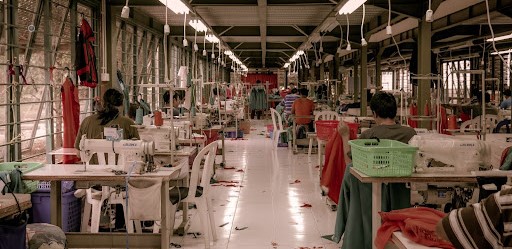 Fig: 2 - The artisans are intolerant towards the entry of power looms and the introduction of any new techniques of production.
A GRADUAL BLUR OF THE HANDLOOM INDUSTRY
Many reasons including the increase in power loom industries and the craft not being prioritised by the younger generation have led to the decline in the quality of the lives of people in the industry. While the power looms compete with the production rate and need for labourers in the handloom industry and take over the textile world, the plight of traditional weavers hangs by a thread.
The cost of production and cost at which these products were sold used to provide a livelihood to these weavers which soon after the introduction of the goods and services tax [GST] got reduced by a huge margin leading to them depending on middlemen who take over a part of their already less income.
Thus the industry is slowly losing its position and potential. While government schemes help them to a certain extent, the need for sensitisation about the craft and help to smaller businesses is a step that needs to be taken.
How can architecture and design help in providing this attention that the handloom industry in India needs?
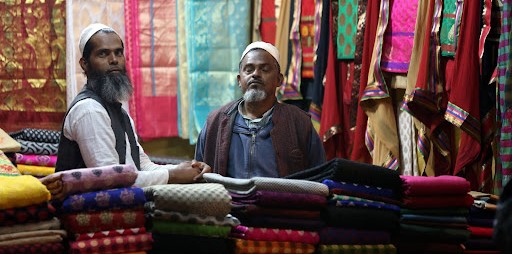 Fig: 3 - Local artisans want to preserve their rich tradition of weaving and prevent the loss of their livelihood at the same time.
DESIGN AN OPPORTUNITY FOR GROWTH
Brief: Design a Handloom hub that would provide the handloom workers and youth of the cluster an opportunity to learn business skills while providing a retail outlet for said business.
The centre would have a retail outlet for the various tourists visiting the place for its many attractions and an incubation centre that would help the people of the community equip themselves with necessary business information.
The project gives an opening for various other ventures that would improve the lives of the local community that are handloom related. The design needs to focus on the weavers primarily as the benefit of such a typology must reach them efficiently, by making it more contextual and not alienating them for the sake of attracting more customers.
But without people visiting the hub, the whole purpose would be defeated. Hence there needs to be a balance between these two functions. The design of the facility is to ensure it grabs the attention of people and tourists.
OBJECTIVES
Landmark - Intent to experiment with form and create a structure with standout visual features.
Multi-use - Space can be used for events other than film festivals for the rest of the year.
Community - Interaction between textile enthusiasts and locals at macro and micro levels.
Interior - Furniture, Finishes, Flooring, Material Palette that are contextual.
SITE
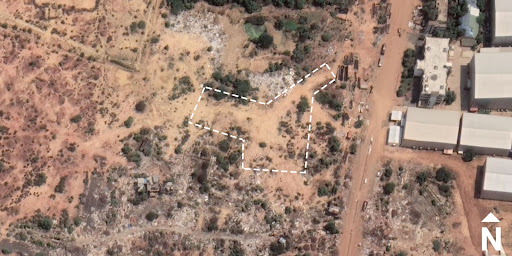
India is a country with a rich multicultural identity and heritage of handloom speciality. It is known for high-quality handloom products created by craftsmen with extraordinary skills. There is an initiative of India Handloom which promotes green production and creates employment in rural India. The site is an hour away from an old handloom training centre in It is known as the ‘City of Silk’ famous for its handwoven silk sarees and delicate zari work.
The history of temples is integrated into the handloom weaving patterns of which skills have been passed down through generations. The site is located in the Kancheepuram district near Chembarambakkam. The locality is an upcoming commercial and residential area, making it easily accessible from any of nearby villages and for people coming in from the town. It is also easily accessible for tourists as it is adjacent to the Mumbai highway.
Site area - 5134 sqm
Height restriction - 12 metres
Ground coverage - 40%
Maximum FAR - 1.0
SetBacks as per CAD plan
Coordinates - Chembarambakkam, Tamil Nadu
PROGRAMMATIC OUTLINE
The facility must-have platforms for both trade and education for 30 trained weavers and 40 learning weavers. The design is to be conceived for 120-150 tourists a day.
- Learning and Training 30%
Classroom, Weaving Lab, Textile Testing lab, Dyeing and Printing, Chemistry lab, Design Studio, Library, Faculty offices, Staff and student washrooms/toilets.
- Production Hub 30%
Warping and sizing yard, Winding room, Dyeing yard, Cloth inspection room, Folding and packing room, Storage for raw silk, Offices.
- Administration 15%
Director’s room, HOB cabin, Supervisor’s Room, Conference room, Service centre, Reception, VIP Lounge, Restroom, Meeting rooms, Security
- Emporium and Tourism 25%
Information centre, Exhibition/Display, Retail shops, Seating, Refreshments/Cafeteria, Auditorium/Gathering spaces.
Any other creative additions to the facility may be done within the provided constraints.
Similar Competitions
Discover competitions you might be interested in




Bring back Drive In's


Challenge to design an urban locus of culture and heritage


The Global Benchmark for Graduation Excellence


The Global Benchmark for Architecture Dissertation Awards
