
Elementary
Architecture College design challenge
OVERVIEW
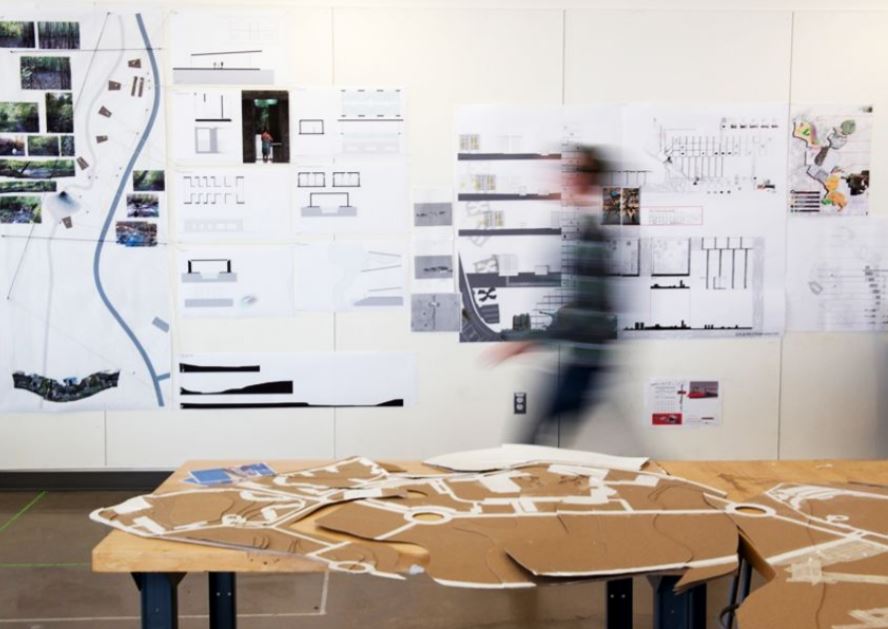
Img 1: A representative image of an architecture student preparing for his design jury. Source
Education
The profession of Architecture, though highly unregulated, is mostly practiced through a licensed professional degree, taught in accordance with guidelines prescribed by the regulating authority in that country. The world over, it is agreed to be one of the most gruelling academic courses, entailing hours worth of design assignments, model making, practical and theory subjects, and mandatory internships. Architectural education is a complex, non-conventional process and its creative demands must be supported by an understanding of art, science, psychology, mathematics and engineering.
Conversely, a graduated Architect is also inherently expected to perform in multiple spheres effortlessly. For a young student, therefore, the study of the Architecture curriculum is one of the most holistic academic experiences there can be.
However, are our institutions equipped with the means to handle such a complex scope of study?
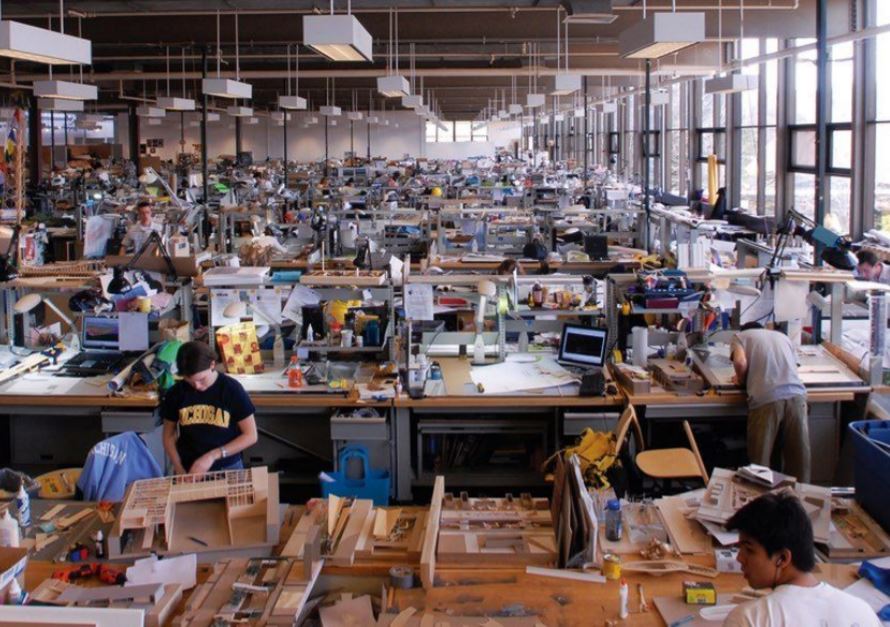
Img 2: A representative image of an undergraduate architecture studio at work. Source
Architecture Practice
Despite the elaborate program, there clearly exists a large gap between the education and the practice of architecture. The dated methods used in architectural education do not reflect the real challenges a fresh graduate would face in the field. Coupled with that, very few graduates actually pass into professional practice with relevant practical experience or knowledge of practical application of building construction details. In essence, what if an architecture institute could embody these details in and of itself? Become a manifestation of the “see and learn” principle?
Added to that, there is the overarching issue of visibility and a lack of understanding among the common populace with respect to what architects do and what our profession embodies. This issue, in particular, also severely plagues the profession as a whole.
Can greater involvement with the local creative community overcome that?
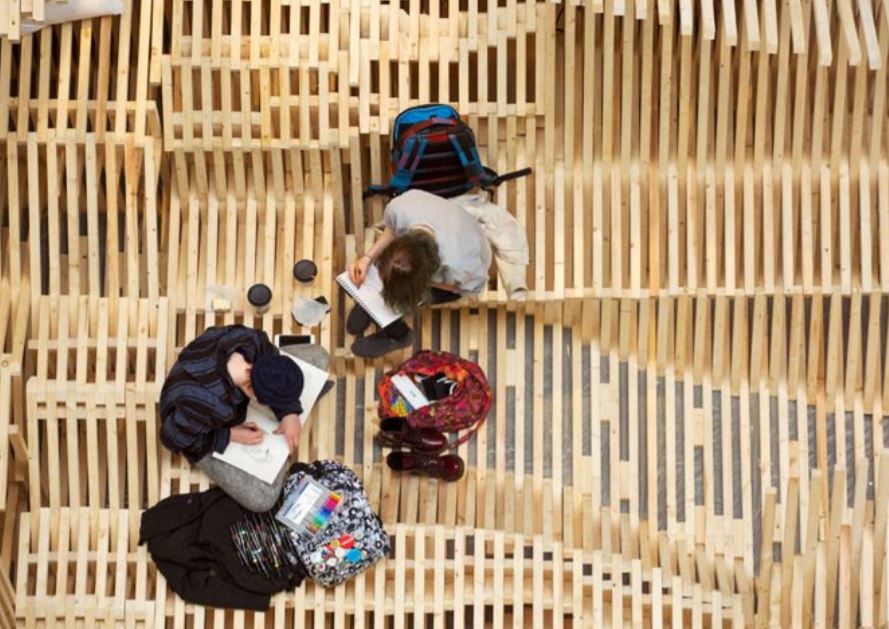
Img 3: The "TwoXTwo" installation with Timber in the Iowa State University’s College of Design. Source
Brief of the competition
Challenge is to design an Architecture School that is the very embodiment of the study it professes. The school should not be just an institution for architecture, but also function as a laboratory for architecture, where students are fully engaged while learning.
Most of the top schools for Architecture in the world are part of larger universities with tremendous repute, serving several departments of study under an umbrella facility. A dedicated facility for architecture would in that case open up an avenue for a school of architecture to have its own unique identity, to put on display what it preaches, and with spaces specifically designed keeping in mind the multifarious requirements of the students in this course.
Additionally, the institution should also aspire for greater transparency and involvement with the local creative community in a conscious step towards improving the visibility of the architectural community, opening up new avenues of opportunity, both academically and professionally.
Objectives


Dedicated: The institute should take into account all the special spaces and needs of architecture students.
Representative: The institute must aspire to represent ARCHITECTURE as a practice and a field of study.
Pragmatic: The design must incorporate the “see and learn” principle applied to architecture.
Involving: The design and spaces must seek to involve the local creative community.
The above serve as qualitative checkmarks for the design of the institute. Participants can assume a mixed demographic for designing services and provisions etc in the institute. Participants are even free to draw from their own study experiences, incorporating what they thought was lacking from their institute of study, especially given the comprehensive needs of Architecture students. The space programme, however, will be derived from the information given ahead.
Programmatic Outline
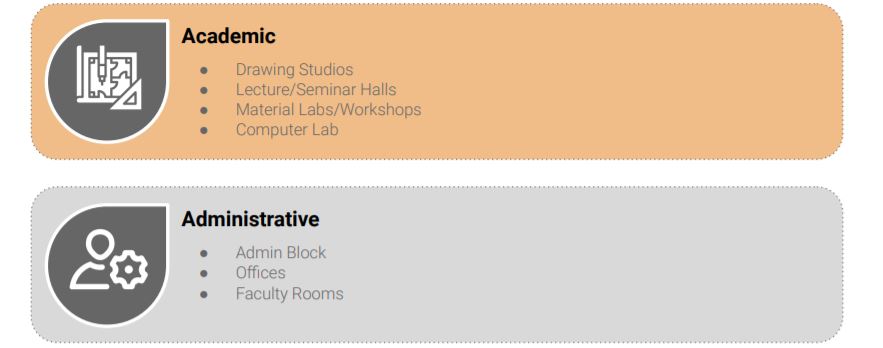
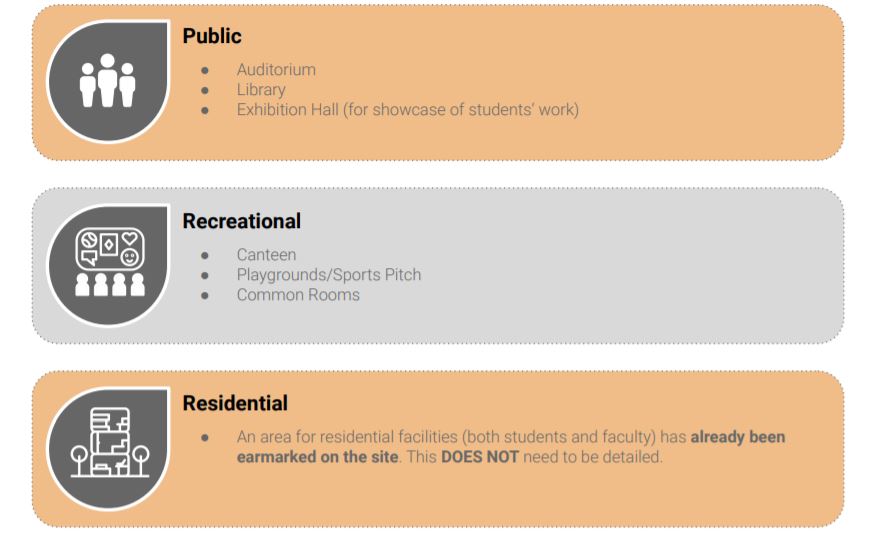
The institution is intended to only serve the Bachelor’s course in Architecture or its equivalent. Participants are free to devise their own study programme, no. of students admitted per batch etc, but it has to be one that is in line with the universal acceptability of the professional architecture degree programme. The list of spaces above is not exhaustive, and participants might alter the program if it benefits the design, but these may be used as check marks to conceive the design in finality
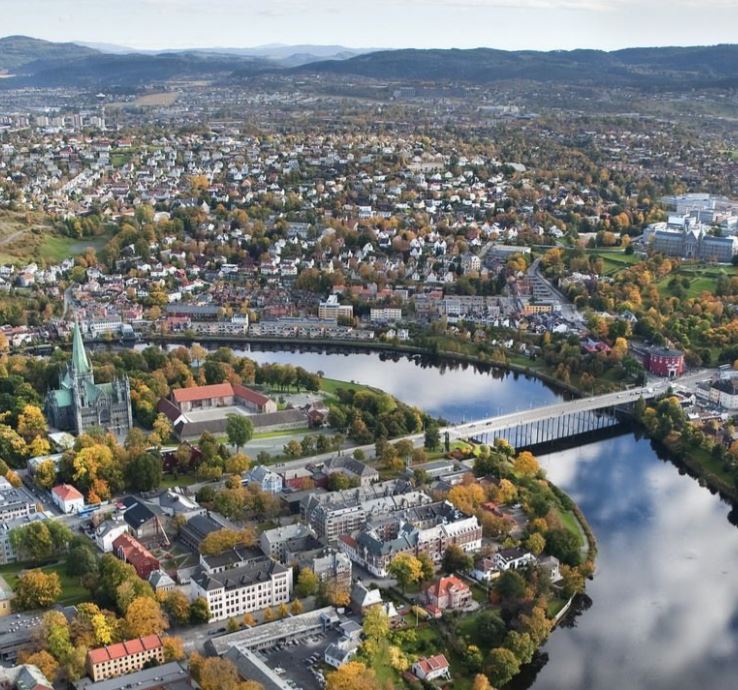
Trondheim, Norway
Trondheim is a city and municipality in Trøndelag county, Norway, and served as the capital of Norway during the Viking Age. It is the third most populous municipality in Norway, with a population just South of 200,000, while being the fourth largest urban area. The Norwegian University of Science and Technology is an institution of national importance situated in Trondheim, for which the town acquires a lot of its repute. The Institute also has a Faculty of Architecture and Design housed within. The Nidelva river flows through Trondheim with old storehouses flanking both sides of this river. Architecturally,
Trondheim is a site with fascinating potential, serving as experimental ground with an amalgamation of both new and old architecture and plenty of natural avenues. With plenty of new constructions and rising tourism, Norway ranks among the top countries for graduate architects to find work.
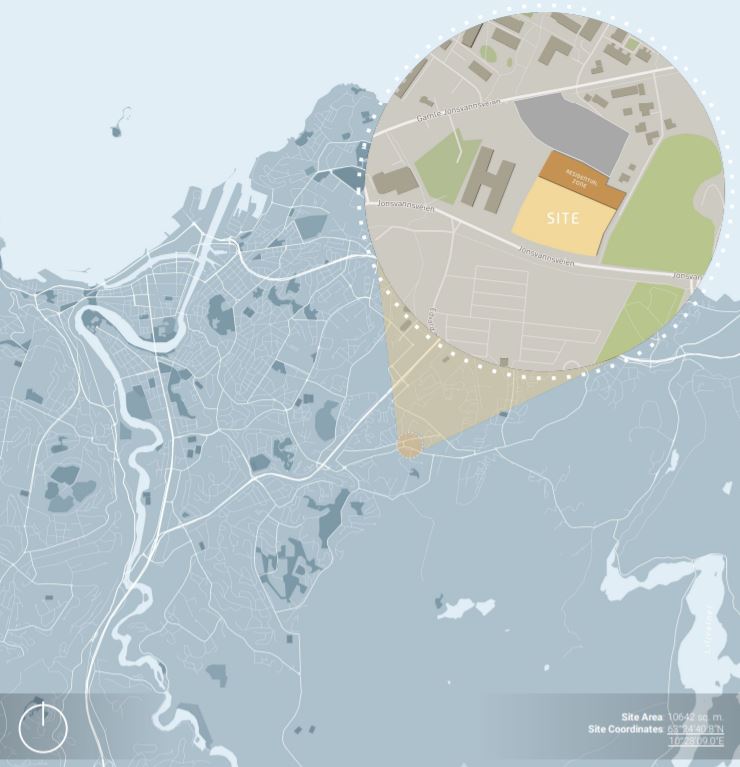
Img 4: Aerial view of the site
Site Plan
The site is located in Nordre Hegdalen in Trondheim, and lies adjacent to the Dragvoll health and welfare center, surrounded by dense green patches. The settlement around is part residential, part institutional, but mostly agricultural. The geographic location of the site is offset from the main city centre in favour of a more quaint environ.
FAR: 80% | Site Area (excluding Residential Zone): 10135 m2 Site Area (including Residential Zone): 14617 m2
Ground Coverage: 40% Height restrictions: 15m | Set backs: 6m on 3 sides, except front (vehicular road facing)
Similar Competitions
Discover competitions you might be interested in




Challenge to design public laboratory


The Global Benchmark for Architecture Dissertation Awards

