
Food vault
A Food Resilience Center Design Challenge
Overview
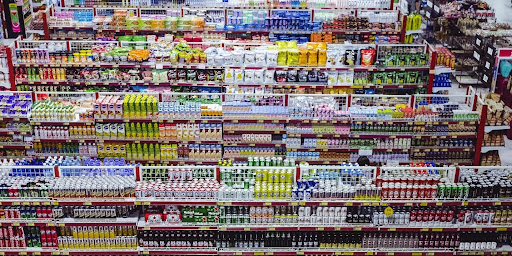 Fig: 1 – Rise of consumerization (Credits- Bernard Hermant)
Consumer culture
Food - fuels the souls, feeds the body. It has inspired cultures to transform our basic needs into extraordinary dishes of creation. It influences a nation's socio-economic status, drives us to work and impacts us our entire life.
How what and why we ate, and eat tells a lot about the past, future and present of a civilization. For our society, the rise in industrialization was where our food consumption changed, while agriculture still is the main producer of food. The result of mass production has led to an increase in consumer outlets which is fuelling consumerization.
The problem is not the inefficiency of food production but an imbalance in food distribution. Due to this, some parts of the world have plentiful and less costly food which contributes to caring less about what one eats, but more about what one buys.
To meet rising needs has resulted in 1.3 billion tonnes of food wastage every year.
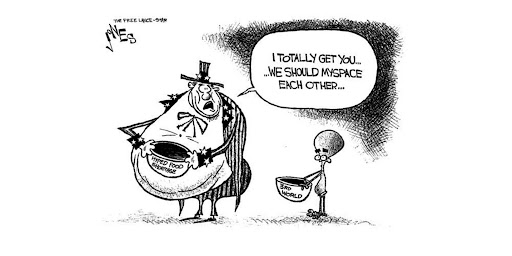 Fig: 2 – Surplus and Shortage of food (Credits- Fredericks Burg)
The paradox of distribution
Despite the food surplus in our first-world bubble, food shortage is the reality. The unequal food distribution due to price rise and economic complexity has given a clear picture of poor food management in our world policies. Surplus and shortage of food is now a paradox.
The fact that most of us are living in urban areas and getting affordable food has disengaged us with the global crisis and food insecurity. Food production has contributed to most of the waste in the past decade.
Our ways of unsustainable eating have also led to environmental degradation in both the natural and built environments, resulting in climate changes and much more.
These ways and distribution processes are neither acknowledged nor addressed by major economies. The need to take control and make changes to reduce food waste is the need of the hour. How can we shape and present these issues by addressing them through architecture?
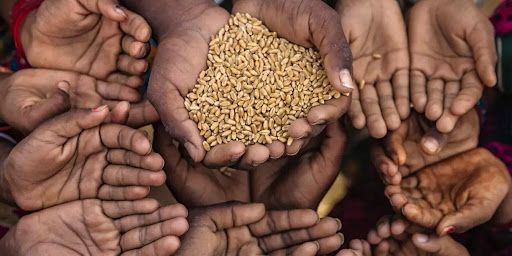 Fig: 3 – PMGKY scheme
Collaboration for food management
While some of us are less Informed about food distribution, there are organizations contributing to the management of food surplus and waste. These groups are aware of environmental impacts and food shortages caused by the overproduction of food and are changing foodscapes at micro and macro levels. They form a diverse range, from brewers, restaurant owners, charity groups to big government organizations and community programs.
The main objective of these organisations is to make a point that food from food surplus is still edible and the stigma related to it needs to be changed. The answer to food waste might be as simple as the recovery of food and distribution of essentials, though doing it is complicated.
For this very reason can organizations and groups like these come together?
Each with their expertise can formulate a better distribution service?
And can we as architects, provide them with space and infrastructure to do so?
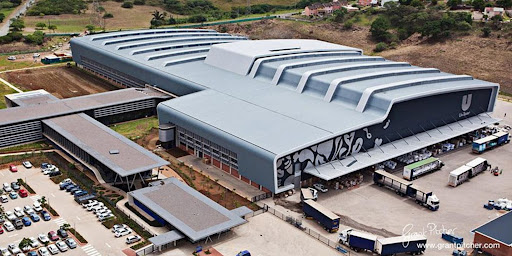 Fig: 4 – Unilever Foods Factory and Distribution centre
Brief of the competition
Brief: Design a food vault that will act as a food security centre with a (i) Distribution centre and an (ii.) Depository.
The Distribution centre will consist of provisions for giving out subsidised food grains and other services, while the depository will act as storage or a safe place for food for future emergencies. During a crisis or disruption, there will be food and essential support in all forms.
The centre will focus on providing subsidised meals and housing provisions for Public distribution schemes and other organizations which distribute food grains and edible food surplus daily.
It will also act as an open centre where people can volunteer to learn about how our food is produced. The competition aims not only at bringing in organisations and NGOs that help in collecting, managing and distributing surplus food but allows architects to work on a challenging and urgent typology in today’s world.
Design objectives
The following objectives can be a point of beginning to conceive this design. Participants are free to form their programmatic outline according to the user group.
Dual: Design a centre in a way that will act as a resilience centre in times of crisis as well as a primary distribution centre for food services daily.
Functions: Other than providing subsidised services and helping during food emergencies, what other functions for the community will your security centre house?
Robust: Ideate to design a strong that can withstand structurally as well as functional during a humanitarian crisis.
Site
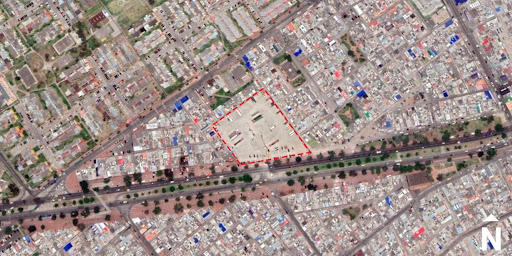
Location: Bogota, Colombia
Area: 9924 sq.m
Height restriction: 10 metres
Maximum Built-Up Area: 9924 sq.m
Ground coverage: 50%
Coordinates: 4°36'52.4"N 74°10'04.9"W
Food security needs in Colombia remain high due to internal conflict and periodic natural disasters, as well as the influx of vulnerable Venezuelans and other migrants crossing into Colombia. Moreover, the rising incidents of forced confinement and displacement perpetrated by armed groups limit Colombians’ ability to access their crops, livelihoods, and basic goods and services, posing severe implications for vulnerable households’ food security. As of now Colombia as a whole is still away from a major food crisis, the possibility of it happening cannot be denied a due increase in activities from armed forces and recent political unrest among the general public.
The need to prepare for the unprecedented crisis is necessary and the food vault can be one option to face the upcoming issues with food security. The selected site in Bogota is the city limits to efficiently work daily as well as for the nearby areas of low-income settlements who would benefit from the centre the most.
Similar Competitions
Discover competitions you might be interested in


Design challenge to reuse E-waste

Illustrate the lost glory of Angkor Wat - Render Challenge

Photograph architecture without architects

Challenge to reimagine the Iron Throne