
FurniTeacher
Challenge to merge furniture with learning
Overview
 Fig: 1 - Isolation makes rural villages and thus in turn schools unreachable to resources (Credits- Joshua Gaunt)
RESOURCES IN RURAL SCHOOLS
Rural and semi-urban schools in India often lack access to adequate print media to learn from, so educators are pushed to maximise the use of the physical space. Walls, blackboards, flooring all emerge as potent means of teaching.
Since these schools often lack access to adequate infrastructure, students of these schools are forced to inhabit these spaces without comfortable furniture for the whole school duration. In addition, many of these spaces are characterised by murals that attempt to facilitate learning. Unfortunately, murals tend to be more permanent than is ideal to facilitate the progress in learning expected from the child. Moreover, budgetary constraints mean that a painted mural remains in the space till there is another financial opportunity to paint again.
In such a space it may be valuable to ask ourselves, what opportunities could modular furniture that could also help transfer knowledge allow?
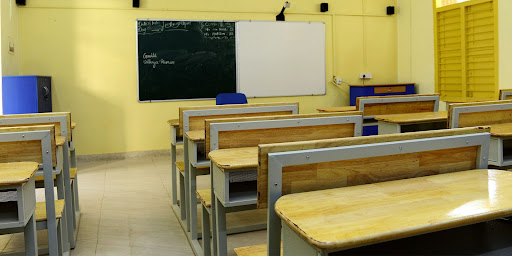 Fig: 2 - Can new possibilities of learning be found in the classroom itself?(Credits-Haseeb Modi)
NEW POSSIBILITIES IN THE CLASSROOM
Furniture, particularly classroom furniture, tends to have a singular purpose. They act as either surfaces to write/draw/interact on, or as seating. As technology has improved in the years, coupled with an increasing cost of production, and increasing environmental consciousness, a need has arisen for modular solutions. There is an increasing demand for furniture that can support more than a singular purpose.
While this design model is useful for various different reasons, its virtues are particularly potent in environments with limitations. In spaces such as rural schools where one must make most of the spatial elements to facilitate learning, these modular furniture solutions can be a promising future.
The furniture could not only increase student comfort but could open up a host of opportunities for children to learn from.
 Fig: 3 - Can we by design thinking merge resources and form something resourceful through classroom furniture? (Credits-Carli Jeen)
FURNITURE, A MEDIUM OF LEARNING
Budgetary and economic concerns push individuals to maximise the utility of spaces and objects. Things attain more than one purpose, often unintended. In schools that grapple with the lack of infrastructure, a plurality of any introduced element can offer unprecedented opportunities.
Brief: The challenge here is to design a modular furniture solution that can be implemented in rural and semi-urban Indian schools.
The solution should act primarily as effective and comfortable furniture for children to use during their school day. Apart from acting as furniture, the object should be able to transform to act as a potent platform to help transfer knowledge to the students. The solution can be one single changeable form or be composed of multiple smaller forms that work together in both scenarios. The material must be cost-effective and durable.
OBJECTIVES
Form: The furniture design should draw inspiration from existing furniture typologies in similar environments
Plurality: The design should be usable in multiple configurations
Transfer Knowledge: The design must be capable of adding to the educational experience of the student.
Materials: What materials, colours, finishes would one employ in the creation of such a project?
SCALE
A single unit, when in its open form should occupy an area of 1.2sqm with a minimum height of 0.8m and a maximum height of 2m. The context for this challenge is a physical classroom of size 8m x 8m x 3m (LXBXH). The number of students in a particular classroom is estimated to be about 15, therefore in any given classroom, there should be units (single or modular) for 15 students.
The design can be deconstructible, modular, connectible to other modules, etc, to both assist the learning process and encourage collaborative learning. But the basic design/composition of a unit or the area should not exceed 1.2sqm. Participants are urged to explore the given constraints and create innovative solutions.

