
Halt
Challenge to design a bridge as a community stop
Overview
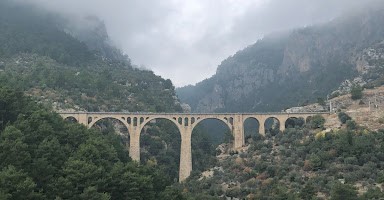 Fig: 1 - Bridges, in the early days were engineering feets, built to enable socio-economic progress in the region through transportation.
PREMISE
When we talk about architectural spaces, we know that every space is designed for a specific function. Transitional spaces are designed for the sole purpose of connecting these functional spaces. The ‘bridge’ the gap between two separate entities, so to speak.
Similarly, a bridge, in the physical form, is an engineering feat, that opens up new terrains for us to explore and expand to. The function of bridges was predominantly to enable the connection. But as civilisation progressed, the design of a bridge evolved into a sculpture, impressive structurally, as it is visually.
Whenever we envision a city skyline, a bridge structure is an important part of the picture. This important landmark becomes part of the history of the region, a representation of the events that have made the city what it is today. But a bridge is a ‘public infrastructure’ and the quality of its spatial design remains insignificant in design.
Can the role of a bridge transcend to being more than just a transporting entity?
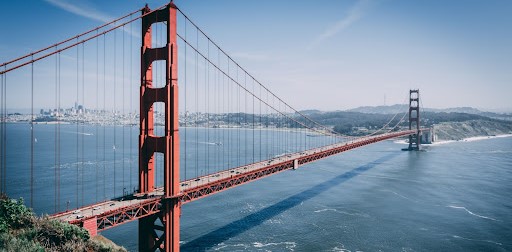 Fig: 2 - Bridges are part of the urban fabric of cities and their presence has an immense impact on society.
CHALLENGE
Bridges being an infrastructural entity, it has several economic, social and political factors into play. As the city and its culture may impact the design, in a similar sense, the bridge construction also has an inverse effect on the city. The economy of a city grows, and it enhances the social life in the city.
While the benefits of the bridge on the city and its inhabitants is immense, it’s potential to be developed as a public destination is still unexplored. Material and technological advancements have made it possible to achieve even the most bizarre and outrageous designs. All the stops to bridge design have been removed and other than its visual impact, the spatial design quality must be enhanced.
Bridges can be a stop to enjoy the beautiful sights around from a heightened perspective, a space for leisure, entertainment or walk and so much more. Bridges are potential landmarks that end up defining the image of the city and their design must be an appropriate representation of the locale.
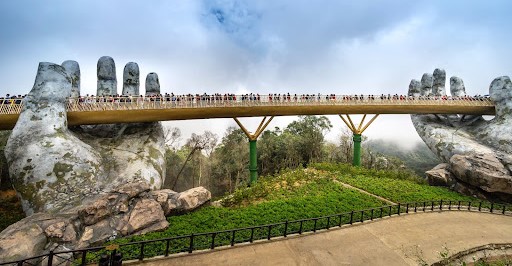 Fig: 3 - Bridges have translated from icons to entities that enable access to the untouched wonders of the world.
BRIEF OF THE CHALLENGE
The challenge is to design a bridge that will become a public destination while making a significant contribution to enhancing the social aspects of the local community.
The bridge design can be inspired by the culture and character of the city. The contextual restraints of the site must be taken into consideration while designing. The environmental impact of the bridge design must be minimal. There is no restriction on the structural type of the bridge. A brief detail regarding the construction and material must be included in the proposal.
The aim of the design is to inculcate a narrative in the bridge design. The bridge is to be designed for pedestrians and cyclists only. The bridge can operate on multiple levels but its impact on the viewscape of the existing city must be analysed and documented. The purpose of the bridge is to incubate social interaction in this public space through strategic design interventions.
OBJECTIVES
- Concept: The design must draw inspiration for the form to create a narrative. The journey over the bridge is to be documented from the pedestrian viewpoint.
- Landmark: The design must be able to create a visual impact on the city viewscape.
- Material + Technology: The palette used must be suitable for both aesthetics and functionality.
- Sustainability: The bridge must not have any adverse impact on its surrounding. Design can be extravagant, but optimum use of resources is expected.
- Context: The design must respond to the (existing) site conditions. The wider socio-cultural, economic and environmental settings are to be considered in the design approach.
SITE

New York City is the most populous city in the world. Its population surpasses 20 million and its natural harbour helps make it the 8th largest economy in the world. The city is built on three islands and is a collection of five Boroughs with many districts, Manhattan, Brooklyn, Queens, The Bronx and Staten Island.
Owing to urbanisation, the city streets are plagued with fast-moving traffic and pollution. The city is trying to rethink its transportation routes and incorporate walking and cycling in the city. While the city has many bridges for vehicle commute, they are at full capacity, and new pedestrian bridges are to be built to enhance green commute.
A pedestrian bridge is to be built across the East River, over Queens and Manhattan. Even though proposals for this design exist, we encourage participants to envision a new design for the site. The width of the bridge has to
- Site Coordinates: 40°45'26.5"N 73°57'02.5"W
- Area: 30668 sqm
- Height Limit : 15 m
