

HEAL+
Regenerative housing for Kerala
JURY

David Scott
Director, Scott & Scott Architects, Canada
David graduated with a Masters of Architecture degree from Dalhousie University in 2000. In the twelve years prior to the establishment of Scott and Scott Architects, David worked in the office of Peter Cardew Architects as the project manager and lead associate on a number of residential and cultural projects.
David has an active and ongoing role in the architectural education as both a Teaching assistant in design and the History and Theory of Cities at Dalhousie University (2000), an adjunct professor at the University of British Columbia (2004) as a sessional instructor at the University of Calgary (2006),and an Instructor in Project Delivery at the British Columbia Institute of Technology (2012). He has been a regular guest critic and committee member on a number of these at the University of British Columbia, a guest critic and lecturer at Dalhousie University and British Columbia Institute of Technology.
In 2008 he was a juror for the Lieutenant Governors Awards in Architecture and in 2014 was a Juror for the Architecture for Humanity ‘Next Big One’ open competition and is currently a director of the Contemporary Art Gallery in Vancouver.

James Law
Founder, Chairman & CEO, James Law Cybertecture, HK
James Law JP is an architect, technologist, and entrepreneur. Renowned for creating the philosophy of Cybertecture in which a better world is designed with technology to alleviate suffering for mankind, his company's projects cover buildings, spaces, technologies, education, and social design. He received his undergraduate and postgraduate degrees from Bartlett School of Architecture at University College London and is a chartered architect of RIBA, Architects Registration Board UK, Hong Kong Institute of Architects, Architects Registration Board Hong Kong.
James is a Justice of the Peace, Young Global Leader of the World Economic Forum; a Council Member of World Economic Forum Global Agenda Council on Design & Innovation; Board Member of the HKDC, Board Adviser of the HKDA, and Member of HKTDC Real Estate Advisory Board.
James is the founder of architecture, interior, technology design firm - James Law Cybertecture; laboratory for future research firm - Cybertecture X; design education institution - Cybertecture Academy, and charity - Cybertecture For Humanity Horatio Law Foundation. He and his companies are winners of multiple international awards including the FT Asian Innovation Award, Edison Award for Innovation, Design for Asia Award, HSBC World Architecture Award. He is the architect of the world-renowned OPod Concrete Tube Housing Project designed to alleviate affordability problems for mass housing; architect for The Pad Tower - the world's first Apple iPod inspired building in Dubai; and architect for the design of the world's first commercially run Hyperloop by Hyperloop TT.
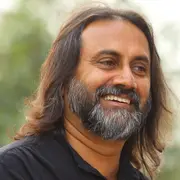
Tony Joseph
Principal, STAPATI Architects, India
Tony Joseph graduated from MIT Manipal and completed his masters in design from the University of Texas, Austin, in the Charles Moore program. Interactions and travels with Moore and his views on regional architecture had a strong influence in the direction of Tony's design. He returned to India and started Stapati in 1989, which has steadily grown into a multi-disciplinary practice emphasizing values of integrity, sustainability, and innovation.
Senapati's architecture emerges from a sensitive understanding of the context; one where the evolution of design is firmly rooted in the region’s traditional narratives, while interpreting the elements in a modern context. There is an underlying acuity in the design approach, which responded to the site uniquely, rendering it relevant and timeless.
Senapati's hospitality projects have been recognized for their innovative and regionalistic architectural interpretations and are the most successful in their respective areas of operation. These include the Kumarakom Lake Resort, Kerala, which has been rated as one of the top five resorts in India, the Alila Diwa, Goa and the Enchanted Island Resort in Seychelles, to name a few, all of which have garnered international acclaim. The practice has evolved continuously since its inception, constantly exploring new directions in architecture.
Stapati, under Tony’s able leadership, has won numerous awards and recognitions over the years and has been selected as one of the Top 50 Most influential design firms in South Asia by Architectural Digest for five years continuously, from 2014 to 2018. In 2015, ORO Editions from San Francisco brought out a monograph on the hospitality projects designed by Stapati. Entitled ‘Timeless Resorts’, the book examines the evolution of eleven captivating hospitality projects. Tony is the Founder Chairman of Avani Institute of Design, a Center of Excellence in Architecture and Design education located in Calicut, promoting a holistic approach to design education to develop well-rounded professionals equipped with the sensitivity, empathy, social and technical skill sets to address the ever-evolving concerns of our environment. Tony was an invited artist in the Kochi-Muziris Biennale 2016 and had designed the Biennale Pavilion.

Sanjay Puri
Principal, Sanjay Puri Architects, India
Sanjay Puri, the Principal Architect of Sanjay Puri Architects, India has been a speaker and a judge at numerous international architecture events including the Leading European Architects Forum, The World Architecture Festival & The Perspective PLAN events held in London, Amsterdam, Bologna, Milan, Venice, Barcelona, Singapore, Berlin & Belgrade.
Winning the World’s Best Residential Building of 2017 at the LEAF Awards, London and the World’s Best Future Infrastructure Project of 2017 at the World Architecture Festival, Berlin, Sanjay Puri Architects have now won over 114 international architecture awards.
5 Chicago Athenaeum Museum of Architecture & Design’s International Architecture Awards in 2016,2014, 2012 & 2011, 9 World Architecture Festival Awards in 2017 , 2015, 2014,2012, 2011 & 2010, 9 Society of American Registered Architects Awards (SARA), New York, 14 World Architecture Community Awards U.K and 3 Hospitality Design Awards New York in 2015,2012 & 2010 are some of the other awards won by the firm in the last 7 years. With over 114 international and over 100 national awards, the firm has won architectural projects in Spain, Montenegro, Mauritius, Abu Dhabi, Dubai, Montreal and Dallas in addition to projects in 40 Indian cities. With a diverse portfolio of townships, schools, hotels, retail and office buildings, they continue their quest for creating innovative design solutions that are sustainable on a large scale.

Sanjay Prakash
Principal, SHiFT Architects, India
Sanjay Prakash, B. Arch., A.I.I.A., is an architect with a commitment to energy-conscious architecture, eco-friendly design, people’s participation in planning, music and production design. Over the years, he has integrated all his work with the practice of new urbanism and sustainability in his professional and personal life.
He is Principal Consultant of his design firm, SHiFt: Studio for Habitat Futures, and was a partner of DAAT and Studio Plus, firms that predate his current firm. He is a co-founder of the Future Institute, a not-for-profit, multi-disciplinary applied-research platform seeking to undertake and enable initiatives towards informing how India shapes its urban future.
His name and work is mentioned in the twentieth edition of one of the main reference work in architectural history, A History of Architecture by Sir Bannister Fletcher.

Mohammed Rezwan
Founding Executive Director, Shidhulai Swanirvar Sangstha, BD
Architect Mohammed Rezwan is Founding Executive Director of Shidhulai Swanirvar Sangstha, and invented the ‘floating education system’. Over the last 16 years, he developed, expanded, and sustained the floating schools to ensure access to all year round and quality education in flood-prone regions in Bangladesh. Applying his architectural expertise, he designed spaces on boats that successfully accommodating the need of a school, library, training to the healthcare center. He introduced a solar system and internet on boats. He also invented the integrated floating farming technique (vegetable garden along with duck and fish raising on floating structure which is made of recycled materials and use the hydroponics system), as well as the bamboo, bottle and siren flood warning system, and the Surya-hurricane solar lantern (a low-cost solar-powered lantern made from recycled parts of the conventional and much-used kerosene lantern). His school- boat idea is recognized by the United Nations as an innovation, which received the UNEP Sasakawa Prize 2007 and UNDP's Equator Prize 2006. He has received several international awards including the Curry Stone Design Prize 2017 and Sri Sathya Sai Awards for Human Excellence 2016.
Rezwan has drawn significant national and international attention towards education and development needs in flood-prone areas. His work with the floating school has been included in the school textbooks around the world including the U.S. and Japan. His project has impacted over half a million people in Bangladesh, and the project model is already copied in eight countries in Asia and Africa - transforming the lives of millions.

Manuel Der Hagopian
Co-Founder & Partner, G8A Architects, Switzerland
Manuel Der Hagopian (born in 1971 in Geneva, Switzerland) graduated from the Geneva Institute of Architecture, Geneva, Switzerland (IAUG) and Belleville School of Architecture, Paris (ENSAPB). He is one of the original Partners of group8 architects, established in Geneva in 2000, and is a Co-founder and Partner at G8A in charge of operations at the Singapore office. He also co-manages the offices in Geneva, Hanoi and Ho Chi Minh City. His main responsibilities include design direction, conceptual design and project management.
Through G8A’s think tank, aptly named 8+, he is currently pursuing his strong interest in the consequences of a rapidly growing population’s impact on the residential housing situation in South East Asia. Since 2015, he has been a guest professor at SUTD (Singapore University of Technology and Design), where he aims to strengthen the transfer of architectural and design knowledge between Singapore and Switzerland.

Suhasini Ayer Guigan
Co-Founder, Auroville CSR, India
Suhasini Ayer – Guigan, is a graduate of “Delhi School of Planning and Architecture”; co-founder of the “Auroville Centre for Scientific Research (CSR)”; an organization dedicated to applied research in the field of solar passive architecture, sustainable urban development and building technologies, water, and waste management and renewable energy.
She heads the “Auroville Design Consultants”, a planning and architectural design unit under CSR. In the projects undertaken by the team, the designs respond to the natural and human geography, local climate and culture to evolve minimal and elegant built forms. The underlying theme in all the projects is the integration of functions with the building systems, including water, energy, waste, building materials and technology to create a passive sustainable network between the users to the built and unbuilt spaces, to empower them to take responsibility for their environment.

Madhav Raman
Founding Partner, Anagram Architects, India
Madhav is an architect and urbanist. He co-founded an architectural practice in partnership with Vaibhav Dimri after they graduated from the School of Planning and Architecture Delhi in 2001. Formally established in 2004, Anagram Architects is internationally recognized as amongst the top emerging practices in the world with a commitment towards delivering deeply contextual designs that encourage sustainable lifestyles.
Over the years the practice has garnered much international acclaim including a nomination for the Aga Khan Award 2010 and inclusion in the Wallpaper* Magazine’s “Architects Directory 2009”. Its work has been permitted at the Architectural Review’s World Emerging Architecture Awards 2007, the Cityscape Architectural Awards 2008, 2010 & 2016, the Wienerberger Brick Awards 2010, the SAIE Bologna 2010, 2011 and 2012, the Holcim Award for Sustainable Construction 2011, Asia Pacific Design Awards 2012, the International Design and Architecture Awards 2013, the Institute of Indian Interior Designers Awards National Winner 2017 and the Indie pool India's Best Design Studio Award 2017.
Anagram Architects has also featured in the International Architecture Biennale 2010 in Rotterdam and Biennial of Design (BIO23) 2012 held in Ljubljana, Slovenia. They have been included in the Architectural Digest's list of the most influential South Asian designers for 2014, 2015, 2016, 2017 and 2018.
Similar Competitions
Discover competitions you might be interested in


