
Homelike
Competition to design a refuge for orphans
Overview
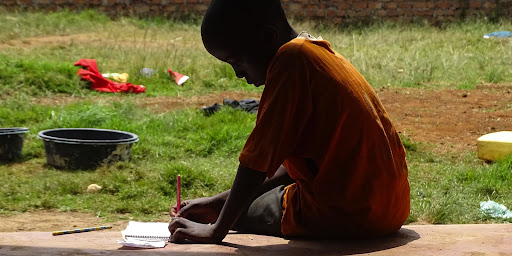 Fig: 1 - Learning for kids suffering from neglect is a tedious task (Credits-Stijn Kleerebezem)Fig: 1 - Learning for kids suffering from neglect is a tedious task (Credits-Stijn Kleerebezem)
EDUCATION FOR CHILDREN
Children are the future of nations. The well-being and upbringing of children are the deciding factors for the future of nations. Being constant learners and in a developmental phase, providing children with proper education, living and well-being spaces is a basic requirement for a safe future.
Education takes up a majority of a child's life, and also is one of the most important factors for the child's present and future betterment. Today the number of children going to school is in the billions, yet the number of children who are devoid of proper education is high.
These children are from areas that are either swamped with political unrest, environmental issues, or poverty. In such situations providing a child with basic resources of survival is a necessity, even surpassing the need for education.
How can education be provided to homeless children who are fighting for survival?
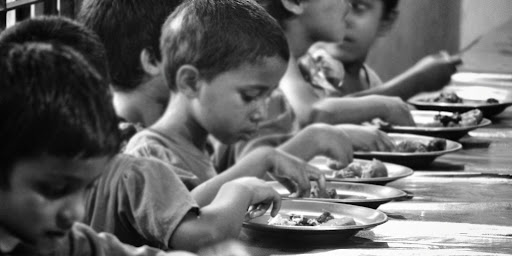 Fig: 2 - The number of orphans is on the rise with social/economical/political unrest (Credits-Orphans in Bangladesh/Imdadul Hussain)
ACCESS TO OPPORTUNITIES
There are about 140 million orphan children worldwide throughout varied countries, who have lost their parents due to some calamity or issue. The majority of this is caused by severe poverty and economical crisis, which eventually has led to being homeless and orphaned.
Under such situations, the children are left to survive by themselves. Causing them to focus on jobs and activities that can help their survival, thus going further away from schools and education.
For these reasons, there is a need for establishing a new type of shelter which will act as a refuge, a care space and also an educational centre. Can the introduction of this new typology provide the homeless orphaned kid’s space that will act as a home and a classroom?
By providing the care and basic things needed for survival can we give orphan children an opportunity to learn?
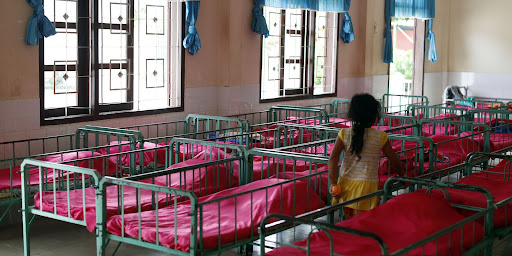 Fig: 3 - How will your typology of orphanage look like? (Credits-Getty Images)
BRIEF OF THE COMPETITION
By rethinking the concepts of having separate shelter homes, schools and care spaces, can we create a unified architectural intervention that merges these centres together into a 'home'?
What architectural intervention can aid and motivate this new typological requirement? And how will it fulfill the needs of these children?
Brief: The architecture competition brief calls for innovating a space as a living and educational facility for the orphaned children by providing spaces for rehabilitation-care-learning.
Exploring the possibilities of how the merging of these spaces can bring about a secure space for these children, where they won't just be presented with a temporary shelter but also an educational space.
OBJECTIVES
Flexibility/choice: How does this design provide flexibility of space and function?
Empathy: How is the design responding to the user’s needs and requirements?
Affordable: How cost-effective is the design?
Cohesion: How effectively does the design unite and merge different activity spaces together?
SITE
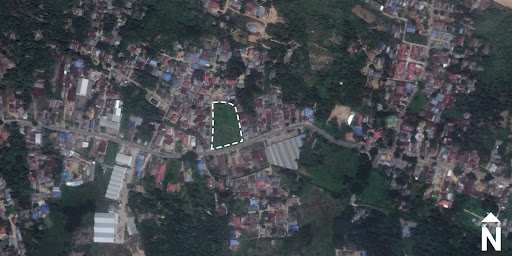
Puuwatu, Indonesia
The site for this challenge is located in Indonesia. Indonesia is located off the coast of mainland Southeast Asia in the Indian and Pacific oceans. Indonesia is well known for its high mountains and active volcanoes. The majority of areas in Indonesia are fertile and are densely populated. As a result, they also fall prey to poverty and other social issues.
This site is surrounded by crowded and densely populated regions, the neighbourhood of the site offers a variety of typologies nearby. This site is mainly accessible and is easily reachable for people. The central location of the site offers a diverse neighbourhood and varied user base.
- Coordinates: 3°57'52.2"S 122°28'26.3"E
- Area: 5648 sqm
- Height limit: 9m
- FAR (Floor Area Ratio): 1
- Ground Coverage: 30%
PROGRAMMATIC OUTLINE
The programmatic outline is intended for one module capacity of 80 children. This is recommended for this challenge.
The space ideas are as follows:
- Spaces to live: 50%
- Spaces to collaborate: 10%
- Spaces to learn: 20%
- Spaces for leisure: 10%
- Ancillary and service spaces: 10%
Other additional spaces can be added by the participants as per their design needs.
Similar Competitions
Discover competitions you might be interested in



Challenge to design mud housing for contemporary communities


The Global Benchmark for Architecture Dissertation Awards
