Hyperblock
Rethinking Cerda's Legacy
OVERVIEW
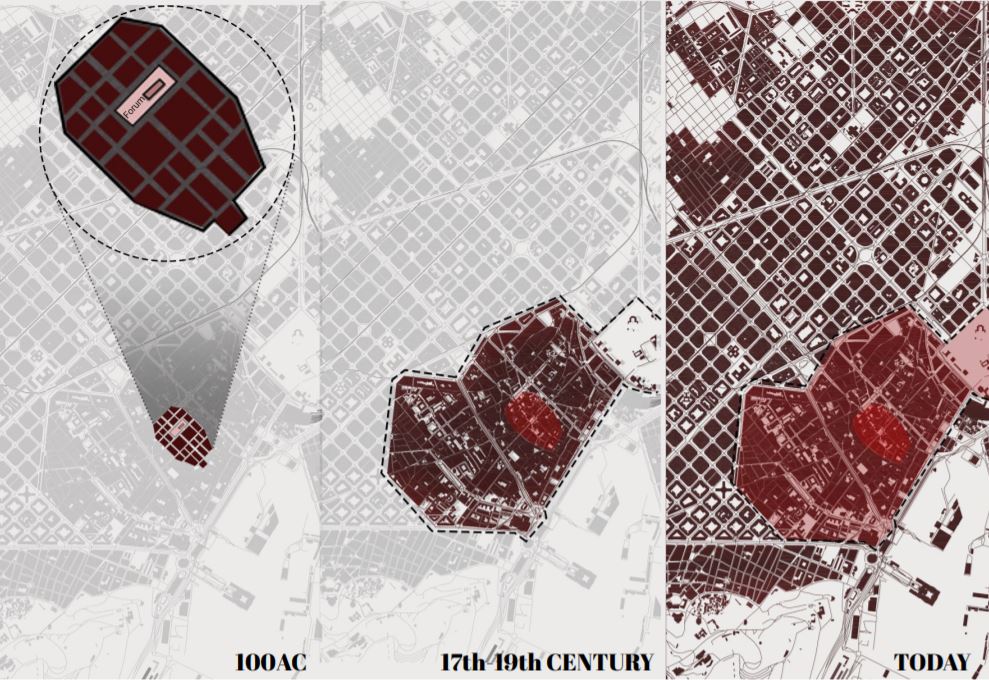
Img 1: 1.Barcino, sketched in its original location. 2. Barcelona hemmed in wall after expansion. 3.Current built density.
Birth of Cerda
Barcelona, a city known for its unique planning has seen drastic changes due to population growth and rapid urbanisation. It has always been a bounded city, dense since its founding by the Romans:
- Founded as ‘Bacino’ (walled city), having an orthogonal outline of 1.5km perimeter inhibiting 1000 people.
- The middle age-city grew and became complex: extended wall was built in 1260 to accommodate.
- 15th century-wall expanded to encompass Raval neighbourhood [1]
- 19th century- highest population density in spain, miserable living and working conditions.
In 1854, to deal with the constant rapid growth of the city the spanish government finally gave the order to take down the walls. As soon as the walls were demolished, plans began for the expansion of the city to promote the Ensanche Project (Eixample District) giving rise to the ‘City of Cerda’.
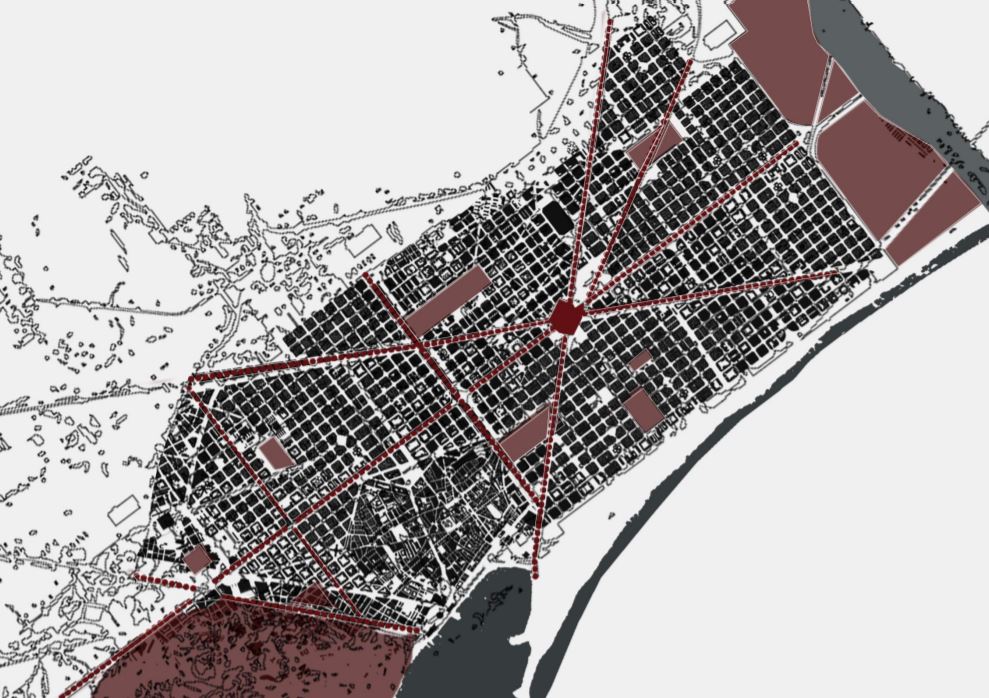
Img 2: plan proposed by Ildefons Cerda.
Plan of Cerda city
In 1855, Ildefons Cerda’s utopian plan was approved by the central spanish government. The design envisioned a rationalised open city, with a grid of wide streets. The principle elements were block dwellings (manzanas) and street corners cutting at 45⁰ angle to facilitate traffic and air movement.
Each manzana was almost identical in terms of height and area (113mx113m). Every Cerda Block was supposed to have an internal courtyard to receive sun, ventilation and joie de vivre.
What was unique about Cerda’s grid was the refusal to address hierarchies apart from few exceptions (diagonal avenues and the Gran Via). The goal was to combine rural living (green spaces, ventilation, fresh air, community) and urban living (commerce, facilities, culture).
So what made the humanitarian marvel collapse?
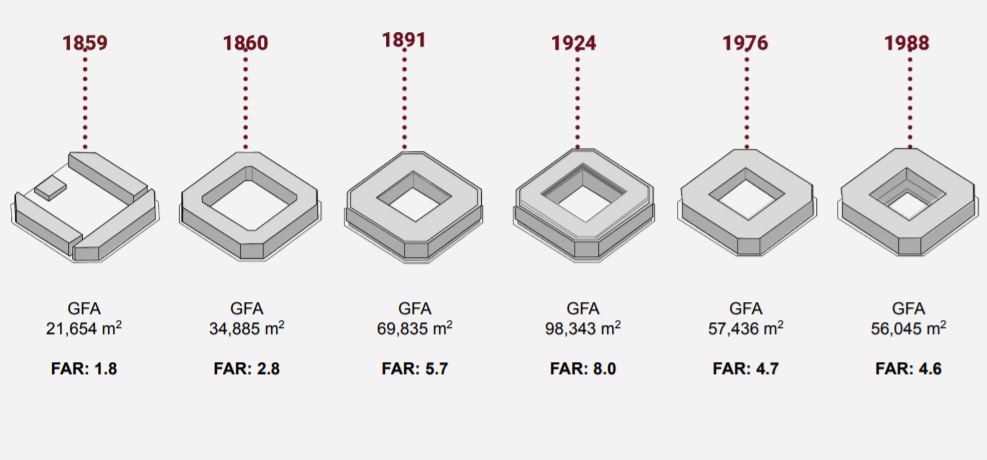
Img 3: Evolution of cerda block with.
Urban scheme of grid city
Cerda imagined a garden city for Barcelona but with growing demands of population, majority of the land was covered for construction. As a result, green spaces disappeared, roads became narrower, provision of sunlight and ventilation and therefore psychological well-being was compromised.
A city whose core idea was for the place to breathe for both ideological and public health reasons, is tied up in the fumes of pollution. Grid lines have become choked with cars and city’s pollution and noise levels have skyrocketed.[2]
What was once a design to make Barcelona healthier, now has to be dramatically rethought for the same reasons.
Salvador Rueda’s urban planning scheme- ‘Superillies’ is an effort to make barcelona vehicle free. It consists of creating superblocks (nine existing blocks of the grid) that limits the vehicular movement to the superblocks perimeter. Only the residents or local business owners of the block are given permittance.
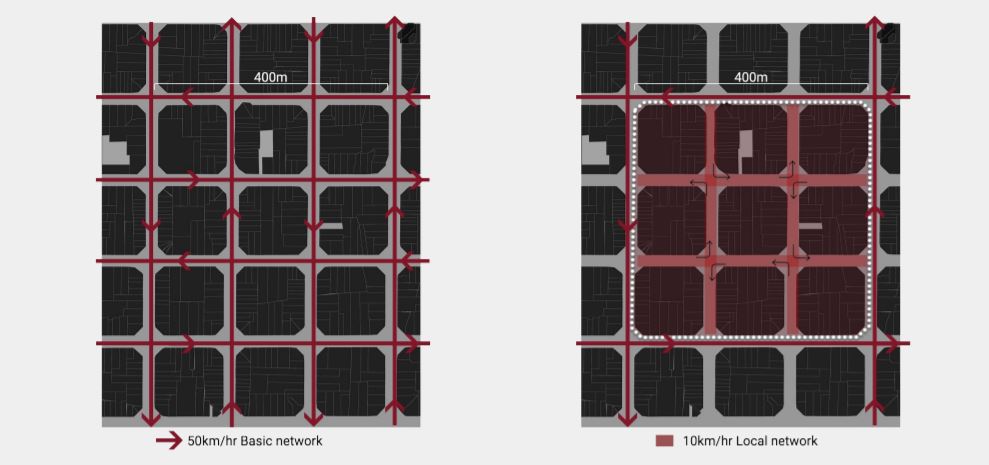
Img 4: 1. Transformation of traffic movement after superblock imposition.
Incrementality in cities
Although superblock is a step in the right direction, it isn't the permanent solution for existing and future issues sprouting from population growth.
A city like Barcelona is meant to attract people. As a result, it is one of the densest cities of Europe. Population density is deemed to grow in the coming years as more and more people are moving to cities in search of better opportunities.
Is there an alternative design scheme to attain controlled urbanisation?
Brief of the competition
Cerda 20 invites visionary ideas for redesigning the city with one of the most unique planning, set in the distant future, ‘2050’. The brief is set up to identify what should have been and what it can be in the future.
Challenge: Musing over culture and heritage of Barcelona, redesign Cerda blocks, recognizing the current and possible social and environmental challenges. Also plan pedestrian and vehicular movement around it.
The participants are encouraged to come up with their own urban guidelines (facilities, road widths, vehicular and pedestrian movement etc) for the area.
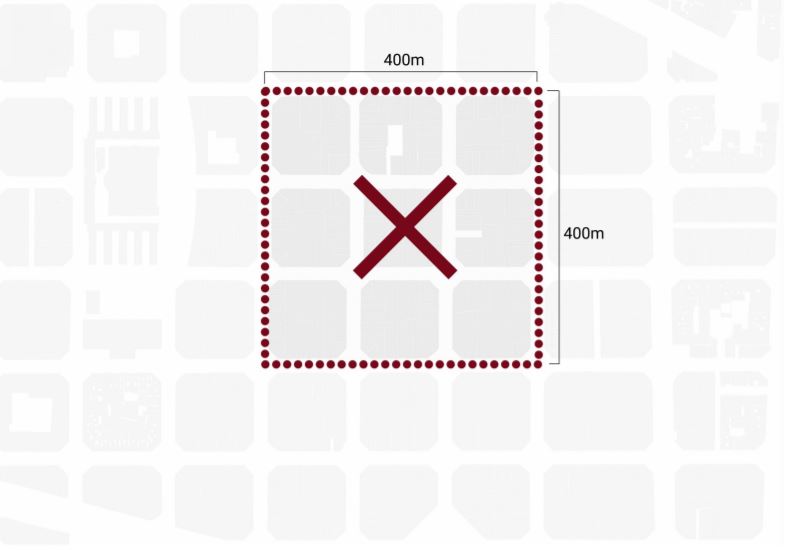
The area of 9 Cerda blocks (400m x 400m) forming a superblock is to considered for the intervention of ‘Cedra 50’.
Objectives
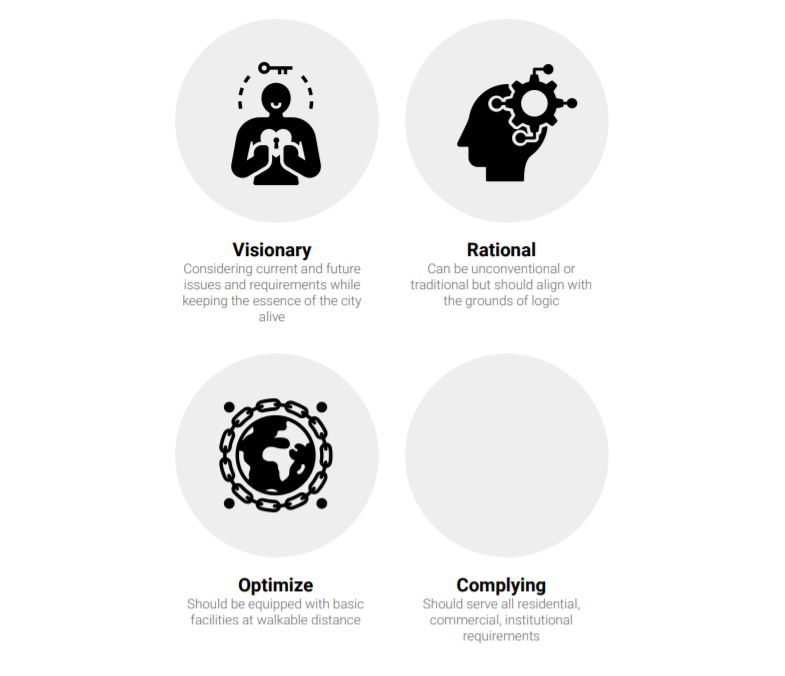
Designing a self sufficient structure or structures resembling a small town in terms of functionality inhabiting 5000-6000 people.
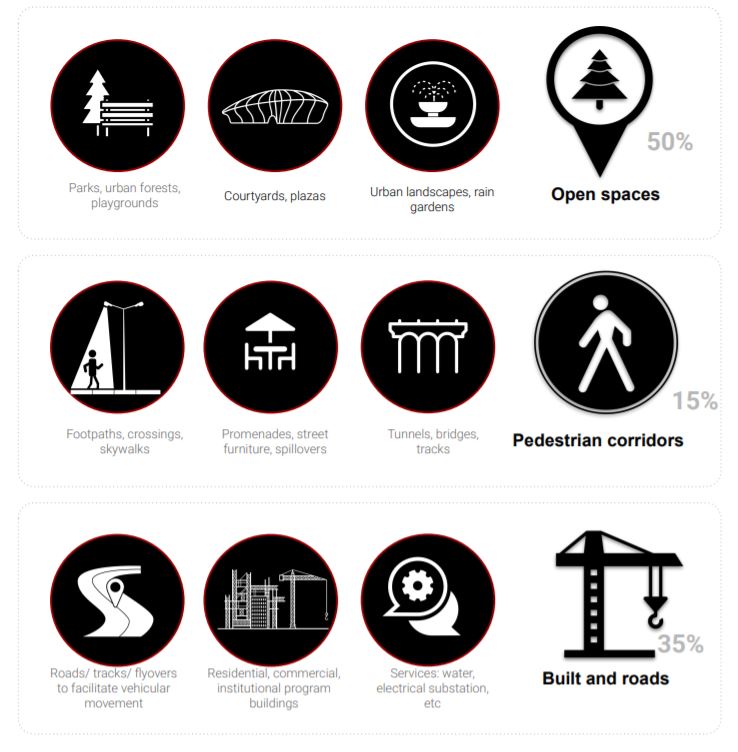
Programmatic Outline
The programmatic functions provided for future barcelona city are in no way exhaustive. Participants are free to explore.
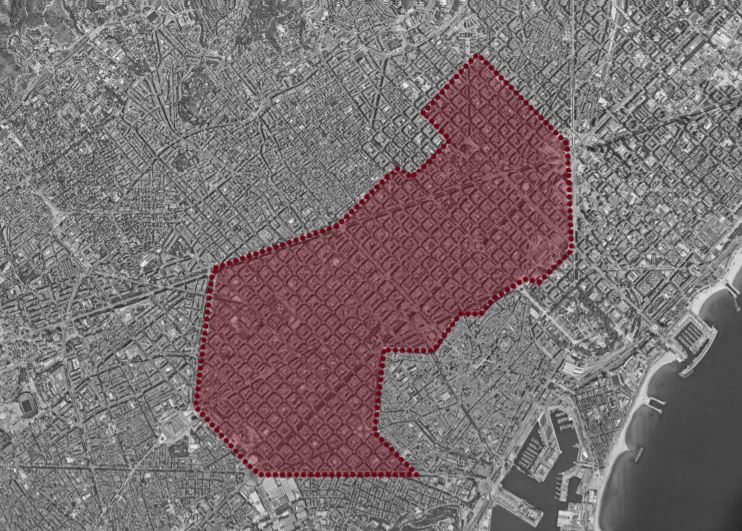
Context Study
The Eixample district is part of the notorious expansion project of the city planned by Ildefonso Cerdá in 1859, when Barcelona extended its old city walls. It’s also the first place, where the concept of superblocks is being tested out.
However, as previously established the district didn't turn out as it was supposed to; Eixample has seen drastic changes in its FAR. It increased in the first 70 years till it finally declined in 1979. Urban population growth is inevitable aspect of our future and therefore FAR of cities is deemed to increase. Eixample district proves to be the ideal place for intervention.
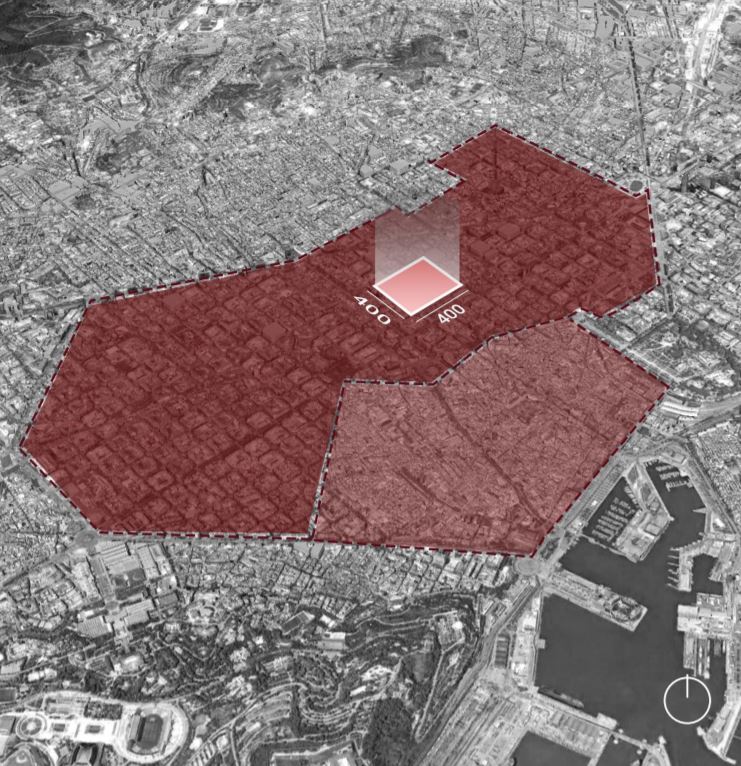
Site Plan
The site for cerda50 is an empty plot of size 400m x 400m. The planned site area is to be treated as the design scheme that can be adopted in the entire city. Participants are free to use the old road layout or come up with the new model.
- FAR: 1.5
- Site Area: 1,60,000 m2
- Height restriction: 65 floors