

Micro Libraries
Compact library design competition
Overview
 Fig: 1 - Keeping libraries clean during the pandemic (Credits-jisc news)
PERPETUAL IMPORTANCE OF LIBRARIES
The recent decade has led to an inevitable surge in the use of digital technologies. In addition to this surge, the COVID - 19 pandemics have radically shifted our world and the perspectives we hold towards it. People worldwide have changed their way of work and life. The rapid changes that it brought to the digital world have shifted our world to Work From Home, making the 6ft norm the new normal.
The new normal has considerably changed our perceptions of spaces. As with the passing months, we are trying to restart our lives by coming back to the places we miss. Including the public libraries; space which no matter what we are unable to completely replace by its existence. Across years of transformation and change, the concept and typology of a public library haven’t changed its place in the lives of people.
The newly rising issues and situations have altered and changed ways as to how we perceive these spaces but their importance is inherent.
H3: How can we address this issue through architecture while maintaining the form and function of the space?
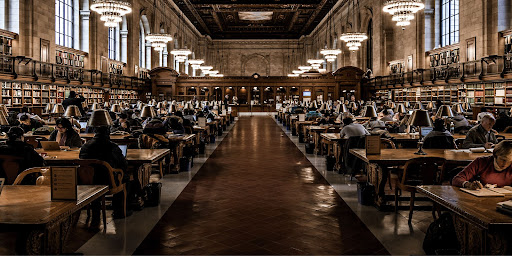 Fig: 2 -As a significant amount of people gathered in libraries, the need to resume safe libraries is urgent (Credits-Patrick Roberts Doyle)
HOW CAN WE TRANSFORM LIBRARIES FOR TODAY’S WORLD?
Libraries have been an integral part of our knowledge system and have been serving as a major typology for learning for past decades. The education and sharing of knowledge that this space promotes are making it an essential space that needs immediate evolution.
Public libraries are one of the most widely used spaces hence, multiple people from different areas come together in this space. This not only puts the people in an unsafe situation but also hampers their chances of approaching public libraries. Having a centralized public library makes it a vulnerable hotspot for the public gathering and virus spread but also makes it absolutely inaccessible for a large proportion of people completely. This disruption of service can only be addressed through rethinking the way we perceive public library spaces and thinking about solutions that would make them evolve.
Space being the vital element in public design, can architecture provide solutions for the issue of accessibility and space constraints in the current scenario?
 Fig: 3 - Compact yet resourceful libraries are important (Credits-Beazy)
CAN WE RESCALE THE TYPOLOGY TO MAKE IT ACCESSIBLE AND SAFE?
Brief: The architecture competition brief calls for a design of a compact prototype of public libraries. Design to install a decentralized public library system ensuring the least public gathering and increased accessibility to people across the city.
With the rapid transition towards digitization and sudden rise in the social distancing norms; the existence and future of these public library spaces are now at a threat. As the typology of public libraries exists to provide knowledge and information to a large number of people from various backgrounds, making it one of the most susceptible spaces and the one that needs to change; fast. So, how can we make the knowledge and information available to all?
Is it possible for us to create a solution that won't just make libraries a safe place but will reduce the risk of large public gatherings?
Is it possible to make these important resourceful spaces easily available to everyone?
OBJECTIVES
Evolutionary: Library design evolving with changing times.
Compact: Small area catering for a limited number of people.
Accessible: Should be easily accessible to people on a community level.
Multipliable: Design that can be prototyped and installed multiple times.
AREA PROGRAMME
The programmatic outline is intended for the batch capacity of 4 people. This is recommended for this challenge. The space ideas are as follows:
- Book stack/storage spaces: 30%
- Reading/Making/Collaborative space: 70%
Other additional spaces can be added by the participants as per their design needs.
SCALE
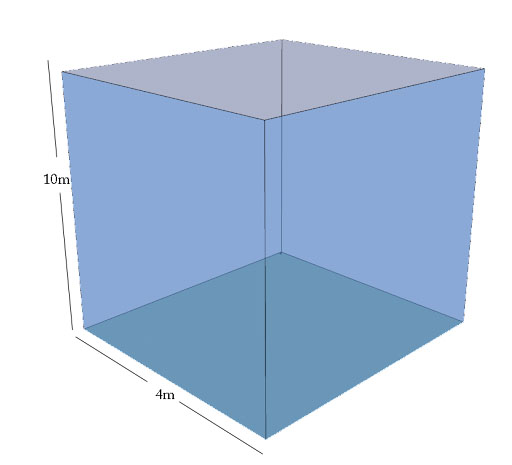
The dimensions of the space are 4m × 4m (l x b) with a minimum height of 6 meters and maximum height limitations being 10 meters.
Similar Competitions
Discover competitions you might be interested in




Challenge to design public laboratory


The Global Benchmark for Architecture Dissertation Awards
