
Mnemonic
Challenge to design a day care center for dementia
Overview
 Fig: 1 – In dementia memories fall into pieces (Credits-myDr)
PREMISE
Dementia is caused by damage to brain cells. This damage interferes with the ability of brain cells to communicate with each other. This in turn affects the behaviour, feelings and relationships of the person.
The brain has many distinct regions, each of which is responsible for different functions such as memory, judgment and movement. When cells in a particular region are damaged, that region cannot carry out its functions normally.
Dementia is not a single disease; it’s an overall term — like heart disease — that covers a wide range of specific medical conditions. Disorders grouped under the general term “dementia” are all caused by abnormal brain changes. These changes trigger a decline in thinking skills, also known as cognitive abilities, severe enough to impair daily life and independent function.
There is currently no cure for dementia, and according to researchers because dementia is caused by different diseases it is unlikely that there will be a single cure for it. For such a complicated disease, can we help to mitigate daily functions through our understanding of spaces?
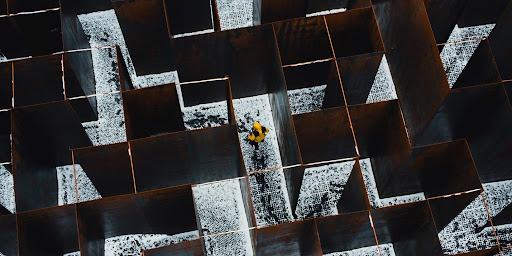 Fig: 2 – Spaces feel like maze and directions confuse people in Dementia (Credits-Dan Asaki)
SPACE
Due to dementia, one’s life falls apart in pieces and is gradually stripped to pure, basic sensations and emotions. Without any basic reasoning ability, people with dementia gradually become lost in space and thought.
They are unable to adapt to the surrounding environment and become therefore dependent on others. With only basic learned motoric, instincts and occasional awakenings, it becomes hard to perform everyday tasks as well as to find a way through any structure or building.
At certain points or in the last stage, the environment for patients shrinks to the walls of the house/care unit. While care units focus on medication, design researchers brief that the way spaces are designed can help to mitigate cognitive delay and behavioural issues without the use of additional drugs. Hence, the design of such spaces/structures/rooms is a sensitive but important matter.
As the need is stripped down to a bare minimum of senses and shelter, can we as architects shift our focus to the basics of living and sensory experience to enrich the lives of those lost in dementia?
 Fig: 3 – Most caregivers of people with dementia are family members, and they need help (Credits- considerable)
CARE
In our hyper-cognitive world, which values and requires fast learning and constant adaptation to new situations. Due to lack of awareness, most times being diagnosed with any kind of dementia equates to a stigma of disability, nevertheless of one’s previous status. It is overwhelming not only for the people who have it but also for their caregivers and families. Added responsibilities, relationship challenges that are expressed in unusual ways can give the family or a known caregiver a mental and physical rollercoaster.
With it, a caretaker also plays an important role in imbibing positive experiences, adaptation and acceptance. Although such an intense and time-consuming task cannot be met by a family/caregiver the whole day.
Can we provide a space that relieves the caregivers as well as provides the affected patient with a much-needed social and peaceful environment?
Can we take this chance to understand the spatial and functional needs of people with dementia as well as provide a facility that acts as an effective respite service to also help the caregivers?
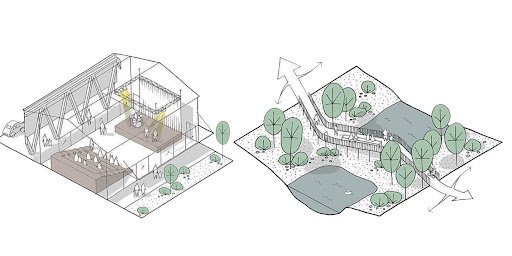 Fig: 4 – Architecture for dementia (Credits-NORD Architects Copenhagen)
BRIEF OF THE COMPETITION
Dementia is increasing year by year, with the total number of new cases to nearly 10 million each year. This number is expected to increase to 82 million in 2030 and 152 million in 2050. It is thus becoming even more urgent to raise awareness, and require care and a specific atmosphere by offering them a guiding hand through architecture.
The challenge is to design a center for people with dementia. Design a center that sensitizes with the requirements of a person with dementia in the form of healing environments.
The aim is to focus on the basics of living; natural light and ventilation, and also on understanding the physical and mental requirements.
The competition not only aims at providing a comfortable space to help the affected people but also to help designers and architects broaden their sense of knowledge and space. To help them understand and see the environment through the eyes of the challenged.
OBJECTIVES
- Understanding and empathy: Investigate and understand the basic working of a person affected with dementia to design for easier living.
- Basic needs: Mobility, natural light and ventilation
- Interiors: Materials, lighting, colour palette, furniture and finishes.
- Functions: Design at a macro as well micro level to enable easier functioning outside primary activities.
- Inclusive: Design not only for patients but also for caregivers/family members to make them aware of workings/understanding the affected member and to strengthen the memories/interaction with the person.
The objectives can be a point of beginning to conceive this design. Participants can free to form their programmatic outline according to the user group.
SITE
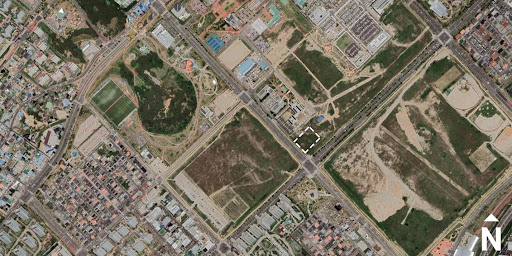
Yansang, South Korea
- Coordinates: 35.3215782 129.0066803
- Site Area: 6312.93 sqm
- Height limitations: 12m
- Maximum FAR: 1
The number of dementia patients is surging along with a rapid population ageing in Korea. According to a survey on dementia prevalence rates in 2012, 9.6% of the elderly population are estimated to have dementia as of 2014, and the figure is expected to reach 15% by 2050.
The site selected is in the city of Yansang, a rapidly developing city which is bordered by the major cities of Busan and Gimhae. The site for the centre is near an upcoming residential and mixed-use area.
PROGRAMMATIC OUTLINE
- Day-care program 50%
Foyer, Cafe, Activity/Play area, TV room, AV room, Contemplation Room, Dining Area, Galleries Gardens, Consultation Room, Lounge, Library, Physical Therapy/Exercise area.
- Administration 25%
Reception, Information lobby/area, Offices, Staff Room, Staff Washroom, Meeting room, Consultation room (for family/caregiver)
- Services 15%
Laundry, Nurse’s Station, Medical facilities, Kitchen, Pantry
- Respite Area 10%
Single Bedrooms, Nurse’ station
The programmatic outline is intended to house 50-80 patients at a time for this challenge. Participants are recommended to craft a schematic programme based on these given segments and understanding of a person suffering from dementia and they can propose something new altogether.
Similar Competitions
Discover competitions you might be interested in




Challenge to design an Ayurvedic Treatment Center


The Global Benchmark for Architecture Dissertation Awards
