
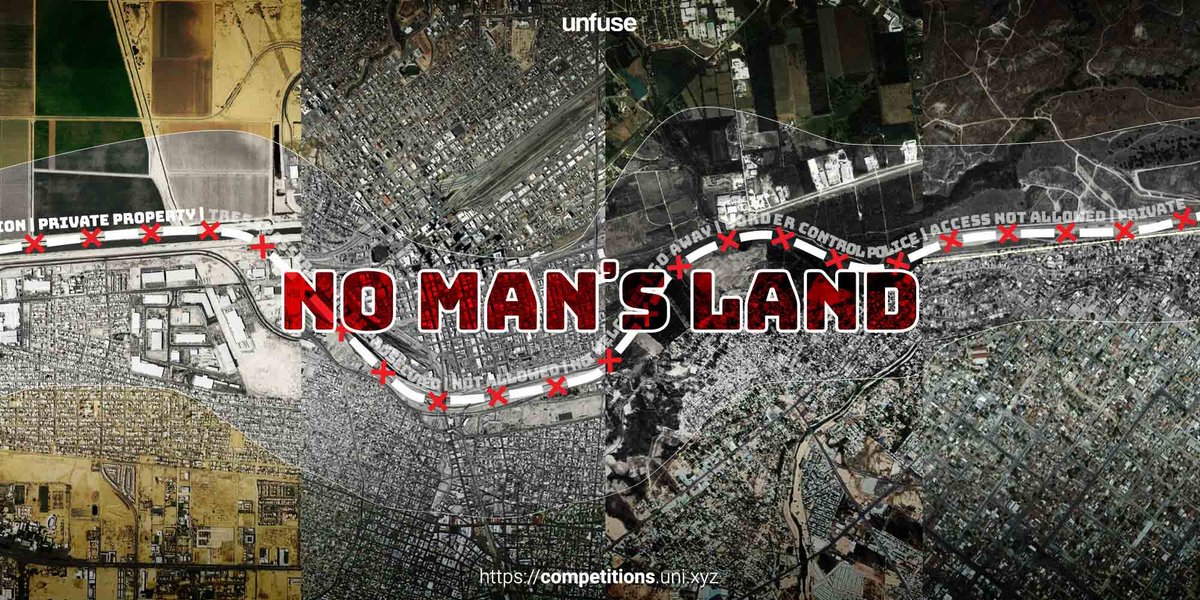
No Man's Land
Architecture on the borders
OVERVIEW
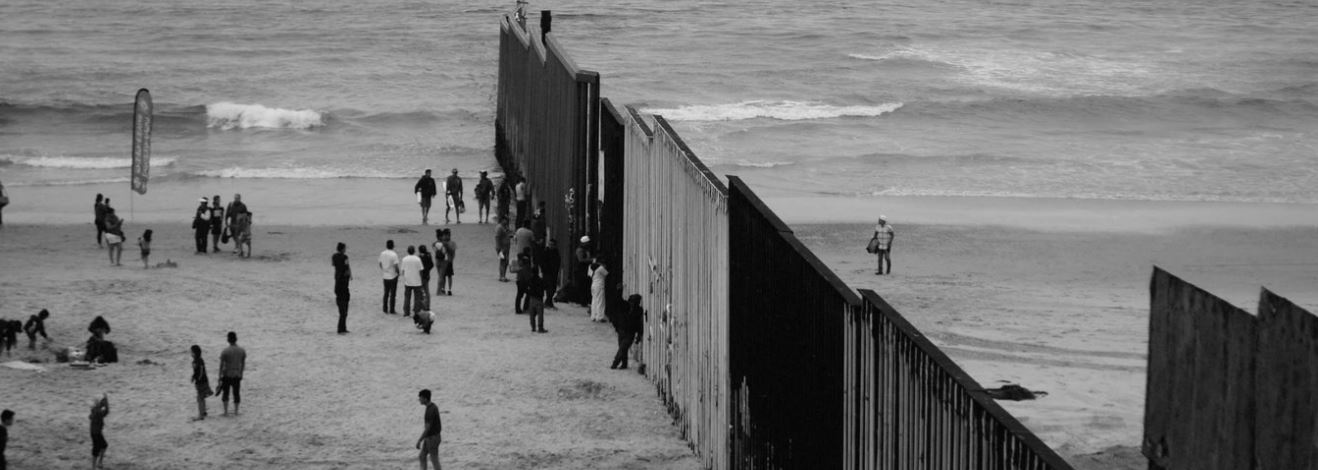
Img 1: Wall between Mexico and USA
Basis
Violence, war and persecution besides causing damage to the artificial and natural landscape, uproots livelihood. Further with climate disasters and poor governance, there has been a 200% increase in people seeking asylum.
The refugee crisis is paramount. Camps are usually planned, built and designed for only a short time but fail to accommodate everyone. According to the UN, only 189,300 refugees of 65.6 million were resettled in 2016. Alongside, the society has to habitat asylum seekers and deporters, which further crumbles down the system.
People prefer to find refuge in a country where they can get better opportunities. But when institutions and countries start rejecting humanitarian efforts for self-preservation, it leads to increased burden and hostile conditions. Same is happening along the borders of the US and Mexico.
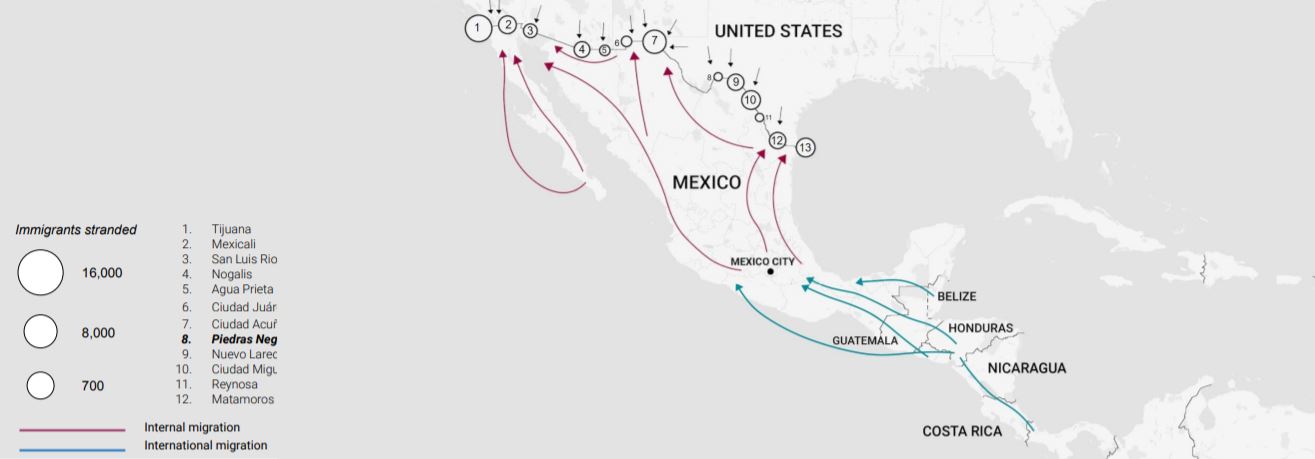
Img2: Map of North America highlighting migration route across the border of US Mexico. Density population in migration cities and different reasons
Background
A humanitarian crisis has taken place along the borders of US-Mexico. In May 2019, around 19000 people were waiting in Mexico to seek asylum in States. Many of them living in detention centres, crowded shelters and makeshift camps.
From only men crossing over to the US for employment in 2000 to families seeking refuge in 2014 for a better livelihood, there has been a tectonic shift along the borders of US-Mexico. This led to American Immigration Crisis in 2014, following which a crackdown implemented by the Trump government. With ‘Zero Tolerance Policy’ in 2018 and ‘Metering’ in 2019, the total border crossings have been constant but the no. of people seeking asylum has increased. This has led to thousands of asylum seekers waiting for refugee status along the US-Mexico border.
With US administration seeking for “safe third country” to absorb asylum seekers, organizations in Mexico have struggled to keep up with the influx of migrants. Once a country of transit, Mexico is buckling under the demands of its new reality. (Source)
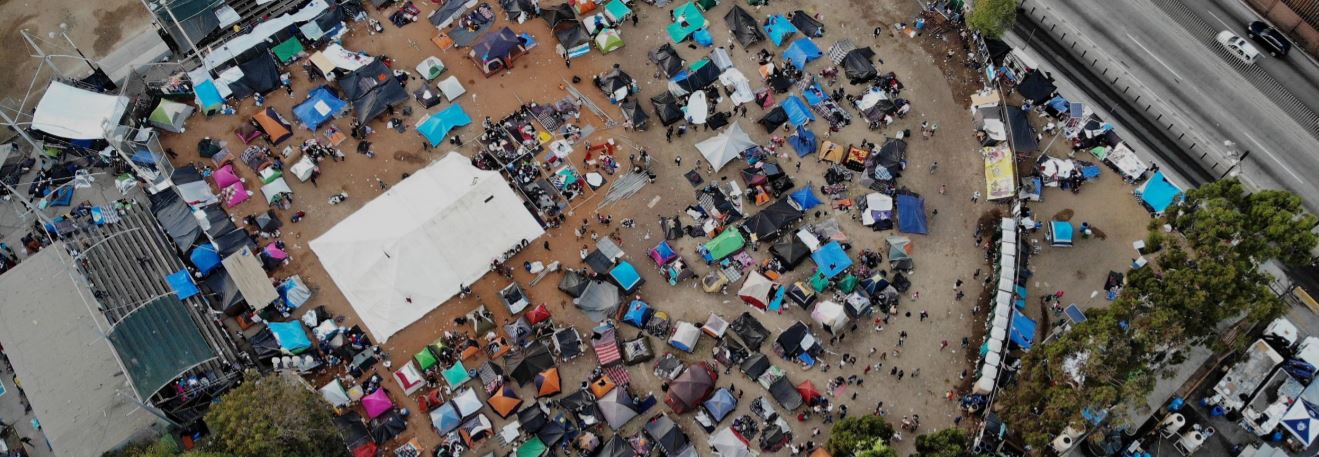
Img 3: A Tijuana sports complex has been turned into a temporary shelter. As of January 6,000 migrants occupy the place, compared to it’s possible occupancy of 1000 Source
Issues
New laws have effectively delayed the asylum process, with the backlog increasing by 10000 cases in Mexico in one year. Over that, the inhumane living conditions in migrant camps have made people restless for a response from the Centre of Border and Protection (CBP).(Source) This has led to them occupying streets, spaces near border walkways and bridges.
Due to an increased number and changing society fabric, immigrants are seen as a burden on city tourism and the city’s safety. They are considered to be intruders and face racism, xenophobia and discrimination on a daily basis. Immigrants aren't safe themselves, often falling victim to the increased crime rate.
With growing tensions between local communities in Mexico and a delayed immigration process in the USA, asylum seekers are slowly being rejected by both countries.
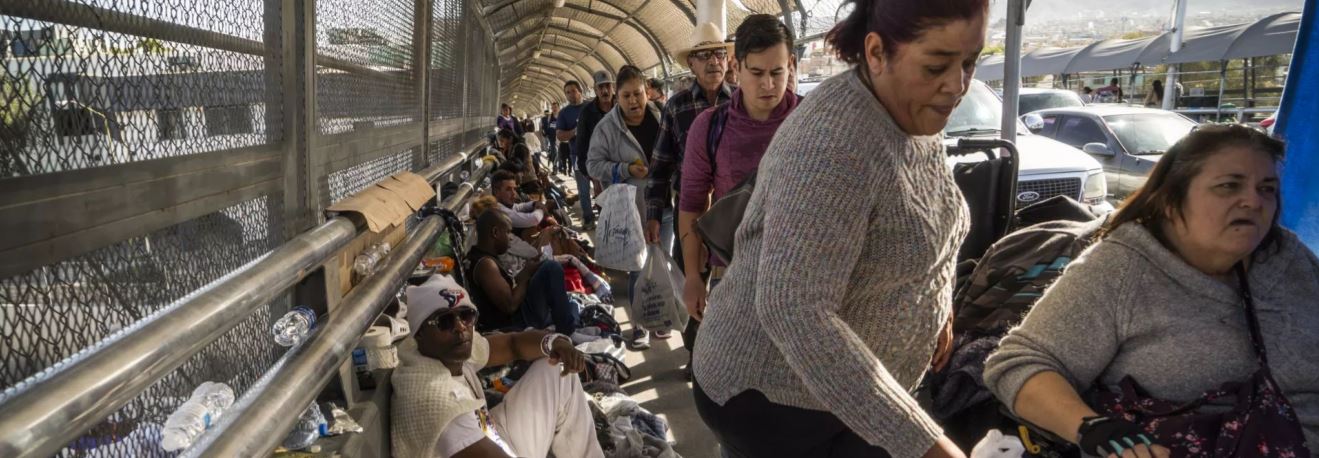
Img 4: Bridge in El Paso, have turned into temporary encampments for waiting asylum seekers. Source
Brief of the competition
As asylum seekers occupy border walkways and bridges, it’s function expands from a transit medium to space for rehabilitation. These bridges connect Mexico and USA not only physically, but also culturally and emotionally. It’s a gateway for asylum seekers - for their dreams, freedom and security.
Border bridges essentially are shared spaces, belonging to no one country. With migrant facilities limiting total intake and asylum seekers refusing to leave bridges, idea is to expand it to become a temporary habitat.
Challenge is to design an immigrant respite centre. It will function as a temporary accommodation facility for 1500 asylum seekers - over a pedestrian vehicular border bridge.
Objectives
Function: Project must retain its primary function of pedestrians and vehicles crossing the border.
Robust: Design should be robust to ensure low maintenance and less hassle.
Inclusivity: To create a safe, inclusive environment where people can access fundamental rights and live with dignity.
Safety: Creating safe boundaries around, so that immigrants don’t cross the border illegally.
The following objectives can be a point of beginning to conceive this design.
The main objective is to design a facility over a border bridge for 1500 asylum seekers. They will stay there temporarily basis for 1-2 months until their case is heard by CBP. This space will act as a respite centre where they can rehabilitate, interact and plan their future.
The project must be conceived as a solution to growing immigrant crisis, wherein asylum seekers are being refuted by countries. Between climate change and the chaos of global politics, humanitarian crisis over the next decades will remain paramount. Thoughtful design cannot prevent that inevitability, but it can alleviate some of the sufferings that our fellow humans will endure.
Participants can assume data wherever necessary. The bridge can be reimagined.
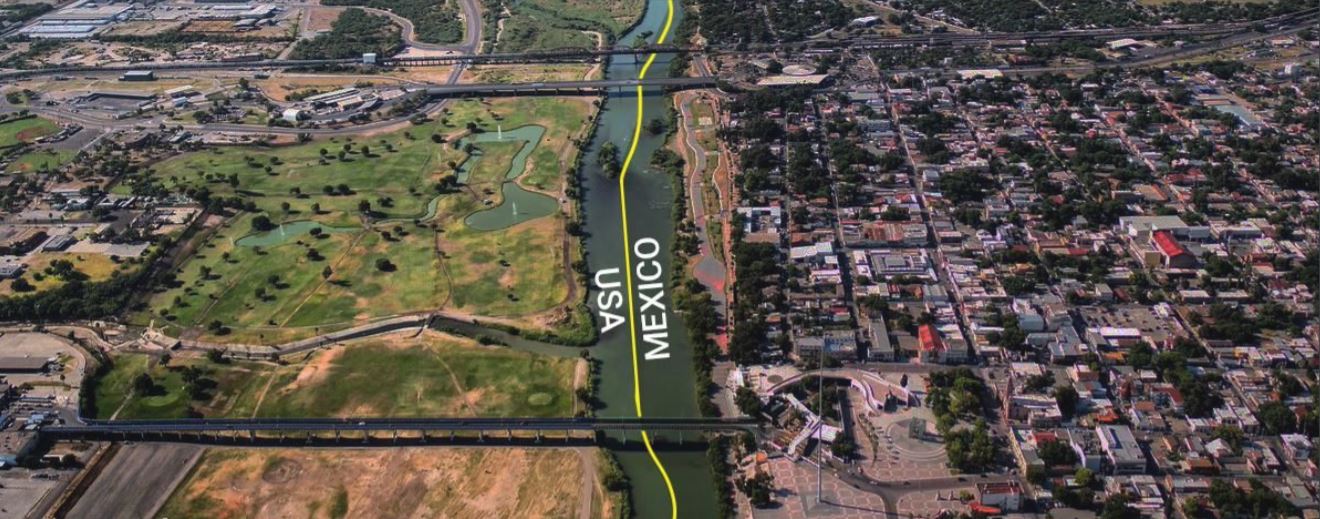
Img 5:: Overview of US-Mexico border near cities of Piedra Negras in Mexico and Eagle Pass in USA by Vanguardia
Place - Eagle Pass–Piedras Negras International Bridge
Piedras Negras, one of the border cities of Mexico with a 62% crime rate is a dangerous place for immigrants seeking stability. Further, the city saw it’s main shelter housing immigrants shut down due to a lack of funds. This led to people setting up makeshift tents near bridges, on roads with many moving to neighbouring migrant cities. Having no designated space of their own, they are left to be exploited. It hence becomes important to activate rehabilitation spaces that could distribute immigrant populations and create a safe environment.
Built in 1927, the Eagle Pass-Piedras Negras International Bridge is a pedestrian and vehicular border bridge (no commercial use) which crosses the Rio Grande connecting the United States-Mexico border cities of Eagle Pass, Texas and Piedras Negras, Coahuila. The bridge was reconstructed in 1954 after it got destroyed by flood.
- No. of Asylum Seekers - 1500 (May, 2019)
- Waiting Time - 1.5 to 2 months
- Length - 565m
- Width - 20m (2 lanes with pedestrian sidewalks of 1.8m)
- Depth of Water - 15m
- Coordinates - 28°42'19.9"N 100°30'42.5"W Hours - 7am to 11pm
- Climate - Semi arid and hot
- Height Restriction - 15m (from surface of the bridge)
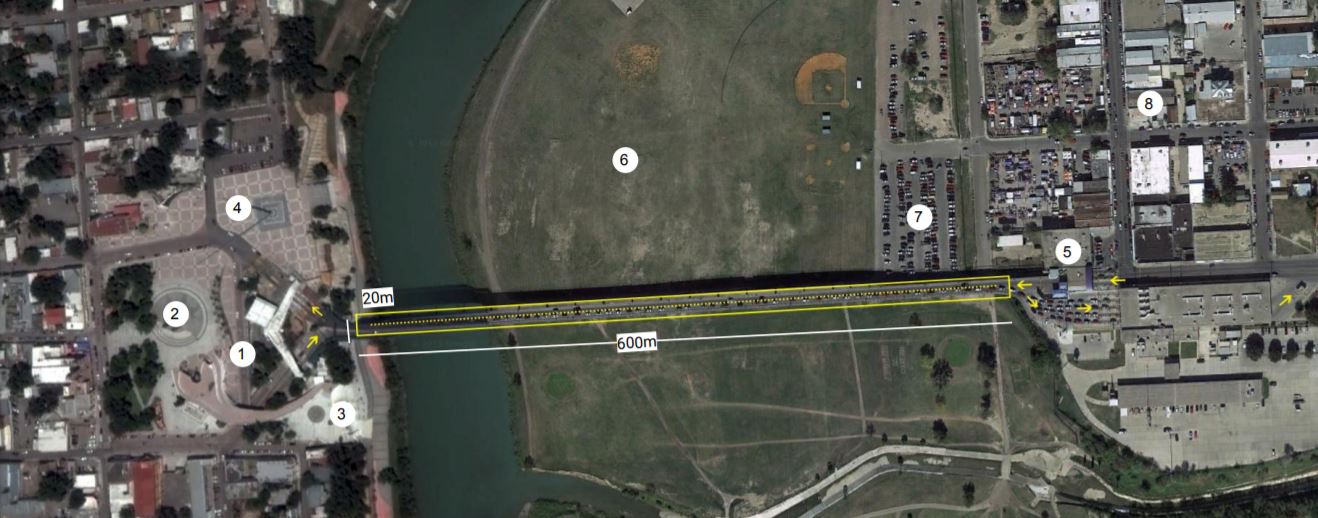
Piedras Negras, Mexico 1. Aduana De Piedras Negras II - Border crossing (Toll Both) in Mexico | 2.Gran Public Plaza | 3.Melcon del Rio’ Bravo - Playground| 4.Astra Batra Monumental.
Eagle Pass, Texas, USA 5. US Border and Protection Center Eagle Pass (Toll Gate)| 6.Shelby Park 7.Parking Lot 8. Downton Shopping Centers.
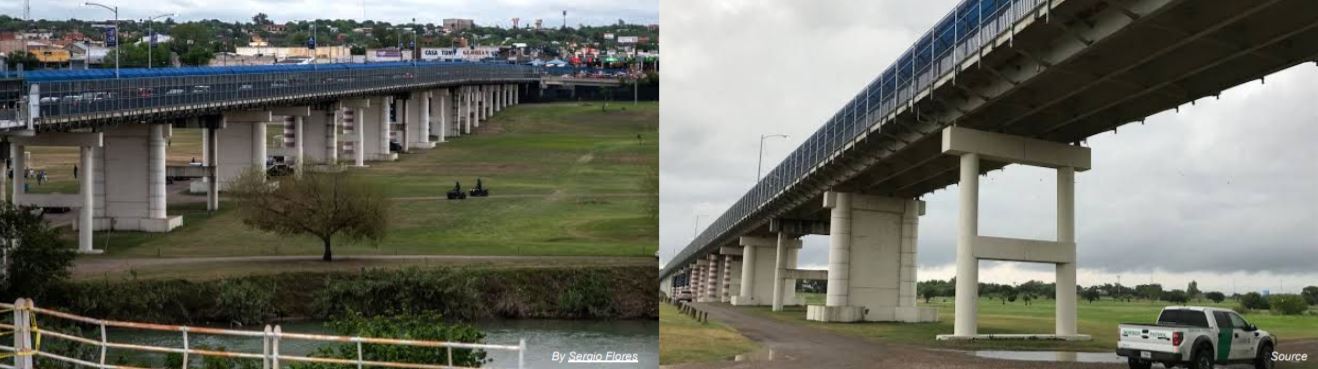
Source: By Sergio Flores
User
Reasons for migration
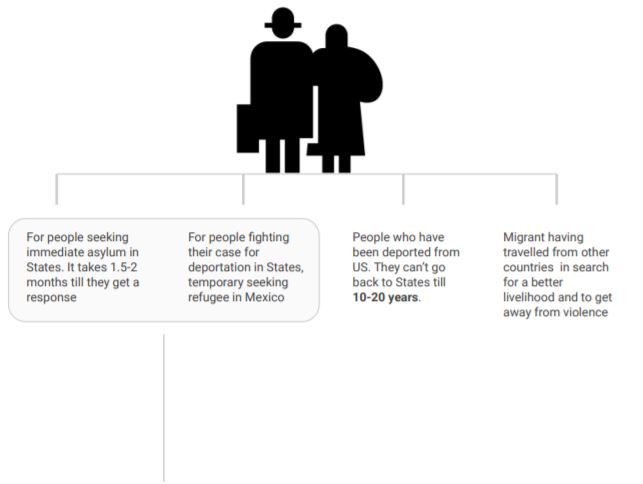
An asylum seeker is essentially a person who has left their home country under extreme circumstances and is seeking refuge in another.
With new immigration laws making the process tough, there is constant uncertainty about their future. They live in an overarching fear of deposition. Since they aren't part of society, they are considered to be intruders and face racism, xenophobia and discrimination on a daily basis. They deserve an opportunity to rebuild their lives with dignity. They want a place to habitat, work while they figure out their future steps.
Programmatic Outline
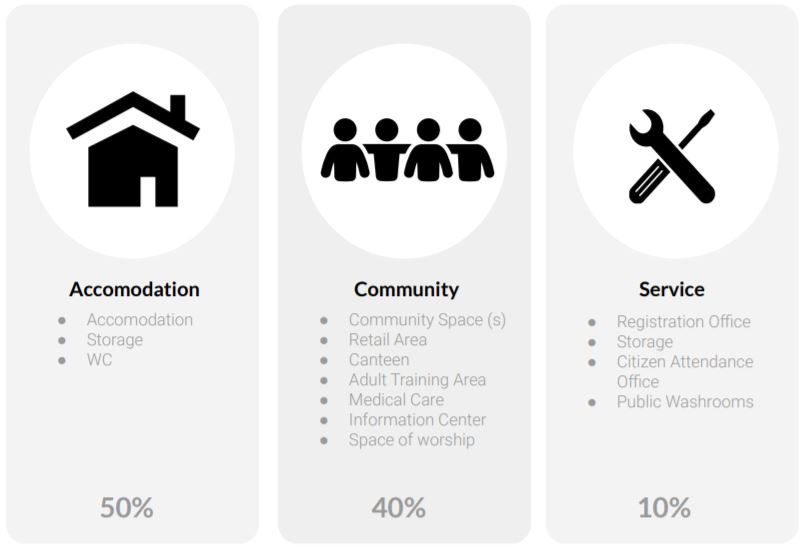
Design should include spaces for registration, reunification and healing of new arrived asylum seekers. Project aims to accommodate 1500 asylum seekers temporarily at any given time. The capacity and size of the areas will be decided by the participant. More programmatic facilities can be added depending on their design.
Judging Criteria
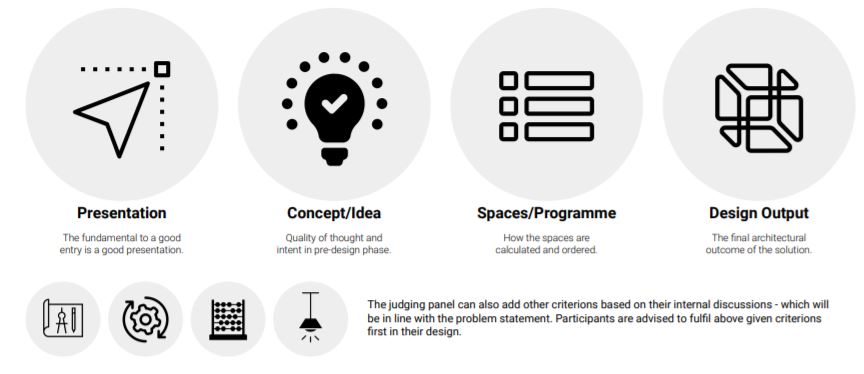
The entries will be judged by an international jury of the competition on the following criterions:
Similar Competitions
Discover competitions you might be interested in




The Global Benchmark for Graduation Excellence


The Global Benchmark for Architecture Dissertation Awards

