
No Roads
Challenge to visualize a future with no roads
Overview
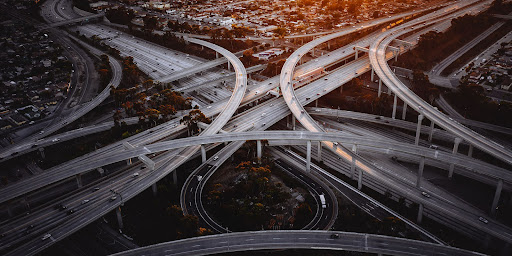 Fig: 1 - Roads are the most vital part of transport infrastructure in today’s cities
A WORLD WITHOUT ROADS
Can you even imagine a world without roads?
Our urban spaces are more often than not designed keeping transportation at the core. As a result roads of various widths and sizes leading from place to place are the unmistakable and often undisputed markers of cities.
It is more common than not for an individual to first think of busy streets crowded with traffic when thinking about a city.
However, these stereotypical and ubiquitous parts of cities are often also the main spaces of conflict in a city. They cause divisions in land use, unwitting boundaries, increase noise and air pollution proportionally to their size, and produce exhausting traffic jams. The striking characteristic of all these examples is the relationship between vehicles and roads.
The world continues to innovate for vehicles, but what if we rethink and first attempt to understand our relationships with roads and streets?
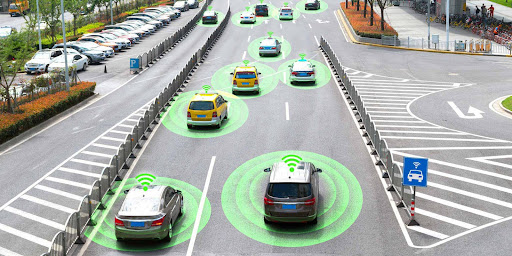 Fig: 2 - With technology transportation systems have advanced greatly. How will this shape the future of our cities?
WHERE WE ARE
Today the technology of transportation is being stretched and experimented with in leaps and bounds. Designers and Engineers are constantly trying to speculate on transportation and innovate for its future. These efforts have manifested in two primary ways.
The first is the imagining and creation of public transportation models that combine resources and decrease environmental impacts. This way of thinking has given us the familiar transport infrastructure - metros, buses, trains etc.
The second is the reimagination of private transportation. Here we have seen the emergence of technologies such as self-driving cars.
Regardless of any approach, these technologies allow us to reimagine our urban reliance on complex networks of roads and a future with fewer and more dedicated transportation routes.
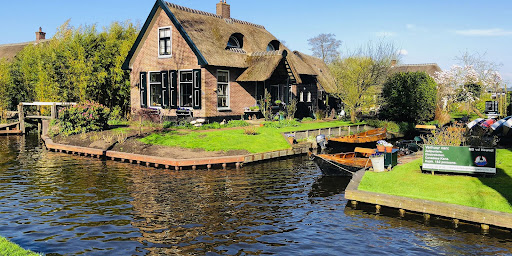 Fig: 3 - Villages like Giethoorn are planned in a way where there is no need for roads. How can this be incorporated with technology in the future?
BRIEF OF THE COMPETITION
Roads and streets however do have other uses that often are lost in creating transportation solutions. They offer spaces for pedestrian access around cities, spaces for community activities and even spaces for informal economies.
For this challenge, you must imagine a future for a city where roads for transportation are no longer the sole determinants of the cityscape.
You must first understand the various experiences and opportunities that streets and roads offer apart from transportation. Map these different uses and channel them into attempting to visualize a future where streets are no longer dominated by transportation.
You may choose to create a section of dedicated routes for transportation but the focus should be on the other possible uses and possibilities of urban design where roads are no longer the way we currently understand them.
OUTCOME
For this challenge, you must create a visualization for a megacity where roads in the central city are used only by pedestrians. You must focus on creating opportunities for pedestrians to travel from point A to point B, but also design a host of activities that encourage public pedestrian activity and human occupation of the public realm.
For the scope of this project focus on creating and detailing one or more such streetscapes with mixed residential and commercial use.
You may present your work in the form of illustrations/images, 3D renderings and/or film/animation outcomes. The design must clearly communicate the imagined future context.
OBJECTIVES
- Speculate: Map out the various uses of streets apart from transportation and speculate about their place in future urban spaces.
- Visualize: Create a visual representation of a future where the use of roads is no longer bound to transportation.
CONSTRAINTS
You may present your work in the form of illustrations/images or 3D renderings. The design must clearly communicate the fantastical context and how you perceive a zoo for magical creatures.
DELIVERABLES
You have to deliver a graphic/visual outcome representing the given theme, based on the following outlines. The images should be of size [2800px x 3200px] in portrait or landscape digital format (JPEG only).
The graphic may be entirely hand-drawn and rendered, digitally created, or a combination of both. The usage of photographs, stylized/credited or otherwise, directly is strictly not allowed.
The use of lassoed graphics lifted from an existing image is limited to half of the total graphic. (The guidelines are indicative, and are placed only to reduce plagiarized artworks – any infringement detected or reported will be notified, and may be removed from competition if found guilty)
The list of deliverables are:
1. Title
2. Subtitle
3. Illustration/images or 3D renderings x 3
4. A few process images
5. Additional cover image of 2000px x 1000px
6. A statement in about 200 words supporting the visuals - You can attach this as an additional image below your artwork.

