
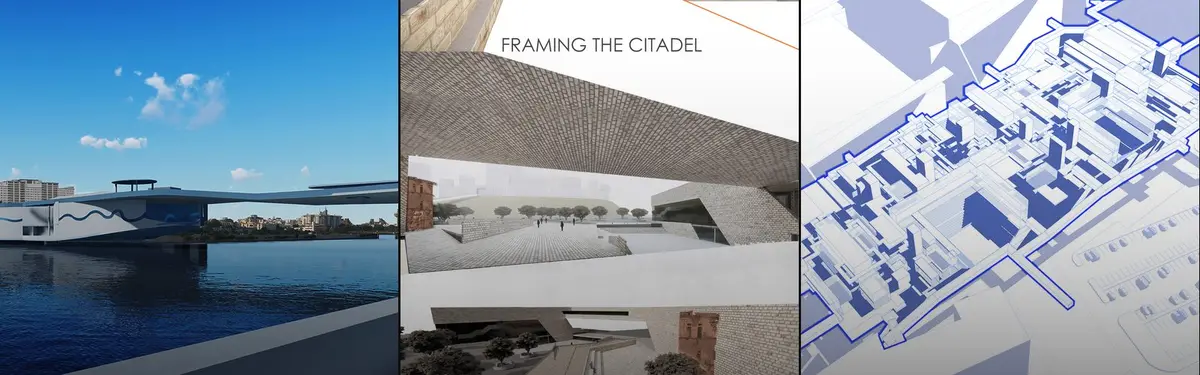


Urban Design
Design and planning of urban spaces, infrastructure, and communities that shape how people live and interact in cities.
Urban design deals with the design and management of a city (i.e. the 'public realm' or 'public domain'), as well as how public places are used and experienced. Public spaces include all the places that the general public uses freely on a day-to-day basis, such as streets, plazas, parks, and public infrastructure.
Architecture and other related professions, such as landscape design, urban planning, transportation, infrastructure design, and municipal engineering, are a part of this interdisciplinary field. In addition to the natural sciences, the discipline borrows substantive and procedural knowledge from the social and behavioural sciences, as well as from public administration, sociology, law, urban geography, and urban economics.

More recently, different sub-subfields of urban design have developed, such as strategic urban design, landscape urbanism, water-sensitive urban design, and sustainable urbanism. It is crucial for urban designers to have an understanding of a wide range of topics, from physical geography to social science, as well as real estate development, urban economics, political economy, and social theory.

Img 1: Urban design rules the major elements and workings of a city
Evolution of urban design
Despite the fact that the term 'urban design' is used today in a professional setting, urban design has been practiced throughout history. Ancient cities found in Asia, Africa, Europe, and the Americas, and are particularly well known within Classical Chinese, Roman, and Greek cultures. They have shown evidence of effective city planning and stand as great examples in urban design at an academic level. In general, Hippodamus of Miletus is often considered to be one of the founders of European urban planning, and the namesake of the "Hippodamian plan", also called the grid plan of a city layout. Throughout history, the design of streets and the coordination of public spaces with buildings have reflected contemporary social norms or philosophical and religious beliefs.
Both observational studies and historical records show the reverse impact of urban structure upon human behavior and thought. During his Discourse on Method, René Descartes acknowledged the influence Renaissance planned new towns had on his own intellect, and there is evidence that the Renaissance streetscapes were also the stimulus that led to the development of coordinate geometry. In much earlier times, as the population, trade and global outreach increased urban design/city planning enabled a common platform for policymakers, architects and the general public to plan new cities worldwide. With this onset, many different theories were established and continue to develop and progress with changing times.
What were some interesting urban design theories in the past years?
• New urbanism: 1980's approach to placemaking to accommodate urban sprawl and growing urbanism. Few priorities in new urbanism include mixed housing, walkability, transport and connectivity, smart facilities, improving quality of life and much more.
• Landscape urbanism: Landscape urbanism began in the 1990s and theorizes sites, territories, ecosystems, networks, and infrastructures through landscape practice. According to Corner, the city is viewed as an ecosystem that grows, shrinks, or changes phases of development, while according to Waldheim, the city is dynamic.

Img 2: Landscape urbanism: Bridge over the Anacostia River, OMA and OLIN's
• Tactical Urbanism: Using short-term, low-cost, and scalable interventions and policies, tactical urbanism was a city-led, citizen-led, or organizational approach to neighbourhood-building. It is commonly referred to as DIY Urbanism, Planning-by-Doing, or Urban Acupuncture.
Other outdated/progressive urban theories include Empirical urbanism, Ecological/Sustainable Urbanism, Pots-Industrial urbanism, Infrastructural urbanism, Smart City, Informal Urbanism, Feminist urbanism and lastly Anthropocene/Planetary Hinterlands and Visionary Urbanism which claim to predict and improve the urban design based on recent happenings.
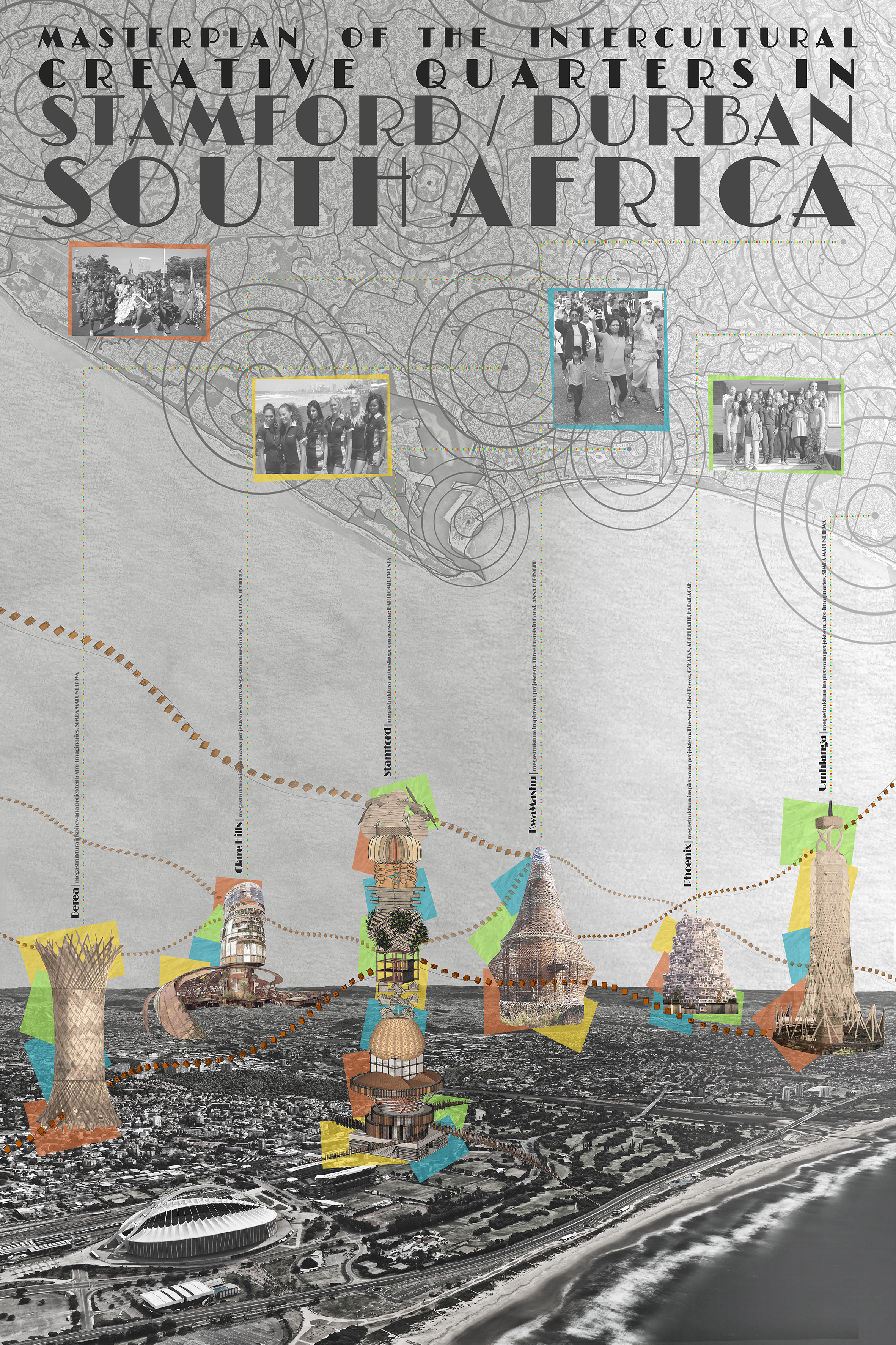
Img 3: Interculture creative district in Durban- Competition entry
Significance of urban design
People and places, movement and urban form, nature and the built environment are all connected through urban design. Creating places with distinct beauty and identity requires the integration of place-making, environmental stewardship, social equity, and economic viability. The urban design combines these elements and others, creating a vision of an area and then deploying the resources and skills necessary to make that vision come to life. Thus, urban design can have a significant impact on a place's economic, environmental, social, and cultural outcomes.
• Urban design can influence the economic success and socio-economic composition of a locality–whether it helps local companies grow and encourages entrepreneurship, whether it attracts people to the area, whether housing and travel costs are affordable, and whether access to jobs, facilities, and services is equitable.
• The physical scale, space, and ambience of a place are determined by urban design, as are the built and natural forms within which individual buildings and infrastructure are sited. Therefore, it affects the balance between natural ecosystems and built environments, and their sustainability.
• The health and social impacts of urban design can be influenced by how people interact with each other, how they move/how much they move, and how they use a place.
While urban design is often presented as a single 'project', it is actually a long-term process that continues to evolve over time. According to the structure stated below, the urban design comprises both micro and macro design elements, Street furniture to park development projects comes under the discipline of urban design.

Img 4: Structure of urban design elements (source: https://urbandesign.org.au/what-is-urban-design/)
Future of urban design
The recent years due to global warming, the pandemic, economic/social unrest and more are critical for affecting the core of our urban living. At the intersection of all these challenges, one topic stands out: the importance of making cities more human and nurturing a strong sense of connection, shedding light on what cities should care about the most. Urban design is evolving and is now being more widely expressed in broader terms such as ‘placemaking’ and ‘urbanism’.
Urban design with its new theories in visionary urbanism and with modification in existing planning/public policies will likely take on more of a facilitative and enabling role. The aim is to find new ways of problem-solving –fostering knowledge and making things happen/‘doing things’, rather than the prescriptive/theoretical urban design principles through regulation, legislation and specialist input.

Img 4: Planetary Urbanism - Winner for MANHATTAN n.2
Architecture competitions
Architecture competitions are a great way to find creative and revolutionary urban design ideas and design enthusiasts who not only have the relevant skills for designing and developing projects but who also share their vision regarding the problems affecting our society today. Urban design competitions offer a wide array of challenges that have the potential to be utilized inbuilt projects that can contribute to thecity/region-wide development.
Explore more projects in urban design on UNI:

UNI is a global network of architects and designers who are solving some of the most challenging problems around the globe. UNI brings together the world's largest pool of design challenges that are curated by the finest architecture academicians and professionals globally. Since 2017, UNI has hosted more than 200+ architecture competitions for various idea level to realization level briefs. In the past, UNI has helped 50+ organizations, universities, and government bodies to use our platform to generate architecture and design solutions through competitions.
Discover other competitions: https://uni.xyz/competitions




Open competitions in Urban Design
See all Urban Design competitions

A Global Graduation Competition for Architecture, Urban Design & Interior Design


Aesthetic Design Ideas for a Better World · Student Category
Popular projects
View all 1.2K projects









Latest journals
View all 1.1K journals

Afloat: A Floating Indonesian City That Uses Shared Housing to Ease Ethnic Tension
Timber gables, fishing grids and planted islets form a water district where a common way of living becomes the ground on which neighbors meet.

prOpencity: Treating the Dense City as Open-Source Code That Its Citizens Can Edit
A collage-driven urban experiment that swaps the masterplan for a repeatable loop of listening, prototyping and revising with the people on the street.


LBWA Plays Blue Joinery Against Walnut and Marble in a 68 m² Tenement Apartment in Poznań's Łazarz District
A renovated flat in a historic Poznań tenement keeps its arched windows and paneled doors while blue cabinetry, walnut and marble carry the design.

OUT Architecture Turns a Coffee Cup Stain into a Broken Ring of Benches on a London Market Corner
A broken ring of steel and cork benches outside an Aldgate café reclaims an overlooked Petticoat Lane corner for the London Festival of Architecture 2026.


