

Parasitic Architecture
Challenge to resolve the space crisis in urban cities
Overview
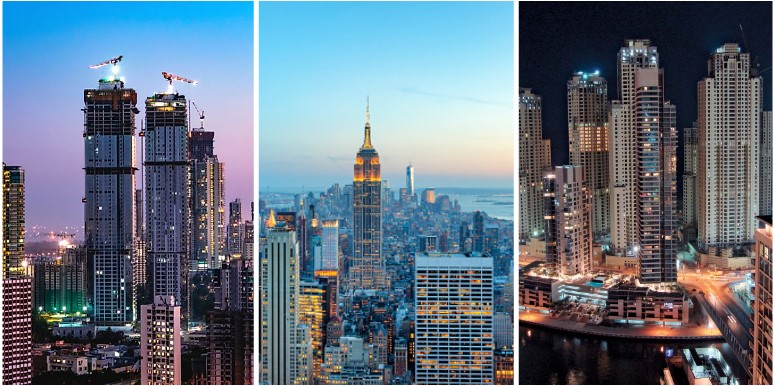 Fig: 1 - Dense Urban City Mumbai, New York and Dubai
FUTURE OF URBAN CITIES
Today, 55% of the world’s population lives in urban areas, a proportion that is expected to increase to 68% by 2050. Projections show that urbanization combined with the overall growth of the world’s population could add another 2.5 billion people to urban areas by 2050.
Living in these densely urbanized pockets is not just ridiculously expensive, but also substandard for average and low economic groups. Moreover, the cost of living increases so rapidly that being at the same pace with it becomes almost impossible for most households, resulting in an abysmal quality of life.
Although implementing population control policies and developing satellite cities as an urban alternative are good long term solutions, they are time-consuming and market dependent. A possible solution thus is to smartly increase the availability of liveable spaces in the cities that are already thriving with people.
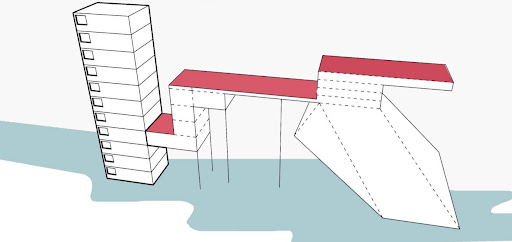 Fig: 2 - A parasite design model
PARASITIC ARCHITECTURE
As we seek to increase the availability of spaces in cities or structures already thriving with people we resolve the crisis of lack of space in the dense urban fabric. New structures and functions now feel obligated to be nurtured by the existing ones acting as selfless hosts. New architecture now feels obligated to be the parasite! Parasitic architecture is defined as a building that is attached to an existing larger structure.
How parasitic architecture serves as a solution to an urban problem?
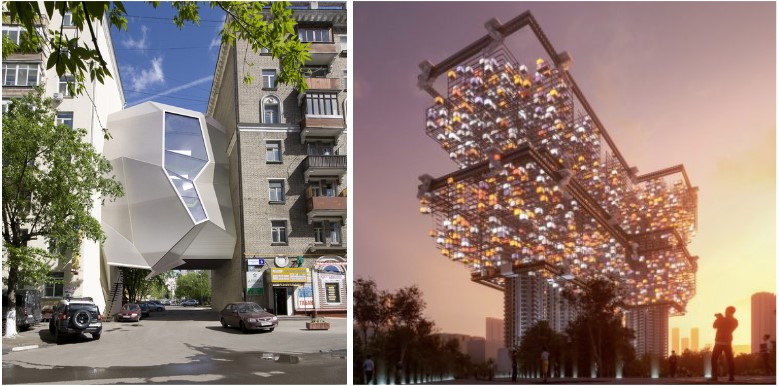 Fig: 3 - Image of an extended space(Left) and standing out landmark(Right)
CONDITIONS FOR A PARASITE
As parasitic architecture serves as a solution to an urban problem, the proposal has to be based in a densely populated urban context. The more densely packed the city is, the more effective the role of the parasite would be. Additionally, the parasite should be serving a typological purpose that is public in nature and resonates with the function of its host and its immediate context. Thus the parasite will embed itself firmly into the urban fabric with a basic economic relevance.
The host should also be functionally relevant and ideally, have a function of public nature so that the parasite can take a much leading role in providing public respite. Moreover, it would be great if the host already has some socio-cultural relevance in the context, as it will help the parasite to be more iconic in its outreach.
Practically, the context plays the most crucial role in the existence and success of the parasitic architecture project, as this entire exercise highlights an effort to solve the problems of the context, with the context.
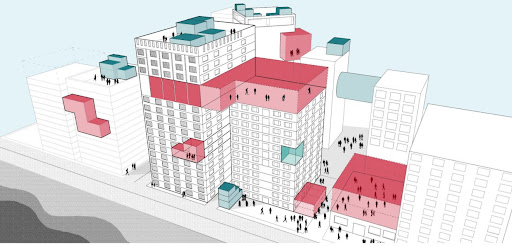 Fig 4: Future of cities, with the new form of architecture serving as an agent of social change.
INQUIRY
As a Parasite, what if this new architecture:
● Relied on a host architecture for its structure, services, and access?
● Grew on and around an existing architectural, infrastructural element?
● Served as an agent of social change, that promoted architecture to be
BRIEF CRITERIA
- Location: Densely populated City
The density of the City (at the neighbourhood/district level) is to be 10000/sq.km
- Typology: Over a Building or Infrastructure
Could be a residential, commercial or civic building or infrastructure such as a bridge.
- Function: Public interest and relevant to host
Functions such as in the informal commercial sector such as ice-cream kiosks or pop-up library.
- Size: Should be between 10 m3 and 100m3
For a small ice-cream kiosk of 3m X 3m, there could be some outdoor seating without exceeding the overall volume.
- Materials: Contemporary and available
Successfully tested experimental techniques could also be implemented.
- Other restrictions: Fire Safety
As it’s a public place, fire safety and any contextual design risks should be thoroughly considered.
BRIEF - OVERVIEW
The WHAT
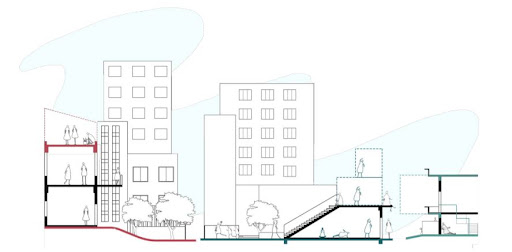
To be identified as parasitic, the architecture should serve at least 2 of the following criteria:
- Be structurally supported by a host architecture.
- Be typologically relevant to the original function of its host architecture.
- Be accessible through the host architecture.
The WHERE
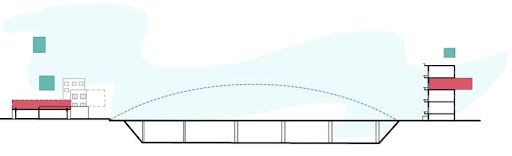
The parasitic architecture must fulfil all the following criteria when choosing the location:
- Be located in a city with a population density of at least 10,000 people per km2.
- Be located on an existing residential/commercial/civic building or civic infrastructure such as bridges.
- Be serving a public function whether the host is a public building or private property.
The HOW MUCH
Although growing organically, parasitic architecture should adhere to all of the following restrictions:
- Be between 10 m3 and 100 m3 in volume.
- Be able to be constructed by available materials and contemporary construction techniques.
- Be respectful of fire-safety regulations.
Similar Competitions
Discover competitions you might be interested in



Challenge to design an open learning module for the elderly


Challenge to design a portable music platform


Challenge to design a portable theatre


The Global Benchmark for Architecture Dissertation Awards
