
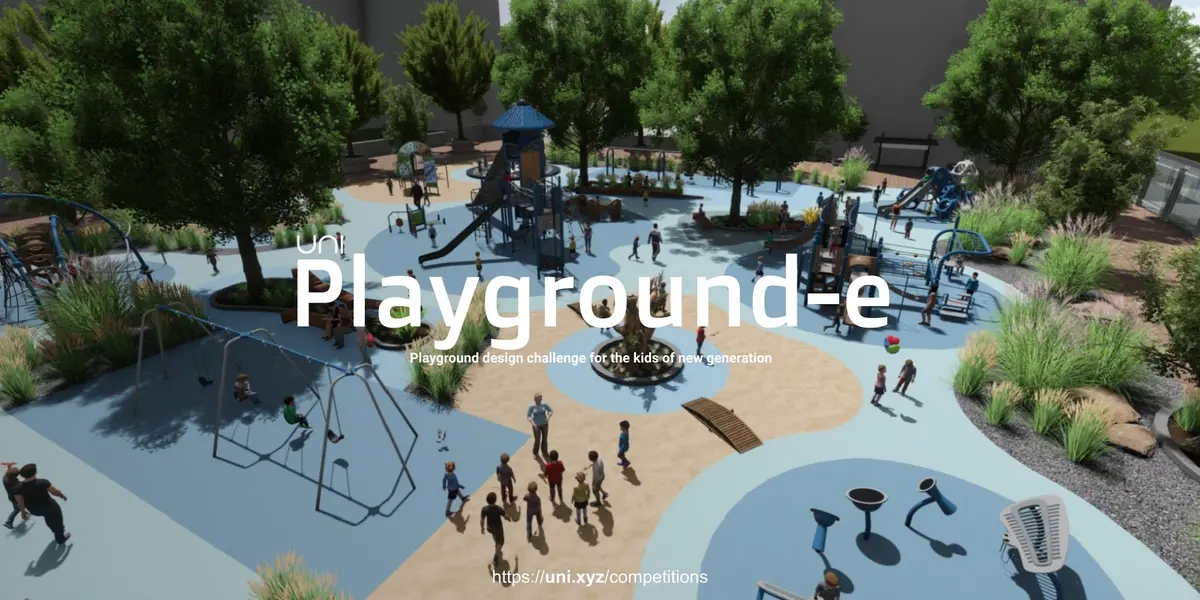
Playground - E
Playground for the current generation - Design Competition
OVERVIEW
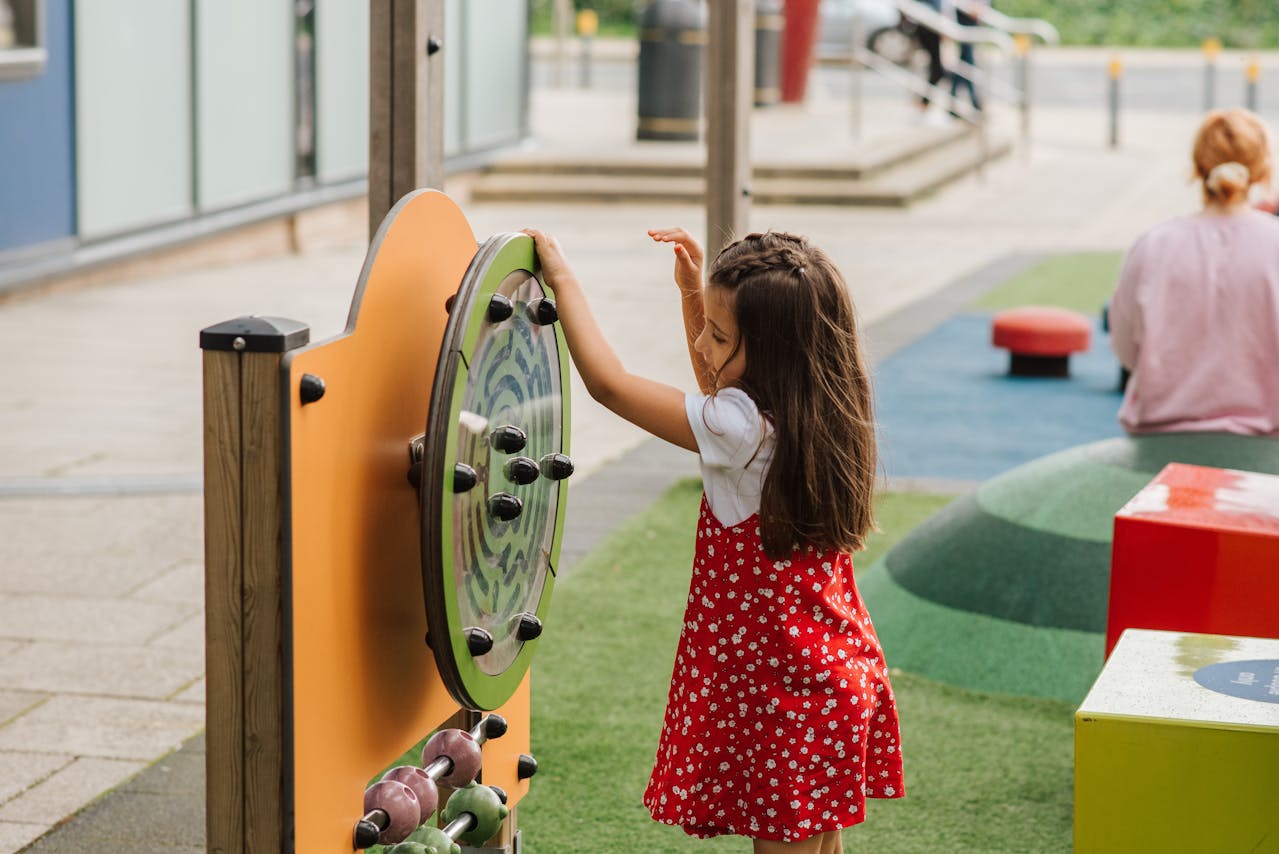
Fig: 1 – A child interacts with traditional playground equipment
Re-envisioning Childhood and Play
Play transcends mere entertainment; it is the bedrock upon which children build physical prowess, cognitive acuity, and emotional depth. This timeless truth was first institutionalized by education pioneer Friedrich Froebel, whose 19th-century innovations planted the seeds for the playgrounds we know today. However, his vision was only the beginning. Visionaries like Aldo van Eyck in the Netherlands further cultivated these communal canvases, infusing global insights into play space design, ensuring they nurtured the child, the society, and the environment harmoniously.
In 1821, the nascent concept of a designed outdoor play area emerged, tailored specifically for a gymnasium. It boasted robust gymnastic apparatuses, inviting physical challenges that would sculpt both the muscles and the minds of youth. As gymnastic fervor dwindled, a more child-centric approach to outdoor play blossomed, and in 1879, Chicago broke new ground with its first park playground—ushering in an era of spaces dedicated to the unbridled spirit of childhood.
These playgrounds became sanctuaries of self-expression, far removed from the rigors of structured education and the watchful eyes of guardians. Here, amidst the tactile splendor of sand and swings, children discovered the joy of movement and the thrill of exploration—sensory experiences no digital device could replicate. The rustle of leaves, the rough texture of climbing ropes, and the buoyant leap from a swing seat were formative encounters, anchoring children to the physical world in a way that screens never could.
Yet, as we navigate the digitized currents of the 21st century, the once-unassailable bastions of play are confronting an existential crisis, challenging us to rekindle their relevance for a new generation of learners and explorers.

Fig: 2 – Children engrossed in their devices, embodying the shift from physical play to digital engagement within the home environment.
Bridging the Digital and Physical Divide in Play
Children of the modern era are natives of the digital landscape, navigating a world where information and communication technologies are at their fingertips. This digital immersion, however, comes at a cost: recent studies highlight a stark decline in physical activity, with kids clocking in an average of 7.5 hours of screen time per day—a significant jump from just a generation ago. The ripple effects are evident, as the absence of active play has led to an uptick in childhood obesity rates and associated health concerns.
While digital platforms can offer educational content and virtual connectivity, they lack the kinetic learning experiences that physical play provides—crucial for the development of motor skills, social interaction, and overall health. The pandemic has exacerbated this imbalance, transforming once-bustling playgrounds into silent monuments of isolation and thrusting children into a predominantly sedentary lifestyle, with online learning blurring the lines between education and leisure.
In this crucial juncture, it falls upon us, as innovative thinkers, to craft solutions that recalibrate the scales, integrating digital appeal with the irreplaceable benefits of physical activity. How can we architect a harmony of screens and swings, pixels and playgrounds, to enrich the holistic growth of the digital generation?
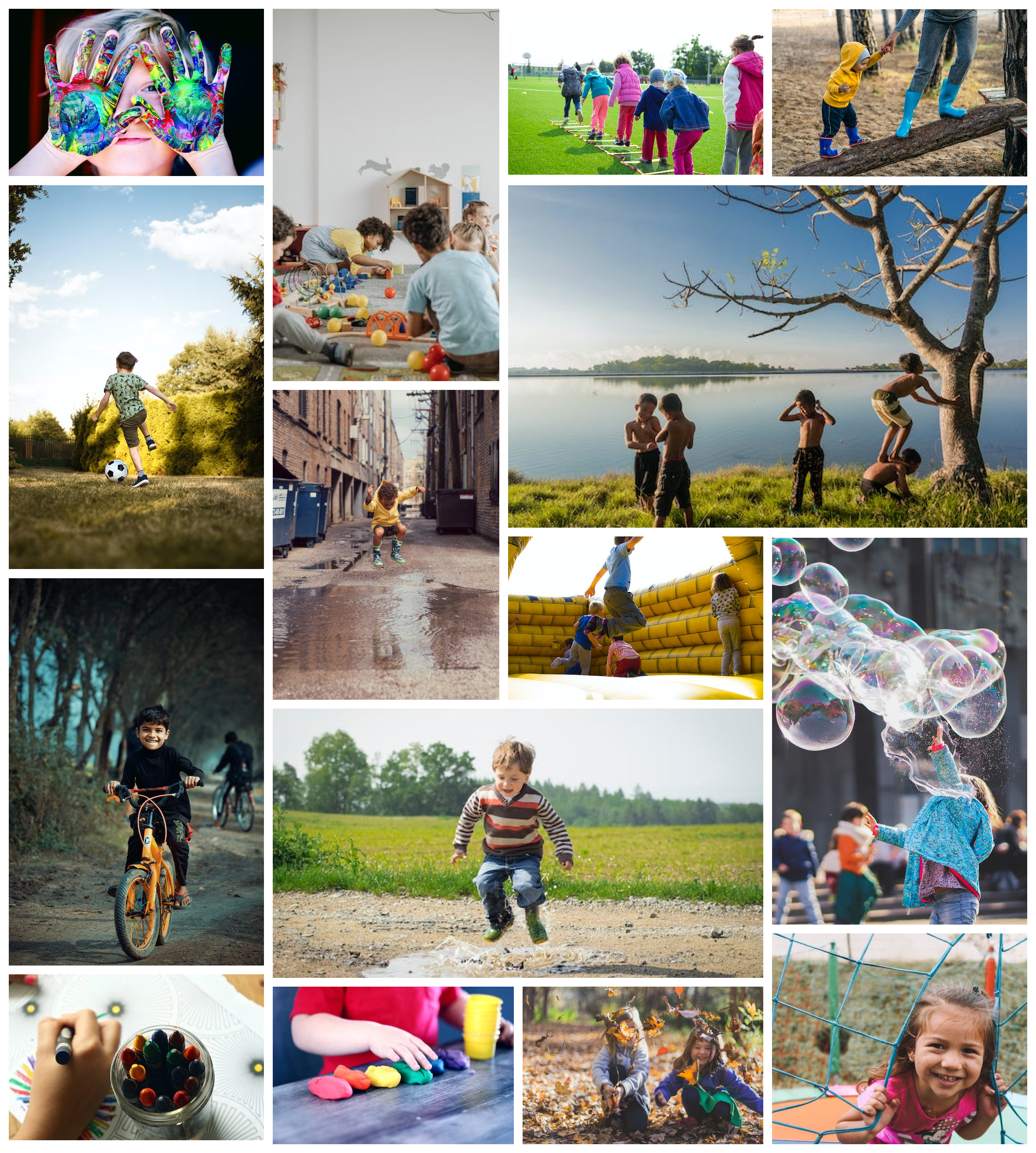
Fig: 3 – What's childhood? Capturing diverse moments of creativity, adventure, and play in various forms—from the tactile delight of paints to the carefree leaps in nature.
Revolutionizing Play in the Digital Age
The digital age has commandeered the realm of play, but the gauntlet has been thrown—will the innovative minds of today rise to reclaim the childhoods of tomorrow? As technology sprints forward, altering every facet of life, our playgrounds stand at a crossroads, steeped in traditional forms yet on the brink of obsolescence. It's a clarion call for designers: to craft interactive spaces that can compete with the allure of screens, to weave the digital thread into the fabric of active play without losing its essence.
Constant innovations have made digital devices more intuitive, more engaging, and unfortunately, more sedentary. The global pause brought on by the pandemic has only highlighted the urgency for change. We stand at a unique threshold where the renaissance of playgrounds could redefine the very concept of play—merging the virtual with the physical, the pixels with the palpable.
Brief: This design challenge is not just about rethinking the playground typology in today's context—it's a mission to architect the cornerstone of a thriving, active, and connected youth.
The task is to devise playgrounds that resonate with the tech-savvy generation while promoting robust physical activity. Designs should foster social interaction even within the matrix of social distancing, ensuring that the essence of play remains intact and invigorating.
Your innovation has the power to lay down the blueprint for playgrounds that captivate and challenge, that nurture health and happiness—a legacy that could shape a brighter, more balanced generation.
Design objectives
The objectives mentioned here can be a point of beginning to conceive this design. Participants can assume their contexts and users before initiating their design process.
Technology and Play: How will the playground and play equipment look when integrated with the latest technology?
Evolution: How can the setup be changed in the longer run by adding or rolling out new features in the future?
Imagination: Innovative playspaces with physical/non-physical spatial intersections that combat isolation
Safety/Durability: To build setups that are safe and durable for long-term outdoor use.
Scale
The location of this playground is expected to be in a gated township that has more than 1000 dwelling units and 3-4 plots like this.
The size is 45m x 45m located between residential towers. These plots can be taken as one combined unit or 3-4 seperate units catering for different age group.
The gated community setup allows high-value playground elements that can be piloted here and maintained in the longer run - thereby paving way for mass release.
Similar Competitions
Discover competitions you might be interested in


Packaging challenge - Design meets sustainability

Design challenge to reuse E-waste

Illustrate the lost glory of Angkor Wat - Render Challenge

Photograph architecture without architects