
Project Runway
A pavilion design challenge to uplift fashion education
OVERVIEW
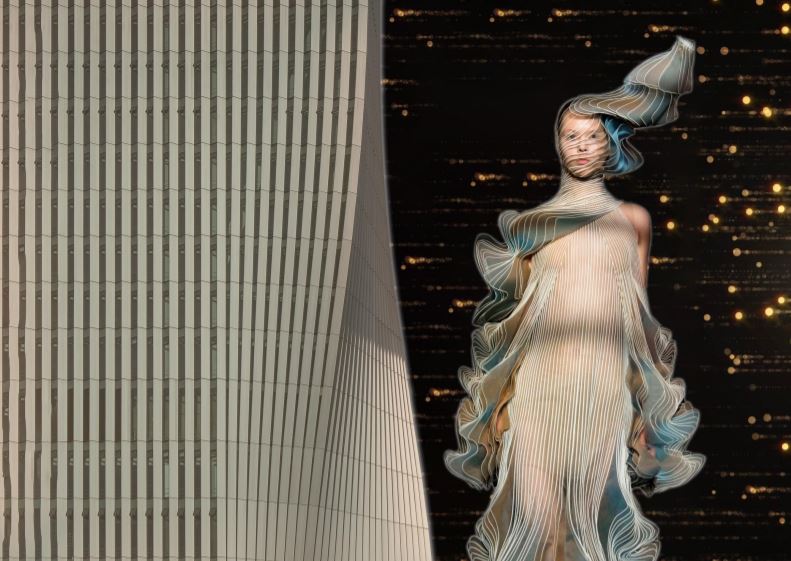
Img 1: Pleats, a common element of garment fashion has now being adopted in architecture of conventional buildings.
The Parallel
It all started back in Greece, when gender was applied to columns and emulated fabric into its fluting; establishing an inter-woven relationship between fashion and architecture. Both disciplines shelter the body, react to spacial volume, play with scales and work on transfiguration of 2D concepts into 3D reality. Other than the physical components, they affect and are affected by economics, politics and culture.
Peirre Balmain, Gianfranco Ferre, Fernado Garcia, Versace and Coco Chanel share something in common. Before securing the title of fashion moguls of the industry, each of these individuals shared an architectural background. Though there exists numerous similarities, a crucial disparity subsist as well. Beyond a difference in scale, fashion endures an ephemeral character, looking for the next innovation and rejecting past notions.
It can be said that architecture and fashion are cut from the same cloth and they sometimes co-depend for inspiration. If fashion is the source of knowledge then architecture is the structure that is responsible for sheltering as well as enhancing its quality.
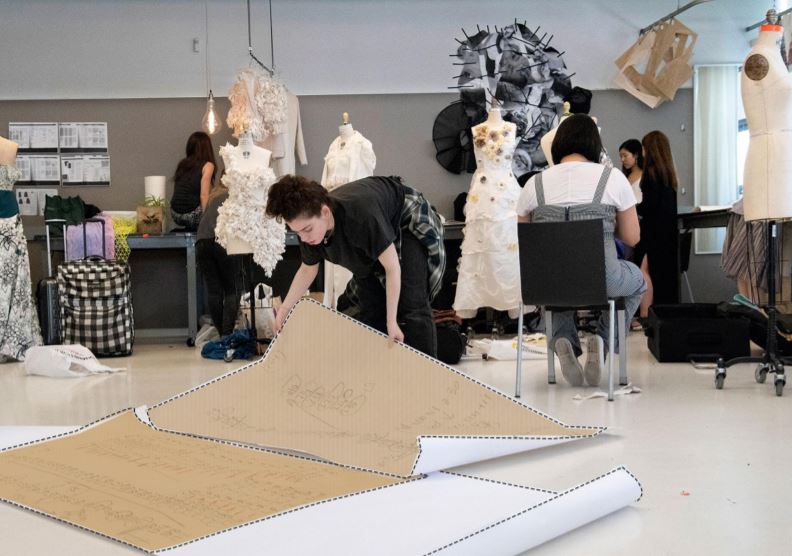
Img 2: Work culture and environment of a fashion student
Institutionalisation
1826, was the year in which Charles Frederic set up the first ever fashion house in Paris. Since then, fashion has evolved from mere garment production into a full fledged industry. A number of institutes have come up all over the world, offering courses in various arenas of designing. Fashion designing is no longer only the designing and creation of a garment, but it is a world in itself involving fashion, design, creativity, technology as well as business.
Fashion education sector is booming and has grown enormously over the last decades. In some cases institutions have experienced enrollment increases tripling student populations. This has given rise to fierce competition to secure jobs after colleges.
Although, we have witnessed increasing competition in the field of design, yet this isn't the major contributor towards unemployment after graduation. Are fashion students getting stitched up? How?
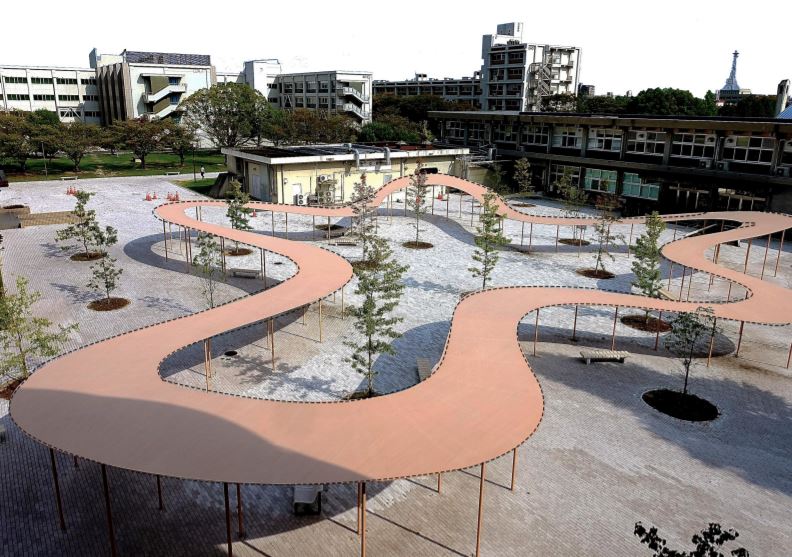
Img 3: Public pavilion designed for okayama university in Japan
Issue
The underlying root cause of global fashion education issue is as experts have stated, ‘the project runway effect’. While many young people are attracted to working as a fashion designer due to increased visibility. Its popularity is not matched by a corresponding increase in fashion designer jobs.
There exists a gap between academic and market/ realworld education in current college curriculums. Most of the graduates lack basic stitching and sewing skills that makes job procurement out of question. While the other half falls short in experience in terms of presentation, client interaction and spectator engagement.[1]
Isn't there a solution to create an integrated businesseducation model?
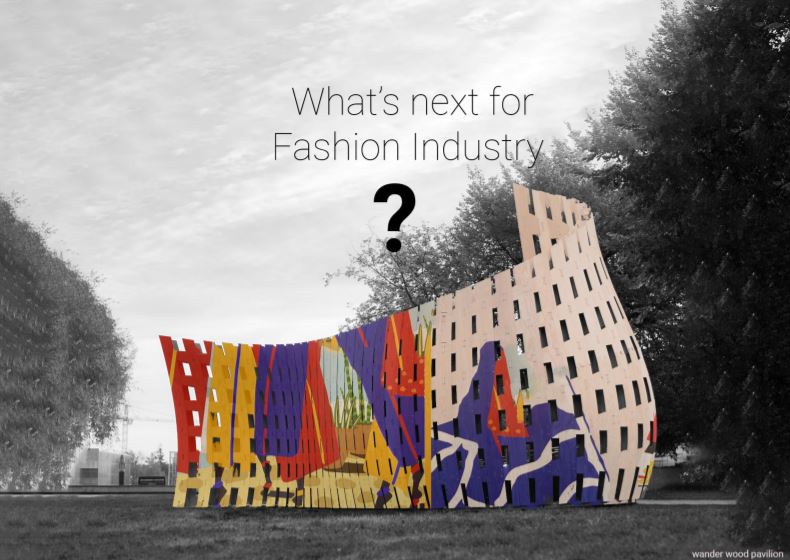
Img 4: pavilion as an amalgamation of fashion and architecture
Brief of the competition
How should fashion schools integrate business learning into a creative education? Can we create a medium to formulate a bond between students and accomplished designers? How can fashion students develop a business mindset from early college age?
Brief: The challenge here is to design a pavilion to integrate academic knowledge with industrial experience amid fashion institutes. The structure should be able to achieve modular properties for easy assembly and dismantling.
The fashion pavilion should be able to host runway shows and exhibitions showcasing designs of students. It should strive to become a window to express their art and at the same time provide an experience and opportunity to interact with spectators as well as accomplished designers.
Objectives
Multipurpose: Ability to host various kinds of fashion events.
Fusion: A combination of institutional as well as commercial side of fashion industry
Open: Creating interactive and open spaces
Lighting + Acoustics: Both play an important part in making the design stand out
The pavilion should be able to accomodate 400-500 people manage 4-5 runway shows at once. It should become a significant part of the university that become an essential element in fashion education worldwide.
Programmatic Outline
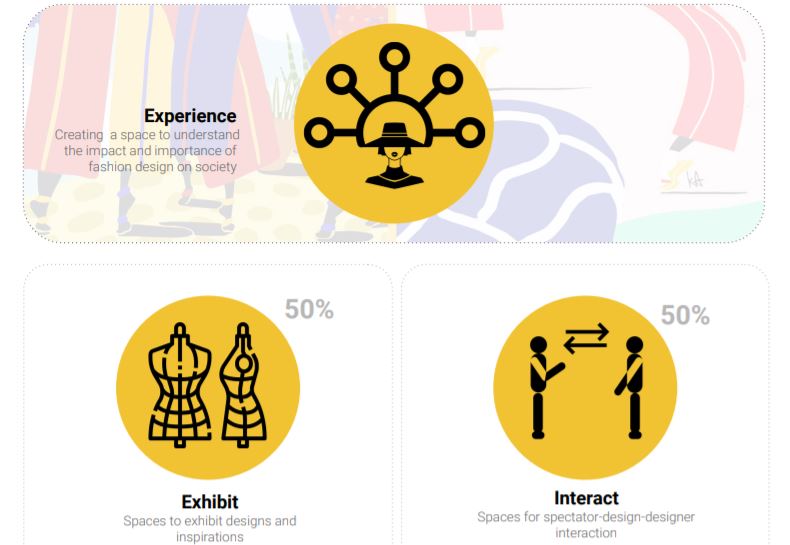
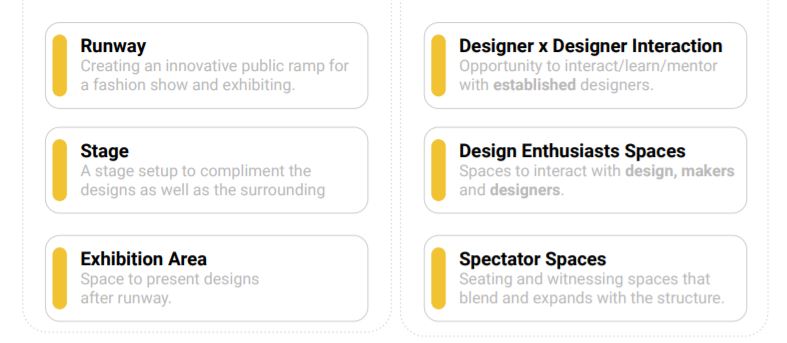
The above guidelines are provided for the ease of designing, participants are free to explore new functions as per their design requirement.
Finland
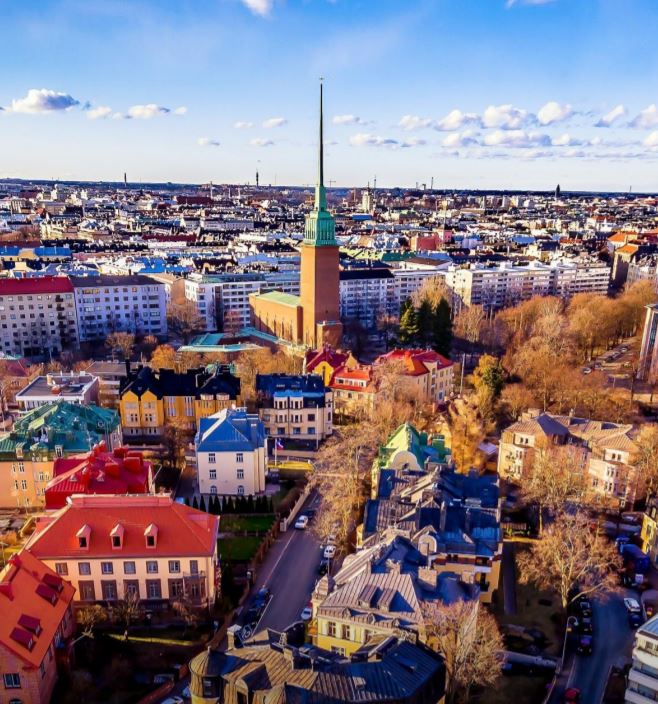
Finland is a Northern European nation bordering Sweden, Norway and Russia. Its capital, Helsinki, occupies a peninsula and surrounding islands in the Baltic Sea. The country is gradually progressing in fashion, especially cities like Helsinki and Espoo. MARIMEKKO, SOPHIE SÄLEKARI, lumi are few of the finnish designers that have made their mark on fashion industry.
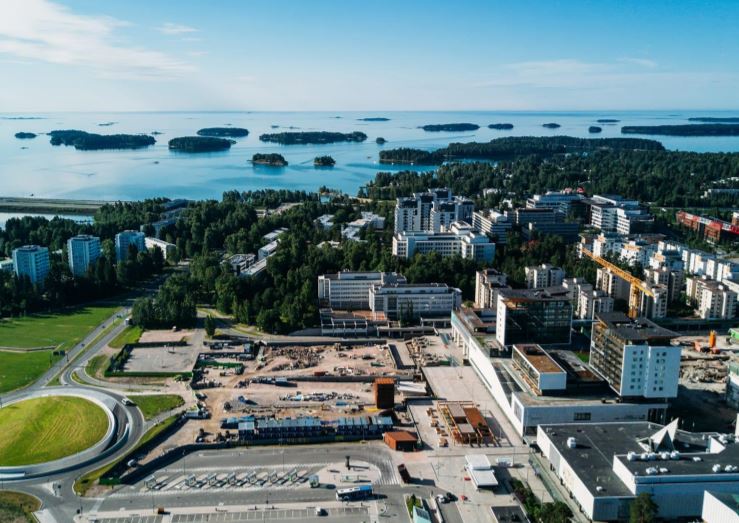
Img 5: Aerial view of city of Espoo
Espoo, Finland
Espoo is the second largest city and municipality in Finland. It is part of the Finnish Capital Region, along with the cities of Helsinki, Vantaa, and Kauniainen, and most of its population lives in the inner urban core of the Helsinki metropolitan area.
Fashion is emerging into spotlight in espoo. Other than being a home to multi million dollar brands, the fashion education sector of espoo has not been so far along.
School of Arts, Design and Architecture - Aalto University ranks 3rd in world ranking, just after london college of fashion and fashion institute of technology. The university shares a unique relationship with both fashion and architecture. And therefore it has been named after Alvar Aalto, a prominent Finnish architect.
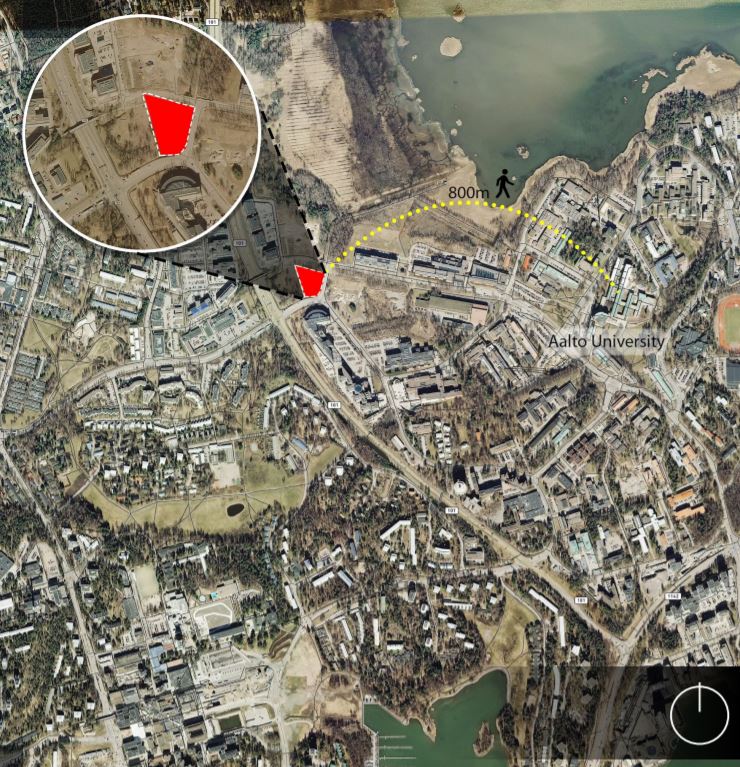
Img 6: Selected Site Location
Site Plan
The site is located within a km distance of Aalto university. The placement of the site amidst university land and near residential area plays a strategic advantage regarding its visibility and accessibility.
Site Area 4660sqm | Coordinates 60°11'12.8"N 24°48'41.6"E
Only regulations to be followed: Height restrictions - 16m, Set backs of 10m on all 4 sides
About BOUN
BOUN Serves as a unit block for UNI in the field of furniture design. It serves as a platform for experimentation and conceptual exchange of ideas for furniture designs happening at various levels. The program intends to get designers from around the world and encourage them to share their extraordinary design ideas. Through our furniture design competition at BOUN, we intend to create a dialogue among designers where they have full freedom to create contextual and user-centric design. Our furniture design awards will identify and acknowledge young and budding designers from across the globe. This approach towards design would serve in refurbishing the profession’s identity and will help the product to reach masses through our leading media and industry partners.
Queries: support@uni.xyz
Discover other competitions: https://uni.xyz/competitions
Facebook: https://www.facebook.com/unixyzglobal/
Instagram: https://www.instagram.com/uni.xyz/
Discover FAQ’s about this competition on our help forum here: https://help.uni.xyz/

Similar Competitions
Discover competitions you might be interested in



Challenge to design an open learning module for the elderly


Challenge to design a portable music platform

Challenge to design a portable theatre


The Global Benchmark for Architecture Dissertation Awards

