
Proximity Island
Architectural Ideas for Repurposing an Oil rig
OVERVIEW
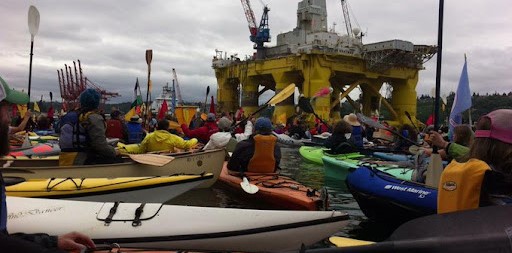 Fig: 1 - Locality Protest for Offshore oil rigs
OFFSHORE SETTLEMENTS
The oil and oil-gas platforms, more than 8000 present all over the planet until a few decades ago, have gradually been dismantled to free the seas from the strong pollution they cause. The so-called decommissioning process of fixed platforms is usually carried out by removing them entirely from the marine environment in which they are located, bringing them to the ground and then demolishing or disassembling them to sell valuable equipment or, in some cases, revamping the best pieces for later reuse in other fields.
As offshore settlements, these kinds of structures, due to their strong visual and evocative impact, constitute an excellent example of industrial archaeology in any sense which, however, only in rare cases have been known to be converted into spaces of civil architecture as artificial islands.
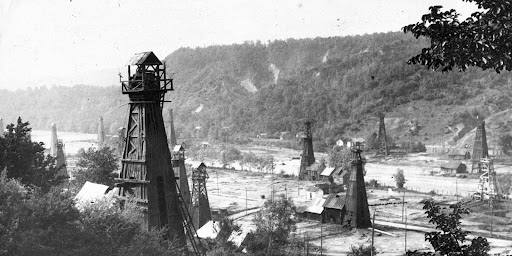 Fig: 2 - World First oil well in Romania
HISTORY OF OIL DRILLING
The birth of the offshore industry dates back to the years following the end of the Second World War.
Italy was the first in Europe to install a platform, exactly in 1959 and since then, almost 200 of the various Mediterranean oil platforms have been installed during the economic boom. Only a quarter of them in the 1990s has been dismantled. In the area of the upper Adriatic there are various assemblies of gas extraction persist and will be gradually dismantled. And yet with the massive amount of costs involved, reflection on their reuse in architectural terms is still uncharted.
Even if the drilling depth can reach hundred meters, the distance from the coast is sufficient (it takes a few kilometers) to avoid affecting the coastal activities. And being so close, these industrial behemoths naturally take a considerable spot right between the beautiful views of the ocean.
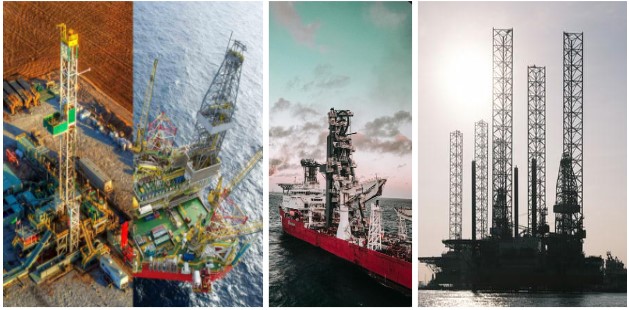 Fig: 3 - Oil Rigs and equipment Combination at horizon
THE CONCEPT OF ISLANDS
Despite the environmental political conflicts that they constitute nowadays, it is undeniable that from an architectural landscape point of view they have great visual strength and constitute a kind of punctual exaltation of the horizon line.
The concept of the island, natural or artificial, does not lie only in being surrounded by the sea. From the Latin Insula, it can turn be decomposed into in-salum, from the Greek sea, but also saleyo which means to move, agitate, storm. The meaning of Isola is somehow if not opposite, profoundly different from the meaning of mainland but rather earth formation.
The artificial island halfway between a ship and a natural island is affected as much by the horizontal movements of the water as those of the sky.
It is from these first observations that we can move in understanding the shifting of the idea of offshore to foreshore, while physically keeping a distant pier like form from the coastline.
How can architecture reuse an Oil platform, dismissed by its original function?
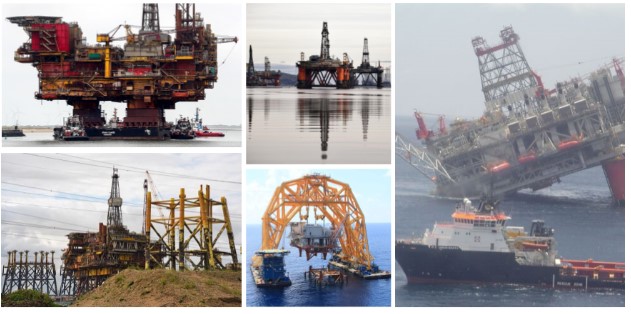 Fig: 4 - Dismantling of an oil rig
OFFSHORE TO ARCHITECTURAL STRUCTURE
One of the biggest problems caused by the dismantling of these structures is the costs. Recent studies have validated that re-use and redevelopment are much cheaper than, for example, completely new construction and partly even more economical in reference to the resale of disassembled parts.
A further problem, even if it concerns offshore structures, is constituted by the interpretation by local communities as elements of visual disturbance between the line of the coast and that of the horizon.
If the choice is to move from the concept of offshore (structure) to that of in-shore (dismantling), we never talk about an intermediate concept like that of the foreshore. This can be interpreted as a threshold between water and earth. This would give to these structures an added value of transitional spaces between sea and land.
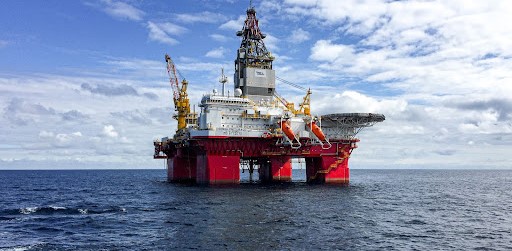 Fig: 5 - Oil rig for experimentation
BRIEF OF THE COMPETITION
The purpose of this competition is the future use of industrial structures that have lost their original function, imagining that in the very near future oil and its derivatives will hopefully be replaced completely by renewable energy available to all people.
The competition challenges to repurpose an unused oil rig into a museum.
The concept of offshore must become much more an intermediate concept such as the foreshore in order to create fluid transition architectures in terms of spaces and functions. In this way, the water, the sea, becomes the leitmotif for the creation of a water museum focused on the three main aspects of the sea: The ocean as the sea of the distance, The Mediterranean for proximity and The Adriatic as the sea of intimacy.
This museum is only for temporary exhibitions, Workshops, installation but above all the space itself must reflect the metaphors of the sea shown above. it will also have to interact with a small block of houses for short stays, for use by artists, students, marine biologists and refugees as an integral part of the history of the sea.
OBJECTIVES
- Architecture x Water: Exploring new relationships between the two.
- Cohabitation: Programme management within diverse functions and limited space.
- Structure: Understanding structural qualities of oil rigs and utilizing them.
These objectives can be a point of beginning to conceive this design. Participants can assume their own contexts and users before initiating their design process.
SITE
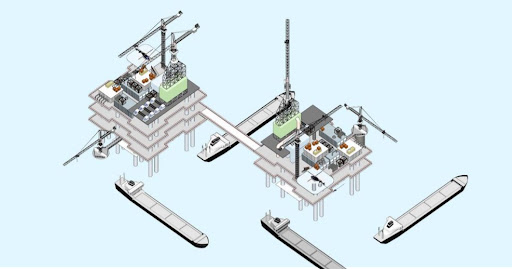 Img 6: View of model oil rig open for experimentation
Oil platform in Ravenna
The platform used in the competition is inspired by the Cervia A and B gas platform almost 7 km far from the coast. The platform is made of 2 parts connected by a bridge but, however, must be conceived as unique.
Site coordinates: 44°23'02.8"N 12°53'37.6"E
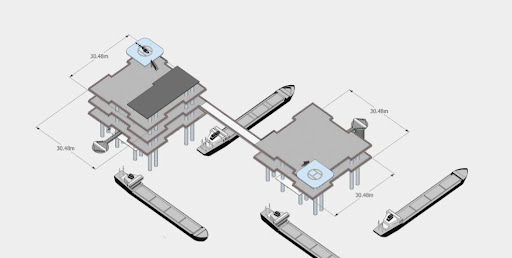 Img 7: Dimensions of oil platforms and plane surfaces (Model in additional resources)
DECK DIMENSIONS
The platform used in the competition is inspired by the Cervia A and B gas platform almost 7 km far from the coast. The platform is made of 2 parts connected by a bridge but, however, must be conceived as unique. For more details participants can refer to the SketchUp model provided in the additional resources.
PROGRAMME OUTLINE
Entrance:
- Small dock able to communicate both with the residential area and with the museum área. Entrance to a museum from the platform level.
- Entrance to residential área from platform level. Entrance to cafetería and laboratories. Planning boat traffic and layout of how ships can be anchored.
- Establishing a relationship between water and the sky through the dock.
Museum:
- 3 main spaces not necessarily separated that must be elaborated on the basis of the 3 main features of the seas (distance, proximity, intimacy).
- The museum must represent the sea and will host as much on-site works from artists, visionaries, as well as scientific works of marine biology.
- The exhibitions, mainly in the format of installations, will be temporary because there are no permanent exhibitions.
Residential:
- 20 units of small apartments that can accommodate at least 3 people. Due to the temporary nature and short stays, housing units are not intended as traditional apartments, but comfort must be guaranteed.
- The spaces must be conceived as contiguous and the distribution, separations etc will be the decision of the participants.
- There is no limit in this sense. The use of new materials will always be of a sustainable nature, preferably recyclable.
The original structure of the platform shall be retained. Structural parts can be added if the logic of the project requires it, but keeping the platform elevated from sea level will always be necessary. The connection with the coast will always be with boats.




