Resile
Resilience Center for the widows of Afghanistan
OVERVIEW
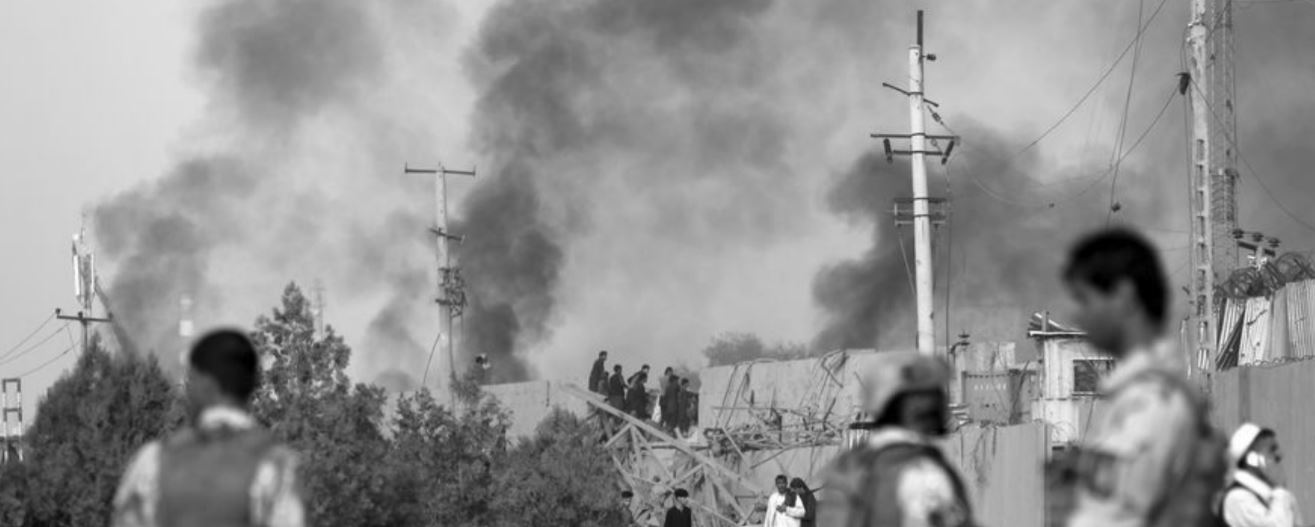
Img 1: Smoke rises as Kabul residents set fire to part of the Green Village compound. Source
The Taliban Rule
On the heels of its yet unannounced presidential election results held in September this year, Afghanistan continues to be among the most hostile places for its population to thrive in. Most of all, the hostility has been faced by its female population. The country became a flagrant breeding ground for discrimination, gender apartheid, and oppression under the fascist regime of the Taliban.
Now, even after two decades of Taliban’s fall, the militant group still seeks to strengthen its hold on the landlocked country. Conditions seem to have hardly improved despite a now incumbent democratically elected government. The brunt of that too has been borne the most by its women. Principal among them are the widows of Afghanistan, left in the wake of a perpetual war that has been tearing the country apart for more than two decades now.
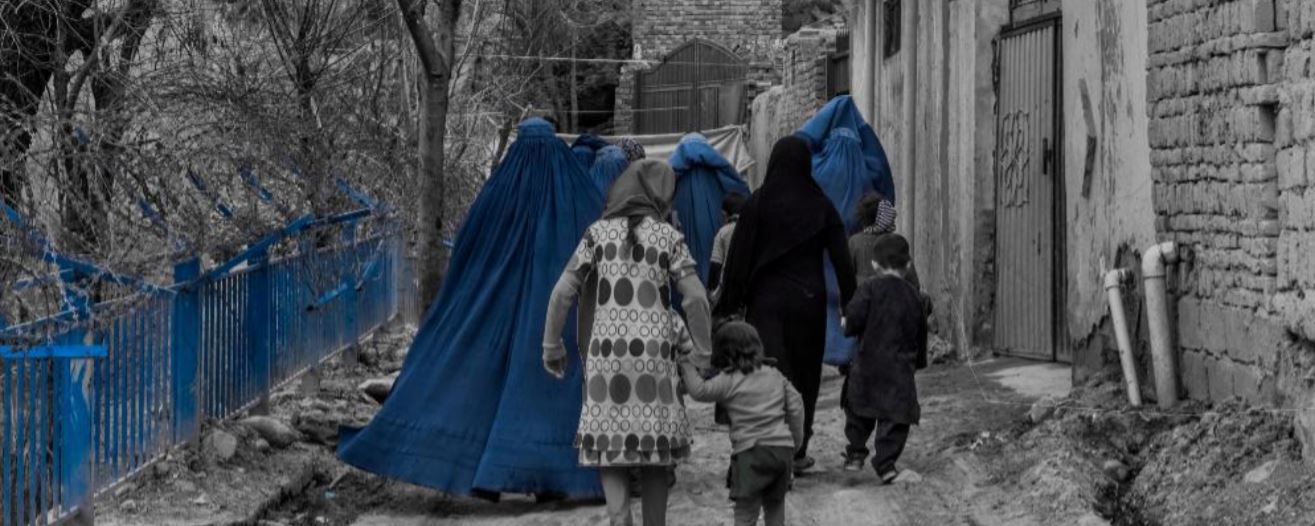
Img 2: A group of widows walking through the militarized by-lanes of Kabul, Afghanistan. Source
Widows of War
A near-perpetual war in Afghanistan that has uprooted lives and severely impacted the country has rendered it to be called the “nation of widows”. The lives of Afghan widows, a number currently estimated to be near 70,000 in Kabul alone and nearly 1.5 Million in all of Afghanistan, are found to be at an inertial roadblock. The lack of any formal education, work opportunities, and even proper healthcare as decreed by the Taliban owing to archaic laws prevents them from acquiring the necessary means to earn a respectable livelihood or lead dignified lives.
As many as 91% of the women in Afghanistan have been reported to have only a primary education or less as of 2018. 67% of Afghan women find themselves unemployed despite immediately willing to work, owing to either societal pressure or the lack of requisite skills, trapping them within a vicious cycle of dependency. The onus of survival is only added on to them, being the sole bread earners of the family, more often than not comprising of infants and kids. Worse, they are often plunged into repeated remarriages with the husband’s close male relatives.
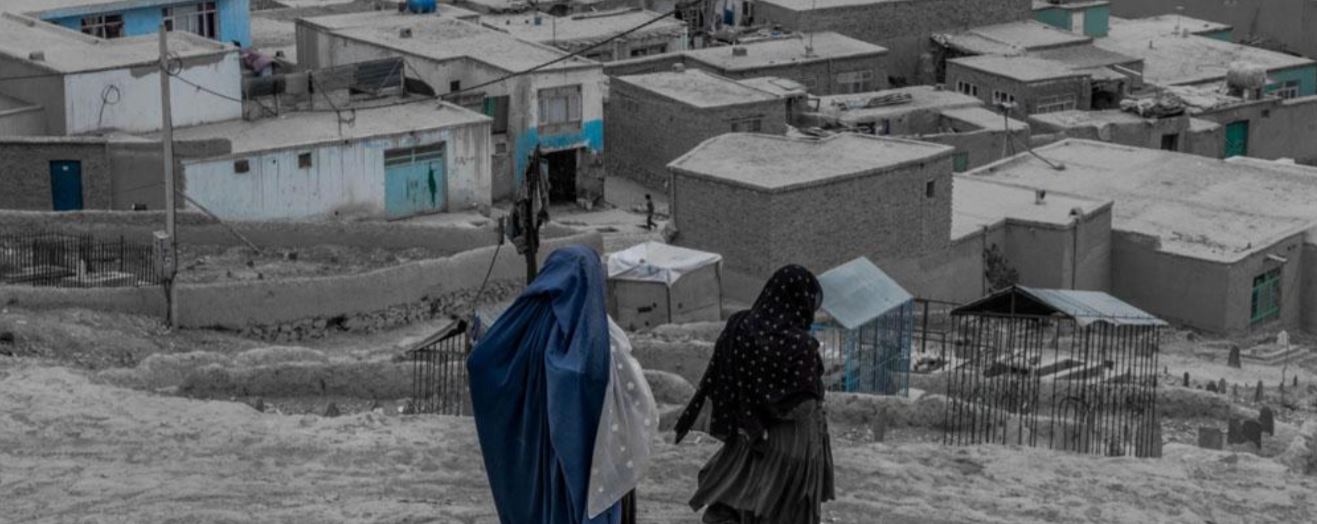
Img 3: Zanabad, a sparse informal settlement of widows on the hilly outskirts of Kandahar, Afghanistan. Source
Zanabad
'City of Women'
Nearly 500 Afghan widows that have survived despite all odds cocooned in an informal settlement on the hills to the southeast of Kabul since the 90s. The settlement came to be called ‘Zanabad’, roughly translating to city of/by the women. They have continued to face discrimination and interference from even the police, who would often demand bribes or demolish their modestly self-constructed homes.
Over the years, the widows of Zanabad have mobilised to weave a mutual system of co-dependence: standing up for each other. Widows settled here include those as far back as the 80s war, to as recent as the uprooting of the Al Qaeda in the region. The average age of widows in the settlement is 35 years, and about 90% of them have children, four on average. To survive, many Afghan widows in Zanabad have begun weaving carpets, do tailoring, preparing food to be sold in Afghan markets, teaching in primary girls’ schools in the area and even working with the government on relief projects.
None of the widows or authorities in the area recall when exactly Zanabad came into being or the women who established it.
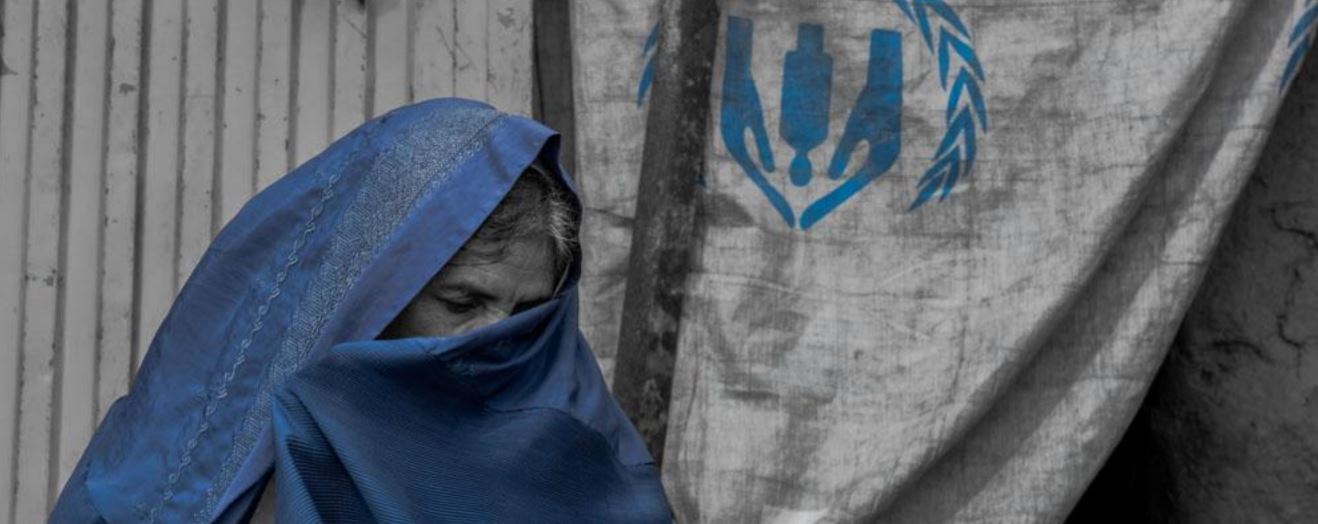
Img 4: An ageing widow in Kabul in front of the camp of the UN support programme. Source
Fight for survival
Since early 2014, the government has been providing electricity and water to the settlement, thereby acknowledging the widows’ right to live in Zanabad. It has also taken responsibility of the girls’ school. However, the widows still do not possess legal documents for the land they live on, and Zanabad is not yet part of Kabul’s official city plan. War widows who are registered by the government receive some meagre annual help from the home ministry, but that does not meet the need of the victims. A number of NGOs including CARE and Beyond 9/11 have extended help, but there remains to be a permanent solution to alleviate the widows’ suffering. Some of them from Zanabad still beg or have to engage in prostitution for supporting their families.
As a result of the oppression and a deplorably patriarchal society that wouldn’t treat them as human, leave alone equals, it is no surprise that a vast majority among Afghan women (47% at current) wish to flee the country in search of asylum and better living conditions, if given the chance. This includes both young women and aged widows who have to rely upon the help of their community to survive.
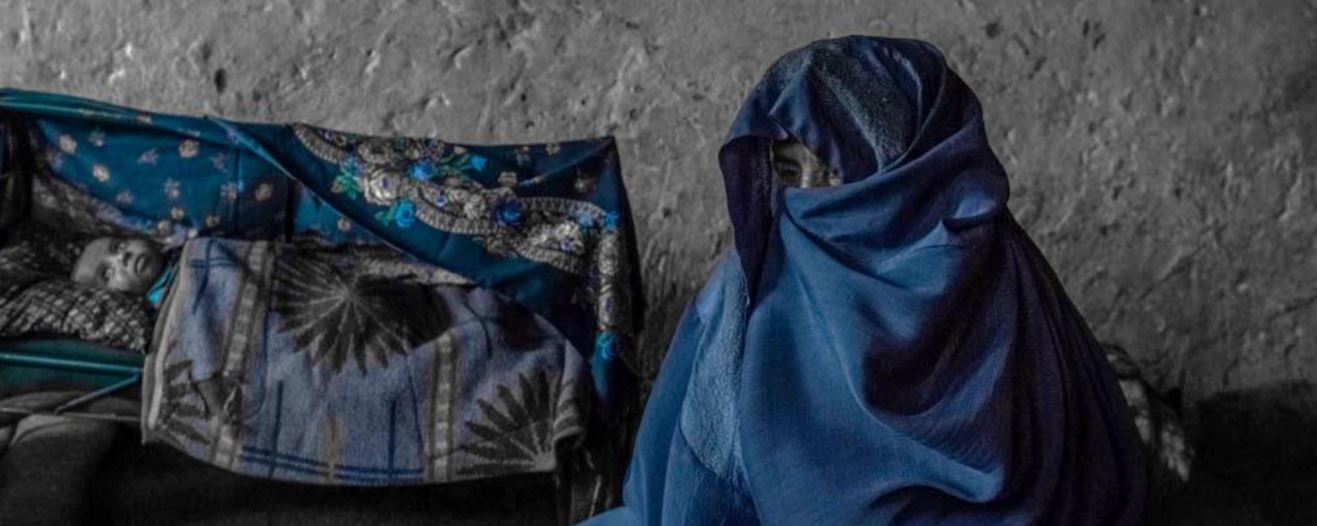
Img 5: A widow with her infant baby inside her modest accommodation in Zanabad. Source
Brief of the competition
Brief: The Challenge is to design a Resilience Centre in Zanabad for the widows of Afghanistan, providing them and their families with residence, educational and work opportunities under an umbrella facility.
Under such inhuman precedents, the rehabilitation of Afghanistan’s widows in a cordial, secure environment is a warranted intervention, necessitating the involvement of the government too. The challenge here would be to design a facility that would cater to their residential needs, livelihood, and education for themselves and their children, along with providing the requisite training for becoming self-sufficient and train future residents. It is to be a building that can be seen as a symbol of strength, solidarity, embrace and hope in a country historically notorious for being unjust and hostile to its women.
Objectives
Residence: A safe haven for the widows who have undergone years of trauma and war.
Education: A means to enable them and their children to rebuild their lives.
Training & Skill Development: To enable these women to acquire better work opportunities in cities.
Maintainability: Application of simple construction techniques to enable easy upkeep by residents.
The following objectives can be a point of beginning to conceive this design. The user group for the conception of the design may be designed to be housed in ~100 residential quarters, with roughly one residential quarter per family (a widow and her children). The other facilities may be designed in accordance with the same user group in mind, under a single building or in separate zones.
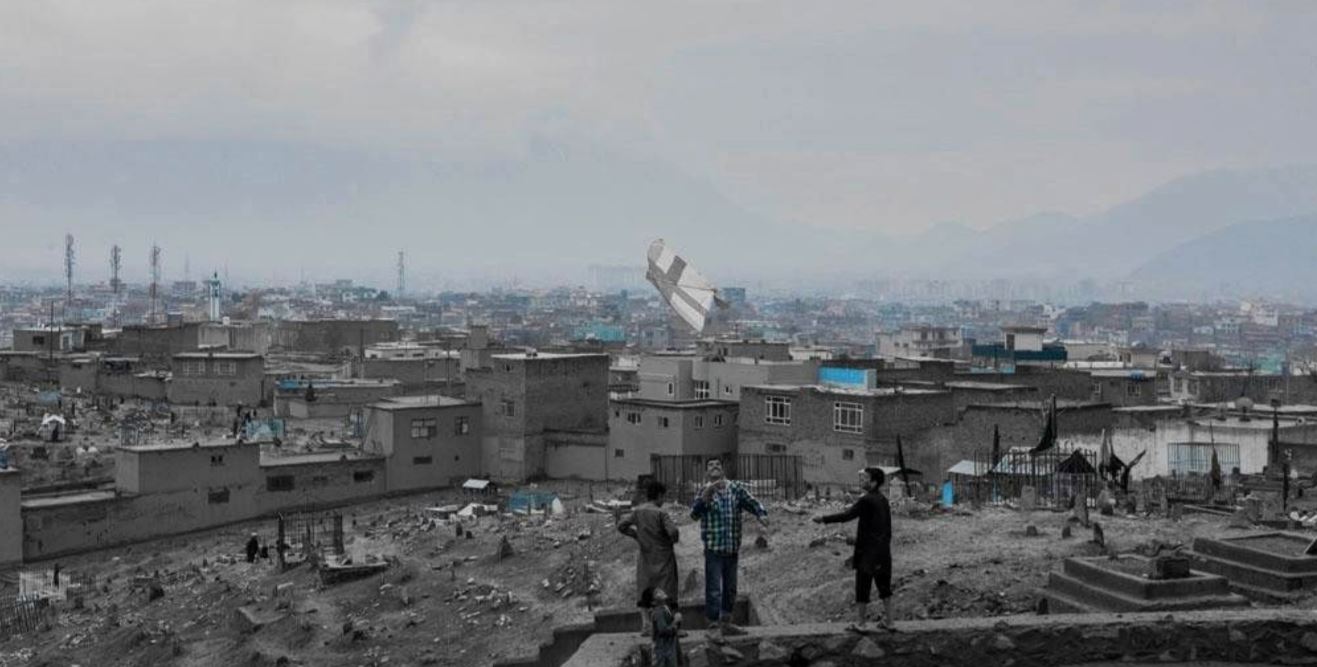
Img 6: The rooftops of a peri urban development near Kandahar, Afghanistan. Source
Qandahar, Afghanistan
Renowned as the capital city of a number of regimes since as far as the 4th Century BC, Qandahar is the second largest city in Afghanistan and the closest formal settlement to Zanabad, which is located towards its North East. Being in the floodplains of the Arghandab River, it is among the very few arable cities in the mountainous landlocked country of Afghanistan. Qandahar is also one of the most culturally significant cities of the country and a major trading center for sheep, wool, cotton, silk, felt, food grains, dried fruit, fine fruits and tobacco. It is often regarded as the heart of the Pashtun civilisation in the country and has been a seat of the Taliban in the past, as well as its current democratic government under President Hamid Karzai.
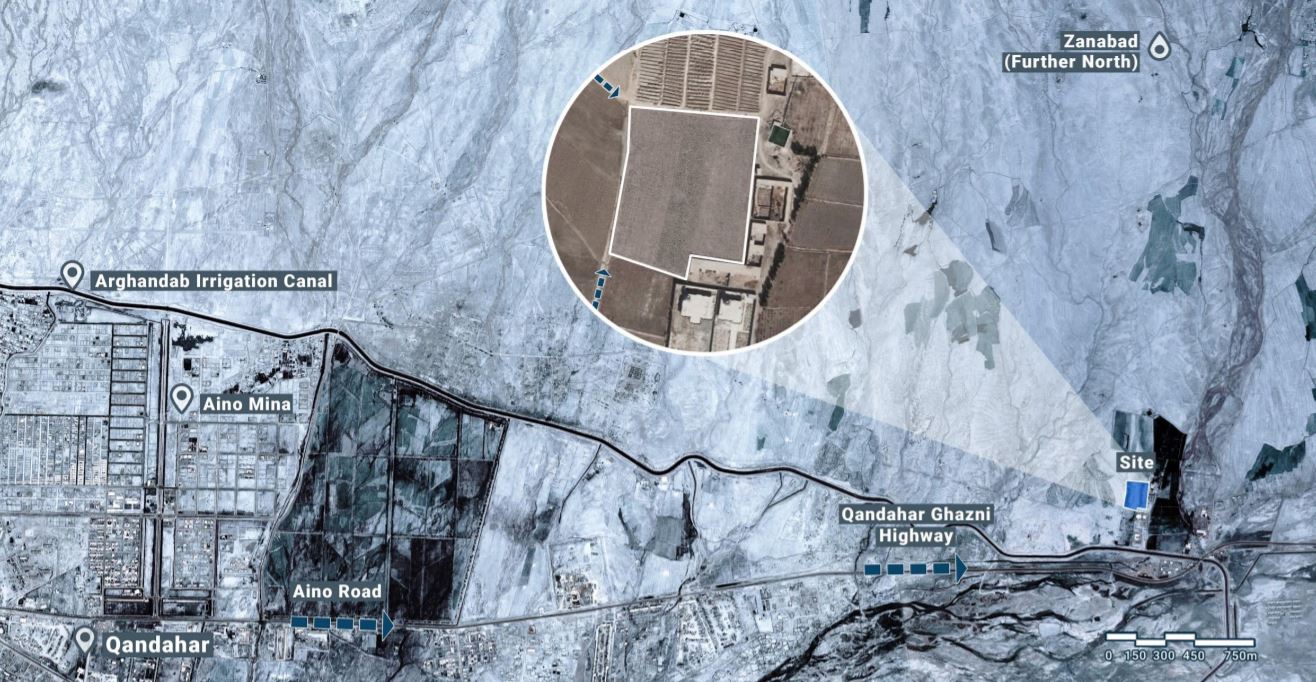
Img 7: Aerial View of the Site.
Site Plan
The site for the resilience centre is located on the outskirts of the city of Qandahar, on the foot of the hills housing Zanabad. It lies 3.5 km (2.2 mi) to the East of Aino Mina, a mega housing project meant to accommodate roughly 20,000 families and is suitably connected via the Aino road branching from the Qandahar highway. The topography of the site is mostly flat and there are no major neighbouring structures except an underground water storage tank for the area sharing an edge, and some private residences to the South. The site’s primary access branches from the main road keeping in mind the relatively peaceful environs, albeit accessible, envisioned for the development.
- Site Area: 23508 sq. m.
- Site Coordinates: 31°37'16.8"N 65° 49'58.6"E
- FAR: 1
- Ground Coverage: 30%
- Height Restriction: 10m
Judging Criteria
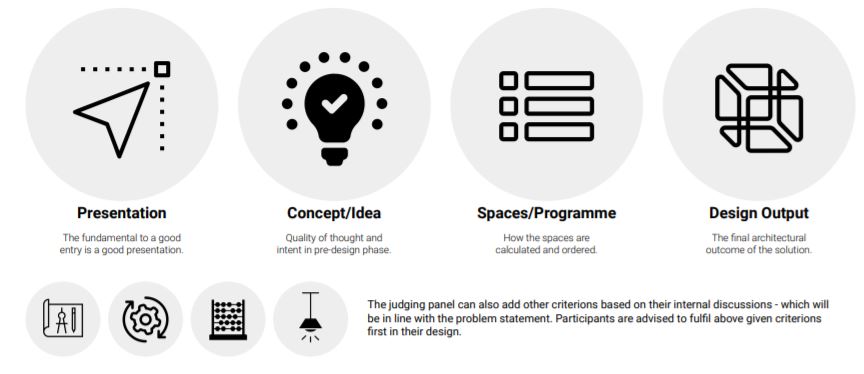
The entries will be judged by an international jury of the competition on the following criterions:
About Unfuse
Unfuse serves as a unit for Uni in the field of Architecture. It intends to break the fusion of traditional design barriers and methodologies by making it a platform for experimentation and conceptual exchange of ideas in architecture, urbanism, society, culture and ecology. It is a research initiative dedicated to providing opportunities for designers from all domains to explore ideas that go beyond the boundaries of architectural discipline and enrich our built environment; thereby opening up possibilities for promotion of architectural thought at a global level.
Queries: support@uni.xyz
Discover other competitions: https://uni.xyz/competitions
Facebook: https://www.facebook.com/unixyzglobal/
Instagram: https://www.instagram.com/uni.xyz/
Discover FAQ’s about this competition on our help forum here: http://help.uni.xyz/