
Resumption
Competition to design a reformation centre for post-imprisonment
Overview
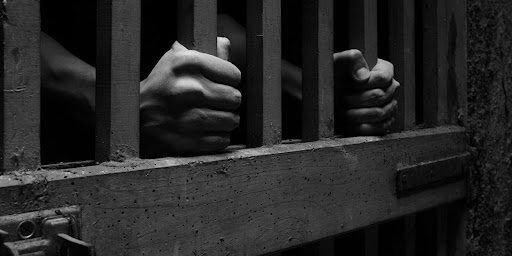 Fig: 1 - Imprisonment causes post-traumatic disorders and can affect mental health deeply (Credits-Cornell Chronicle/iStock)
IMPRISONMENT
Currently, there are 10.35 million people confined throughout the world. This number makes up a large portion of the population worldwide. This number varies across different countries and so do the level and time of sentences given.
Every month about 10,000 people are released from post imprisonment and are expected to join society. This annually sums up to a large number of people standing at the doorstep of the community to provide them with a chance to lead a normal life.
Moreover, worldwide, there is an observed decrease in the number of people actually pursuing a normal life.
H3: The lack of people going back to leading a normal life creates a question in the working and methodology of the post-incarceration period, as to what leads to the drop in the numbers and what is hampering this process and people?
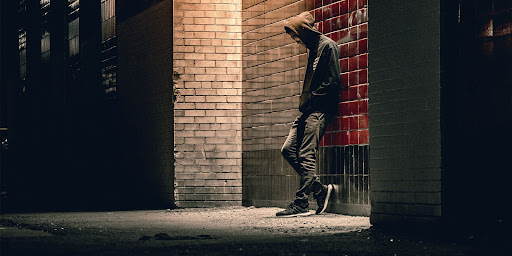 Fig: 2 - When system neglects people they turn their paths towards crime and wrongdoings (Credits-Warren Wong)
COMEBACK
Different regions and different individuals have their own set of reasons as to why they are unable to make a comeback. But through a generalised observation, there are some major issues that these people face all around the world.
Beyond the personal reasons, the average reasons were: inability to cope with the changing times. With respect to the time of their sentence, most prisoners are unable to get hold of the new reality. In addition, the lack of employable skills in order to get a job is a major cause for these people to find something relevant in the changing job market.
And even if one manages to come past these factors, the past trauma and shock of post imprisonment cause many to fall back into the spiral of unemployment - crime - imprisonment.
Thus, making us question what can be done in order to break this vicious loop? How can we free them to help them make a comeback and lead a normal life? Can we help create spaces for them to be and transform into an able individual?
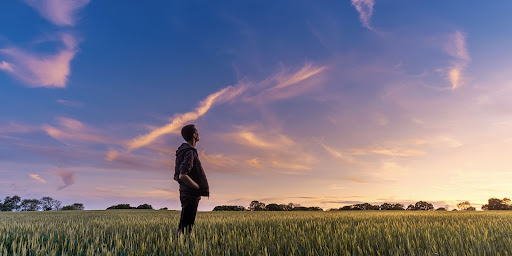 Fig: 3 - Redemption centres offer a chance to look at life through a different lens (Credits-Benjamin Davies)
BRIEF OF THE COMPETITION
How can architecture help in rehabilitating these people through spaces?
Can design strategies help in bridging the gap between these two worlds?
Brief: This challenge aims to design a reformation and skill development centre for the people post imprisonment.
This issue brings us to formulate a solution that is majorly fragmented into the following:
Reformation - rehabilitation - skill development.
The design aims to create a space that will fill the gap that has caused a major population of people to post imprisonment to relapse back towards crime. Design to offer them spaces where they can heal from their past but also can learn marketable life skills that can help them in employment for the future.
OBJECTIVES
Empathy: The design should consider the perspective of a person post imprisonment.
Healing: Design should offer spaces that ensure, promote healing through Architecture and therapeutic space uses.
Sense of community: Creating engaging - recreational spaces with the community.
Inclusive engagement/design: This design should try and eradicate the stigma towards reformative buildings.
SITE
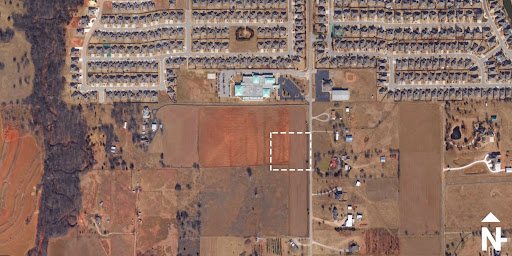
Oklahoma City, OK, USA
- Coordinates: 35°19'31.0"N 97°33'57.7"W
- Area: 8,401 sqm
- Height limit: 10m
- FAR (Floor Area Ratio): 1
- Ground coverage: 50%
The major characteristic of the United States is probably its a great variety. Its physical environment ranges from the Arctic to the subtropical, from the moist rainforest to the arid desert, rugged mountain peak. Although the total population of the United States is large by world standards, its overall population density is relatively low. The country embraces some of the world’s largest urban concentrations as well as some of the most extensive areas that are almost devoid of habitation.
The site is located amidst the dense neighbourhood of Oklahoma City, USA. Where there are small residential clusters and other commercial blocks in the neighbourhood. Major adjacent land is green pastured with wide fields in the distance. The open areas around the site provide a wide vista and connection with the context in spite of being far from them, which can enable better recovery and bring a positive change in their lives.
AREA PROGRAMME
The programmatic outline is intended for a batch capacity of 50 people. This is recommended for this challenge.
The space ideas are as follows:
- Workshop spaces: 30 %
- Stay spaces: 30 %
- Healthcare facility areas: 10 %
- Meditation/healing spaces: 5 %
- Public gathering/engagement spaces: 10 %
- Services and ancillary spaces: 5 %
Other additional spaces can be added by the participants as per their design needs.
Similar Competitions
Discover competitions you might be interested in


Design challenge to reuse E-waste

Illustrate the lost glory of Angkor Wat - Render Challenge

Photograph architecture without architects

Challenge to reimagine the Iron Throne