Art and Installation in Architecture: Where the Two Disciplines Collapse Into One (Updated October 2026)
This is the UNI editorial home for the art-architecture intersection — the competitions, open calls, and briefs that ask architects to become artists, artists to become architects, and both to work in the space where the boundary between their disciplines disappears. It is the home of land art and earthworks, immersive installations, public art commissions, light and sound installations, artist pavilions, sculpture gardens, and everything else that lives where fine art practice and spatial design overlap. If you have ever stood inside James Turrell's Skyspace at Naoshima, walked Robert Smithson's Spiral Jetty, or lost an hour in teamLab Borderless and thought "this is what I want to make" — this section is for you.
What Is Art and Installation in Architecture?
Installation art, as the Tate defines it, is "large-scale, mixed-media constructions, often designed for a specific place or for a temporary period of time." Architecture is the design of space as lived experience. Where these two definitions meet, you get the art-architecture intersection — a field that includes:
- Land art and earthworks — large-scale sculptural interventions in landscape (Smithson, Heizer, Holt, De Maria, Goldsworthy, Long).
- Immersive art environments — teamLab Borderless, Meow Wolf, Yayoi Kusama's infinity rooms, Olafur Eliasson's weather projects.
- Public art commissions — civic sculpture, plaza art, urban interventions, public art programs attached to new buildings.
- Light installations — James Turrell Skyspaces, Dan Flavin fluorescent work, Yayoi Kusama's Infinity Mirror Rooms, Bruce Munro's field installations.
- Sound and sonic installations — Bruce Nauman's neon-and-sound work, contemporary sound art in architectural spaces.
- Kinetic and interactive installations — Random International's Rain Room, interactive facades, participatory art environments.
- Artist pavilions and biennale work — Serpentine Pavilion, Venice Biennale national pavilions, Desert X, Burning Man temple installations.
- Projection mapping and digital installations — video art as architecture, building-scale projections, NFT and virtual installations.
- Participatory and relational art — Theaster Gates's Dorchester Projects, community-driven public art.
- Ephemeral art competitions — snow sculpture, sand art, ice, fire, and other time-bound installations.
- Street art and mural architecture — where graphic intervention scales to architectural dimension.
Why the Boundary Between Art and Architecture Keeps Collapsing
The question "where does architecture end and art begin?" has been a live debate since at least the 19th century Arts and Crafts movement. Walter Gropius founded the Bauhaus in 1919 explicitly to collapse the distinction. The Gesamtkunstwerk — the total work of art — was already the ambition of Wagner and Viollet-le-Duc before that. Richard Serra and Maya Lin made the question urgent again in the 1980s. Today, with teamLab, Meow Wolf, Refik Anadol, and Es Devlin working at scales and ambitions that traditional categories cannot contain, the boundary has collapsed for good. Consider:
- Maya Lin's Vietnam Veterans Memorial (1982) — is it sculpture or architecture? It is listed in both canons. The question is incoherent.
- Gordon Matta-Clark's building cuts (1970s) — the artist who treated existing buildings as sculptural material, cutting holes through houses before demolition.
- Rachel Whiteread's House (1993) — a cast of the interior of a Victorian terrace house in East London. An architectural negative as sculpture.
- Christo and Jeanne-Claude's wrappings — the Pont Neuf, the Reichstag, the Arc de Triomphe (posthumously in 2021). Architecture as raw material for ephemeral art.
- Donald Judd at Marfa — the Chinati Foundation in Texas, where Judd repurposed military buildings into permanent installations.
- Tadao Ando's Naoshima museums — buildings whose entire purpose is to frame specific art by James Turrell and Walter De Maria.
The pattern is clear: serious practitioners stopped caring about the boundary a long time ago. Competitions are finally catching up.
The Land Art Tradition: When the Earth Became the Canvas
Land art — also called earth art or earthworks — emerged in the late 1960s as a radical rejection of the gallery. American artists decided that if sculpture mattered, it should matter at the scale of the landscape, not the pedestal. The movement produced some of the most influential works in the history of sculpture and architecture combined:
- Robert Smithson — Spiral Jetty (1970): a 1,500-foot coil of mud, salt crystals, and basalt extending into the Great Salt Lake in Utah. The canonical work of land art.
- Michael Heizer — Double Negative (1969) and City (1972-2022):City, finally opened in 2022 after 50 years of construction, is a 1.5-mile-long complex of earthen architecture inspired by pre-Columbian city planning.
- Nancy Holt — Sun Tunnels (1973-76): four 18-foot concrete tubes in the Utah desert, aligned with the solstice sunrise and sunset, with star-constellation holes cut through their walls.
- Walter De Maria — The Lightning Field (1977): 400 stainless steel poles in a one-mile by one-kilometre grid in New Mexico. You visit by appointment, stay for 24 hours, and wait for lightning.
- Andy Goldsworthy: ephemeral sculptures made from leaves, ice, stones, and twigs — then photographed and allowed to decay.
- Richard Long: lines walked across landscapes, stone circles arranged by hand. Walking as sculpture.
- James Turrell — Roden Crater (1974-present): a dormant volcanic crater in Arizona being converted into an observatory for naked-eye astronomy. Fifty years in the making.
What land art taught every subsequent designer: the site is not a location, it is the medium.
Immersive Art Environments: Architecture You Feel
- teamLab Borderless (Tokyo 2018; Shanghai, Macao, Abu Dhabi): a 10,000 sq m digital art museum where 50+ works share a single continuous space, projected onto surfaces that respond to visitor movement. One of the most visited single-artist museums in the world.
- Meow Wolf (Santa Fe 2008, Las Vegas, Denver, Grapevine, Houston): the American immersive art collective that turned experiential environments into a commercial art model. "House of Eternal Return" is a Victorian house functioning as non-linear narrative installation.
- Olafur Eliasson:The Weather Project (Tate Modern, 2003) filled the Turbine Hall with an artificial sun. Ice Watch (2014) placed Greenland ice blocks outside the Pantheon and Tate Modern as a climate installation.
- Yayoi Kusama's Infinity Rooms: mirrored rooms that produce the illusion of infinite space.
- Random International — Rain Room (2012): a room of falling water that stops wherever a visitor moves, powered by motion-sensing technology.
- Refik Anadol: data visualization and AI-generated projections at architectural scale, including the MoMA lobby installation (2022).
Public Art Commissions and Civic Sculpture
- Anish Kapoor's Cloud Gate (Chicago, 2006): the stainless steel "Bean" at Millennium Park.
- Richard Serra's torqued ellipses: from Tilted Arc (1981, removed from Federal Plaza NYC in 1989) to Sequence. Serra raised the question of who owns site-specificity.
- Maya Lin's Vietnam Veterans Memorial (1982): arguably the most important single work of American public art. Lin was a 21-year-old Yale undergraduate when she won the competition.
- Christo and Jeanne-Claude: wrapped the Reichstag (1995), the Pont Neuf (1985), and posthumously the Arc de Triomphe (2021). Also The Gates in Central Park (2005) — 7,503 saffron fabric gates along 23 miles of paths.
- Theaster Gates's Dorchester Projects (Chicago, 2009-present): the Chicago artist who buys abandoned buildings on the South Side and converts them into archives, performance spaces, and community centres.
- Do Ho Suh's fabric houses: full-scale replicas of the artist's previous homes, rendered in translucent fabric.
Light, Sound, and Ephemeral Installation Art
Light Art and Architecture
James Turrell is the defining figure — his Skyspaces are rooms with ceilings opened to the sky, where the visitor watches the light change over hours. Other canonical figures: Dan Flavin (fluorescent tube installations), Robert Irwin (perceptual light work), Ann Veronica Janssens (fog and coloured light), and Leo Villareal (the Bay Lights on the San Francisco-Oakland Bay Bridge).
Sound Installation Art
Bruce Nauman's neon and sound works, Max Neuhaus's continuous sonic installations (notably the untitled work under a grate at Times Square running since 1977), and Susan Philipsz's architecturally-embedded vocal recordings.
Ephemeral Competitions
Snow, ice, sand, and fire sculpture competitions — from the Harbin International Ice and Snow Sculpture Festival to Winter Stations in Toronto to Burning Man temple commissions — represent the oldest form of art-architecture brief.
Artist Pavilions and Biennale Art
The Serpentine Pavilion (London) and the Venice Biennale national pavilions are the most visible art-architecture commissions in the world. The 25th Serpentine Pavilion by Lanza Atelier opens June 6, 2026 (see our sister section on temporary and modular architecture). Desert X (Coachella Valley) and Burning Man's annual temple commissions are the American counterparts.
Participatory and Relational Art Practice
- Theaster Gates — urban repair as artistic practice, building-scale social sculpture.
- Rirkrit Tiravanija — the Thai artist whose exhibitions often include cooking and serving pad thai to visitors, dissolving the gallery into a social space.
- Tania Bruguera — the Cuban artist whose Immigrant Movement International turned a Queens storefront into a functioning community advocacy space.
- Do Ho Suh's fabric replicas — intimate, memory-driven architectural reconstructions the visitor walks through.
- Pipilotti Rist — video, light, and spatial sound environments that transform gallery architecture into altered domestic spaces.
Open Art and Installation Briefs on UNI Right Now
The competitions currently curated in the art and installation section:
- Luminous — Challenge to design lighting inspired by nature
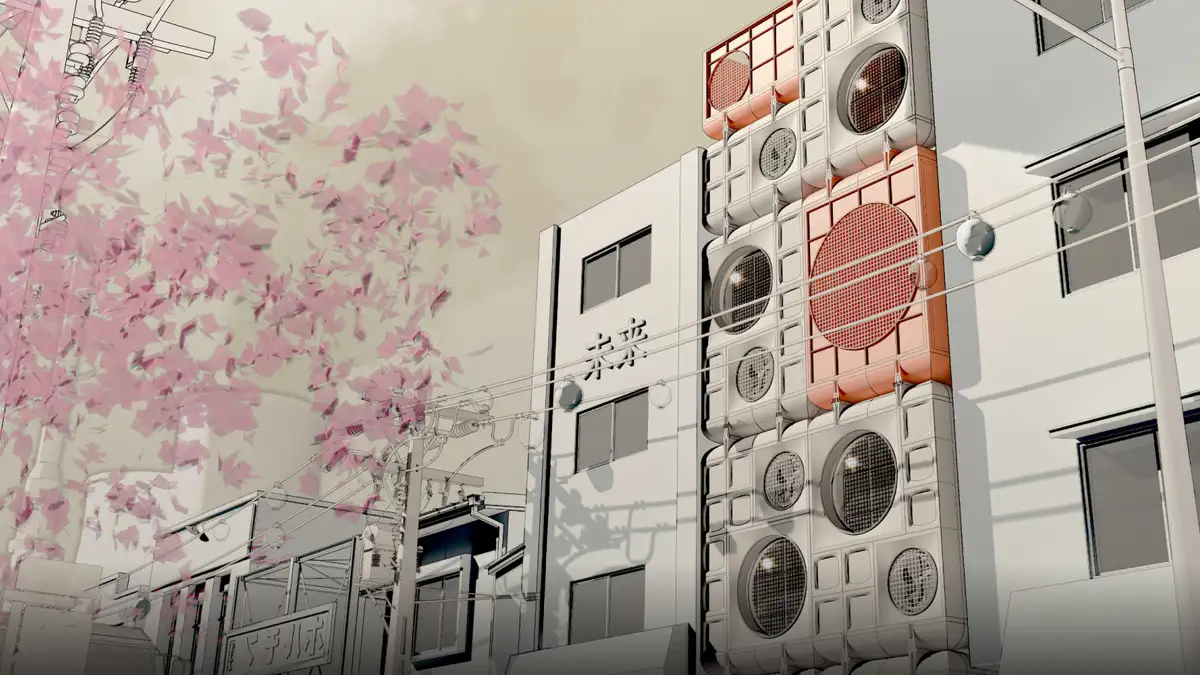
- Shifting Music — Challenge to design a portable music platform
For more art-architecture briefs across the platform, browse all ongoing competitions.
Technical Considerations for Art-Architecture Entries
- Structural engineering for large-scale installations. Even when a work looks effortless, it has to stand up, support its own weight, and survive weather. Serra's steel works and Kapoor's Cloud Gate are engineering as much as they are sculpture.
- Lighting design as primary medium. Colour temperature, lux levels, timing, and dramaturgy. Lighting is not decoration for an installation — it is often the installation.
- Interactive technology: sensors, projection mapping, real-time systems, machine learning. The Rain Room would not exist without motion tracking. teamLab's work is entirely software-defined.
- Sound system design: multichannel audio, architectural acoustics, speaker placement.
- Material choices: for outdoor works, weather resistance and UV stability. For temporary works, cost-effective but visually ambitious.
- Documentation strategy: ephemeral art is partly preserved through its documentation.
- Insurance, permits, and liability: the unglamorous back-of-house of public art commissioning.
How to Prepare a Strong Art-Architecture Competition Entry
- Read the jury composition carefully. A jury of architects reads a submission differently from a jury of curators. Curator-heavy juries reward conceptual rigor and art-historical literacy; architect-heavy juries reward spatial reasoning and technical feasibility.
- Commit to a medium. Light, sound, earth, projection, kinetic, relational — which one? Entries that try to be everything end up being nothing.
- Cite your lineage. Reference Smithson, Turrell, Eliasson, teamLab, Gates, or Lin if the work draws from them. Naming your ancestors is not weakness — it is scholarship.
- Write a serious concept statement. Art juries want to know: what is this about? What is it responding to? What does it ask the viewer to do?
- Show the experience, not just the object. A single atmospheric render of a visitor inside the installation, at the right time of day, is worth ten technical drawings.
- Document the moment. Ephemeral works need a documentation plan. How will the work be photographed? Filmed? Recorded?
- Address the site. The best art-architecture work is site-specific.
- Respect the participant. If the work requires participation, respect the visitor's agency, safety, and dignity.
October 2026 Platform Snapshot
- 2 open briefs currently curated in the art and installation architecture section
- 41 competitions currently open across all themes on the platform
- 769 total competitions hosted on UNI since 2017
- 7991 total entries submitted across all competitions
- 905 jurors have evaluated work on the platform
- 280K+ architects and designers in the global UNI community
- 78 disciplines spanning architecture, landscape, urban, interior, product, and allied art practice
Frequently Asked Questions About Art and Installation in Architecture
What is the difference between installation art and architecture?
Installation art is typically defined as large-scale, mixed-media work designed for a specific place and often a specific duration. Architecture is the design of buildings and spaces as lived environments. The difference is largely institutional rather than essential. In practice, the most interesting contemporary work ignores the boundary entirely.
Can architects enter public art and installation competitions?
Absolutely. Many of the most celebrated public art works were created by architects or architect-artist collaborations — Maya Lin's Vietnam Memorial being the canonical example. Architects bring spatial reasoning, structural feasibility, and site literacy. Juries increasingly welcome cross-disciplinary entries.
What is a site-specific installation?
Site-specific art is art created to exist in a particular place — and which cannot be moved or reproduced without losing its meaning. Richard Serra's Tilted Arc is the textbook example: when the work was removed from Federal Plaza in 1989, Serra argued (and many critics agreed) that the act destroyed the work.
How do I commission public art for a plaza or building?
Public art commissioning typically follows a four-step process: (1) Request for Qualifications (RFQ), where artists and architects submit portfolios; (2) shortlist selection; (3) Request for Proposals (RFP), where shortlisted candidates submit detailed concept proposals with fees; (4) commission award, contract, fabrication, and installation. Budgets run from $50,000 for small plaza work to several million for major civic commissions.
What are the largest art and architecture competitions in the world?
The Serpentine Pavilion (annual), the Venice Biennale national pavilions (biennial), Desert X (biennial), Burning Man temple commissions (annual), and the major public art commissions across the UK and US. Smaller but highly prestigious: the Land Art Generator Initiative and international biennale commissions.
What is a James Turrell Skyspace?
A Skyspace is a Turrell installation: a room with a precisely cut opening in the ceiling, framed so the sky appears to be a flat plane touching the ceiling edge. Visitors watch the light change over hours, especially at sunrise and sunset. There are over 80 Skyspaces around the world.
What did Christo and Jeanne-Claude wrap?
The Pont Neuf in Paris (1985), the Reichstag in Berlin (1995), and the Arc de Triomphe in Paris (posthumously, September 2021). They also wrapped islands (Surrounded Islands, Biscayne Bay, 1983), ran an orange fabric curtain across a Colorado valley (Valley Curtain, 1972), and installed 7,503 saffron fabric gates through Central Park (The Gates, 2005).
What is land art and who are its key figures?
Land art is a 1960s-70s art movement that used landscape itself as both medium and canvas, producing large-scale sculptural interventions far from traditional gallery spaces. Key figures: Robert Smithson (Spiral Jetty), Michael Heizer (Double Negative, City), Nancy Holt (Sun Tunnels), Walter De Maria (The Lightning Field), Andy Goldsworthy, Richard Long, and James Turrell (Roden Crater).
What makes teamLab different from traditional architecture?
teamLab Borderless is not architecture in the traditional sense — there is no permanent structure, no building program, no client. What teamLab builds is a computed environment: projections, sensors, and real-time visuals that transform a generic white room into a continuously changing experience. It is architecture in the sense that it produces lived spatial experience. It is not architecture in the sense that it has no permanent form. Both things are true.
How do I find art and installation competitions on UNI?
This section curates open briefs at the intersection. For more adjacent briefs, check temporary and modular architecture (pavilions), narrative and thematic design (experiential installations), and cultural and museum architecture. A UNI Membership gives you unlimited access to every competition on the platform.
Recommended Reading
Start with: Claire Bishop Installation Art: A Critical History; Rosalind Krauss Sculpture in the Expanded Field (the 1979 essay that theorized the art-architecture collapse); Robert Smithson The Collected Writings; Maya Lin Boundaries; James Turrell A Life in Light; Theaster Gates My Labor Is My Protest; Christo and Jeanne-Claude The Complete Projects. For contemporary immersive work, follow teamLab, Refik Anadol, Random International, and Es Devlin.
Explore More on UNI
Beyond art and installation, browse all ongoing competitions, see what's trending, preview upcoming launches, or study the past competitions archive. Related sections include cultural and museum architecture, narrative and thematic design, temporary and modular architecture, and free architecture competitions. Want unlimited access to every brief on UNI? Explore UNI Membership.