Technological Integration in Architecture: AI, Parametric Design, Robotics, and the 2026 Inflection Point (Updated August 2026)
This is the UNI editorial home for technological integration in architecture — the competitions and briefs that live at the frontier where AI, computational design, parametric workflows, BIM, digital twins, 3D printing, robotic construction, VR/AR, and smart building systems meet traditional architectural practice. 2026 is the commercial breakout year for technology in architecture. ICON's Titan robotic printing system launched commercially in March. Approximately 27% of AEC firms now use AI actively in their workflows. Generative AI tools like Midjourney and Stable Diffusion have rewritten visualization in 24 months. Digital twins are becoming infrastructure, not novelty. Robotic construction is scaling. If you build with code, compute, and fabricate, this is your section.
What Does Technological Integration in Architecture Actually Mean?
The phrase "technology in architecture" gets abused. It can mean anything from a well-designed Revit file to a building that generates its own electricity. This section uses a stricter definition: technology becomes integral to the design when the architecture could not exist without the tool. Parametric surfaces that cannot be drawn by hand. Robotic brick assemblies that no mason could place. AI-generated concept iterations that a human alone would never arrive at. 3D-printed geometries impossible to cast. Digital twins that live and breathe alongside their physical counterparts. These are the cases where the tool becomes a collaborator, not just an accelerator.
The integration runs through four related but distinct tool revolutions that each rewrote a part of practice over the last 30 years:
- BIM (Building Information Modeling): the shift from 2D drawings to data-rich 3D models. Revit, ArchiCAD, Vectorworks. Started in the late 1990s, mainstream by 2010, now approaching "BIM 6.0" where AI, IoT, geospatial data, and digital twins converge into a single model.
- Parametric and computational design: the shift from fixed drawings to rule-based geometry. Grasshopper, Dynamo, Houdini, Rhino. Started with Frank Gehry's CATIA workflows in the 1990s and Greg Lynn's animate form. Mainstreamed by Zaha Hadid Architects and the Patrik Schumacher parametricism manifesto.
- Generative AI: the shift from designer-authored to designer-collaborated form. Midjourney, Stable Diffusion, DALL-E, Veras, Autodesk AI, text-to-3D, and emerging text-to-architecture tools. This revolution is 36 months old and already redefining the profession.
- Robotics and digital fabrication: the shift from hand-built to machine-built. CNC, laser cutting, robotic arms, 3D printing. From Achim Menges's ICD Stuttgart research pavilions to ICON's commercial 3D-printed houses in Texas. Commercial at last in 2026.
A serious entry in this section typically engages at least one of these revolutions meaningfully, and the best entries engage two or more in combination.
AI in Architecture: The 2023-2026 Explosion
The most consequential technology shift in architecture since BIM is the generative AI revolution. In late 2022, Midjourney and Stable Diffusion crossed the threshold where architectural quality visualizations could be generated from text prompts in seconds. By 2024, AI tools were embedded in every major architecture school curriculum. By 2026, they are standard in professional practice. What this enables, what it threatens, and what it leaves untouched is the central question of contemporary architectural discourse.
Key tools, figures, and developments to know:
- Midjourney: the dominant text-to-image tool for architectural concept generation. Used across schools and studios for iteration, mood-board creation, and concept exploration. "Midjourney architecture" is now one of the highest-volume architectural search queries globally.
- Stable Diffusion and ControlNet: the open-source alternative. More controllable, less polished out of the box, preferred by researchers and tool-builders. Stability AI's release of architecture-specific fine-tunes has accelerated adoption.
- Veras and Arko AI: architecture-specific AI tools built on top of Stable Diffusion for Revit and SketchUp integration. Aimed at practicing architects, not conceptual explorers.
- Autodesk AI for Revit: native AI-assisted BIM workflows, generative design plugins, and machine learning-driven optimization inside the industry-standard BIM platform.
- Text-to-3D and text-to-architecture: the genuinely new 2025-2026 frontier. Tools like Meshy, Luma AI, and research systems like Google DreamFusion are producing 3D geometry from text prompts. Architectural-specific applications are still emerging but moving fast.
- Refik Anadol: the Istanbul-born artist who has made AI-generated data visualization at architectural scale his signature. MoMA's 2022 lobby installation, his work at Sotheby's, and collaborations with the Sphere in Las Vegas positioned Anadol as the bridge between AI art and architectural practice.
- Machine learning for structural optimization: genetic algorithms, neural networks for topology optimization, and AI-assisted energy simulation. Less photogenic than generative imagery but arguably more transformative for practice.
- Mario Carpo's The Second Digital Turn: the theoretical framing of the shift from scripted computation (parametricism) to trained computation (machine learning). Required reading for anyone serious about this transition.
The live debate in 2026: who is the author of an AI-generated building? The answer is not obvious, and competition platforms are among the few institutions that have to answer it explicitly. UNI's position: AI is a tool, the architect is the author, and credit is required. Generative work is welcome; uncredited generative work is not.
The Computational and Parametric Design Lineage
Before AI there was parametric. Before parametric there was Gehry's CATIA. The lineage matters because contemporary tech-forward practice sits on three decades of accumulated computational technique:
- Frank Gehry and Gehry Technologies (1990s): the adaptation of aerospace CAD software (CATIA) to architectural use. Guggenheim Bilbao would not exist without it. Gehry Technologies (later acquired and dissolved) pioneered the workflows that every contemporary computational practice inherited.
- Greg Lynn — Animate Form (1999): the theoretical and practical introduction of time-based, computationally-generated form to architecture. Lynn's Embryological House project and the related scholarship laid the intellectual groundwork for parametric design.
- Zaha Hadid Architects and Patrik Schumacher: the firm that made parametric architecture a visual and cultural movement. Schumacher's Parametricism as Style manifesto (2008) remains the most aggressive theoretical statement on the subject. The MAXXI, Heydar Aliyev Center, and Galaxy SOHO are its built arguments.
- Neri Oxman and MIT Mediated Matter (2010-2021): computational biology meets architectural fabrication. Oxman's silk pavilions, 3D-printed glass, and synthetic biology experiments redefined what "tech in architecture" could mean. Her move to independent research in 2021 closed the Mediated Matter era but extended its influence.
- Michael Hansmeyer: the Swiss-German architect whose computational ornament work showed that algorithmic design could produce geometries no human could draw by hand. His "Subdivided Columns" series remains the clearest demonstration of computation as a generative medium.
- Achim Menges and ICD Stuttgart: the University of Stuttgart's Institute for Computational Design, whose annual research pavilions have pushed the boundary of robotic fabrication, computational biology, and structural innovation for over a decade.
- Fabio Gramazio and Matthias Kohler — ETH Zurich: the architects who made robotic construction a serious research field. Their bricklaying robots, timber assembly robots, and concrete extrusion research at ETH have trained a generation of robotic construction specialists.
- Marc Fornes / THEVERYMANY: the French-American architect producing computationally-designed structures at architectural scale using custom scripting workflows. His public pavilion commissions in Europe and North America demonstrate that computational form can be built, not just rendered.
- Mario Carpo: the architectural historian and theorist whose books The Alphabet and the Algorithm (2011) and The Second Digital Turn (2017) provide the intellectual scaffolding for understanding the shift from scripting to machine learning.
Contemporary computational tools every serious entrant should know: Rhinoceros (Robert McNeel, the industry-standard modeler), Grasshopper (visual programming for Rhino, the dominant parametric tool), Dynamo (the equivalent for Revit), Houdini (procedural modeling from film VFX, increasingly used in architecture), and Blender (free, open-source, increasingly competitive with commercial tools).
3D Printing and Robotic Construction: Now Commercial
For most of the last decade, 3D-printed architecture was a research curiosity. In 2026, it is a commercial construction method. The 2024-2026 milestones:
- ICON: the Austin-based 3D printing company whose Titan program launched commercially in March 2026. ICON has built dozens of printed homes in Texas and is now scaling the platform for broader builder partnerships. The most commercially serious 3D printing architecture company in the world.
- Apis Cor: the Russian-founded (now US-based) company behind America's first commercially permitted 3D-printed residential building.
- Winsun (China): the earliest commercial 3D printing construction company, with printed buildings across Asia and the Middle East dating to the mid-2010s.
- MX3D (Amsterdam): the Dutch company behind the 3D-printed stainless steel bridge installed in Amsterdam's red-light district — the first permanent 3D-printed steel structure.
- Mighty Buildings: California-based 3D printing company producing prefabricated panels and modular homes.
- COBOD (Denmark): the construction 3D printing platform provider whose BOD2 printers are used on projects globally.
- Gramazio Kohler Research (ETH Zurich): not commercial but the research anchor. Their bricklaying robot and spatial timber assembly experiments are studied by every serious robotic construction program.
Market projections place 3D construction printing at roughly 90% compound annual growth through 2030. Material frontiers include concrete (still dominant), clay (for sustainable building), biopolymers (emerging), and steel (MX3D and others). Design implications: mass customization at no additional cost, geometries impossible to form-cast, radically lower labour requirements, and the possibility of building on sites where conventional construction cannot operate.
BIM and Digital Workflows: The Professional Infrastructure
BIM is the most widely adopted technology in architectural practice. By 2026, working in non-BIM workflows for anything but the smallest projects is increasingly unusual. Key developments to understand:
- BIM 6.0: the current industry shorthand for the convergence of BIM, AI, IoT, digital twins, and cloud collaboration into a unified data model. Not a single vendor or product, but a direction the entire industry is moving.
- Autodesk Revit: the dominant commercial BIM platform. Subject to near-universal ambivalence from practitioners, still the industry standard.
- Graphisoft ArchiCAD: the European alternative. Loved by those who use it, widely used in parts of Europe and Asia.
- Vectorworks: the design-friendly alternative with a strong presence in landscape and product design workflows.
- Scan-to-BIM: the workflow that uses drone photogrammetry, LiDAR scanning, and point cloud processing to convert existing buildings into BIM models. Essential for heritage preservation, adaptive reuse, and any project on an existing site.
- Cloud collaboration: Autodesk Construction Cloud, BIM 360, and similar platforms that move the BIM model from a desktop file to a shared living asset.
Smart Buildings and IoT Integration
Smart building systems have moved from novelty to standard specification in high-end construction. A contemporary luxury office or residential project in 2026 may carry 200+ sensor monitoring points integrated into the BIM model and feeding a live digital twin. The key technologies:
- Sensor networks: temperature, humidity, occupancy, CO2, air quality, structural load, moisture, and more — all feeding a central building management system.
- LoRaWAN, 5G, and edge computing: the networking infrastructure that makes sensor-dense buildings economically viable.
- Responsive facades: shading systems, operable windows, and solar tracking elements that adjust based on sensor data. From Al Bahar Towers in Abu Dhabi to contemporary kinetic glass experiments.
- Predictive maintenance: AI systems that analyze sensor data to predict equipment failures before they happen, reducing downtime by 25-40%.
- Kinetic and responsive architecture: the broader field of buildings that physically respond to occupants, climate, and load. Chuck Hoberman's work, the Al Bahar Towers, and contemporary research at ICD Stuttgart.
VR, AR, and Immersive Design Tools
Real-time rendering and immersive design have collapsed the feedback loop between design and visualization. What used to take overnight renders now happens in real time as the designer moves their camera:
- Twinmotion: the Epic Games-owned real-time architectural visualization tool built on Unreal Engine. Free for non-commercial use, used by almost every architecture student in 2026.
- Unreal Engine 5: the game engine underlying Twinmotion, increasingly used directly by architecture practices for photorealistic real-time visualization. Nanite and Lumen have made architectural scenes possible at film-quality in real time.
- Enscape and Lumion: the other major real-time rendering tools integrated with Revit, Rhino, and SketchUp.
- Meta Quest and Apple Vision Pro: the consumer VR/AR hardware making immersive design review economically viable for mid-size practices.
- AR for site overlay: using tablets or AR headsets to overlay BIM models onto physical construction sites for quality checking and sequencing.
Digital Twins: Architecture's Living Counterpart
A digital twin is a real-time, continuously-updated digital model of a physical building or city, connected via sensors and fed by live data. It is not the same as a BIM model. A BIM model describes the building. A digital twin knows what is happening in the building right now. The distinction matters:
- Building-scale digital twins: used for facility management, predictive maintenance, energy optimization, and occupancy analysis.
- City-scale digital twins: Singapore, Helsinki, Herrenberg (Germany), and dozens of other cities now maintain digital twins of their urban fabric. The global city digital twin market is projected to exceed $3.77 billion by 2026.
- Heritage digital twins: used to document historic buildings for conservation, disaster resilience, and scholarly research. The Notre Dame rebuild is using a pre-fire digital twin extensively.
- Infrastructure digital twins: bridges, dams, transit systems, and power grids with continuous live monitoring.
Open Tech-Integration Briefs on UNI Right Now
The competitions currently curated in the technological integration in architecture section:
- ReDrive-In — Bring back Drive In's
- Simulation — VR headsets Storefront design competition
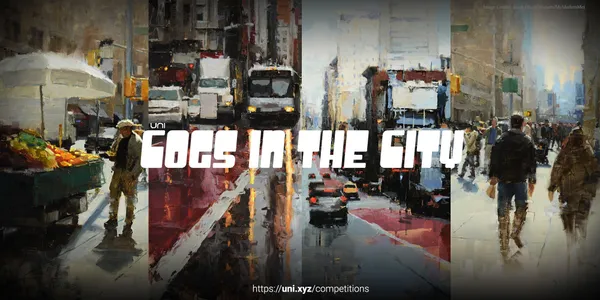
- Cogs in the City — Render competition to represent the city as a machine
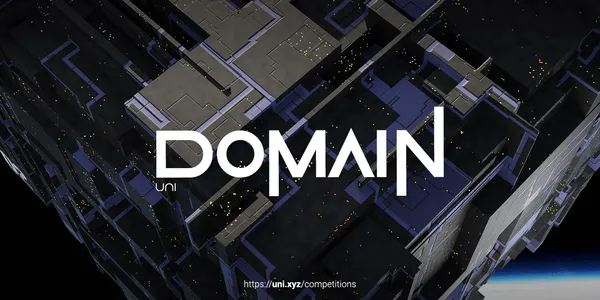
- Domain — Essay writing competition - Architecture in video games
For more tech-forward briefs across the platform, browse all ongoing competitions.
Computational Sustainability: Technology in Service of Climate
One of the most important applications of architectural technology is climate response. Computational tools make it possible to iterate through thousands of design options against real climate data:
- EnergyPlus and IES: the industry-standard energy simulation tools. Used to predict heating, cooling, daylight, and ventilation performance before a single brick is laid.
- Ladybug and Honeybee: the Grasshopper plugins that bring environmental simulation directly into parametric workflows. The most important free environmental design tools in the industry.
- Multi-objective optimization: machine learning workflows that run 13,000+ design variations against cost, energy, daylight, and embodied carbon targets to find Pareto-optimal solutions.
- Carbon calculators integrated into BIM: Tally, OneClick LCA, and EC3 calculate embodied carbon directly from the BIM model.
- Digital twin energy optimization: using live sensor data to continuously tune building performance against changing conditions.
The Ethics of Tech-Integrated Architecture
Every major technology shift in architecture creates ethical questions the profession has to answer. The current set:
- Authorship and credit: who designed the AI-generated building? The architect who wrote the prompt? The model's training data? The human who finished the entry? Competition platforms have to take a position, and UNI's position is that the human architect is always the author, and AI assistance must be credited.
- Algorithmic bias: generative models trained on Western canonical architecture reproduce Western architectural biases. What does this do to the field over time?
- Accessibility and equity: smart buildings are expensive. Who benefits from them? Who pays for them? The sensor-dense luxury building model does not scale to affordable housing.
- Environmental cost of computation: data centers, training runs, and GPU-heavy workflows consume significant energy. An architectural AI workflow can have non-trivial carbon costs. Honest practice accounts for this.
- The replacement anxiety: AI is not replacing architects, but it is changing what architects do. The profession has to have this conversation honestly rather than defensively.
How to Prepare a Strong Tech-Integration Competition Entry
- Lead with concept, not tool. Juries reward ideas, not tool showcases. A Grasshopper definition that solves an interesting problem beats a Grasshopper definition that just looks complicated.
- Credit your tools honestly. List the software, AI models, plugins, and workflows you used. Juries — and future employers — reward transparency.
- Show the process, not just the output. Exploded diagrams of the computational workflow, algorithm sketches, generative variation grids — these prove you understand your tools rather than just operate them.
- Engage the ethics. If your entry uses AI, acknowledge it and explain how authorship works in your workflow. The best entries treat ethics as part of the design.
- Cite your lineage. Reference Gehry, Lynn, Hadid/Schumacher, Oxman, Hansmeyer, Menges, Gramazio Kohler, or Carpo where relevant. Scholarly honesty is strength.
- Document feasibility. If your project proposes 3D printing or robotic construction, cite the technology and vendor. "Printed in concrete" is vague; "printed with ICON's Vulcan system in 54 hours" is credible.
- Section drawings still matter. The most impressive computational facade means nothing without a clear plan and section.
- Quantify performance claims. If you claim energy savings, show the EnergyPlus simulation. If you claim cost savings, show the BOQ. Juries reward numbers over adjectives.
August 2026 Platform Snapshot
- 4 open briefs currently curated in the technological integration section
- 46 competitions currently open across all themes on the platform
- 768 total competitions hosted on UNI since 2017
- 7964 total entries submitted across all competitions
- 904 jurors have evaluated work on the platform
- 270K+ architects and designers in the global UNI community
- 78 disciplines spanning architecture, computational design, parametric design, BIM, and allied technical practice
Frequently Asked Questions About Technology in Architecture Competitions
Do I need coding skills to enter a computational design competition?
Not always. Visual programming tools like Grasshopper (for Rhino) and Dynamo (for Revit) let you build parametric systems without writing code. Plenty of computational designers never learn Python. However, strong computational practice benefits from some scripting ability — most commonly Python, which is well-supported in Grasshopper, Dynamo, and Houdini.
Can a student with Grasshopper skills compete against professional firms?
Yes. Competitions level the field between students and professionals because they are judged on ideas and execution, not firm size. A well-crafted computational entry from a student frequently outperforms a large firm's submission. UNI's thesis and graduation awards specifically reward student work.
What's the difference between generative design and parametric design?
Parametric design uses explicit rules (if X, then Y) defined by the designer. Change the parameters, and the geometry updates deterministically. Generative design uses a goal (minimize weight, maximize daylight, etc.) and lets an algorithm — often a genetic algorithm or neural network — explore thousands of variations to find solutions. Parametric is the designer teaching the computer how to draw. Generative is the designer teaching the computer what to optimize for.
Are AI-generated architectural images allowed as competition submissions on UNI?
Yes, with attribution. UNI's position is that AI is a tool, the human architect is the author, and credit is required. Entries that use Midjourney, Stable Diffusion, DALL-E, Veras, or similar tools for visualization are welcome, but entrants must acknowledge the tool use in their submission. Entries that consist entirely of uncredited AI-generated imagery with no architectural thinking behind them will not pass review.
How do I find competitions specifically for BIM or digital fabrication specialists?
This section (technological integration in architecture) is the best starting point. For more specific filtering, browse all ongoing competitions and filter by discipline. UNI covers computational design, parametric design, BIM, 3D visualization, and allied technical disciplines as distinct tags across the 68 disciplines on the platform.
What software should I learn first to enter tech-architecture competitions?
Start with Rhinoceros + Grasshopper for computational and parametric work. Add Revit or ArchiCAD for professional BIM workflows. Add Twinmotion or Unreal Engine 5 for visualization. Learn Midjourney and Stable Diffusion for concept generation. For serious computational practice, add Python scripting. For robotic fabrication, add HAL Robotics or KUKA PRC.
Is robotic construction actually commercial in 2026?
Yes. ICON's Titan program launched commercially in March 2026 for builders in the United States. Apis Cor has built permitted 3D-printed houses in the US. MX3D's 3D-printed steel bridge has been operating in Amsterdam for years. COBOD's BOD2 printers are deployed on projects globally. Winsun in China has been commercial for nearly a decade. The global 3D construction printing market is projected to grow at roughly 90% compound annual growth rate through 2030.
Can I enter a digital twin proposal to a competition?
Yes. Digital twin frameworks are increasingly accepted as legitimate competition submissions, especially for infrastructure, heritage, and smart city briefs. The challenge is documenting the twin's architecture (data flows, sensor layers, visualization strategy) as clearly as you would document a physical building.
What is the difference between BIM and a digital twin?
A BIM model describes what a building is. A digital twin describes what is happening in the building right now. BIM is static authoring data; digital twins are live, sensor-fed, continuously updated. All digital twins require a BIM model as their substrate, but most BIM models are not digital twins.
How does UNI handle ethics around AI-generated submissions?
UNI's policy: AI is a tool, the human architect is the author, credit is required, and ethical use is expected. Entries that use AI must disclose it. Entries that claim to be human-authored when they are substantially AI-generated violate the platform's code of conduct. Juries across our 895+ juror network increasingly treat tool disclosure as a positive signal of professional maturity, not a weakness.
Recommended Reading for Tech-Forward Architects
Start your library with: Mario Carpo The Alphabet and the Algorithm and The Second Digital Turn; Greg Lynn Animate Form; Patrik Schumacher The Autopoiesis of Architecture and Parametricism as Style; Neri Oxman's published Mediated Matter research; the ICD Stuttgart research pavilion catalogue; Fabio Gramazio and Matthias Kohler Digital Materiality in Architecture; and Achim Menges Material Computation. For AI specifically, follow Parametric Architecture (PA Magazine), the Autodesk Research publications, and recent Cambridge University Press papers on generative AI and BIM integration.
Explore More on UNI
Beyond technological integration in architecture, browse all ongoing competitions, see what's trending, preview upcoming launches, or study the past competitions archive. Related sections include Architecting for a Type 1 Civilization (speculative tech-forward futures), temporary and modular architecture (prefab + robotic fabrication overlap), art and installation in architecture (AI art + computational installations), and free architecture competitions. Want unlimited access to every brief on UNI? Explore UNI Membership.