
Seed Bank
Cities as seed economies
OVERVIEW
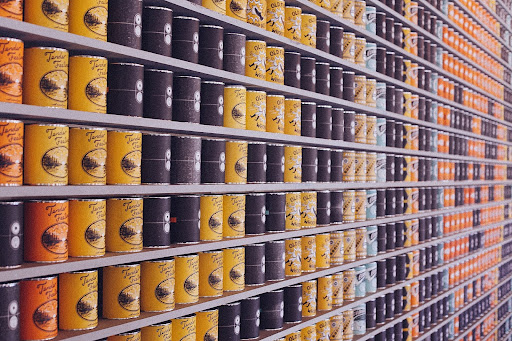
Img 1: Mass consumerism with cities - An example
Premise
Food is one of the most fundamental elements of human existence. Humans have thrived and survived because our ancestors learnt how to gather, produce and consume food. Ours has sustenance has been ensured due to these crucial elements of knowledge passed through generations.
As industrialization percolated in civilization, mass production began. Then there was an influx of consumers - who were capable of paying for the food, instead of producing it. The need to grow food depleted, and as a result, skills and crafts related to agriculture and food production are gradually becoming mostly obsolete in the urbane environment.
Mass consumerism through supermarkets is slowly changing how we perceive, acquire and consume food.
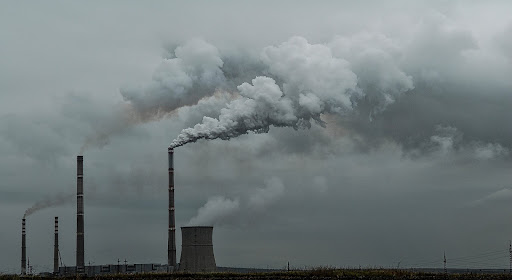
Img 2: Global warming by excessive production/pollution
Decline
The paradigm shift in food production and consumption interspersed with the rising population of our cities creates a bigger problem. We are now wholly reliant on global networks of production and distribution. We are inevitably dependent on the organizations that control these processes. Food production and consumption have become more economic which in a way has defined what grows and what doesn’t.
As individuals, not only we are losing access to crucial, knowledge pertaining to self sustenance but also losing the diverse species rapidly. The availability and access to plants/food that fulfils the dietary needs of an individual are ensured by the corporations today, making us vulnerable to concepts like food insecurity.
This may behold merit when we see in terms of optimization, however really bad in terms of the planet itself. Global warming is in a way exacerbating this slow unseen process of vanishing plant species. This cyclic process of decreasing plant diversity in tandem with worsening climate makes things even gloomy for our urban lifestyle in the coming future.
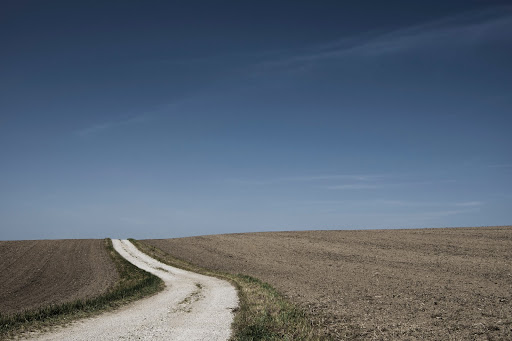
Img 3: Commercializing farming and crop growth
Issue
The Industrial Revolution has provided us with a highly consistent supply of processed food. In a way, it has given birth to issues like overconsumption, poor quality, high wastage and an over-dependence on manufacturing agencies.
On the flip side, we cannot escape mechanization, which successfully meets the soaring demands of consumers. Artificially increasing the speed of production and boosting longevity by adding preservatives is a hidden yet common practice. In the longer run, our perception of fresh food will be completely eroded.
By this model, only economically viable species will flourish, everything else will wither. This rampant commoditization is a slow time bomb that will deteriorate our environment.
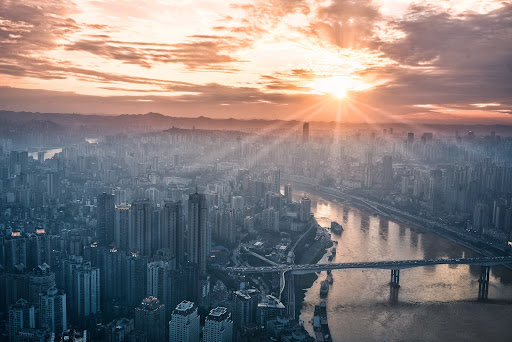
Cities are the locus of economic activity where so many things come together to make world happen.
If people coming and living together is causing so many problems to emerge,
Can we solve this one together?
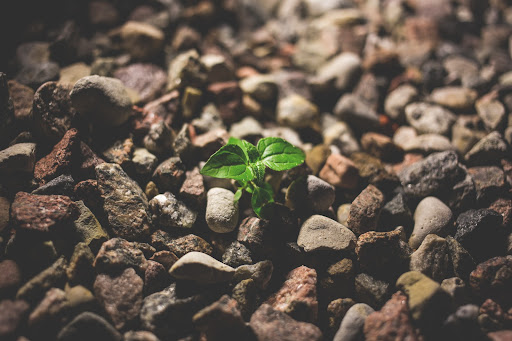
Img 4: Seeds an origin of everything - A concept
Brief of the competition
In a situation when cities are landlocked and are officially labelled as consumers, this falling rates of biodiversity makes humanity more and more vulnerable gradually. Seeds may be insignificant things but, they evolve into things that feed or sustain the entire environment we live in.
How can we inspire a positive change in cities we live in where people can learn about these vanishing species and grow/maintain on their own? How can we change the downside of cities, i.e. overcrowding and increasing susceptibility to collapse, to more self-sufficient and more resilient places of living?
How can we create cities as micro seed economies where not only urban farming happens, but everyone contributes to the food chain by small endeavours and smarter techniques of farming?
Objectives
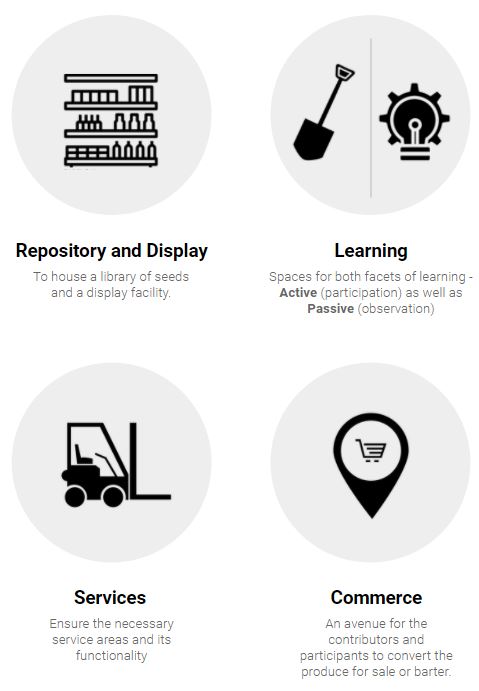
Design Challenge: To design an urban seed bank and farming hub where people can learn about how agriculture works at large and borrow equipment and seeds from the bank.
This micro-network creates spaces where farming is not only learnt but made possible in vertical yet healthy spaces.
This bank will also be a repository of plant biodiversity located inside the city - where seeds could be mobilized in case of any crisis.
You can also include a multi-level market where not only grown produce is available but spaces for the barter of homegrown produce can be exchanged.
The following objectives can be a point of beginning to conceive this design. Participants can assume their contexts and users before initiating their design process.
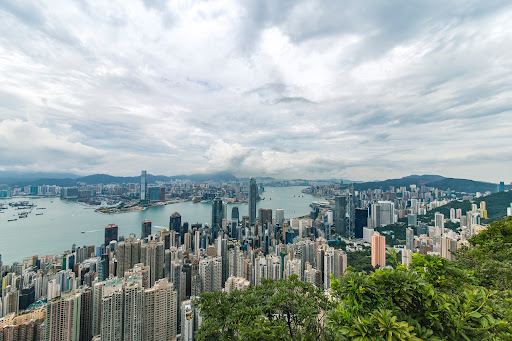
Img 5: Aerial view of Hong Kon
Hong Kong, China
Hong Kong is a special administrative region on the eastern side of Pearl River Sanctuary in Southern China with a high-density population of over 7.4 million people of various nationalities. Once sparsely inhabited land of farming and fishing villages has now grown into a city with the largest number of Skyscrapers. The high-rise, high-density city has inevitably created a vast disconnect with nature for its residents and has arable land of a mere 2.9%. As the developers saw growing vertically as the only option not only for housing but for the natural environment as well. The city started with initiatives of rooftop farming and have successfully set-up about 30,000 sq ft of the same. Nonetheless, the city currently needs to import about 90% of its food supplies from China even with the threat of contamination.
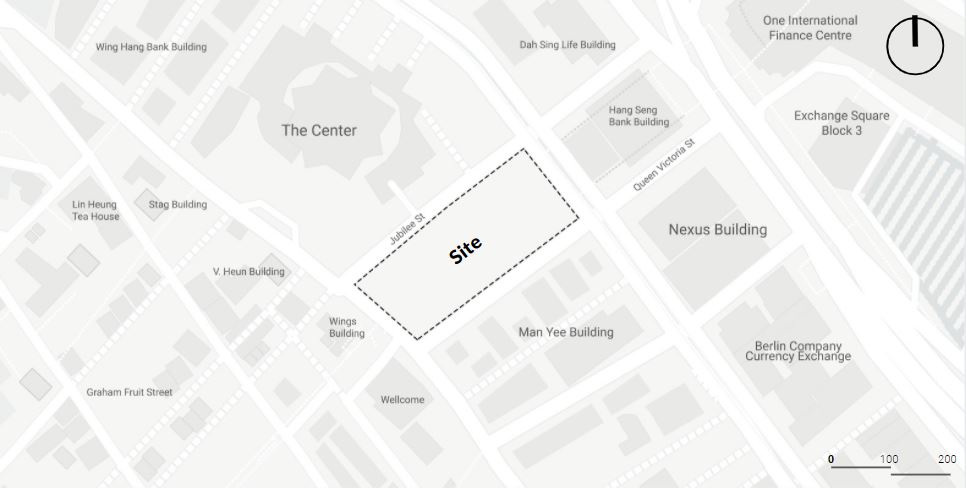
Img 6: Site Plan
Site Plan
The site chosen for this project is a Grade 3 historical building that was a marketplace and has been defunct for over a decade. It lies in the heart of the city in Central Hong Kong surrounded by high rise buildings and a busy commercial area. The “Seed Bank” is to be conceived in such locality to enable accessibility for the working population and create awareness at the same time. Such a programmatic model of a seed bank can be designed for any mega-city with a dense urban fabric.
- Area: 4129 m2
- Height limit: 90m
- Site coordinates: 22°17'02.4"N 114°09'19.5"E
- Ground Coverage: Entire site limit
