Symbiotecture
Geological park design challenge
OVERVIEW
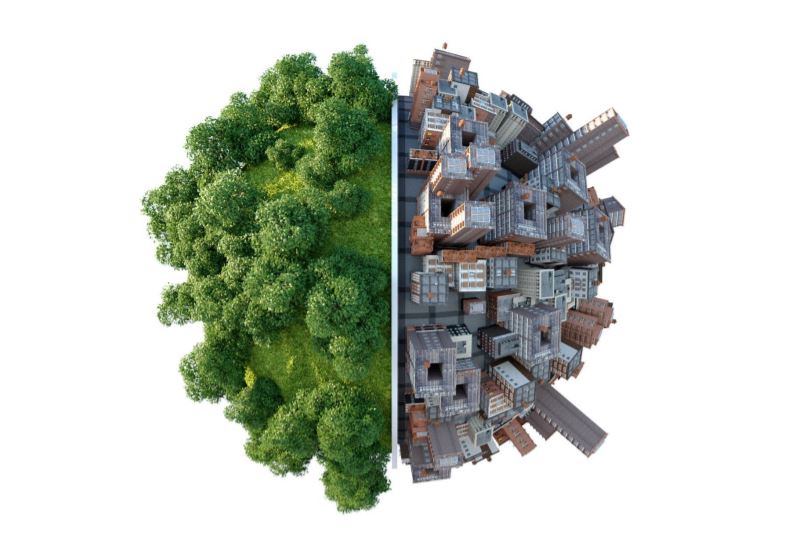
Img 1: Two bodies: one accomplished, finished and the other in progress - A concept (Credits: Eric Huismann)
Premise
The condition of contemporary society is struggling to find itself in common identity values condensed in a recognizable iconography. Assuming that in the contemporaneity it is an achievable goal, yet it turns to be an accumulation of dislocated and dislocating experiences. Perhaps for this very reason, it's now a good time to reconsider the debate between nature and architecture but with new assumptions.
A usual way we move close to this idea is by wrapping things up under the term ‘sustainability’, which deals with this entire issue in a lot of fragments. Eventually leaving an unsatisfied the need for an architecture that homogeneously condenses a theme that is not only technological, nor exclusively formal or typological. Instead of an ethical and structural connection between humans and society with nature, and a huge opportunity of how architecture be an element of mediation between them.
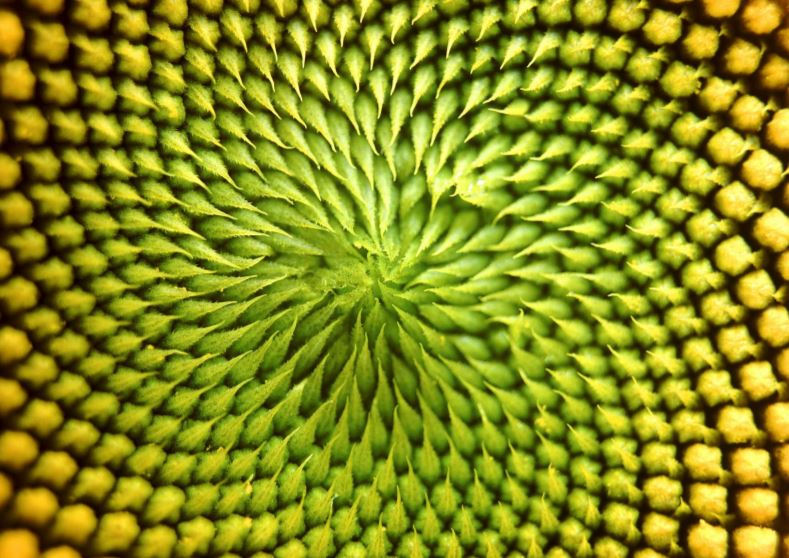
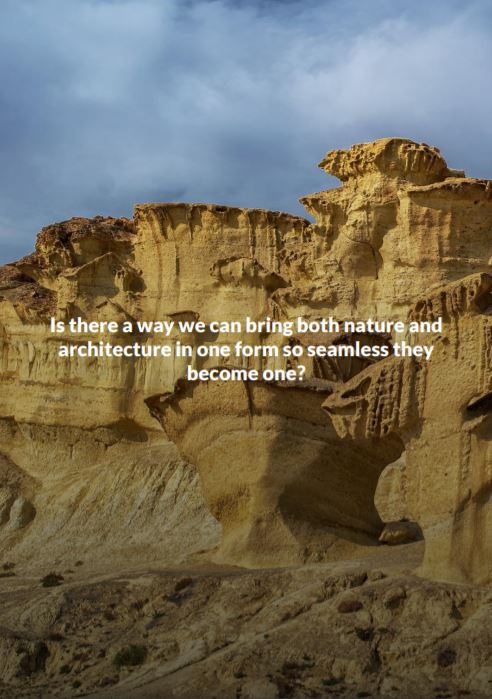
Img 2 Organic complex structures within nature (a concept)
Nature x Architecture
Nowadays the topic of the relationship between man and nature, in a wider way "landscape", permeates contemporary research.
However, nature is not only a human counterpoint to the industrial myth or an industrial product, but an extremely more complex presence.
Even without contradictions; we as architects value architecture beyond simple geometric formulas and spaces, by interpreting it to be so much more.
The nature in contrast with its organic structure and the territory it covers, is so much more than what it is generally considered around architecture today. Its replication as landscape or pastiche sustainability around architecture is not enough.
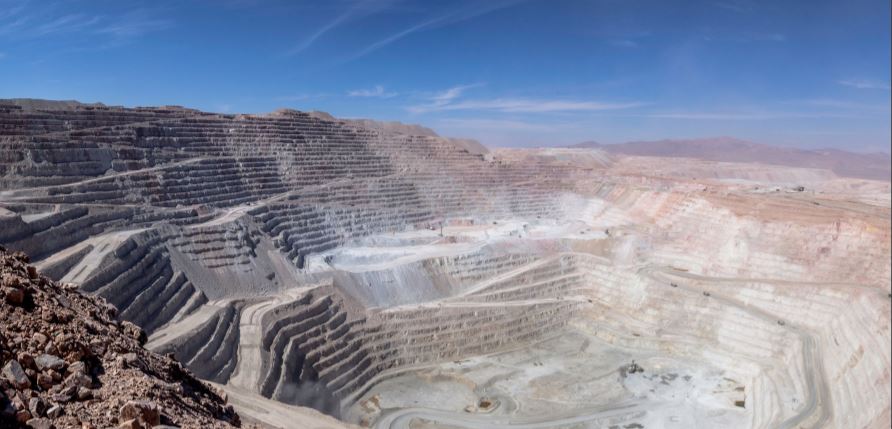
Img 3: An actual today’s photo of the rio tinto mines.
Issue
The giant opencast mines of Rio Tinto in south Spain create a surreal, almost a martian landscape. The removal of layer upon layer of soil and rock, in the search for iron ore, copper, silver etc. has tinted this part of the planet in a range of dusty pink, brown, yellow, red and grey. The scale of operations is so vast, that the depression created resembles a man-made crater that measures several kilometres across.
Named after the river which flows through the region-itself named for the reddish streaks that colour its water-Rio Tinto has become a landscape within a landscape. The predominant ores, however, are the ferrous ones, which oxidise when they come into contact with the air and colour land and river alike in shades of reddish brown. Even as far as Niebla, roughly 50 kilometres to the south-east, the waters of the Rio Tinto still flow past the town's ancient fortified walls in an eerie trickle of blood-red. this area and its suggestive presence of mines constitute an extreme powerful geological landscape.
It is one of those flash points where man has went against nature to create
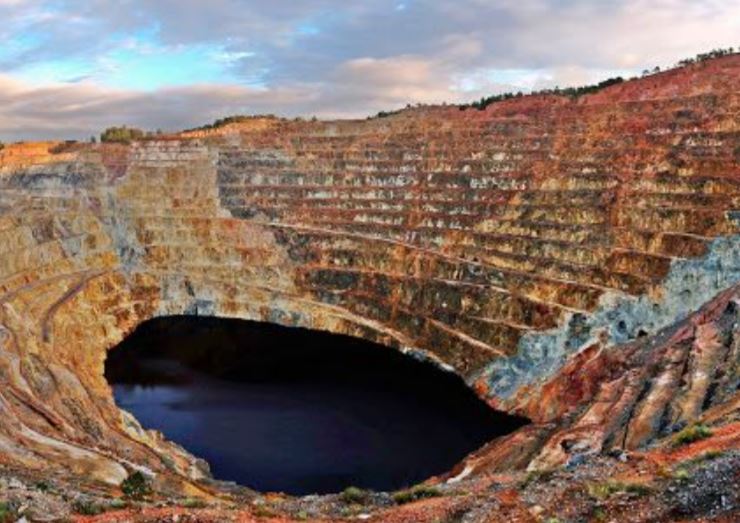
Img 4: The colors of the soil changing during rainy seasons.
Brief of the competition
The competition brief is to design an archaeological park in the Mines of Rio Tinto Spain.
The aim of this competition is to go far beyond a simple, even if necessary, use of nature as a product, but wants to push the architectural experimentation through a process of hybridization of two. In usual architecture discourse, they are apparently different bodies and two different languages how can we merge boundaries between both?
The design question of the competition is:
How can architecture manifest itself like a human body where the architectural spaces can be understood as an extension of it? How can the structure of the territory itself with the corresponding morphological and topographical variations be fused with the nature it is surrounded with?
Objectives

Symbiosis: Blending nature and architecture, and finding a hybrid between the two.
Co-existence: The spaces must respect eachother and adapt to the current site and surroundings.
Functionality: Achieve an optimally functional design of an archaeological park.
Evolution: Take the time factor into consideration and ageing of the building with nature.
The following objectives can be a point of beginning to conceive this design. Participants can assume their own contexts and users before initiating their design process.
Programmatic Outline
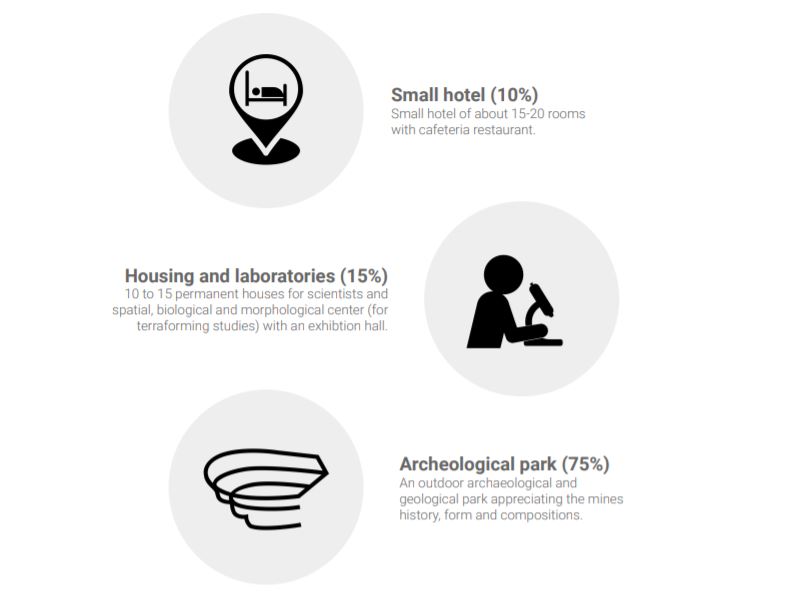
The following programmatic outline is the point to begin your design at. You can add your elements especially to the archeological park and the public accessble laboratories.
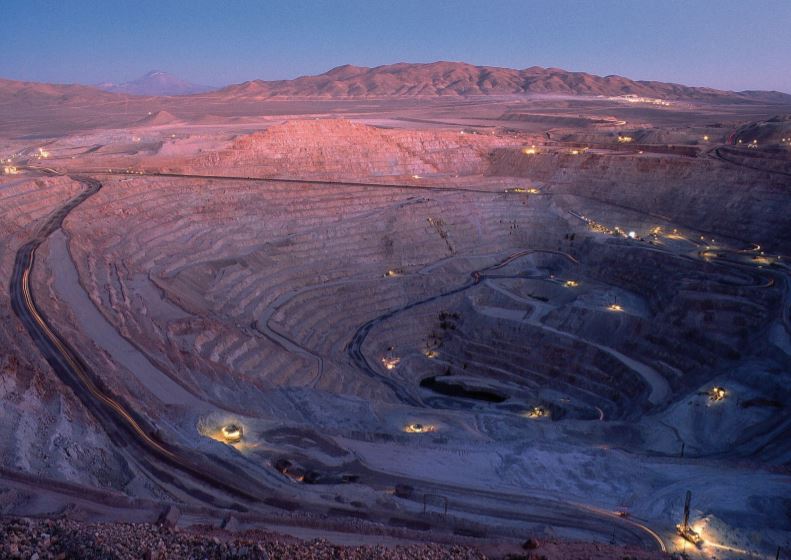
Img 5: A night view of the mines with lights.
Context
The area of Rio Tinto's project consists of mine structures as well as excavations and artificial craters. Due to this singular context it is proposed to find an overlap between both, the natural geological structure (terrain) of the soil and the human intervened new soil structures due to mining activities that have taken place here.
It may be fluid or compact or disaggregated as well as the limit between architecture and landscape can assume as much complexity as necessary. The aim of this competition is to go far beyond a simple, even if necessary, use of nature as product, but to push the architectural experimentation through a process of hybridization of two apparently different bodies and two different languages. First is of a human body where the architectural spaces can be understood as an extension of it, and the structure of the territory itself with the corresponding morphological and topographical variations.
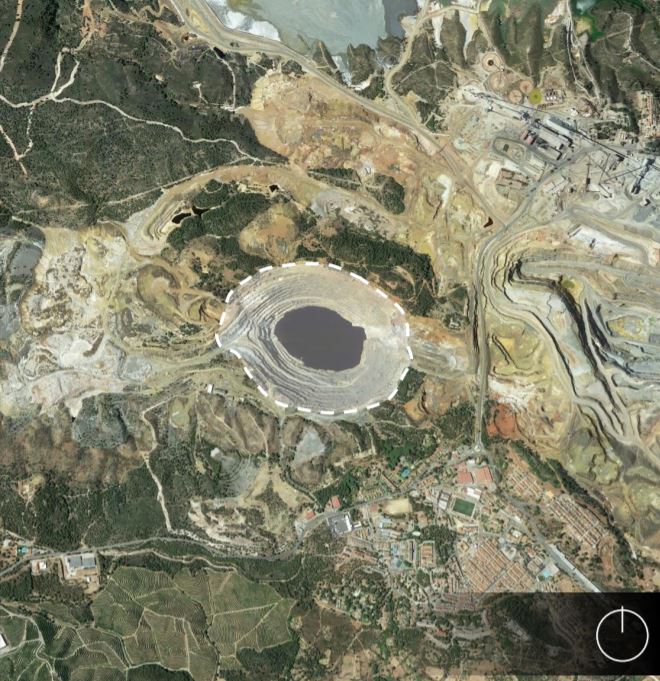
Img 6: Site plan of the competition.
Site Plan
The given site of this competition is situated in one of the deepest manmade craters of the world in the ‘Minas de Rio Tinto’ site. The design shall look at not only in the crater but its views and soil properties as well.
No builtup area requisite | Site Area: ~60 Hectares | Coordinates | No height restrictions or setbacks
About Terra
Terra serves as a unit block for UNI in the field of nature centric design. It intends to break the fusion of traditional design barriers and methodologies by making it a platform for experimentation. It embarks on exchange of ideas between architecture and nature. It is a research initiative dedicated to provide opportunities for designers from all domains to explore ideas that go beyond the boundaries of architectural discipline and enrich our built environment; thereby opening up possibilities for promotion of architectural thought at a global level.
Queries: support@uni.xyz
Discover other competitions: https://uni.xyz/competitions
Facebook: https://www.facebook.com/unixyzglobal/
Instagram: https://www.instagram.com/uni.xyz/
Discover FAQ’s about this competition on our help forum here: https://help.uni.xyz/