Transfarm
Symbiotic Design for Productive Territories: Farm design challenge
OVERVIEW
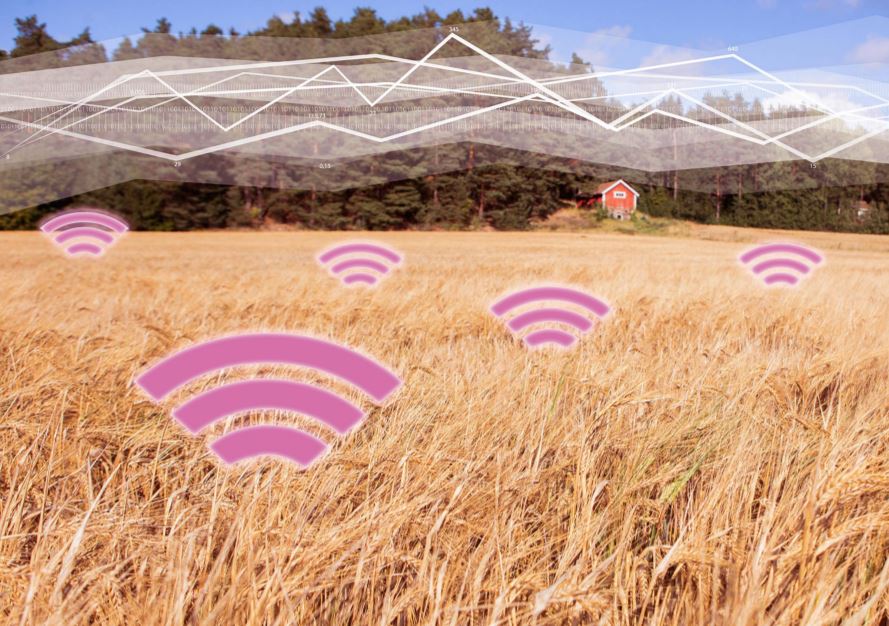
Img 1: technological advancements has led automation in the field of agriculture
Premise
The very foundation of the human transformation of Earth can be traced back to the beginning of farming - which compelled our nomadic ancestors to settle. As human population rapidly approaches the 8 billion mark, agriculture returns to be one of the key issues of territorial development and its infrastructure boldly shapes immense surfaces of our planet.
Recent academic interest (i.e. AMO exhibition on The Countryside) as well as geopolitics (i.e. the well documented investments of China in African land) clearly point out how the management of agricultural territories is going to be one of the crucial battlefield for securing a sustainable existence on planet Earth.
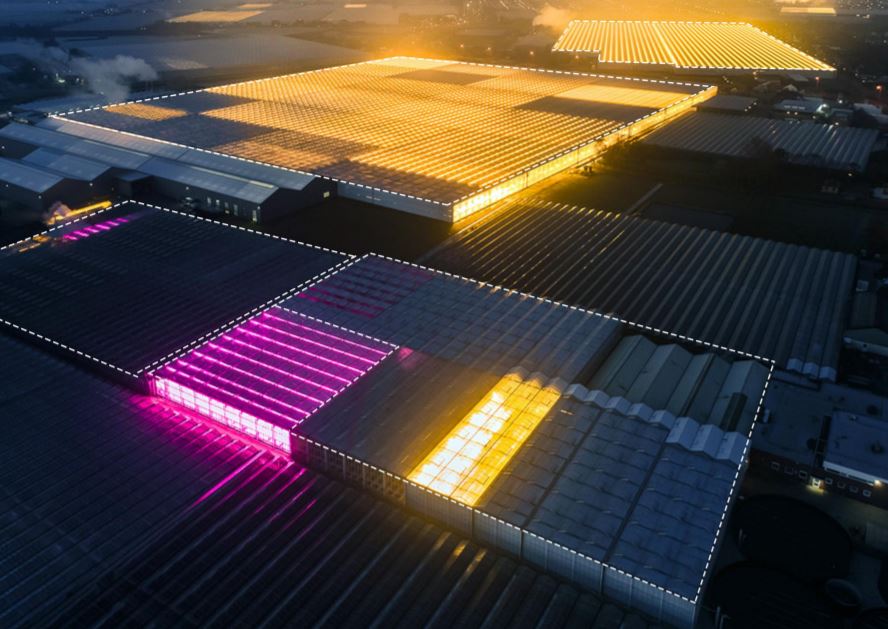
Img 2: Series of greenhouse setup to multiply the production rate in Netherlands; Tom Hegen’s. The Greenhouse Series
Evolution
Not only agriculture is growing, it’s also changing at incredible speed. On one hand the mutation of our dietary habits, on the other the robotization of production, are resetting the very notion of what cultivation looks like
Gone are the idyllic vistas of the rural landscape, replaced by infinite planes of high-tech greenhouses tended by remote-controlled drones.
The well justified demand for plant based products asks for more intense production which unfortunately results in monoculture and deforestation:
Sustainable balance is an extremely tricky goal.
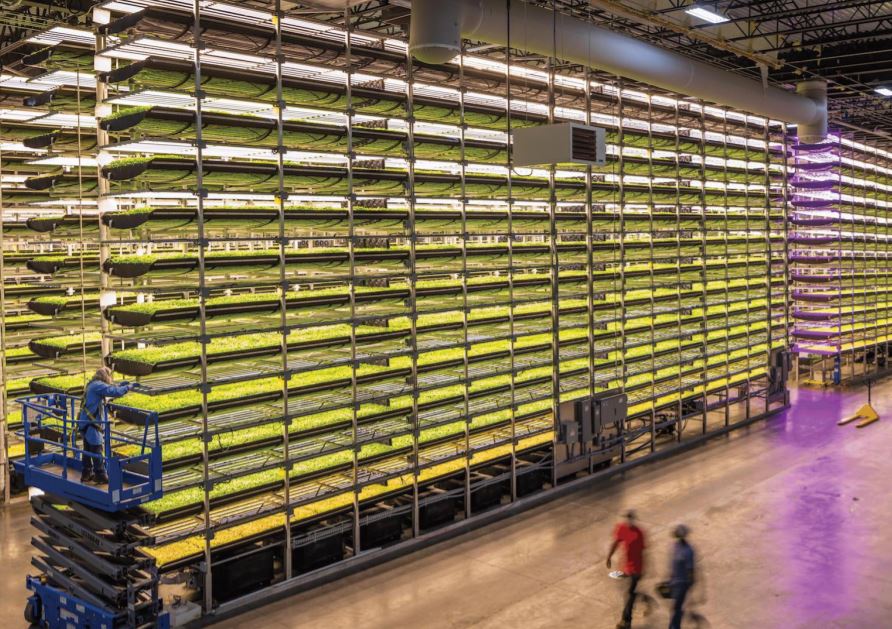
Img 3: Replacing farms into factoritories by vertical farming
Issue
The urgent needs of efficient agriculture are threatening the ecological balance of the entire planet. Simultaneously, those same territories are becoming more and more inaccessible to humans themselves - fenced off like hi-tech factories. Therefore, the current design of high-productive farms is not only depleting biological diversity, but also depriving us of the enjoyment of the landscape.
Architecture, with a contemporary focus on both human-centred design and multi-species coexistence, can provide an alternative vision and more nuanced approach.
Can Architecture help agriculture to speculate on a more equitable balance between human sustenance and natural resources? Can we imagine highly efficient infrastructure which also provides amenable spaces for visitors? Can multiple species coexist in harmony on a intensely farmed territory?
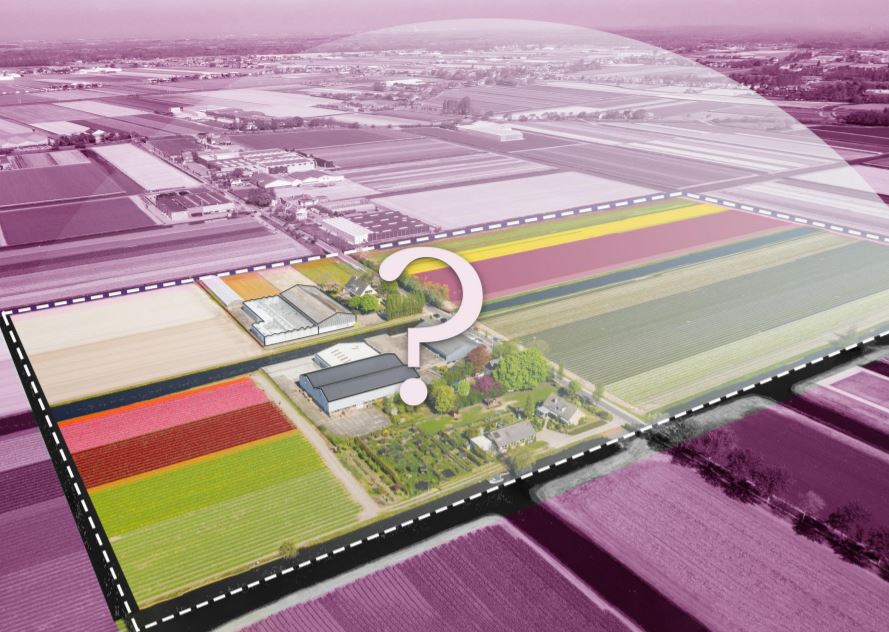
Img 4: How would the future farm look like?
Brief
The competition challenges you to reinvent a typology which has been with us since the beginning of times.
Under these conceptual premises we ask you to design a holistic proposal for a “farm” as unit of territorial transformation. This may comprise enclosed structures for humans, machines, plants and animals, production of energy and spaces for storage, as well as the overall organization of open land.
The farm we are looking for takes on a different approach to the use of the land: instead of exploiting resources to the maximum, it aims at repairing the damages caused by our species. It leverages the natural symbiotic interactions of the surrounding ecology. It contextually makes the best use of natural resources and renewable energy.
Objectives


Transform: Establish a category to augment synchronised living
Connect: Filling the gaps amongst the key Components of the Biosphere
Mindset: Changing the perception on agriculture by education and self experience
Balance: strike balance between our own enjoyment and a respectful treatment of all creatures
The following objectives can be a point off beginning to conceive this design. The user group for the conception should be able to house 150-200 families (a family of 2-4). Other facilities maybe designed in accordance to the user group in the same structure or in different zones.
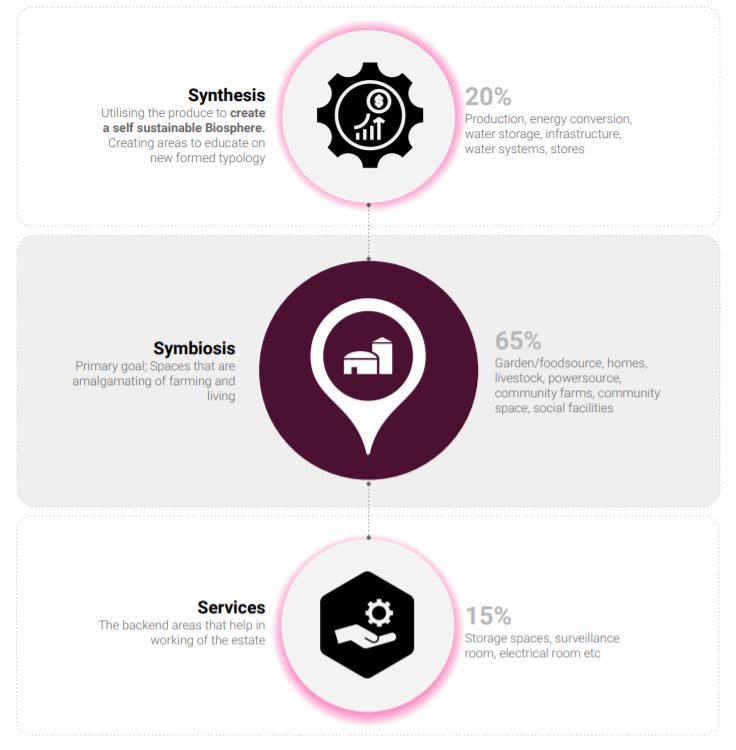
Program
The above can be used as a point of reference to bifurcate different functions of the complex. However, new functions and categories can be added as per design requirements.
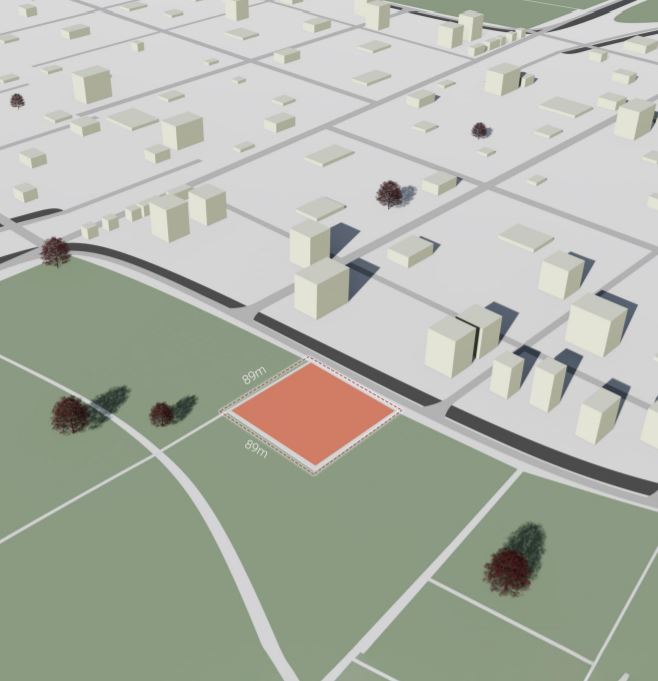
Img 6: Site location
Site
The site chosen for this design exercise is hypothetical and can be associated with a peri-urban region around any city of the world. The design context is independent of the site context and a detailed study is not required; you may assume a certain place in the world on your choice.
Allowable ground coverage: 40%I Site Area 8000sqm | Height restrictions - 100m, Set backs of 10m on all 4 sides