
Travelling Diner
Challenge to reimagine food trucks as travelling diners
Overview
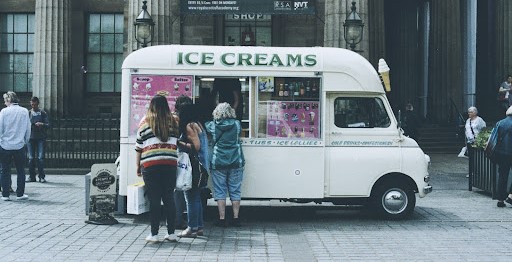 Fig: 1 - Food trucks are a trend that has been picking up in most parts of the world.
STORY OF FOOD TRUCKS
Food trucks first saw an unprecedented rise in popularity after the 2008 recession. A primary reason for their rise in popularity was owed to the fact that they offered cheaper and therefore more economical alternatives to aspiring restaurateurs.
Restaurateurs also had previously unimagined freedom to connect with the public in their realm. It allowed the food to be brought to the people without having to attract and seat customers in spaces with high real estate costs.
To their customers, food trucks meant convenience and a new way to publicly interact in the city. They emerged as valuable informal public spaces built around food that with time offered a wide range of cuisine across a host of cultures.
H3: Thus food trucks have emerged as a cost-effective alternative to create temporal space for cultural amalgamation in a public realm. How might we channel these virtues to create more community opportunities in urban worlds?
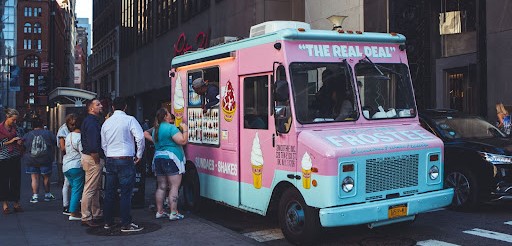 Fig: 2 - Ther popularity has pushed cities to accept them as legitimate public spots in the city.
URBAN REGENERATION THROUGH FOOD
When food trucks first emerged food trucks were deemed to be a mere fad that would pass with time. However, in reality they have come to become vastly popular and deeply entrenched in public urban activity. As a consequence, food trucks have been seen to have major economic, social and spatial impacts on the city they inhabit.
Food trucks have the ability to attract people to spaces that are often unused or limited in their usage including spaces such as sidewalks, alleyways, parking lots.
H3: The ability of food trucks to foster hubs of activity and interaction in the public realm is a valuable virtue that can be capitalized by urban policymakers looking to implement low-investment opportunities to improve urban environments.
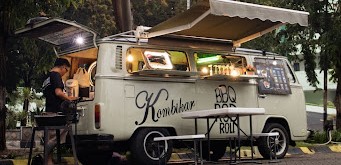 Fig: 3 - While the food trucks have been successful, their extension in providing more than food for their customers is on the way.
DESIGN TRAVELLING DINERS
As urban worlds grow faster than ever, our cities are proliferated by many spaces that are either unused or have only single use. Moreover, the urban public has fewer public opportunities to build and maintain community relations. In such situations, the development and reimaging of food trucks can create novel and affordable opportunities to regenerate public spaces.
H3: Brief: The challenge here is to design a food truck with smaller modules/parts that can be made into a micro public dining space in the area around the truck.
The aim is that the design outcome should not just provide opportunities for food consumption but also create spaces where one can pause and enjoy the food.
Most importantly the design outcome should be temporal and modular so it can change with the food trucks changing context.
OBJECTIVES
Retrofit: The designed outcome must be able to build upon existing food truck designs.
Modular: The designed outcome must be modular and adaptable to match the changing contexts of food trucks
Robust: The designed outcome must be low-cost and robust and not require extensive and expensive maintenance
Transportation: The designed outcome must be able to seamlessly fit within the scope of a food truck and be easily transportable.
LOCATION: IRELAND
The chosen location for this project in Ireland. Like in many countries around the world, Ireland saw a boom in food truck culture following the economic crash in 2008. Chefs who were forced to think outside the box after restaurant doors closed adopted these temporal moving spaces to continue bringing food to their customers. More recently, the lockdown caused by the Coronavirus Pandemic has only fired these food hubs’ popularity.
Ireland has strict policies regarding food trucks information of which can be found here (particularly look at Guidance Note No.16 Food Stalls > Page 24, 5.2 MOVABLE FOOD VANS/TRAILERS/UNITS)
You can find examples of popular food trucks on the following sites: Gastrogays, Irish Country Magazine, Ireland on a budget
Since food trucks are not limited to location there is no specific site for this project.
SCALE
The intended project should fit within the constraints of an average food truck that measures 6m in length, 2.5 m in breadth and 2.7 m in height.
When deconstructed, the design can occupy a maximum area of 40 sqm including the truck and provisions for seating/serving.
