
Under one roof
Challenge to design modular housing for migrants in Indian cities
Overview
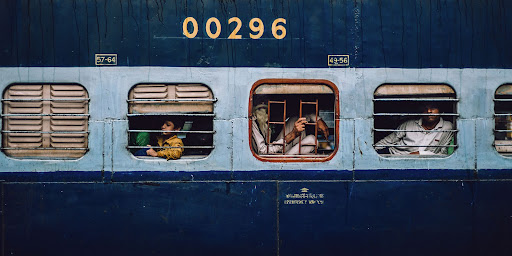 Fig: 1 - Migrants in India move to cities through trains or on foot
LIVING FOR MIGRANTS IN CITIES
Based on the 2001 Census data about 52 million of a total of 1.2 billion Indians, migrated from rural to urban environments. In 2011 this percentage of migrating individuals had risen from 5.06% of the total migrating population to 6.5%.
This fast-rising population is the direct result of a disparity in economic opportunity.
Unfortunately, the urban environments that receive these migrants are far from equipped to deal with the large population influx. As a result, legal housing often emerges as a luxury for those with economic means. The larger majority of the migrant population seeks out temporary housing solutions, often illegal means.
These ‘shanty’ houses are more often than not houses created with found material put together with little to no allowances for ventilation, sunlight and even sanitation.
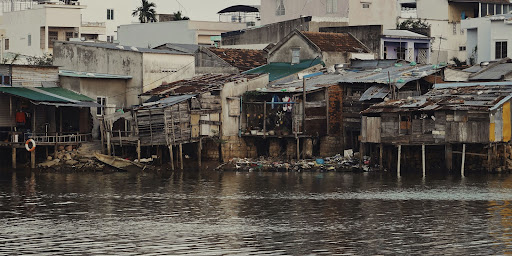 Fig: 3 - Shanky settlements in Indian cities
BASTIS OF INDIAN CITIES
Slums, Bastis or shanty housing is a staple part of most Indian cities. Millions of employees of the city inhabit these spaces in houses that are often constructed with low cost, easily available or found materials. Faced with a lack of resources and expertise these houses tend to lack appropriate ventilation, light and sanitation.
While authorities intend to rehouse these migrants in redevelopment projects, economic and bureaucratic challenges mean slow progress. In the meanwhile, these residents are left to inhabit spaces as they find them.
Policymakers and governments work towards their larger more ambitious goals, cities and their migrant residents require a middle approach.
A space where they can dwell in dignity while the city catches up to their needs.
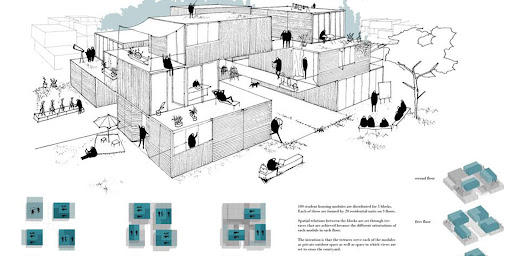
Fig: 3 - Example of modular housing- Ryterna modular building (Credits: https://thecompetitionsblog.com/results/083_02/)
MODULAR HOUSING TO FORM A MIDDLE-GROUND
Slum housing in cities is often a point of conflict. Denied legal access to space and insecure about their futures, migrant workers/labourers/families tend to occupy spaces that are available and root themselves so as not to lose their dwellings.
While urban policy promises to work to improve these living conditions, the process is slow and unable to keep up with the continuous influx of people seeking better opportunities in urban spaces.
Brief: The challenge here is to attempt to design a middle ground- a modular housing solution in cities that migrants can use while infrastructure catches up to their needs.
The design solution is intended to be the first step in a rural migrant worker's aspiration in creating a livelihood in a city.
Since many of these individuals that seek this typology of housing may not have adequate economic means. The design should be low cost, durable as well as afford comfortably.
OBJECTIVES
- Form: How does the design solution provide adequate and dignified housing for migrant populations?
- Modular: The design solution should be able to accommodate a variety of needs of its residents.
- Durable: The design should be effective and durable enough to sustain its dwellers for longer periods of time (until formal dwellings are available to the individuals)
- Cost-Effective: How does the design, its materials and configurations respond to the constrained economic means of its residents?
SCALE
The designed outcome must be in the form of a modular housing solution with the following housing requirements
1. Housing Modules (50 units)
- A housing module for a family of 3-4: 65-70 sqm (25 units) maximum height 3m
- A housing module for a family of 6-8: 130-140 sqm (25 units) maximum height 6m (g+1).
The designed solution should be able to accommodate the needs of the inhabitants typically involving space to rest, a kitchen and a toilet. While the designed solution can work in collaboration with other modules it should also be capable of affording its dwellers similar comforts when standing alone. Participants can assume the site as any Indian city.
Similar Competitions
Discover competitions you might be interested in




Packaging challenge - Design meets sustainability


The Global Benchmark for Architecture Dissertation Awards
