
Villa Vernacular 2.0
The leisure villa design challenge
Overview
 Fig: 1 - What does leisure travel hold in the future? (Credits-Jeshoots)
PREMISE
Our perception of leisure travel is changing in many ways due to many reasons lately. A trend shift where people now avoid crowded destinations against more peaceful solitude-like places is not a surprise.
Call it a pandemic risk or general change in mindset, natural getaways and mostly the countryside are gaining popularity the world over.
But the real game-changer in this shift is almost negligible commute for most office-going population, which is likely to continue with coming generations. While the usual hustle was to squeeze in a holiday on a weekend, now working from anywhere has opened a possibility to live within a vacation instead of short.
What does this mean for the leisure industry?
What possibilities does this liberated work-home relationship hold for dense cities that require no commute?
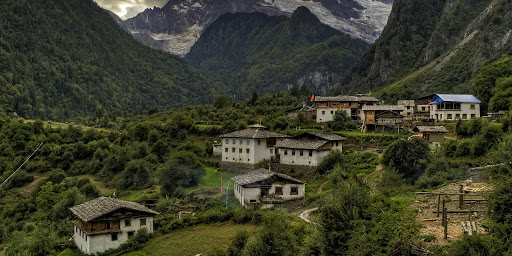 Fig: 2 - By introducing architecture interventions in the rural scape how can we preserve it rather than destroy it? (Credits-James Wheeler)
FINDING BALANCE
The internet solves a lot of problems for the world, especially the one that pertains to distance. This unlocks the idea that we can live in less crowded places with rural & scenic qualities. We can choose where our window faces, how big the house can be, what all it needs, more like a farmhouse. Although farmhouses are short-term leisure properties, can a new typology with long-term stays for almost 50% of the year work? If yes, with possibilities what new challenges will the site around it face?
The idea of a city in rural areas brings a lot of decision-making powers to architects and the clients they build for. The development control rules are lenient and the possibilities are endless. This is liberating and alarming in all senses if we come to analyze it.
The factor of rural fabric that can be hampered by such city-like construction styles is the biggest identity threat to the rapid rural expansion of the city.
How can we find a balance?
 Fig: 3 - How will a luxury villa enhance the rural escape as well as provide a leisure gateway? (Credits- Sparsh Karki)
BRIEF OF THE COMPETITION
Villa Vernacular is a design challenge focused on building a motion towards responsible leisure properties across the world. It is an idea that looks toward equalizing the balance between rural identities and urban demands.
The ability to pay does give access to every construction technology at hand, but the challenge wants to normalize the fact that living in rural areas should be a healthy exchange instead of closed compound construction and living like the city.
The architecture competition brief calls for a design of a villa for a family of 4 members, who have switched to work from home completely and look to live in the countryside for half the year.
The client profile has to be defined by the participants followed by which the design process can begin by considering a vernacular approach for the entire building scheme.
OBJECTIVES
User-centric design: How does the design focus on the need of clients?
The Client: Build a detailed client profile that covers descriptions, choices, hobbies, and backgrounds.
Place: Understand the context, the place, cultures, values, and community from relevant dimensions you wish to weave the design in.
Spaces: Identity and craft spaces for the client and your understanding of the place.
Knit: Develop the spaces and construction in relevance to the context the building belongs in.
SITE
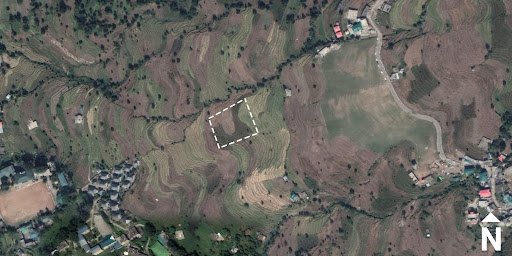
Suja, Himachal Pradesh
The site for this challenge is located in the northern part of India. Situated in the western Himalayas it is characterized by both scenic and extreme landscapes. Predominantly it is known as a mountainous region, comprising ranges of mountains and high grounds. Himachal has 90 per cent of its population located in rural areas. Culturally Himachal is well known for its tribes, which are predominantly living in rural areas.
The Architectural character of Himachal represents a blend of vernacular and local construction. Himachal has a history of having a rich cultural heritage, well known for its scenic beauty and tribal traditions.
This site is located in the contoured regions of Himachal. This region offers a variety of vistas and landscape scenes. The site is located amidst the green lush and neighbouring village settlements. This site is within the region of the rural settlements and farms.
- Coordinates: 32°02'31.7"N 76°42'21.1"E
- Site Area: 4784 sqm
- Height limit: 9 m
- FAR (Floor Area Ratio): 1
- Ground Coverage: 30%
Ground Coverage refers to the ratio of the maximum allowed solid/permanent footprint on the site to balance the built and unbuilt spaces. You can utilize the other 30% of the site for any temporary intervention/recreation.
PROGRAMMATIC OUTLINE
The programmatic outline is intended for a family of 4 members. The space ideas are as follows:
- Living/residential stay areas: 60%
- Common recreational spaces: 20%
- Open/landscape areas: 10%
- Ancillary spaces: 10%
Other additional spaces can be added by the participants as per their design needs.

