Xocolatl
Design Competition for tourist experiences around Mayan chocolate history
Overview
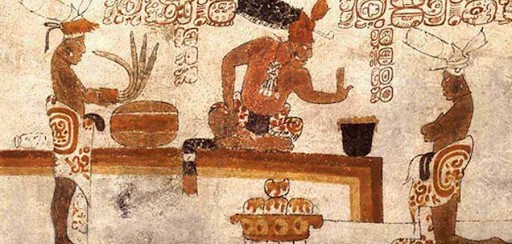 Fig: 1 - Mayans originally consumed chocolate from cacao seeds and the process remains unchanged to this day.
MAYANS LOVE FOR CHOCOLATES
Chocolate was a significant part of ancient Mayan history. Not only did they worship the plant but it also became important to ritual, social and commercial practices. While more abundantly consumed by Mayan royals and priests, evidence suggests that many commoners likely enjoyed consuming it on at least some occasions.
Archaeological surveys have produced many ancient Mayan artefacts that were decorated with paintings of the people gathering, preparing, or drinking cacao. The Mayans’ fondness of the cocoa bean also resulted in them successfully cultivating the species where they lived.
Today cocoa is consumed in various ways across the world and most of us owe this favoured indulgence to the ancient Mayans.
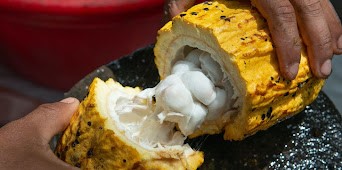 Fig: 2 - Cacao tree fruits are used to produce many other products besides chocolate, and they grow in humid forest ecosystems.
CHOCOLATE IN TODAY'S WORLD
Despite its widespread popularity, the cocoa tree grows in very restricted environmental conditions. Today the world’s leading cocoa producers are Cote d’Ivoire, Ghana and Indonesia and collectively produce half of the world's chocolate. Unfortunately at present, this narrow environmental belt means that the plant is vulnerable to climate change.
Researchers estimate that as climate temperatures change if the plant is not protected it could be extinct by 2050. While researchers are trying to genetically modify and protect the plant - another important part of any conservation effort is educating.
When we create opportunities for individuals to experience and intimately engage with natural species and the concerns surrounding them we also increase the public sensitivity that may, in turn, affect behavioural changes.
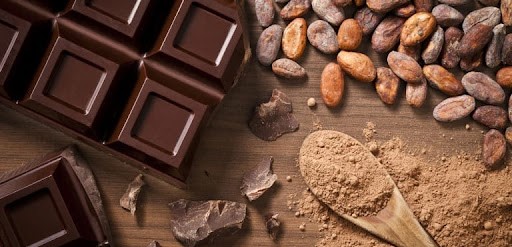 Fig: 3 - The chocolate community is ever-growing and spreading awareness in sensitive ecosystems for preservation is essential. (Credits: FCA Foto Digital/Getty Images)
DESIGN FOR CHOCOLATE
Today the chocolate we consume is far removed from its origins and even from its ancient history. Not only are we averse to the natural conditions of the plant but we rarely acknowledge its roots in Mesoamerica. Yet chocolate was more than food for the Mesoamericans. It was a significant and intrinsic part of their culture. This deep-rooted relevance in culture may help us to learn and fortify present and future conservation efforts.
Brief: Design an experiential resort within cocoa plantations inspired by the significance of the plant in ancient Mayan culture.
Human activity must not intrude or affect the quality of the ecosystem surrounding it. Becoming a haven for chocolate fanatics can generate popularity for the resort and its mission.
Visitors must be able to engage with the history, the present natural state and learn about future concerns in this cocoa retreat. Visual permeability and participation will be key for inspiring learning.
OBJECTIVES
Hospitality: The design outcome must create valuable hospitality opportunities that will draw and engage tourists.
Experiential: The design outcome must allow one to intimately engage and experience processes around the plant
Culture: The design outcome must borrow and be inspired by the place of coca in ancient Mayan culture
Educate: The space must be able to educate individuals about the future concerns surrounding the plant.
SITE
The site for this project is located in Tabasco, Mexico. Tabasco is one of the largest contributors to Mexican cocoa production, producing nearly 68% of the nation's cocoa produce.
The site is located in the Comocalo City in Tabasco, and has an existing Cocoa route tour that includes the surrounding cocoa plantations namely Hacienda La Luz, Hacienda Cholula, Hacienda Jose Maria and Hacienda La Bonita.
The Total Site Area is ~160,274 sq.m (site image 1). Within this site, the assigned buildable area is centrally located and is a maximum total of ~10,000 sq.m (site image 2). The rest of the area is reserved for the cocoa plantation.
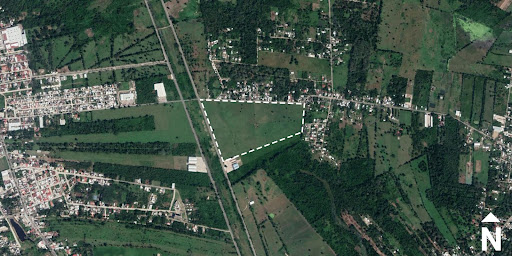 Fig: 4 -Site Image 1
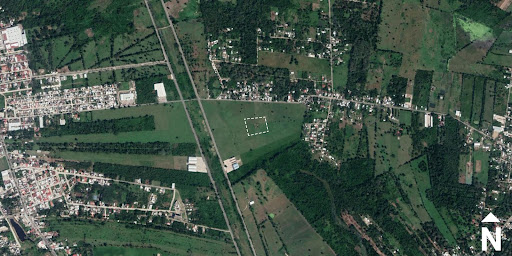 Fig: 5 - site Image 2
Project Area: 10,000 sq.m
Height Restriction: 10 meters
Ground Coverage: 50%
Maximum FAR: 1
Setbacks as per CAD plan
Coordinates: 18°15'43.9"N 93°12'10.2"W
AREA PROGRAMME
In the designated buildable area the outcome must contain the following:
- Administration/Operation
- Entrance lobby, reception desk ~ 100 sq.m
- Administration offices: Director, head of operations, researchers ~ 200 sq.m
- Staff lounge, canteen ~ 200 sq.m
- Accommodation
- Single Room/ Double Sharing: Total 20 units of 30-50 sq.m each
- Villas: Total 30 units of 60-80 sq.m each
- Experiential and Learning
- Cocoa processing and tasting space facility ~ 600 sq.m
- Cocoa tour facility (offices, staff services) ~ 100 sq.m
- Museum/Gallery (Curation of Mayan Culture related to Cocoa) ~ 300 sq.m
- Exhibition hall for events ~ 300 sq.m
- Kitchen for learning, cooking workshops ~ 200 sq.m
- Recreation
- Cafes ~ 100 sq.m
- Restaurant and dining ~ 200 sq.m
- Outdoor multi-purpose space for workshops, performances, etc.
- Circulation (30% of built area), Services and Parking.
The participants are free to add to the above area programme as needed.