
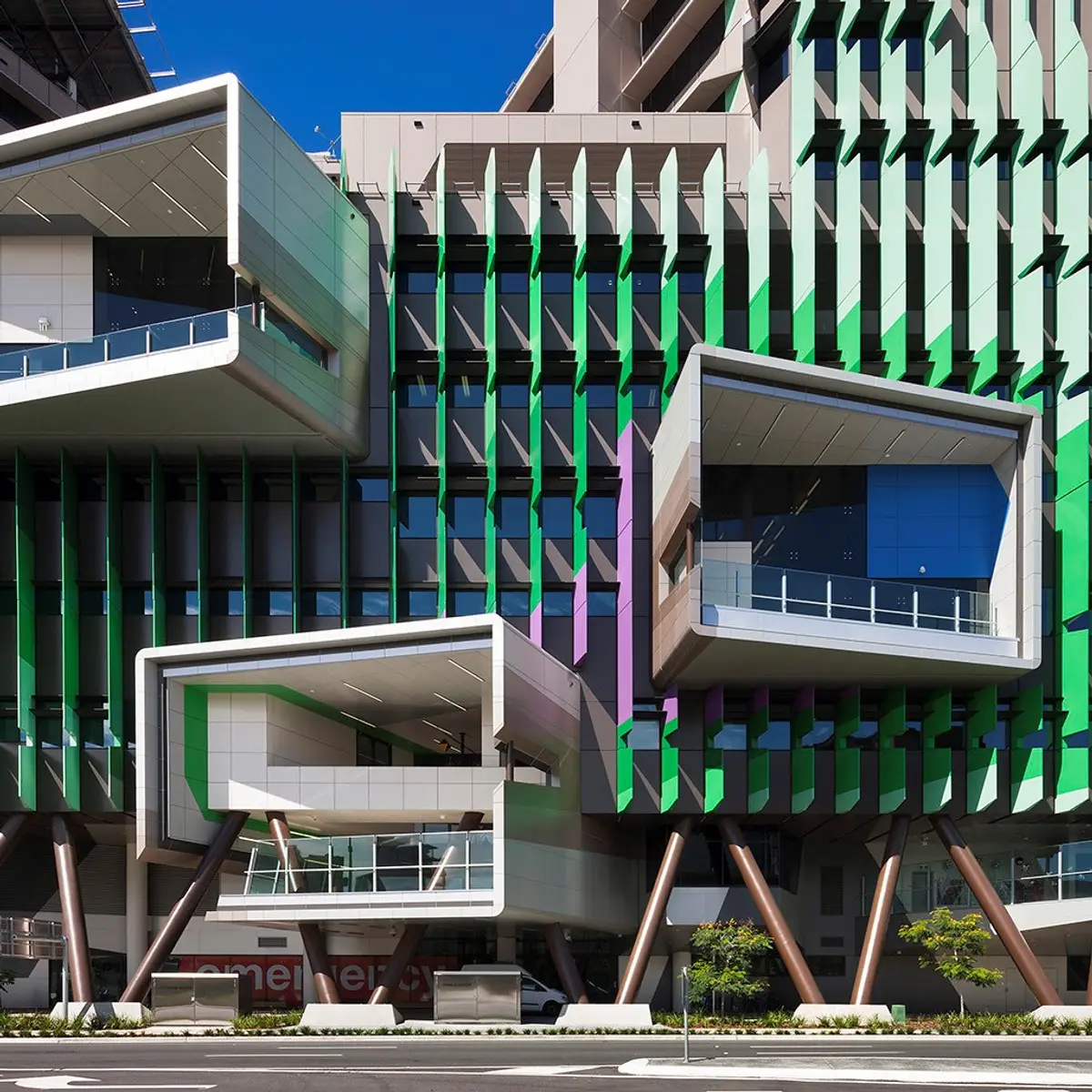
A Force for Change
An essay on channeling the strength of Architecture to change the design systems of healthcare and to advocate for holistic healthcare design.

Architecture is a force of nature – while our profession possesses sentience that acts of nature and force majeure do not, we do share a certain kinship to these phenomena. We have the power to create and to destroy - we also possess the tools to wipe out the old and usher in the new. This power we architects possess is something that should not be taken lightly – after all, the power to create and to destroy is integral to the progress of our society. It is our duty, as the stewards of this power, to create with the utmost intelligence and to destroy with immense responsibility – removing the rightfully antiquated spaces and replacing them with new, more era-appropriate, and progressive design, is part of an architect’s social responsibility. One such responsibility these days is to create a space of life and healing – spaces that provide a breath of fresh air to our fast-paced life. As Zaha Hadid once said, ‘Architecture is really about well-being. I think people want to feel good in a space. On the other hand, it’s about shelter, but it’s also about pleasure’ – this saying is important now, more than ever. Healing architecture, nowadays, is not only about the traditional hospitals and patients but also about mental health and the daily well-being of the average citizen.
This new definition, however, does not in any way diminish the gravity of the existing dynamic of hospitals and patients - it is simply an expansion of the definition, and it wouldn’t be architecture without expanding the definitions of concepts, wouldn’t it?
Hospitals, clinics, and the traditional spaces of healing are all the backbone of this system, but it shouldn’t end there – nowadays, hospitals cannot be the end all be all of healing architecture. We must constantly strive to reimagine spaces in the context of now. We must strive to update the design of all healing infrastructure, not only the hospitals but also the ancillary spaces. We should not only focus on physical ailments but also on mental health issues as well – take the pandemic for example; during its devastating height, covid’s death toll was a shock to the entire world. Essentially, life as we know it halted during the height of its rampage – but it wasn’t just the death toll that was paradigm-shifting, the number of people who suffered from depression was also at an all-time high. It was unprecedented and it truly altered the paradigm that we were operating under – people focused more on their mental health to help survive the ongoing situation. Health became a holistic concern – it wasn’t just about physical health, the adversity thrust forward into the limelight the true meaning of mental health and how to care for it.
It immediately became apparent that focusing on one side, the physical aspect, was no longer going to be the norm going forward – the solution became clear, holistic healing design is the next logical step in healing architecture.
Now, this doesn’t mean a drastic worldwide initiative to build like Ozymandias, it isn’t a drive to create monumental and iconic pieces of architecture whose sole function is to heal. It is simply a wake-up call to incorporate healing architecture into more typologies that exist – specifically in places like offices, schools, and hospitals, to name a few. We have to constantly strive to create more humane spaces for everybody – basically, creating humane environments is a step towards improving mental health and expanding the definition of healing architecture. Take the recently proposed UCSB dormitory for example – it’s a perfect analogy for what the philosophy of our society has been. Developers and those in power believe that the design is perfect because it fits the maximum efficiency that they so crave, while architects and stakeholders are disgusted by the sheer magnitude of this monstrosity. While the thought may sound a bit anti-establishment, I assure you that it’s simply a logical analysis of how inhumane the conditions are in this design - 4000 people in one mid-rise building with windows only in the periphery are not conditions that anybody should be living in, especially since it’s for college students. Creating a housing solution to jampack 4000 college students is not a smart decision – there is no logical reason to house that many people in that design any way you look at it; add that to the fact that college is a stressful transition period for most people and you have a factory of depressed students coming out of that place, left and right. The point is, highlighting the humanity of the design is going to be more important as we move forward – the awareness of experiencing something first-hand has fueled the rise of mental health architecture, and that is a huge breakthrough for us and our profession.
The system has to be changed so that everybody can get the help they need, it’s not a question of one or the other anymore – it’s an indictment for us to become more aware and to design better. It’s also not a question of limitations, it’s the beginning of a collective initiative to make healing spaces more prevalent in society.
But that’s not all; while a holistic approach and a humane design philosophy are contributing factors to creating an everyday integration of healing architecture, we must strive to innovate traditional spaces. For example, EGD or Environmental Graphic Design, has become an up-and-coming design trend in hospital design – it allows the typical drab, office-like space, to have a feature that shakes up the norm and presents the space in a more positive light. Most hospitals tend to be too utilitarian and design trends like this help break the monotony of the interiors – besides, EGD adds depth of artistry in an extremely utilitarian place and it helps with wayfinding and placemaking, something that is essential in healthcare design. It also alleviates the morose hospital aesthetic and adds a bit of positivity in a stressful place, plus, there are plenty more trends apart from this that help hospitals break out of the typical aesthetic. Healthcare designers now are pushing for more green and open spaces in hospitals and if that isn’t feasible, the addition of planters to the façade is usually a go-to trick. Some hospitals have even added some ‘end-of-life’ spaces to their hospitals – these are transitional spaces where the patients and their families may enjoy the company of each other inside their own room. While the idea of the space is truly a necessity for healthcare facilities, there is still a lot of design variation that can be added to the complex concept.
There is a prevalent need to disrupt the current paradigm in this typology to create better atmospheres for the people who need them. Furthermore, the addition of green and open spaces in this typology would benefit everyone – a study by A. Riaz, A. Younis, W. Ali, & M. Hameed, submitted to the ISHS has presented findings that ‘well-planned green spaces not only creates an atmosphere of relaxation, lowered stress level, increase social interaction and enhance mental stimulation, but also can improve clinical outcomes through reducing pain medication intake and shorter hospitalization’ (1). This validates the idea that a holistic and humane approach to healthcare design is the best route to take to improve upon the existing paradigm and the same idea goes with therapy clinics and rehabilitation centers. These places, which are surrounded by stigma, are critical to the development of people’s life – the presence of these spaces should be celebrated and not ridiculed. These places, especially rehab centers, were designed to reintegrate people back into society and to help everyday people with afflictions – as our society progresses, we must set aside the stigma that surrounds these places and advocate better design and better conditions for the people using these facilities.
Why not include these spaces in the expansion of the definition of healing architecture? Why not break the monotony of drab office spaces in buildings to go to therapy? Why not create more humane designs for those people with afflictions?
Architecture will always be a force of nature – a discipline so powerful that it demands the very best out of its ranks. Healthcare design and healing architecture surely bring out the best in us, but I believe that we can do better – we become better not only for ourselves but also for the good of our society. We must channel the force of nature, that is architecture, into better spaces for everyone – be it an everyday space or a specialized space. We must wield the power of architecture to remove antiquated design systems, and usher in the needs of the people. We must turn to modern knowledge in this regard – as Daniel D. Palmer once quipped ‘the mind must be cured as well as the body, as the mind, so is the body’. The awareness today, especially in this day and age, of mental health and holistic healthcare cannot and should not be overturned – as part of our social responsibility, we, as architects, should advocate and educate the populace on the merits of better healthcare and healing design - who knows, that might just help save and improve lives.
References (1)

Popular Articles
Popular articles from the community


ETEH Reworks the Shared Spaces of São Domingos School in Brazil Around Timber, Color and Hanging Plants
At São Domingos School in Brazil, 436 m² of hall, refectory and library are recast with timber joinery, a yellow and blue code and trailing greenery.


Singing Woman: An Opera House That Performs Before the Curtain Rises
Ovidiu Cristian Pavel's conceptual opera house translates Estonia's choral identity into a sculpted waterfront landmark facing the Baltic Sea.

LT2A and OPEN Architectes Thread a Brick and Glass High School Through a Wooded Belgian Campus
In Braine-l'Alleud, a 3,000 m² wing for Collège Cardinal Mercier pairs pale brick with a glazed colonnade, deferring to a small chapel and a dense wood.

FCC Arquitectura Expands a Portuguese Granite House with a Board-Marked Concrete Wing
In Portugal, JV House pairs a cleaned-up whitewashed and granite dwelling with a timber-shuttered concrete extension, courtyards and a garden pool.

Similar Reads
You might also enjoy these articles

Vereda Arquitetos Renovates a 40-Square-Meter Apartment Inside Niemeyer's Copan Building
A compact unit in São Paulo's most iconic residential tower gets a material overhaul that pairs exposed concrete with bold blue Formica.

Shakur's House: Exposed Brick as an Interior Organiser in a 168 m² Mashhad Residence
Brick moves indoors in this Mashhad residence, where masonry walls, glass partitions and teal planes sequence a compact home without closing it off.

Day and Night Park: A Time-Based Urban Newsstand in Beijing
A temporary urban newsstand in Beijing blending travel, light, and reading through poetic colors, compact form, and community-focused design.

Modernist Patio Renovation in El Masnou, Barcelona by Oliver Segura Arquitectura + Cebrià Arquitectura
Modernist patio renovation blending tradition and innovation with a movable pool, leveled floors, and Catalan materials in El Masnou.


Comments (0)
Please login or sign up to add comments
No comments yet. Be the first to comment!