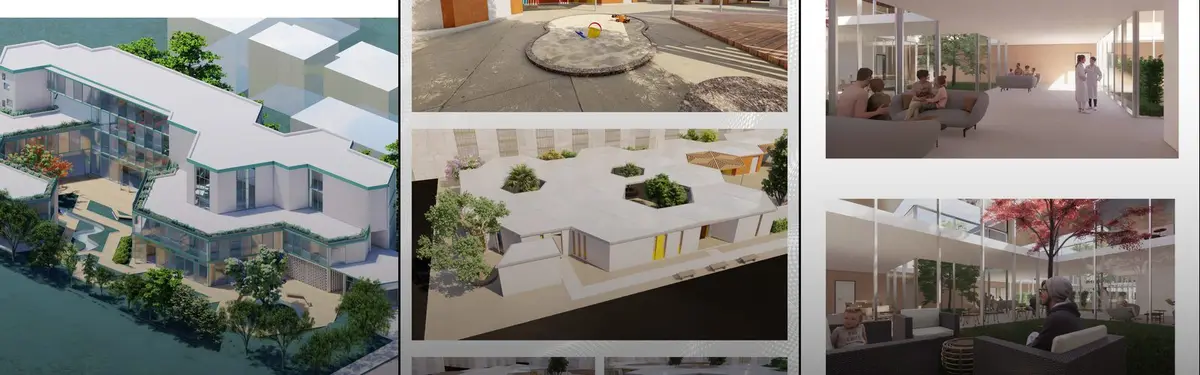

Healthcare Building
Design and architecture of healthcare facilities, wellness spaces, and therapeutic environments.



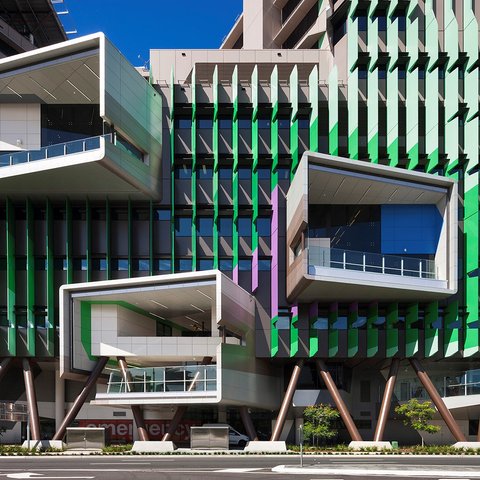
To get better, people rely on hospitals and healthcare organizations. As architects, we have a responsibility to create hospitals that provide healthcare to the general public. People expect to be able to navigate the health-care system in hospitals in a timely and efficient manner. Everything from the waiting room through the operating room is included. Everything comes together.In general, a health facility is any location where healthcare is offered. Small clinics and doctor's offices to urgent care centers and huge hospitals with extensive emergency rooms and trauma centers are all examples of health facilities. One typical indicator of a country's or region's prosperity and quality of life is the number and quality of health facilities available. In many countries, health facilities are controlled to some extent by law; before a facility may begin for business, it is frequently needed to get a license from a regulating agency.Img 1: Healthcare building design must fulfill not only in technical aspects but its scope must be broadened to respond to social needs as well.Design value of healthcare facilitiesHealth care centers encompass a huge variety of sorts, from small and comparatively simple clinical clinics to huge, complicated, and luxurious, teaching and studies hospitals. Large hospitals facilities may additionally include all the diverse subsidiary fitness care kinds which might be regularly unbiased facilities. The facility conveys a message to patients, visitors, volunteers, carriers, and workforce. The facility also communicates a torrent of clues about the enterprise and the hospital treatment being provided there. The clues start on the approach to the power, the drop-off location, the parking masses, and the street signs. Ideally, that message is one which conveys welcoming, caring, comfort, and compassion, commitment to patient well-being and protection, wherein strain is relieved, shelter is supplied, appreciation is reciprocated, competence is symbolized, manner-finding is facilitated, and households are accommodated.The facility also affects worker service attitudes and behaviors. Finishes, signage, and artwork ought to be cautiously decided on, nicely coordinated, and incorporated. Security can be balanced with a few capabilities apparent to patients/visitors, whilst conveying a message of protection. Thoughtful layout can assist make sure the right first impression is created and sustained.Img 2: A splash fof colour in the hallways and waiting areas adds liveliness to an otherwise gloomy vibe of hospitals. (Credits: Andrew Watson Photography)The complete healthcare industry is beneath extraordinary stress to lessen charges, and at the equal time, be extra attentive to "customers". The growing old are the heaviest users of healthcare services, and the percentage of the getting older in our populace is increasing appreciably. At the same time, fast technological advances, frequently regarding very state-of-the-art strategies and equipment, make extra diagnostic and remedy approaches to be had. The consequent boom in health care fees is not easily accommodated. Designers locate growing cognizance on proscribing both production expenses and the prices in their layout offerings, even as compressing production schedules and still meeting the highest best requirements.As cost pressures grow, healthcare facilities locate themselves in growing competition for each sufferer and group of workers. Architecture is frequently recognized as an vital device in attracting and maintaining the exceptional doctors and nurses, the most hit HMOs and insurance plans, and the most sufferers. Consumer decisions are based totally on value, accessibility, exceptional career, and high-quality medical care. An aesthetically captivating facility is a key factor of the perceived first-class of care.Img 3: Helathcare institutions are expensive projects on account of their high use of resources, location, technology and value of service.To avoid rapid obsolescence in the face of changing needs and technologies, any new health care facility must include flexibility as a basic element. Health-care facility requirements are continuously changing, and it's difficult to predict where they'll go with any precision. The facilities that contain them are affected by new equipment technologies, new treatment methodologies, changes in diseases, and changes in the patient population base. Inpatient treatment is steadily declining, while outpatient care is increasing. Special-care units and smaller satellite institutions are becoming more popular than large, centralized facilities. Types of Healthcare buildingsA rising variety of health care types has come from a trend toward specialization. Hospitals, nursing homes, outpatient facilities, psychiatric facilities, rehabilitation facilities, hospices, assisted living facilities, communal housing, adult day care facilities, and a variety of specialty outpatient facilities are just a few examples.HospitalNursing homeOutpatient clinic - Includes diagnostic and treatment facilityPsychiatric facilityTemporary medical clinicsImg 4: Types of healthcare facilities as described by the WBDG guidelines.Trends in healthcare designIn recent years, infectious diseases have become a major public health concern, and sanitation or cleanliness is a key feature of a healing or therapeutic setting. Cleanliness is critical, but the importance of a pleasant, simple-to-understand, and non-threatening environment for patient recovery is becoming more widely recognised.Good health-care design begins with identifying basic functional requirements, but it does not end there; it must also address the emotional needs of persons who utilize such facilities at times of uncertainty, dependency, and stress.Img 5: Creative strategies can be applied to create interesting, non-medical places for delightful engagement of visitors and patients. (Credits: Rogers Stirk Harbour + Partners)There has been a clear shift away from hospital-based acute care and toward more holistic, preventative, and continuous health and wellness care. All health-care facilities must be designed with sustainability in mind. Daylighting, energy and water conservation, nontoxic materials and finishes, and sustainable operations and maintenance are just a few of the sustainable design characteristics that can be implemented into health care facility design.There is a growing focus on security, particularly in major public facilities, and the need to strike a balance between that and the intended openness to patients and visitors.Evidence-based health-care design promotes family involvement and fosters safe and therapeutic spaces for patient treatment. It encourages efficient employee performance and provides relief for stressed personnel. The clinical, economic, productivity, satisfaction, and cultural parameters of the company should all improve as a result of these designs. Principles of new age healthcare architectureCrowding concerns: The last thing a patient wants is to feel claustrophobic as a result of overcrowding. Overcrowding is frequently caused by floor layouts that fail to allow for efficient traffic movement. Anticipating overpopulation by utilizing every square inch of a room's layout and optimizing space can go a long way toward helping a patient feel more at ease while also providing physicians with sufficient space to accomplish their duties. These concerns can also be alleviated by strategically situating patient subwaiting spaces and accommodating family members.Img 6: In light of pandemic times, management and dissipation of huge crowds visiting healthcare faciiities ia a top priority. (Credits: MASS Design Group)Personalized Patient Rooms: When patients are placed in an unfamiliar environment, personalization is critical for their comfort. Being in a medical facility can be stressful at times. In order to reduce anxiety while improving happiness, healthcare architecture is increasingly striving to allow for more individualized patient rooms. In healthcare institutions, features such as patient communication boards and customisable digital signage with the patient's name, family photos, weather predictions, and more are being implemented.Micro-hospitals: The number of small-scale inpatient institutions is increasing. These micro-hospitals have an emergency room, pharmacy, and lab, as well as radiography, surgery, and other services available in larger hospitals. What are the advantages of becoming small? For the convenience of patients, these facilities provide easy access to a broad range of healthcare services. They are close to communities, decreasing the need for patients to travel to larger hospitals located outside of their neighborhoods.Img 7: Efficient design interventions have been successful in creating make-shift clinics and hospitals that provide healthcare services to peope in emergency situations and even remote, rural areas. (Credits: Weston Williamson)Interiors: In a healthcare institution, it can be difficult for patients, especially those who are there for a long time, to feel at home. It's simple to see why when you look at standard healthcare architecture: white walls, pastel hues, fluorescent lights, and sterile surfaces. Facilities are being constructed to be more inviting to patients, with warmer artwork and colour palettes, wider windows to allow for more natural light, and furniture that looks and feels more like home decor rather than the cold, industrial options of the past.Flexible or multifunctional elements: Because patients may have numerous guests at once, hybrid goods such as sofa beds and recliners can help caregivers and visitors have the space they need when they need it without overwhelming the room. As previously said, preventing overcrowding is a crucial priority in healthcare architecture, and using convertible furniture is a simple design option for making healthcare architecture function for a variety of patients and their visitors. Having family and friends nearby during rehabilitation can help a lot, and this trend makes that easier.Nature sense: Healthcare architecture that is purposely constructed to provide patients with a view and access to reconnect with nature might be beneficial in reducing the anxiety associated with being in a healthcare institution for an extended period of time. Gardens, live plants, and large windows that open to green grass, trees, and shrubs illuminate the rooms and create a sense of quiet and calm. Furthermore, having access to nature has been shown to aid patient recuperation. Healing gardens, which are intended to relieve stress and increase a sense of healing, have sparked a lot of debate and design in the industry. Img 8: Being in nature is the highest recommended therapy strategy for most patients, especially in contemporary times and so being able to access nature in healthcare centre premises itself aids recovery of patients. (Credits: MASS Design Group)The architecture of healthcare institutions has evolved in tandem with the advancement of healthcare. When it comes to the design of such facilities, architects are faced with the task of creating something that is both aesthetically pleasing and functional for patients. Architecture and design that is explicitly designed to decrease stress, encourage calm, and provide comfort is exactly what the doctor ordered, and it is something that should be included in future healthcare projects.When it comes to further developments that will be witnessed in the future, the sky's the limit. Healthcare architecture is actively working to make healthcare more comfortable for patients looking for comfort when they need it most, with personalized rooms, the growing availability of micro-hospitals, facilities that feel more like home, convertible furniture for guests, and greater accessibility to mother nature. Architecture CompetitionsArchitecture competitions have been a big part of historic construction innovation. For centuries, architecture competitions have helped source the best and most unique designs for projects, spurred community development (think: urban planning), and created huge publicity around new projects. Competitions are a great way to try out new things, make mistakes and learn from them. They're also a great opportunity for portfolio building because everything you submit gets contextualized based on where it ranks against everyone else's work. And perhaps most importantly, they give you extra insight into what the judges see in your submitted work as well as how they don't see it - which is yet another fantastic way to improve your designs in unexpected ways!Some of the competitions for healthcare building design being hosted all over the world are Johns Hopkins Healthcare Design Competition, Healthcare design showcase, Healthcare design awards by AIA, Healthcare design awards by IIDA, and so on. Explore projects on healthcare architecture published on UNI website: UNI Design CompetitionsUNI is a global network of architects and designers who are solving some of the most challenging problems around the globe. UNI brings together the world's largest pool of design challenges that are curated by the finest architecture academicians and professionals globally. With over 200,000+ registered members, UNI brings academia and professional spheres of architecture together through a unique knowledge sharing web platform. Since 2017, UNI has hosted more than 200+ architecture competitions for various idea level to realization level briefs. In the past, UNI has helped 50+ organizations, universities, and government bodies to use our platform to generate architecture and design solutions through competitions. There are many competitions hosted by UNI on our website for healthcare building discipline such as Aid, Restore, Heal, Convalesce, Autistic care and so on. Explore current challenges on healthcare architecture hosted by UNI:Discover other competitions: https://uni.xyz/competitions