
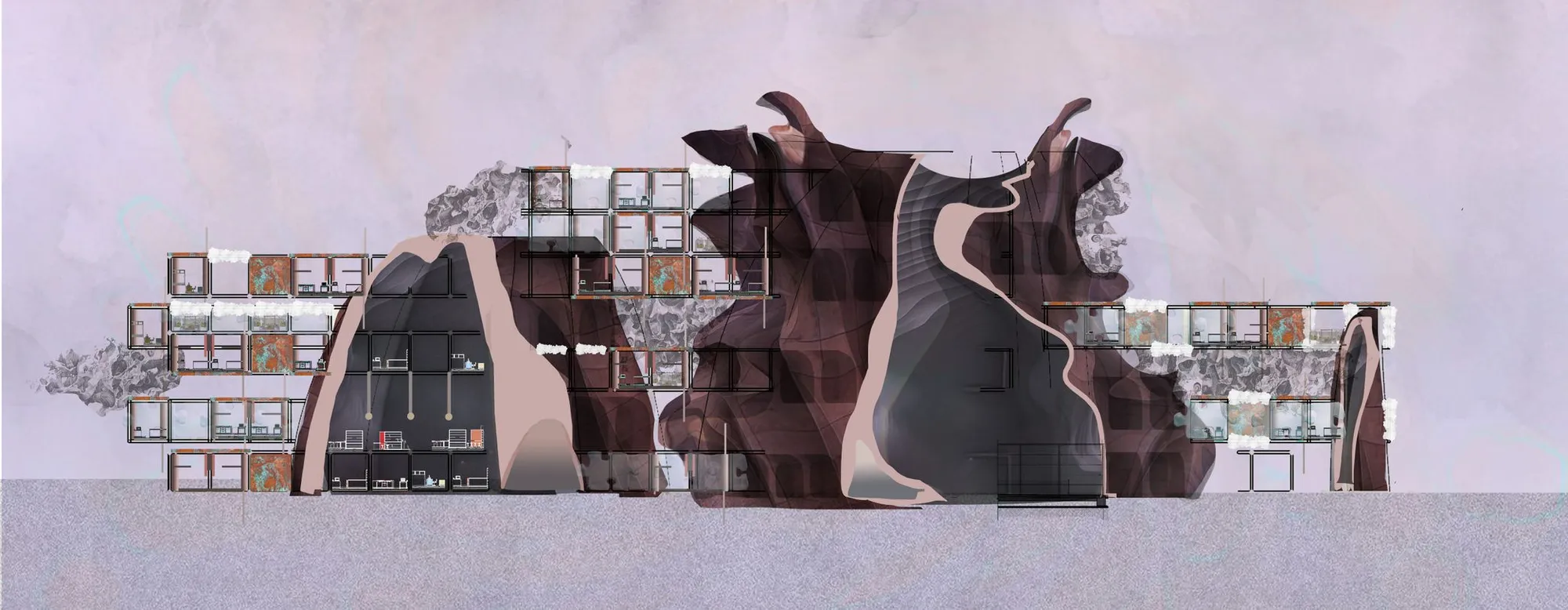
Adaptive Architecture Design: The Evolutionary Concept of IMPULSE by Raphaela Nicolettis
Explore IMPULSE: An adaptive architecture design project that evolves with eco-technologies, biomaterials, and flexible living spaces for dynamic individuals.


As we navigate through an era where both personal and environmental evolution is not just a desire but a necessity, adaptive architecture design stands at the forefront of this revolution. 'IMPULSE', an honorable mention entry in the Hustle Hub by Raphaela Nicolettis, epitomizes the symbiosis between human growth and our built environment. Let's delve into the transformative vision of IMPULSE and how it redefines the concept of living spaces.
The Foundation of Adaptive Architecture
The Heart of IMPULSE - A Living Crater
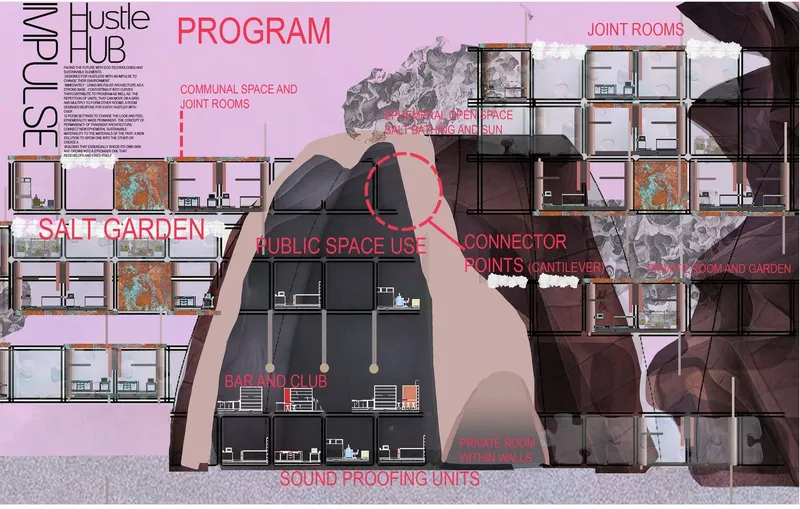
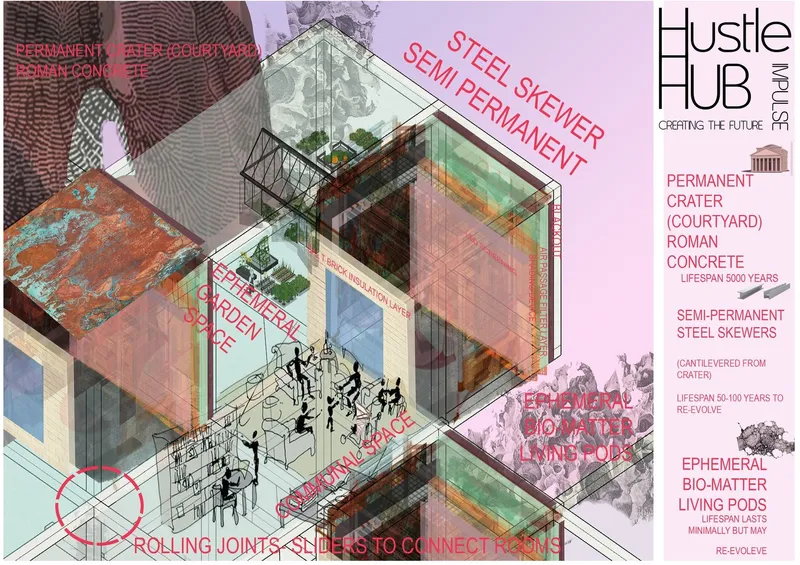
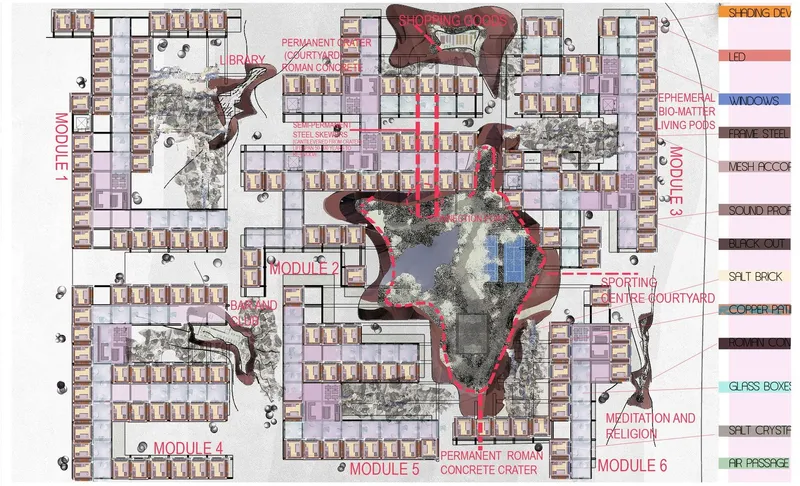
At the core of IMPULSE lies a permanent crater, formed from Roman concrete, promising a lifespan of 5,000 years. It's not just a structural element; it's a testament to the enduring foundation of adaptive architecture. The crater acts as a courtyard, a communal nexus, fostering social interactions among 'hustlers' — a term endearingly used to describe the dynamic inhabitants of IMPULSE.
Steel Skewers - The Semi-Permanent Spine
Cantilevered from the crater are semi-permanent steel skewers, a spine that supports the growth of the building over a span of 50-100 years. Their copper patina facade on the left side and salt brick insulation on the right side showcase an integration of organic and inorganic materials, contributing to the building's evolutionary path.
Living Modules - The Biomaterial Skin
Ephemeral Bio-Matter Pods
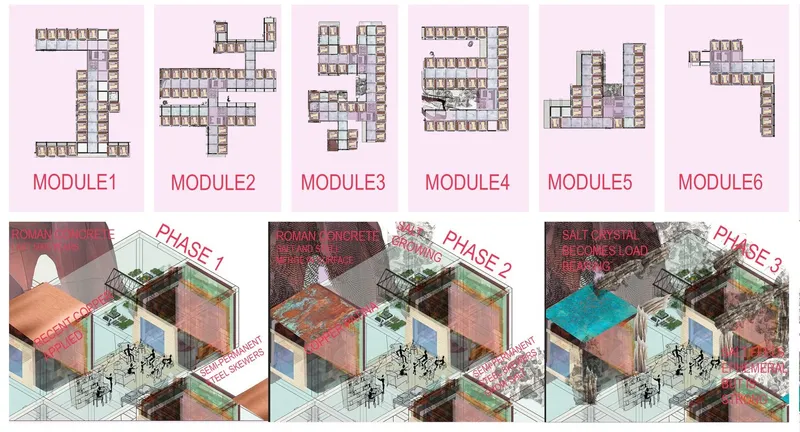
The IMPULSE project grows not just in a figurative sense but literally through its ephemeral bio-matter living pods. With a minimal lifespan that invites re-evolution, these pods are designed to adapt to the hustler's expanding needs. They are a canvas for growth, for both the building and its inhabitants.
Ephemeral Salt: A Growing Frame
IMPULSE embraces the ephemeral qualities of salt, integrating it into the building's frame. This is architecture that breathes and evolves with environmental conditions, allowing the building to grow with the individual.
Adaptive Interiors for the Ambitious Hustler
The interior spaces of IMPULSE are as adaptable as its structure. With modular 5x5x5 rooms, the building caters to the initial affordability requirements of hustlers. As they progress in their careers, the spaces evolve, reflecting the personal growth of its residents. This is a building that grows, not just with the individuals it houses but with their aspirations too.
Sustainability and Eco-Technologies: The Future of Adaptive Architecture
The Role of Eco-Technologies
In an age where sustainability is no longer a luxury but a responsibility, IMPULSE integrates eco-technologies into its very fabric. These technologies are not mere add-ons but integral components that define the living experience within IMPULSE.
Weathering 2050: An Evolutionary Forecast
Looking ahead to 2050, IMPULSE predicts a building where copper plates and Roman concrete stand resilient, where the ephemeral becomes permanent, and where salt has reinvented the steel's surface. This is a forecast of a building that not only withstands the test of time but flourishes with it.
IMPULSE, a beacon of adaptive architecture design, embodies the essence of transformation. It's a space that acknowledges the growth of its inhabitants and responds in kind with a flexible, sustainable, and futuristic design. As Raphaela Nicolettis envisions, this is not just a building; it's a living, breathing entity that grows in harmony with human ambition and technological progress.
The project IMPULSE is a bold statement on the elasticity of architecture and its ability to cater to the individual needs of hustlers who thrive on change. It’s a visionary approach that reimagines our interaction with the spaces we inhabit, crafting a narrative of growth, sustainability, and perpetual evolution.
In the architectural landscape, IMPULSE shines as a pinnacle of adaptive architecture design, promising a future where our buildings will not just shelter but will also reflect our personal journeys. It’s a journey into the future of architecture, a future that grows with us.




Popular Articles
Popular articles from the community


Conexión: Biophilic Design Reimagines High-Rise Living in Hong Kong
Conexión reimagines high-rise living in Hong Kong through biophilic design, green facades, shared spaces, daylight, water and nature within.

The Earth Pod: 3D Printed Homes for Resilient Refugee Communities
The Earth Pod reimagines refugee housing through 3D printed homes made from clay, combining resilience, self-sufficiency, and rapid shelter.

Play: Fragments of Their World
Familiar architecture becomes modular playground design, creating safe spaces where displaced children can learn, connect, imagine and play.

The Musturak Paradise: Senior Living Architecture for a Connected Future in Temara, Morocco
The Musturak Paradise reimagines senior living architecture in Temara via private homes, social spaces, culture, community, and shared care.


Similar Reads
You might also enjoy these articles

Day and Night Park: A Time-Based Urban Newsstand in Beijing
A temporary urban newsstand in Beijing blending travel, light, and reading through poetic colors, compact form, and community-focused design.

Modernist Patio Renovation in El Masnou, Barcelona by Oliver Segura Arquitectura + Cebrià Arquitectura
Modernist patio renovation blending tradition and innovation with a movable pool, leveled floors, and Catalan materials in El Masnou.

Alto Residencial Coop: Cooperative Housing Development in Santiago de Compostela by Carbajo Barrios Arquitectos
A linear cooperative housing complex blending white volumes and perforated metal façades, enhancing community living, natural light, privacy, and urban integration.

Vil Genis School by BPA ARCHITECTURE – Massy, France
Vil Genis School in Massy, France, features sustainable design, south-facing classrooms, community integration, accessible spaces, and modern educational architecture.

Explore Interactive Architecture Competitions
Discover active competitions in this discipline



Challenge to reimagine the Iron Throne


Photograph architecture without architects


Illustrate the lost glory of Angkor Wat - Render Challenge


Design challenge to reuse E-waste
Comments (0)
Please login or sign up to add comments
No comments yet. Be the first to comment!